family
The Postcard That Arrived 50 Years Late
The Postcard That Arrived 50 Years Late Written by Mirza It was a rainy Thursday morning in the quiet town of Bellhaven when Margaret Fielding opened her mailbox to find a yellowed postcard tucked among the usual bills and catalogs. The paper was brittle, the ink faded, and the stamp bore the mark of 1975. She squinted, her arthritic fingers trembling slightly as she turned it over. It was addressed to her, but in a handwriting she hadn’t seen in decades—one she had once known better than her own. It was from Thomas. Margaret's breath caught in her throat. She hadn’t heard that name aloud in fifty years, hadn’t spoken of him since the summer of '75. It had been a summer of picnics, long walks by the lake, and whispered dreams under starlit skies. They were in love—intensely, youthfully, foolishly in love. But life had different plans. Thomas was drafted. They promised to write. She wrote every week. He never replied. Heartbroken and confused, Margaret moved on. She met Edward, a kind man who gave her stability and a quiet kind of love. They married, had two children, and settled into a life built on gentle routines and shared respect. But Margaret never stopped wondering why Thomas had disappeared. She assumed he’d been killed in the war or perhaps chose not to return. Either way, she buried that part of her heart long ago. And yet—here it was. The postcard read: > "Margaret, If you're reading this, it means the world hasn’t forgotten me. I'm coming home soon, and I hope we can pick up where we left off. I think of you every single day. Love, Thomas." Tears blurred her vision as the decades melted away. Why had this postcard never arrived? She contacted the local post office, who explained that a box of undelivered mail from the 1970s had recently been discovered in a closed rural facility. Apologies were given, but it didn’t change the past. Margaret sat on her front porch that afternoon, the postcard pressed to her chest. She thought about all the what-ifs. What if this had reached her in 1975? Would she have waited for him? Would Edward still have been part of her story? The sun dipped low as she sat in silence. Later that evening, her granddaughter Lily called. Margaret hadn’t told her much about her youth, but now she poured out the whole story, voice trembling with memory and emotion. Lily listened with wide-eyed wonder. “Do you want to find out what happened to him?” Lily asked. Margaret hesitated. She didn’t know if she was ready for the answer. Still, something deep within her stirred. Closure? Curiosity? Maybe hope? With Lily’s help, they began searching. Newspaper archives, veterans’ forums, old address registries. Days turned into weeks. And then—they found him. Thomas Hargrove. Alive. Living in Oregon. Eighty-one years old. He had never married. Margaret’s heart pounded as Lily arranged a video call. When the screen lit up, and an old man with kind eyes and silver hair appeared, Margaret gasped. “Margaret?” he said, voice thick with emotion. “Yes,” she whispered. He told her everything. He had written to her from overseas. Many letters. But he never heard back. When he returned, he thought she had moved on. Margaret’s letters, it seemed, had suffered the same fate as his postcard—lost in the ether of time and poor military mail routes. “I thought you forgot me,” he said. “I never did,” she replied. They laughed. They cried. They spoke for hours. Over the next few months, they spoke often—rekindling a bond that had never truly broken. Margaret didn’t feel guilt; she felt grace. Life had given her a husband, children, a story worth telling—but it had also given her this moment. A thread from the past, finally tied. One spring morning, Margaret flew to Oregon. When she stepped off the plane, Thomas was waiting with a bouquet of daisies—the same flowers he used to bring her in the summer of '75. They embraced like no time had passed. And in that moment, Margaret knew: sometimes, even if it takes fifty years, love finds a way back.
By Moonlit Lettersabout a year ago in Fiction
The Magic of Books
The Magic of Books: How Reading Shapes a Better You Unlocking a Healthier Mind and a Brighter Future In a world buzzing with screens and instant updates, there’s a quiet, timeless magic in the simple act of opening a book. Reading isn’t just a pastime; it’s a gateway to a healthier mind, a richer life, and a more compassionate self. Books have an extraordinary power to transform us, guiding us toward success, honesty, and a deeper connection to the world around us.
By Shohel Ranaabout a year ago in Fiction
The Candle That Burned Out
The shop shouldn’t have existed. It sat between a bookstore and an abandoned bakery, tucked away on a street that seemed even longer than it was. There was no sign on the door—just the faint scent of cinnamon and something old, something old.
By Echoes of Lifeabout a year ago in Fiction
The Man Who Sat in Silence for 10 Years
The Man Who Sat in Silence for 10 Years Written by Raza Iqbal In the small village of Bramble Hollow, nestled between misty hills and forgotten trails, there lived a man named Elias Wren. No one had heard his voice in ten years. Not even a whisper.
By Moonlit Lettersabout a year ago in Fiction
The House That Waited for Her
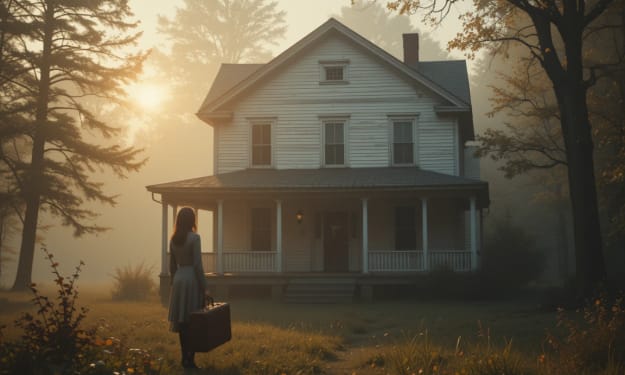
The House That Waited for Her Written by Mirza The house sat at the edge of a forgotten road, with white paint peeling like old memories and vines growing over the porch railings like stubborn thoughts no one had trimmed back. For forty years, it had waited — quietly, patiently — for her to return. To the rest of the town, it was just the “old Barlow house,” the one people drove by without really seeing. No one lived in it. Not since Ellie left. They said Mr. Barlow never moved a single piece of furniture after she ran away. The curtains remained drawn, her bedroom untouched, and the porch light — it stayed on, every night, like a lighthouse in case she ever came home. Ellie Barlow had been a spark in a quiet town, a girl with fire in her voice and wildness in her heart. She talked about New York, Paris, and places most people only read about. She wanted more than her small town could give. So on a humid July morning in 1985, just sixteen, Ellie packed a bag, left a note on the kitchen table, and boarded a bus that didn’t stop for goodbyes. And she never looked back. She became Eleanor Barlow in the city. Dropped the southern lilt, the denim jackets, and the scent of honeysuckle. She wore blazers and heels and built a life out of ambition. Editor. Director. Then, finally, her name in the corner of a hardcover book jacket — a memoir of someone else's life, written in her own words. But she never wrote about herself. She told friends she was an only child, that her parents were dead, and that she didn’t miss the place she came from. She told herself the same lies, until they became easier to carry than the truth. But on her 56th birthday, a letter arrived. A real one, with a crooked stamp and shaky handwriting she hadn’t seen in decades. > "Dear Ellie, If you’re reading this, it means I’m gone. The porch light is still on. You can come home now. — Dad." The house smelled like old wood, dust, and the faintest trace of lemon soap. Ellie stood in the foyer, her hands trembling as they used to when she was five and had knocked over her mother’s vase. Nothing had changed — not the photos on the wall, not the grandfather clock frozen at 3:17, not even the tiny pencil mark that still measured her height on the kitchen doorframe. The dining table still held the lace runner. Her chair still wobbled at the leg. And on the fridge was the last thing she ever drew — a crayon sketch of a girl flying a kite. Her father's shoes were still by the door. She found the note on her old bed: > “Thought you might come one day. Bedroom’s still yours. Welcome home, little star.” She didn’t cry. Not at first. She made coffee in the same chipped kettle. She sat on the porch and listened to crickets. She looked across the field where she used to chase fireflies and remembered the night her father built a campfire and promised her the stars would wait for her. They had. The neighbors were older. A few recognized her. Most didn’t. She didn’t explain. She helped Mrs. Heller carry groceries and fixed the swing in the old park. She walked past the school and stared at the empty lot where her best friend’s house once stood. One afternoon, she sat down at the same wooden desk in her old room. And for the first time in decades, she wrote about herself. About the girl who left. And the woman who came back. She stayed for a month. The house whispered to her, each room unlocking a version of herself she had buried. The girl who used to sing into hairbrushes. The teenager who kissed a boy named Luke under the bridge. The daughter who once believed her father didn’t understand her dreams. But he had. He had left the light on for 40 years. And when she opened the attic, she found a box labeled “For Ellie.” Inside, were postcards she had never sent, old newspaper clippings of her achievements, and a small tape recorder. She played it. > “You don’t have to forgive me. I just hope you find peace. Wherever you go, you’ll always have a place here. Love you forever, Dad.” Ellie didn’t sell the house. She returned to the city, but she visited every summer. Eventually, she wrote a second book: “The House That Waited for Me.” It wasn’t a bestseller. But readers loved it. Because it was real. And it made them remember their own unfinished stories.
By Moonlit Lettersabout a year ago in Fiction
A Gift from the Grave
It was a warm Saturday. Sandalwood incense burned on the counter. The dryer whined loudly, releasing subtle bursts of Snuggle into the air. I had just finished cleaning the house and was sitting down for lunch when the radio suddenly turned on.
By Baby Josieabout a year ago in Fiction
A Lost Summer, A Found Soul. Content Warning. AI-Generated.
The summer of 2020 was supposed to be perfect. Rachel Matthews had just turned seventeen, the world was wide open, and her plans were tightly packed — a road trip across California with her best friends, her first concert in Los Angeles, and late-night bonfires on the beach. But fate, with its silent hands, had other ideas.
By The Professionalabout a year ago in Fiction
Divorce and Potato Salad. Honorable Mention in The Summer That Wasn’t Challenge.
The last ten summers of my life had been a whirlwind of daughter-centric activity: day trips to the New Jersey beaches, parks, neighborhood cookouts. I hosted plenty myself—tables of potato salad, coleslaw, baked beans that simmered all day. The three girls and I made lemonade and drank it by the pitcher, giggling with the sugar rush. A few times, when my husband was willing to splurge, we even rented a boat. I loved summer—especially because it was my namesake.
By Aubrey Rebeccaabout a year ago in Fiction
She Danced Every Morning at 6 AM
She Danced Every Morning at 6 AM Written by Raza Iqbal At precisely 6:00 AM every morning, just as the first golden strands of sunlight broke through the tall windows of apartment 4B, she danced. To the casual observer, it was nothing out of the ordinary — an elderly woman moving gracefully to music only she could hear. But to those who paid attention, it was something else entirely. Something sacred. Something that made you stop whatever you were doing and just… watch. She lived in a corner unit of the old brick building on Montclair Street. A neighborhood that had seen its share of change — coffee shops replacing bookstores, condos where gardens used to grow — but she remained unchanged. A relic in a modern world. Her name was Eleanor Hart. But the neighbors just called her Miss Ellie. Some mornings, she danced in a flowing white nightgown. Other times, she wore a silk robe that caught the light like moonbeams on water. Her movements were soft, but deliberate. Her face calm, but filled with something deeper — remembrance, maybe. Or longing. She never opened her windows. Never looked down at the street. She simply danced in silence, as though honoring a promise made long ago. My name is Jonah. I moved into the building two years ago — third floor, apartment 3A, just below Miss Ellie. I first noticed her on a Sunday morning while drinking coffee on my fire escape. The world was quiet except for the low hum of the city, and then, there she was. Arms lifted toward the sky, bare feet on worn hardwood, twirling slowly with eyes closed. It became my ritual. Wake up early. Watch Miss Ellie dance. At first, it felt like spying, but there was nothing invasive about it. Watching her felt like a privilege — like being let into a secret world. I never told anyone. It was mine to witness and mine alone. Until one morning, she didn’t dance. I waited, mug in hand, staring up at her dark window. No movement. No light. No silhouette. I assumed she had overslept. Or maybe she was away. But when the second day came and her apartment remained still, an unease crept in. On the third day, I asked the building manager if she was okay. “Miss Ellie?” he said, eyes softening. “She passed away… three nights ago. Peacefully. In her sleep.” It felt like someone had pulled the ground from under me. I never spoke to her, never heard her voice, yet her absence struck like a blow to the chest. The street felt quieter. The mornings colder. A week later, I found an envelope taped to my door. It was handwritten in delicate cursive: “To Jonah, the boy on the fire escape.” My hands trembled as I opened it. > Dear Jonah, > You didn’t think I didn’t notice you, did you? > Every morning for the last two years, there you were — sitting with your coffee, watching me dance like a ghost. I almost laughed the first time I saw you. But then I grew fond of it. Your quiet presence. The way you never interrupted the moment. > I was dancing for someone. His name was Harold. My husband. He died 20 years ago to the day I started dancing. > We were dancers once, in our youth. We met at a jazz club in Paris in 1958. He twirled me under strings of golden lights, and I fell in love before the song ended. Every morning, we danced in our living room before work. Always at 6:00 AM. It was our way of saying: “I choose you again today.” > When he passed, I thought I would break. But then, on a whim, I danced. Alone. At 6:00 AM. And somehow, I felt him there with me. So I did it the next day. And the next. > Some might say it’s silly. But love doesn’t vanish just because a body does. > You watched me without judgment. Without pity. That meant more than you’ll ever know. > So I want to ask you for a favor. > Dance. Not for me. Not for Harold. But for yourself. Dance when you’re lost. Dance when you’re full of joy. Dance when the world makes no sense. > Life is too short to keep your feet still. > Thank you, Jonah. > With love, > Miss Ellie I cried. Not the kind of tears that fall in silence, but the kind that erupt from somewhere deep and long-buried. I never knew what she meant to me until that letter. And I never knew how much I needed to hear those words. So I danced. The next morning, at 6:00 AM, I moved the furniture in my living room and let the music play. Old jazz from the 1950s. The kind she would’ve loved. I didn’t know the steps. Didn’t need to. I just moved — arms open, heart wide. And maybe it was my imagination, or maybe it was something else… but for a fleeting second, I felt her there. Smiling. Watching.
By Moonlit Lettersabout a year ago in Fiction
The Summer That Changed Everything
I looked at the ring on my finger. It was small, but that didn't matter to me. It was hot outside, but the sun was shining and the birds were singing despite the storm I felt in my heart. He had postponed the wedding...again. This time it was because he didn't like the venue we had picked out. He said that it felt more like my mother had picked out the venue. It was true that my mother had helped with quite a bit concerning the wedding. After all, I'm only 19 years old, and she knows more about weddings and social gatherings than I do, but this feels like a sign to me. I mean, how many times can one have something come up with planning a wedding and it not be a sign? The first time, it was the pastor who canceled. Then, my fiancé postponed it because he thought we didn't have enough money in the bank, and now this. I know we're young, but I love him with all my heart, and we've been together almost 5 years already. I want to be married, have children, and be settled. After all, that is what I've been taught and raised to do my entire life. When you are a girl and you live in the Deep South, you're expected to grow up, get married, and have babies right out of high school. I felt so uncertain now and sick to my stomach, so I turned out the lights and tried to get some sleep. It was a restless sleep; I tossed and turned all night. What did I want to do with my life right now if not marry the love of my life? I could go to college. I was planning on doing that anyway, as I want to be a teacher. However, if I weren't getting married, I could live the full college experience. That would please my mother and my stepfather. I could travel, maybe. I could go wherever I want to, and then I wouldn't have to face all these people asking me why I'm not married yet. The questions and assumptions are relentless in a small town. I could stay here with my grandma for a while longer and try to figure things out. Yes, that sounds like a good idea. Before I knew it, a couple of weeks had passed, a couple of boring weeks. I worked at my uncle's grocery store, where I had to answer questions about why my June wedding hadn't happened yet, and it was almost July. Why did this wedding keep getting postponed? I kept getting comments about how I didn't need to be married anyway because I was too young, or the opposite end of the spectrum, that I better hurry and get married before that boy runs off. I had spent most of my life with a controlling mother who nothing was ever good enough for and then this small town life where you had to live up to these impossible standards. I just wanted to find my way, be myself in this world instead of having someone tell me who I was supposed to be. I wanted to make my own decisions, and I was mad because I wanted my fiancé to be the first decision. He was supposed to be my "suck it" to everyone. This summer was not turning out the way it should have. My fiancé and I were still together, but I am starting to realize that he's not going to be my "suck it" to everyone. He's not going to be my "I'm going to do what I want and you can't stop me." And after some thought, maybe that's okay because after all, maybe that's not such a good reason to get married after all. I mean, I do love him, too, of course, but mostly, I wanted to get married this young to prove to everyone that we could make it. Then, one day, a recruiter from the Army Reserves came into my Uncle's grocery store. Sure, I'd seen several in my senior year of high school, but this one was different. This was a woman, and she looked like a badass in her uniform. She was in her dress uniform, which she called her "dress greens," and I was struck by the way she carried herself and the hard lines on her face that gave way to softness as she handed a child back his candy he had dropped while she waited in line. I felt like living with my mother growing up; I had already been through a war of sorts, and it struck me that this would be another way to stick it to people and do something that women usually didn't do. Also, a way to find myself, perhaps? I helped her to her car with her groceries, even though she didn't need it, and I talked her ear off with questions for the next 15 minutes. She was in her early 30s, as it turned out, and had been to Iraq. She caught some shrapnel from an IED and had to be put on a light-duty job, so she was a recruiter. She explained to me how I could get my college degree while serving in the military, and the military would pay for it. She handed me her card and told me if I had any questions to call her. When I spoke to my fiancé that night, he told me how he had thought about joining the military too. He didn't know if it'd be the right move for him, though. After some coaxing, I convinced him, and the next day we went to the recruiter's office together. The same recruiter that I'd seen the day before was there. She was honest about the hardships she'd seen, how hard it was to carry all the equipment on your back through the heat, then she shared how much the Army had given her a sense of purpose and a way to find herself outside of her family. As she put it, when you aren't allowed to have anything and you're left to start anew with just your military comrades, you learn not only your strength but what you're made of inside. When you are in certain situations and you respond, you learn a new thing about yourself every time. Whether good or bad, you learn. I didn't need to hear anymore. I signed the papers, and my fiancé followed suit. We walked out of that recruiter's office with a brand new future in our sights. On the way back home, riding in the passenger seat, I looked at my engagement ring once more. I didn't know when or if we would still be getting married, but somehow that didn't matter so much anymore. I was about to put myself to the test in ways I had never imagined before, and I would always love him no matter what.
By Lindsey Altomabout a year ago in Fiction