family
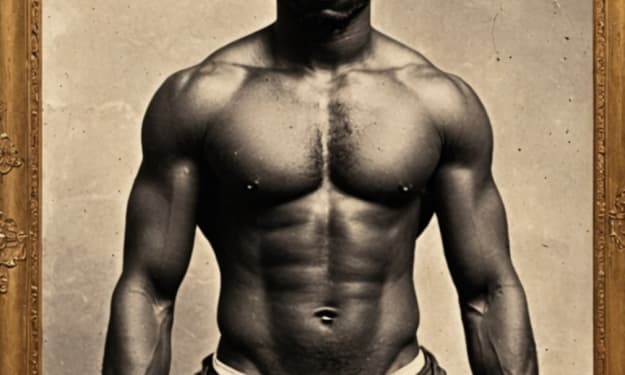
I Was Born a Slave
I Was Born a Slave I was born in the heat of a field, not in a house, not in a bed, not even in the shade. The women worked with me still inside my mother, and when I came there was no rest for her hands. She bit her lip, finished tying the bundle of cane, and only then knelt to wrap me in a strip of cloth torn from the hem of her dress. Her sweat was the first thing I smelled. Her heartbeat was the first thing I heard.
By ♿ V+ Marie381Uk about a year ago in Fiction
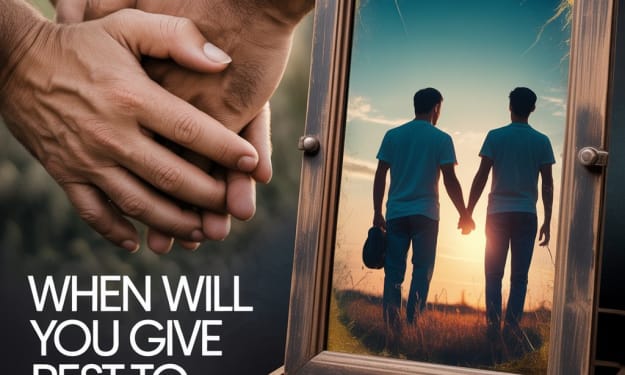
When Will You Give Rest to Your Father?" – A Tale of Love, Duty, and Redemption
In the small village of Eldenbrook, nestled between rolling hills and whispering forests, lived a hardworking farmer named Thomas. His father, old Henry, had once been the strongest man in the village—a man who could lift sacks of grain with ease and work the fields from dawn till dusk. But time had taken its toll. Now, Henry was frail, his hands trembling, his steps slow.
By Danyal Hashmiabout a year ago in Fiction
The Unforgotten Birth of Life
Lingering hours are delicate and prolonged, flickering like the remnant sparks of fire. Burnt embers glow, alighting the pistils of lilly flowers, scattered across the planks of the wooden jetty. The unforgotten birth of life flashes on and off, a chorus in the passing days, vibrating deep within Gurain's soul.
By Susan L. Marshallabout a year ago in Fiction
Doctor and Patient Subtitle:
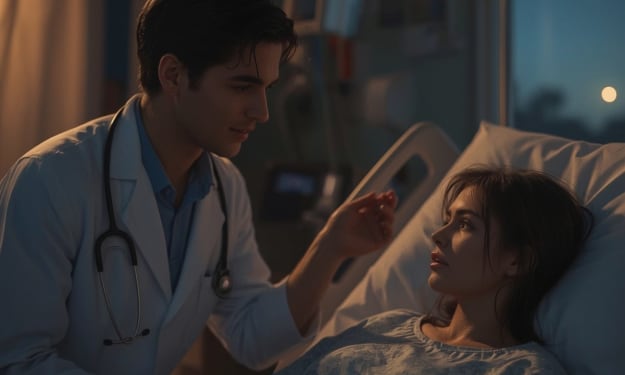
The fluorescent lights in Room 306 flickered with a faint hum, casting pale shadows across the walls. Dr. Evelyn Harris stood by the window, her stethoscope hanging loosely around her neck, the night city skyline reflected faintly in the glass. She had been a physician for fifteen years, but tonight felt different. On the bed lay Michael Turner, a man in his late fifties whose face was etched with lines that spoke of both laughter and hardship. His breathing was shallow but steady, his eyes fixed on the ceiling as though searching for answers only he could see. "Michael," Dr. Harris began gently, stepping closer, "how are you feeling tonight?" He turned his head slowly, his lips curling into a faint smile. "The same as yesterday, doc. Maybe a little more tired. But you didn’t come in here to hear me complain, did you?" She pulled the chair closer to his bedside and sat down. "I came to talk. And to listen. Both are part of my job." Michael chuckled softly, but the sound dissolved into a cough that rattled through his chest. When it passed, he closed his eyes. "I used to think doctors just patched people up and sent them home. But you—you ask about things other than symptoms." "Because sometimes," she said, "the mind and the heart weigh heavier than the illness itself." For a long moment, silence filled the room. Only the rhythmic beep of the heart monitor broke the stillness. "I’ve been thinking a lot," Michael said finally. "About the time I wasted. About the things I should have said to my daughter before she left for college. I never thought I’d be here, with tubes in my arm, wondering if I’d get the chance to say them." Dr. Harris leaned forward. "You still can." "Maybe." He hesitated, his eyes glistening. "But it’s hard to know what’s real hope and what’s just me lying to myself." She knew that feeling. Years ago, she had stood at her own father’s bedside, clinging to any sign of improvement, refusing to believe the inevitable. The memory still lived with her like a shadow that refused to fade. "Michael," she said softly, "hope isn’t always about a cure. Sometimes it’s about the moments we still have—the conversations, the forgiveness, the laughter. You can still give those to her." He nodded slowly, his gaze drifting toward the window where the city lights blinked in the distance. "She called yesterday. Said she’s visiting this weekend. I wanted to sound strong for her, but my voice cracked. She pretended not to notice." "She noticed," Dr. Harris said, "and she’ll still come. Because she loves you." Another silence followed, this one heavy with unspoken fears. Dr. Harris knew the test results waiting on her desk would not bring good news. The disease was advancing faster than expected. But telling him now would rob him of these final days of anticipation. "Can I ask you something, doc?" Michael said, breaking the quiet. "Anything." "Do you ever get used to this? Watching people fade?" She took a deep breath. "You don’t get used to it. You learn to live with it. Some days it feels like carrying a stone in your chest. Other days, you remember the smiles, the thank-yous, and it feels lighter." Michael studied her face for a moment. "You’re good at this. Not just the medicine part. The human part." A faint smile touched her lips. "Thank you. That means more than you know." The clock on the wall ticked toward midnight. Dr. Harris knew she had other patients to see, but something in Michael’s voice told her this was not a moment to rush. "Tell me," she said, "what’s one thing you want your daughter to remember about you?" He exhaled slowly, thinking. "That I loved her more than I loved anything else. Even when I worked long hours. Even when I was tired and cranky. I want her to know she was always my first thought in the morning and my last at night." "Then tell her exactly that," Dr. Harris said. "Don’t wait for the perfect moment. Sometimes the perfect moment is the one you have right now." Michael smiled faintly, the lines around his eyes softening. "You sound like someone who’s been there." "I have," she admitted. "And I learned the hard way that unspoken words can feel heavier than grief." The nurse peeked in, holding a tray of evening medications. Dr. Harris stood, giving Michael’s shoulder a gentle squeeze. "I’ll see you in the morning," she said. "And when your daughter visits, I expect to hear you’ve told her everything you just told me." He gave a slow, deliberate nod. "You will." As she left the room, Dr. Harris paused at the doorway, glancing back. Michael had turned toward the window again, the glow from the streetlights painting his face in gold and shadow. He looked peaceful—hopeful, even. In the hallway, she allowed herself a deep breath. Being a doctor was more than diagnosing and prescribing. It was standing in the spaces between fear and hope, holding both for as long as the patient needed. That night, long after her shift ended, Dr. Harris sat at her desk, the unopened test results still in front of her. She knew she would face them in the morning. But for now, she let herself believe in the same fragile hope she had given Michael—that there was still time for words, for love, for moments that mattered. And sometimes, she thought, that was enough.
By Hazrat Bilalabout a year ago in Fiction
Intuition
As my husband and I drove home from our anniversary dinner in September of 2024, I brought up my family. A rare subject, my husband listened quietly as I shared memories of the people I had gone no contact with years before. My cell phone rang just as my story time came to an end. It was my brother. We had only been speaking again for 6 weeks. He had called to tell me that our dad was in the hospital and it wasn't looking good. "He is giving up. I'm trying to keep him calm. I don't know what to do." I got off the phone and texted his girlfriend. "Do I need to come?" Her answer came without hesitation. "Yes."
By M.N. Sterrettabout a year ago in Fiction
The First Night. Content Warning.
As she drove up to the hospital, she was a little nervous. This was a new job for her, and she didn’t really know what to expect. And it was the night shift. In a hospice unit. She figured the patients would be asleep. What she wasn’t banking on was the emotions she would be feeling by the time the shift was over.
By Pamela Dirrabout a year ago in Fiction
Residency
I knew the art residency I had signed up for was going to be in a castle, but the pictures and description couldn’t have prepared me for the reality of it. We drove over a drawbridge; I couldn’t believe the place had a moat. Then we went through the tunnel in the stone wall around the base of the hill, then pulled up the winding drive. Once at the top we drove around the side of the castle and down a slope into an underground garage. The driver parked in one of the slots in a row occupied by matching unremarkable black cars. He got out and opened my door for me and helped me out. I was glad I had worn my gauzy dress; it was comfortable but also felt medieval and ethereal. It was an off-white color spaghetti strap with barely visible flowers all over it. It fell to my calves and was cinched around my waist loosely. I left my auburn hair down and my curls felt heavy on my bare shoulders.
By Raine Fielderabout a year ago in Fiction
Now I lay me down
Miriam absentmindedly poured too much chardonnay into a coffee mug as she listened to her sister explain their father’s condition. As Claire detailed that he’d been intubated and given oxygen, Miriam sipped and sifted though the words for clues about the actions the hospital staff was taking. She grabbed a pen and scribbled unfamiliar terms on the back of a piece of mail—words she’d likely forget but would Google later.
By Stephanie Stevensonabout a year ago in Fiction
The House Without Your Voice
It’s strange how silence can feel so heavy. When you were here, the house was never really quiet. I don’t mean in a noisy, chaotic way—it was the kind of sound that made a place feel alive. Your voice floated from the kitchen as you hummed while cooking. You’d call out from the hallway, asking if I’d seen your keys. You’d tell me a random story you’d remembered, your words spilling out in bursts of laughter.
By Habib kingabout a year ago in Fiction
The Motherhood Collection
It occurs to me that several of my stories are on this theme. It never seems to be the "nice" side of motherhood, either. You know. The home-cooked dinners and freshly washed children with rosy cheeks. Picnics in the garden, walks in the park, feeding the ducks. Feats of superhuman strength or courage to save her little ones.
By L.C. Schäferabout a year ago in Fiction