family
The Day Colors Vanished. AI-Generated.
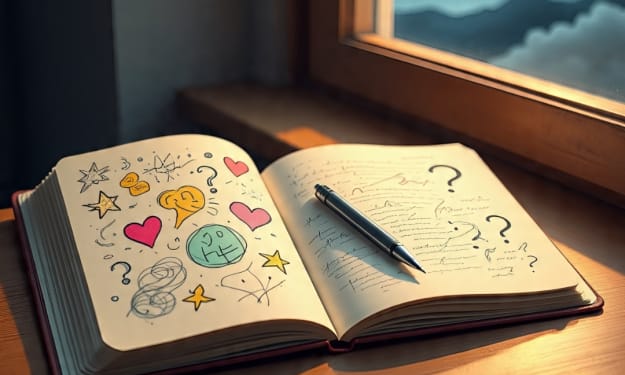
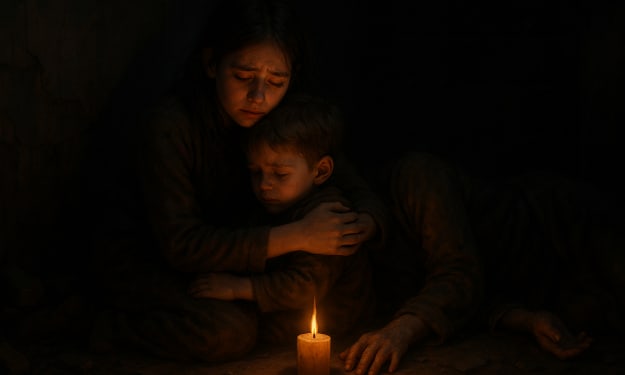
1. The Morning of Silence It happened without warning. One morning, the sun rose over the city of Miran, but the light it spilled carried no warmth, no glow, no beauty. The sky was not blue. The flowers were not red. The trees were not green. Everything—the streets, the faces, the skies—was suddenly gray. At first, people thought it was an illusion. They rubbed their eyes, blinked, checked mirrors. But no matter where they looked, the world had become a lifeless sketch, as though someone had drained the planet with a giant eraser. Children cried at their colorless toys. Painters screamed in horror. Lovers looked at each other and gasped—the spark that once shone in their eyes was gone. The world had not lost its light. It had lost its soul. --- 2. The Fear That Spread News channels exploded. Scientists claimed a chemical imbalance in the atmosphere. Politicians blamed foreign enemies. Priests warned it was the wrath of heaven. But behind the noise, people were breaking. Artists destroyed their canvases. Designers abandoned their work. Photographers burned their film. Teachers whispered that life had lost its lesson. The world without color was not only ugly—it was unbearable. --- 3. The Girl Who Noticed In the middle of this storm lived a girl named Aaliya. She was twelve, curious, and carried a sketchbook everywhere. Unlike others, she didn’t panic that morning. She stared. She studied. And she saw something strange. When her little brother laughed nervously, his outline flickered faint pink. When her mother hugged her tightly, warmth glowed around her in shades of orange. When a man shouted angrily at the sky, a jagged burst of black smoke pulsed from him. Colors weren’t gone. They had moved. They no longer lived in objects. They lived in emotions. But no one else could see it. --- 4. The Sketch of Hope That night, Aaliya filled her sketchbook with what she saw: the soft blue of her father’s sorrow, the green flicker of her neighbor’s kindness, the golden shimmer of her own curiosity. Her drawings looked gray to others, but she knew what they meant. And the more she sketched, the more certain she became: If the world wanted its colors back, it would need to feel again. --- 5. The First Experiment The next day, Aaliya gathered children from her building and took them to the rooftop. She gave them broken chalk pieces. “Draw your happiest memory,” she told them. The children frowned. “But there’s no color.” “Close your eyes,” Aaliya said softly. “Remember the laughter, the hug, the warmth. Feel it first. Then move your hand.” One boy scribbled wildly, remembering the day he rode a bike. A girl carefully traced circles, remembering her grandmother’s lullaby. The chalk was gray, but Aaliya gasped—colors exploded around them. Pink swirls, golden sparks, blue ripples. She saw joy returning, alive and glowing. The children couldn’t see it, but they could feel it. They laughed, they hugged, they played. For the first time since the vanishing, the rooftop glowed with life. --- 6. Spreading the Spark The next morning, Aaliya stood in the town square with a small drum. People walked by, dull and heavy, their faces blank. She began to play—softly at first, then louder, with rhythm and joy. At first, no one cared. But then an old man stopped. He tapped his foot. A yellow glow flickered around him. A woman clapped, and green sparks rose. A child giggled, sending pink ripples into the gray air. The marketplace shimmered faintly. Word spread quickly: “There is a girl who brings colors back.” --- 7. Doubt and Resistance Not everyone welcomed her. Leaders accused her of trickery. Scientists said she was spreading false hope. Preachers warned she was playing with forbidden powers. “Stop filling people with illusions,” an officer barked as he dragged her away from a crowd. But people noticed something undeniable: the officer’s anger was heavy and black, while Aaliya’s defiance glowed like sunlight. Whispers spread: “Maybe she is right. Maybe colors live inside us now.” --- 8. The Awakening Aaliya did not stop. She told stories to children. She asked lonely people about their dreams. She sang in the streets. And every time someone opened their heart, colors burst around them. She discovered something powerful: Joy glowed orange. Compassion shimmered silver. Grief pulsed deep blue. Courage blazed red. Forgiveness glowed soft lavender. The city was learning again—to feel was to see. --- 9. The Festival of Gray Months later, Miran announced its annual festival. But how could a festival be joyful without fireworks, without flowers, without light? Crowds gathered in the dull square. No decorations, no music, no laughter. Just silence. Then Aaliya stepped forward. She climbed the fountain and raised her voice. “Look around you. This world is not empty. It is waiting. Color doesn’t live in the sky or the ground—it lives in your hearts. Feel it. Share it. Let it rise.” She began to sing. Not a perfect song, not a rehearsed one, but a raw melody of hope. Children joined her. Parents followed. Strangers held hands. Some cried, some laughed, some shouted. And then— The square exploded. Waves of crimson, gold, green, silver, blue rose into the sky like invisible fireworks. The crowd gasped, not with their eyes but with their souls. For the first time in months, the city of Miran truly breathed. --- 10. A World Reborn The colors never returned to objects. The grass stayed gray, the skies remained pale. But no one cared anymore. They had discovered something greater: real colors were never outside—they were always inside. Aaliya grew older, but her name became legend. Schools began teaching empathy alongside science. Artists painted emotions instead of surfaces. Leaders were judged not by promises, but by the colors they carried. The city once broken by despair became the most vibrant place in the world. And whenever anyone forgot, whenever life felt dull again, they remembered the story of a girl who stared into the gray and refused to believe it was empty. --- 11. The Whisper That Spread Travelers carried the story far beyond Miran. Some laughed at it. Some dismissed it. But those who visited always returned with the same whisper: “The city still looks gray… but when you walk among them, when you cry and laugh with them, when you really live—you see colors brighter than rainbows.”
By Ihtisham Ulhaqabout a year ago in Fiction
The Mountain and the Squirrel
Auther name (Hazratullah) High in a distant land, where the air was clear and the wind carried the sound of eagles, there stood a mighty mountain. Its peak rose so high that clouds often rested on its shoulders, and its sides were marked with rivers, forests, and sharp stones. To many creatures, the mountain seemed eternal, unshakable, and proud. It had witnessed storms, earthquakes, and the rise of countless seasons, yet it remained strong, towering above everything around it.
By Asmatullahabout a year ago in Fiction
The Language of Love
Emma Whitman, a travel blogger from Seattle, had always been drawn to languages that spoke to the soul. Urdu, with its poetic elegance, fascinated her deeply. She enrolled in a three-week course in Islamabad, not knowing that this journey would lead her to something far beyond alphabets and grammar – it would lead her to love. Her instructor, Zayan Ali, was a man of quiet charm, deeply rooted in his culture. Their first meeting was simple – a polite greeting and a shared smile – yet an invisible thread seemed to pull them toward each other. Each day, Zayan introduced Emma to new words, but more than the language, it was his passion for poetry, art, and the beauty of expression that captivated her. “This word,” he said one afternoon, writing محبت (mohabbat) on the board, “means love. But in Urdu, it is more than a word. It is a feeling you carry in your soul.” Emma repeated softly, “Mohabbat…” and Zayan felt the syllables echo in his chest like a whisper he could not ignore. Their lessons soon moved beyond the classroom – strolling through colorful markets, practicing phrases with shopkeepers, sipping chai at roadside stalls while discussing the meaning of untranslatable words. Emma admired the depth of his culture, while Zayan admired her curiosity and courage. Yet, there was a quiet sadness beneath their growing bond – her time in Pakistan was running out. One evening, as they watched the sun sink behind Margalla Hills, Emma asked softly, “Do you think language can connect hearts?” Zayan replied, “Yes. But sometimes, hearts understand what words cannot say.” Their eyes met, and for a heartbeat, silence spoke louder than anything else. On the last day of class, Emma gave Zayan a notebook filled with Urdu words she had learned, each carefully written with translations. On the final page, in shaky but heartfelt Urdu, were the words: مجھے تم سے محبت ہے (Mujhe tum se mohabbat hai) – I love you. Zayan froze, his heart aching with emotions he had tried to suppress. “Emma,” he whispered, “some things are felt deeply but spoken softly. My heart understands you, even if my words cannot.” She smiled through tears, knowing her flight was in two days, and fate was cruel to hearts that met too late. But love has a way of finding moments where reason hesitates. The next evening, they met secretly at a small tea shop overlooking the hills. There, Zayan finally confessed what he had hidden. “Emma, if life were a book, this chapter with you would be my favorite. But I don’t know if I can write the next one.” She reached for his hand. “Then let’s write it anyway, even if it’s just a page.” They spoke little that night, just sat together, memorizing each other’s presence – the way his fingers trembled when they touched, the way her eyes searched his as if engraving them in memory forever. The day of departure arrived like an unwelcome storm. At the airport, Emma stood before the departure gate, fighting back tears. Zayan, unable to cross the security barrier, stood a few feet away, clutching the notebook she had given him. Their eyes locked one last time – no promises, no goodbye – just a silent exchange of everything they could not say. She turned and walked away, each step heavier than the last, each breath tasting of goodbye. Months passed. Emma returned to Seattle, her blog now filled with stories of Pakistan, yet every post carried a trace of unspoken longing. Zayan returned to his routines, teaching Urdu to new students, but the notebook remained on his desk – a reminder of a love that lived in words but could not survive reality. One rainy evening, Emma received a letter in Urdu. It was from Zayan. It read: “Some languages are meant to be learned, but some… are meant to be felt. You are the language my heart speaks, Emma. Always.” She cried reading it, knowing she could not return, yet feeling closer to him than ever. Years later, Emma visited Pakistan again, but this time only to walk the streets they had shared, to sit by the same tea shop, and to whisper into the evening air, “Mujhe tum se mohabbat hai, Zayan.” Somewhere across the world, Zayan whispered the same words into the night sky. They were no longer together, yet bound by something greater than distance – a love that lived eternally in a language neither time nor fate could erase.
By Aman Ullahabout a year ago in Fiction
The Message Written in the Sky
It was a quiet night, and the world seemed to hold its breath under a canopy of stars. Ali, a 22-year-old astronomy student, sat cross-legged on the rooftop of his modest house, his telescope angled toward the sky like a silent sentinel. Since childhood, he had been fascinated by the stars, often wondering if they were more than just glowing specks of gas suspended in an infinite void. But tonight, the stars had something unusual to share. When Ali looked through his telescope, his breath caught. The stars weren’t scattered randomly—they were forming words. Bright dots of light aligned like ink strokes across a cosmic parchment, spelling out a phrase that sent a shiver down his spine: “You are not alone!” He blinked, rubbed his eyes, and looked again. Still there. Clear as day, though glowing faintly, as if afraid of being noticed by the wrong person. Slowly, the letters began to blur, dissolving into their ordinary positions until they looked like a normal night sky again. Ali leaned back, heart pounding. Was he hallucinating? Could lack of sleep or too many nights staring into the abyss of space be playing tricks on him? But deep down, something told him it was real. --- The Second Night The following evening, Ali couldn’t resist the pull of curiosity. He skipped dinner, set up his telescope even earlier, and scanned the skies obsessively. Midnight crept closer, and for a long while, nothing happened. But just as he began to feel disappointed, the stars shifted once more. This time, the words read: “Follow the light.” Ali’s pulse raced. Follow what light? Which light? He scanned the sky for unusual patterns, but everything looked ordinary. Then he noticed one star glowing a little brighter than the rest—pulsing faintly, like a heartbeat. “Is this what you mean?” he whispered to himself, though he didn’t know who—or what—he was speaking to. He marked the star’s location, scribbling notes into his astronomy journal. It wasn’t on any of the conventional maps, at least not with that intensity. Something strange was happening, and Ali was determined to uncover it. --- The Third Night The message came earlier this time—right after dusk. It read: “She is waiting for you.” Ali froze, his mind racing. Who was she? And where was she waiting? He felt an inexplicable sense of longing, a pull toward something—or someone—he didn’t even know. For hours, he sat staring at the sky until exhaustion overtook him. When he finally fell asleep on the rooftop, he dreamed of a girl—her silhouette bathed in starlight, her hair flowing like dark waves against a silver horizon. She reached out her hand to him, but just as he tried to take it, he woke up. The Message Written in the Sky – Part 2 Ali woke up to the faint light of dawn creeping across the horizon. The dream lingered in his mind—so vivid, so real—that he could almost feel the warmth of the girl’s hand slipping away. He rubbed his eyes and looked at the sky again. The stars had faded into daylight, but the longing remained. That day, Ali could not concentrate on his studies. He visited the university library, digging through ancient texts about celestial patterns, mythologies, and phenomena where stars had been said to communicate with people. Most of it seemed like folklore—tales of star-crossed lovers and cosmic destinies—but one account caught his eye. It was an old journal entry from a forgotten astronomer who claimed to have seen “messages written by the night” during the Perseids meteor shower of 1872. According to him, the messages led him to a secluded place in the mountains where he met the “keeper of starlight”—a woman who was not from this world. Ali closed the book, heart racing. Could the girl in his dream be… one of them? --- The Journey Begins That night, Ali returned to his rooftop earlier than usual. He stared at the sky until his eyes burned, waiting, yearning. And then—it happened again. The stars shifted. This time, the message was longer: “The mountains hold the key. Follow the brightest star. Midnight will guide you.” Ali packed a small bag—flashlight, compass, notebook, and a bottle of water—and set out toward the mountains on the outskirts of his town. The path was steep and silent, only the chirping of crickets and the soft rustle of leaves keeping him company. Hours passed. Just when fatigue began to pull at his steps, he saw it—the bright, pulsing star directly overhead. It cast a faint silvery glow on a hidden path that twisted deeper into the forested slopes. Ali followed. --- The Keeper of Starlight At exactly midnight, he reached a clearing where the glow from the star intensified, almost bathing the place in unearthly light. And there, standing in the middle of the clearing, was the girl from his dream. She was exactly as he remembered—long, dark hair, eyes that seemed to hold entire galaxies, and a presence that made the night itself seem alive. “You came,” she said softly, her voice carrying like a whisper of the wind. Ali stepped closer, unable to find words. “Who… are you?” “I am Selene. A messenger of the stars. We’ve been waiting for someone like you—someone who still believes.” “Believes in what?” “That the universe speaks. That love is written in the constellations. That two souls—no matter how far apart—can be drawn together by light.” --- The Choice Selene explained that she was not of this Earth. She was part of a celestial order—guardians of cosmic balance—who occasionally reached out to humanity. But the connection could only last if the human chosen was willing to leave everything behind. Ali stood frozen. Could he abandon his life, his family, his dreams, for something so impossible… and yet so real? Selene watched him with patient eyes, as if she already knew his heart. “I don’t want to lose this,” Ali finally whispered. “Then don’t,” she replied, stepping closer, her hand outstretched. --- The Leap of Faith The moment their hands touched, the clearing exploded in radiant light. Ali felt himself weightless, floating, as constellations stretched endlessly around him. He wasn’t on Earth anymore—he was inside the sky, surrounded by an ocean of stars. Selene smiled. “Welcome home.”
By Aman Ullahabout a year ago in Fiction
Beauty from A Distance
Catalina always thought the boutique window was a kind of stage. The mannequins stood stiff and lifeless, yet somehow alive under her careful hands. As a young single mother, she didn’t have the luxury of chasing dreams in Paris or New York. Her runway was Main Street, her stage lights the morning sun, and her models—well, they were silent figures dressed in the colors of her imagination.
By Rebecca Daughertyabout a year ago in Fiction
This Little Light of Mine
“Hon, you need to get home. She’s not doing well. It’s time.” I don’t remember how long I held onto the phone after hearing my mother’s somber words but it had long ago disconnected the call. I wanted to pull the old Grand Cherokee out of my assigned parking space and head north, but I couldn’t… not yet.
By Krysha Thorpabout a year ago in Fiction