family
The Forgotten Name
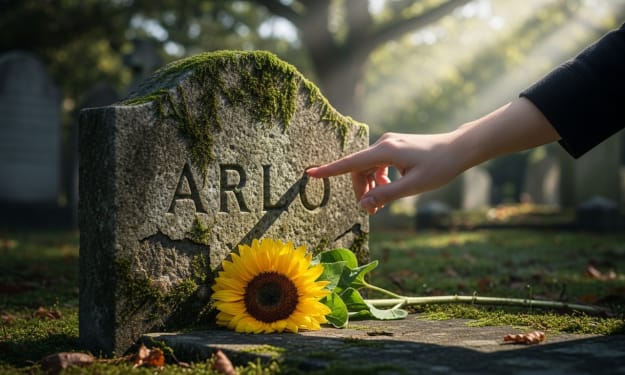
The name was her final breath. A soft, sighing word that hung in the sterile hospital air after she was gone. “Arlo.” We all heard it. My parents, aunts, and uncles exchanged confused glances over her bed. A prayer was resumed, but the question lingered: Who was Arlo?
By Habibullahabout a year ago in Fiction
The Loyalty of a Wolf
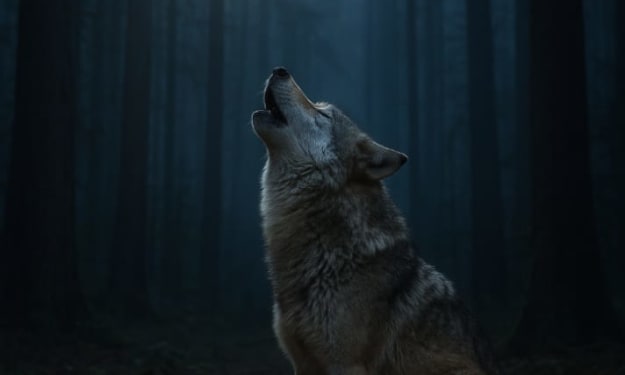
(A Story of Devotion) Deep in the heart of a dense forest lived a family of wolves. Their leader was a strong and brave wolf whom everyone called White Fang. He was the protector of his pack and lived a peaceful life with his mate, Moonlight.
By New stAr writer about a year ago in Fiction
Shadows on the Edge of Tomorrow
The train station was almost empty, except for a few scattered travelers dragging their suitcases across the cold concrete floor. The air smelled faintly of rain, and the giant clock above the platform ticked louder than usual, marking each second like a reminder that time was both a gift and a thief.
By Nadeem Shah about a year ago in Fiction
Post PM of Pakistan Imran khan
written by SHAMS KHAN Early Life & Education Birth and Family: Born on October 5, 1952 in Lahore, Imran Ahmad Khan Niazi was the only son among five siblings in a Pashtun Niazi family. His father, Ikramullah Khan Niazi, was a civil engineer, and his mother, Shaukat Khanum, nurtured his strong family values
By Muhammad Haris khan afridiabout a year ago in Fiction
“What the Water Kept"
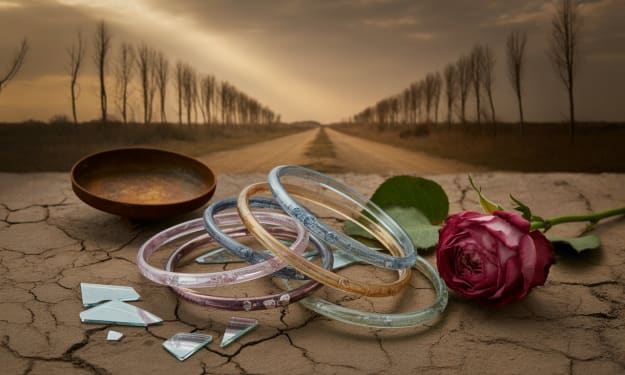
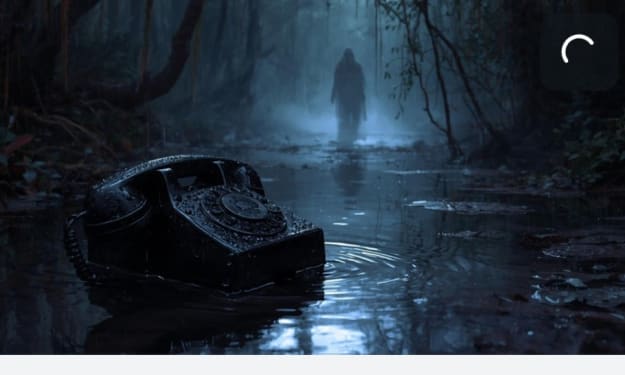
Most folks in town said Lila Gray stopped thinking long before she stopped breathing. It was as if her mind just set down its load one day and forgot to pick it up again. She would lie in her narrow bed for hours, rolling a little tin thimble between her fingers until even that became too heavy to hold. Her house smelled of cedar and dust, and it sagged with age, like it wanted to lie down and rest beside her. But what unsettled me most was the shelf in her parlor. On it sat a cracked piece of iron that looked like the mouth of an old gramophone. A bent wire hung from it like a limp tail. Lila called it her “speaker for the dead.” Nobody else knew what she meant. Her son, David, once said, “She kept a whole life locked away from me.” My aunt thought that was bitterness talking, but I don’t think so. I think Lila never let him give her kindness. And that’s its own kind of theft—because kindness with nowhere to land is like a bird with no tree. It just circles, lost, until it falls. When she passed, David swore he’d toss every last relic into the garbage. “I made it this far without ‘em,” he said. But I saw the crease between his eyes, the way his hands lingered on every object. He couldn’t bring himself to let go, not yet. Among her belongings was a will she had scrawled on lined notebook paper. Most of it was ordinary—leave the house to David, divide the quilts among nieces, let the church have her rocking chair. But one line stuck like a burr: “To find what matters most, my son must put his ear to the ground.” Aunt May snorted when she read it. “She must’ve been heat-struck when she wrote this foolishness.” But David went quiet. --- Now, I need you to understand something about old Southern women. They can turn anything into treasure. A cracked jar is the one she used to pickle okra when her brother came home from the war. A loose button is from the dress she wore to her first revival. A pebble from the yard becomes proof that the land itself once loved her. Every scrap is a story, and every story is holy. Lila was no different. She feared deep water more than anything, yet she hoarded relics like a crow—bits of broken glass, yellowed postcards, scraps of cloth. She built her house into a shrine for strangers long gone. You didn’t visit Lila’s parlor; you stepped into a mausoleum made of forgotten lives. And in the end, she made herself a prisoner of it. --- A year after her death, I dreamed of her. Dreams fade, but this one stayed sharp as a nail. She was in her bed, the room lit with soft afternoon light, a cup of chicory coffee steaming on the nightstand. She looked straight at me, her eyes thin as river stones, and whispered: “How will David know that the water I feared has come to drink from me?” Then I woke, and the world felt unsteady for days. I never told David, but soon after, he began walking the property, crouching low and pressing his ear to the earth like he was listening for a secret. Folks called him strange, but I knew he was following her riddle. --- That so-called “speaker for the dead” wasn’t from a gramophone, not really. Nobody knew exactly where it came from. Some said it was blown loose when a storm knocked down a warehouse in the next county. Others swore it was junk dredged from the river after a flood. Whatever it was, Lila treated it like a relic. If you pressed it to your ear, you didn’t hear silence. You heard a rush, like water tumbling over rocks, with voices hidden beneath. Not words, but laments, praises, sighs. David said once, almost to himself, “It ain’t wrong to want to hold on.” And I understood. The river doesn’t forget what we pour into it. Fear, sorrow, even love. It rolls them smooth like stones but never lets them go. --- Aunt May mocked Lila’s fear of water. “Imagine being scared of the only thing that keeps you alive,” she’d laugh. “A river’s the best storyteller we’ve got. Always moving, always remembering. Why wouldn’t you listen?” But I think that was Lila’s curse—she did listen. Too closely. She heard what most of us train ourselves to ignore. She heard the voices of the drowned, the whispers of the past, the cries of all who’d poured themselves into the current. She built her archive from those sounds, and it was heavier than any body could bear. --- People still tell the tale of that iron mouthpiece. The demolition crew that tore down an old hotel swore it had been ripped loose when the wrecking ball struck. They said it rolled into the creek and was carried downstream for years before Lila plucked it from the shallows. She polished it, placed it on her shelf, and claimed it had been meant for her all along. Some say it was nonsense. But others whisper that if you press your ear to it, you can hear the creek calling, waiting for someone to answer. The night Lila died, she hung up before she realized it was her own call. --- Epilogue Now when I walk by that creek, I stop. The water moves fast, carrying minnows, silt, and stories too old for us to name. Sometimes I wonder if David still presses his ear to the dirt, waiting for what his mother promised him. And sometimes, when the wind dies down and the water hushes, I think I hear something too. A sigh, a whisper, a voice asking to be remembered. If I’ve learned anything, it’s this: nothing we fear ever really leaves us. The water keeps it. And one day, sooner or later, it comes back to speak.
By Ihtisham Ulhaqabout a year ago in Fiction
The Most Popular Creatures of Slavic Folklore
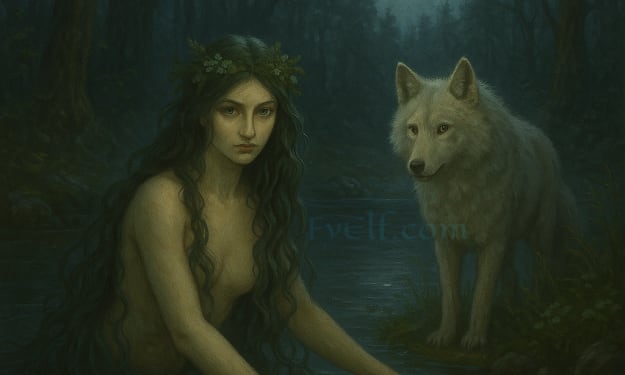
Slavic folklore is one of the richest traditions of Europe, filled with witches, spirits, dragons, and magical beings. These creatures were more than stories told around the fire—they explained the mysteries of nature, taught moral lessons, and reflected the struggles of daily life in villages surrounded by forests, rivers, and endless fields.
By Ancient Spiritabout a year ago in Fiction
The House on Harbor Street
M Mehran No one on Harbor Street liked to talk about the gray house at the corner. Its windows were always shuttered, the garden overrun with ivy, and the gate leaned as if it might collapse under its own rust. Children dared each other to touch the front steps, but few stayed long. The house had been empty for years—or so everyone thought. Then one rainy October evening, a moving truck appeared. The neighbors peered through curtains as boxes were carried inside. By morning, the house that had long been silent now had life: lights in the windows, smoke curling from the chimney, and the faint sound of a piano drifting into the street. The new owner was a man named Adrian Cole, a quiet figure in his late forties. He wore long coats, spoke softly, and seemed uninterested in small talk. When Mrs. Douglas from next door brought him a plate of cookies, he thanked her politely but shut the door before she could ask questions. Soon, Harbor Street buzzed with speculation. “He’s a writer,” said one. “A recluse,” whispered another. “Or hiding from something,” muttered old Mr. Gaines at the corner store. But it was eleven-year-old Emma, curious and fearless, who discovered the truth. One evening, as she walked home from school, she heard the piano again. The melody was unlike anything she had heard—soft, haunting, full of longing. Drawn by curiosity, she crept closer until she was peeking through the iron gate. To her surprise, the garden no longer looked wild. The ivy had been trimmed, roses bloomed where weeds once strangled, and lanterns glowed along the path. The music stopped. “Are you going to stand there all night, or will you come in?” a voice called. Emma froze. Adrian Cole was at the door, watching her with tired but kind eyes. Embarrassed, she shuffled forward. “I… I just liked the music.” He studied her for a moment, then smiled faintly. “Then come listen properly.” Inside, the house was nothing like she had imagined. Instead of dust and cobwebs, the rooms glowed with warmth. Bookshelves lined the walls, filled with journals and thick novels. Paintings of strange landscapes—moons with two suns, forests made of glass—hung above the fireplace. On the piano rested sheets of music, handwritten and delicate. Emma pointed at one. “Did you write this?” “Yes,” Adrian said. “It’s part of a story I’m working on.” “You write stories and music?” “They’re the same thing,” he said softly. “Stories are music for the mind. Music is a story without words.” From that day, Emma visited often. She sat by the piano while Adrian played, and in return she told him about school, her friends, and her dreams of becoming an artist. But as weeks passed, she noticed something strange. The stories Adrian read to her weren’t ordinary tales. When he described a forest, she swore she could smell pine. When he spoke of rain, her hair dampened with mist. And once, when he read about a storm at sea, the entire room shook with thunder. “Is it magic?” Emma asked breathlessly. Adrian paused, then nodded. “Words have power. Too much, sometimes. That’s why I came here—to hide them, to keep them safe.” “Safe from who?” He closed the book carefully. “From people who would use them to change the world without caring for its consequences.” Emma wasn’t sure she understood, but she knew one thing: Adrian was no ordinary writer. One cold evening, as wind howled outside, Adrian handed her a leather-bound journal. “I want you to have this,” he said. Emma opened it. The first page read simply: “For the next storyteller.” “Me?” she asked. “You see the magic,” he said. “That means you can carry it when I no longer can.” Before she could protest, the room shook violently. The lanterns flickered, books fell from shelves. Outside, shadows moved in the street—tall figures cloaked in black, their eyes glowing faintly. “They’ve found me,” Adrian whispered. The shadows pounded at the door. Emma clutched the journal. “What do I do?” “Run,” he said firmly. “And don’t stop until you’re safe.” “But what about you?” He smiled sadly. “Stories never die, Emma. They only find new voices.” The door burst open. Adrian raised his hands, and suddenly the house itself seemed to awaken. Walls trembled, the piano roared a furious chord, and light blazed from every book as though the words themselves were fighting. “Go!” Adrian shouted. Emma fled into the rain, clutching the journal to her chest. Behind her, the house glowed brighter and brighter until it vanished in a flash of light, leaving nothing but the rusty gate and the sound of fading music. The next morning, Harbor Street was quiet. The gray house stood empty once again, as though Adrian Cole had never been there. Neighbors shook their heads and muttered about tricks of the storm. But Emma knew better. Late at night, when the street was silent, she opened the journal. The blank pages whispered softly, waiting for her pen. And as she wrote her first line, she felt the same hum she had heard in Adrian’s music—alive, powerful, endless.
By Muhammad Mehranabout a year ago in Fiction
Wings of Fate: Elena’s Forbidden Encounter
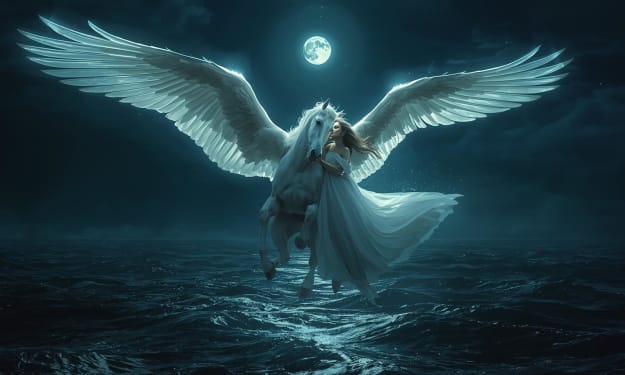
Wings Over the Tower I was staring out of my bedroom window when I saw it. A horse. Not just any horse, but a radiant white stallion standing still on top of the old stone tower at the edge of the village. My breath caught in my throat. My heart slammed down into my stomach as if the ground beneath me had collapsed. Horses don’t climb towers. Horses don’t perch like statues on weathered stone. And yet, there it was—its mane shimmering like silver fire, its eyes glowing with a light that chilled me to the bone. Then I noticed the wings. Vast, powerful, angelic wings, stretched out against the night sky. My hands trembled as I fumbled for my phone. Without thinking, I snapped a picture and sent it to my mother, Margaret. “Look! I’m not imagining this. It’s real.” Her reply came within seconds, cold and dismissive: “Elena, you’re tired. You must be seeing things. Horses don’t stand on towers.” I wanted to believe her. God, I wanted to believe her. But the horse didn’t vanish. It stood there, watching me. Not moving, not blinking—watching me. I texted again, fingers shaking. “Check the picture. Just look.” The three dots appeared. Disappeared. Appeared again. Then her answer dropped like a stone into my chest: “Dear God… how is that horse on the tower?” The moment I read her words, I knew I wasn’t hallucinating. Fear coiled around my lungs, tightening with every breath. The air in my room grew heavy, suffocating. I could barely breathe. Then another message appeared: “I’m coming home right now. Lock the door. Don’t let anyone in.” That was the moment I knew I was in real danger. The stallion’s eyes blazed brighter, as though it sensed my fear. My knees weakened, and yet I couldn’t tear my gaze away. Every second, I felt its presence press closer, even though it hadn’t moved. The wings shimmered as if ready to take flight, but instead, the beast stood perfectly still—focused only on me. I jumped when I heard the rattle of keys outside. My mother had arrived. I ran to the door, heart pounding so hard it echoed in my ears. Margaret stumbled inside, her face pale, her chest heaving. “Close the door, quickly!” she gasped. We slammed it shut, bolting the lock. For a moment, I thought we were safe. Until the window shattered. A weight crashed into the room. Shards of glass sprayed across the floor, glittering like ice. And through the wreckage stepped the stallion. Its enormous wings filled the space, brushing the ceiling and walls. The air smelled of rain and roses, sweet and terrifying. I screamed, clinging to my mother. And then—before my eyes—the horse began to change. The feathers burned away like smoke. Its legs stretched and shifted. Its face elongated, reshaped, transformed. Within moments, the stallion was gone, replaced by a man. Tall. Broad-shouldered. His hair black as midnight, falling messily across his brow. His eyes—those same burning eyes—pierced through me, their dark glow pulling me in like a tide. He smiled, slow and cold. His voice was low and steady, vibrating through my bones. “There is no need to fear, Elena. I came for you.” I froze, torn between terror and a strange pull deep in my chest. My mind screamed at me to run, but my body leaned toward him, as though I had always known this man. My mother stepped in front of me, her voice sharp with fury. “Stay away from her!” But he raised his hand, calm as death itself. “No one can keep me from her. She has belonged to me… long before she was even born.” The words crashed over me like thunder. Belonged to him? Before I was born? My heart thrashed wildly. My legs refused to move. His gaze locked mine, and it felt as if he was drawing the very breath from my lungs. Margaret clutched my hand and began reciting prayers, her voice trembling. But instead of retreating, he only smiled wider. “I have been with you in every nightmare,” he whispered. “I have guarded you in your sleep. I waited as you grew. And now I’ve come to claim what was always mine.” Tears burned my eyes. As horrifying as his words were, part of me… believed him. Part of me recognized him, as if from some forgotten dream. Mother screamed again, calling him cursed. But he only chuckled, the sound echoing like distant thunder. “Cursed to you, perhaps,” he said. “But to her… I am salvation.” He reached out his hand to me. And though my body shook, I nearly lifted my own to meet it. Then—light. A blinding beam of light shot through the window, slashing across the room. For an instant, wings unfolded from his back again, glowing brilliantly—then dissolved into black smoke. His face twisted with fury and sorrow all at once. He looked at me, his voice breaking like a vow. “No matter where you run, Elena. You are mine. You will return to me.” And with that—he vanished. Only the scent of roses remained. That night, I didn’t sleep. Every time I closed my eyes, I saw his face. His wings. His burning gaze. His voice whispered in the dark, promising, calling. When sleep finally took me, I found myself in a world of endless fog. Cold seeped into my bones. My bare feet sank into frost. And from the mist, he came. Lucian. Wings wide, eyes black but glowing with a strange light—half terror, half comfort. His smile was softer this time, tinged with sorrow. “I missed you,” he said. My lips trembled. “Why do you keep appearing? Who are you?” He stepped closer, his touch brushing my cheek. My skin tingled, my heart stuttered. “I am no stranger. I was your knight. Your lover. Betrayed, murdered before your eyes. My soul bound to yours ever since. I waited for you to return, Elena. And now, the moment has come.” Images slammed into my mind—memories not my own. A white dress. His blood. My screams. His name on my lips as he fell. I gasped, clutching my chest. “It was real? I was there?” He nodded. “You were there. You were mine. And tonight, we are together again.” Behind me, faint and desperate, I heard my mother’s voice, as though carried from another universe. “Elena! Don’t leave me! Come back!” Tears streamed down my face. His hand reached out, his eyes pleading. My mother’s voice called, raw with fear. And still, I lifted my hand to his. The moment our fingers touched, light exploded around us. Wings burst from his back, wrapping me in a circle of brilliance. The ground fell away. We soared. Over oceans, over starlit skies. The wind roared in my ears. My fear melted into strange, blissful calm. For the first time in my life, I felt… home. He pulled me close, his own tears falling freely. “No force can part us now,” he whispered. I laid my head against his chest. And I smiled through my tears. From that night on… Elena was never seen again. But on nights of the full moon, villagers swore they saw a winged horse gliding above the sea, carrying a young woman in its embrace. Her laughter echoed over the waves. And beside her, the voice of a man answered with endless devotion. Together at last. Forever bound.
By محمد السبكيabout a year ago in Fiction
FROM LOST TO FOUND. AI-Generated.
There was a time when I thought I had everything figured out. Life felt like a road that only stretched forward neat, predictable, and safe. But it doesn’t take much for a road to bend. Sometimes all it takes is one choice, one disappointment, or one door closing to make you feel like you’ve lost your way.
By Yakubu Grace Oyizaabout a year ago in Fiction