Fable
The Window
She was the single window in the old blue-almost-green house, already a little washed out by time in that monotonous village, where everything seemed to be slowly losing its colour. So she was surprised that her windowsill didn’t get a bit more attention from the people inside the house.
By Erika Lorennaabout a year ago in Fiction
Hearts against the Storm
Two weeks later, the world had changed — or maybe we had changed enough to see it clearly. The headlines were still buzzing. Investigations were underway. Arrests had been made in the land fraud case tied to my uncle’s death. My father's political allies had started to disappear like shadows under sunlight.
By Mehmood Niazabout a year ago in Fiction
Hearts against the Storm
The night was colder than usual, with a restless wind scraping across the empty roads as I rode toward the old farmhouse. I had no backup. No phone. Just the folded copy of the evidence Hamza had given me, tucked in my inner coat pocket. And a flicker of hope that somehow, this meeting — this trap — might be the end of it all.
By Mehmood Niazabout a year ago in Fiction
Hearts against the Storm
The sun had barely risen over the horizon when I opened my eyes in Hamza’s small apartment. The air was still, heavy with tension. Alya lay beside me on the mattress, curled up, clutching the shawl Hamza had given her the night before. I could see the bruise on her arm — Azeel’s mark. My blood boiled at the sight.
By Mehmood Niazabout a year ago in Fiction
Hearts against the Storm
The SUV disappeared into the dust of the road before I could even take a step. I stood there frozen, the world spinning around me. Alya had been crying. Her eyes had locked with mine. She wanted me to stop him. To save her. But I was too slow.
By Mehmood Niazabout a year ago in Fiction
Love Letters I Never Sent (But Wrote Anyway). AI-Generated.
Love Letters I Never Sent (But Wrote Anyway) They say closure is a conversation. I say it’s a letter you never send. I used to think the only love stories worth telling were the ones that ended in forever. But now, I believe the ones that end quietly—half-healed, half-open—teach us just as much. Maybe more.
By waseem khanabout a year ago in Fiction
A World Without Sleep. AI-Generated.
The Day the Night Died It began with a whisper—an unexplained global shift. First, the insomniacs noticed. They stopped complaining. Then, the dreamers found their nights empty. No yawns, no fatigue, no need for rest. Within weeks, it was official: humankind no longer needed sleep. At first, it was hailed as a miracle. Scientists called it the Lucid Surge—an evolutionary jump no one could explain. “The brain has found a new rhythm,” they said. No one aged faster. No one fell ill from exhaustion. Our bodies simply… adapted. We had won back a third of our lives. But the cost wasn’t what we expected. --- The Endless Grind With no need for sleep, days became endless. What once were evenings of rest and reconnection turned into bonus work hours. Employers extended shifts. Schools ran 24/7. Cities buzzed with activity around the clock. Capitalism rejoiced. Rest became laziness. “Why nap when you can produce?” became the mantra on corporate billboards. People were always available, always reachable. Burnout didn’t disappear—it mutated. Mental exhaustion grew in strange new shapes. Without dreams, creativity suffered. Without rest, perspective blurred. The world had gained time, but lost stillness. --- The Dreamless Generation Children born after the change had never felt the joy of waking up refreshed, never whispered secrets under blankets at midnight, never asked for just five more minutes in bed. They didn’t understand why lullabies existed or what nightmares were. A new branch of psychology emerged: Nocturnia, a condition where people missed sleep not physically, but emotionally. Therapists began prescribing “dark time”—eight hours a day of stillness, silence, and solitude, mimicking the old sleep cycle. Parents dimmed lights, drew curtains, and asked children to pretend to sleep. Not to rest, but to remember. --- Black Markets and Sleep Clubs Underground movements began to form. People who craved sleep met in hidden basements and blackout rooms. They hired sound engineers to recreate the soothing hum of a fan, or the drip of rain against windows. Some paid scientists for neural “sleep simulations,” downloaded into their minds like black-market dreams. The elite bought hours of fake REM sleep to remember what it once felt like to surrender control. A new drug—Somnia—emerged. It didn't make you sleep, but it created vivid dreams in a conscious state. People took it just to feel tired again. --- The Silence in the Stars Astronomers noticed something curious. With no one sleeping, city lights never dimmed. The stars grew fainter. No one looked up anymore. Before, the quiet hours of the night had belonged to the sky. Now, noise filled every second. There were no more midnight walks. No secret kisses under moonlight. Romance began to fade, not because people stopped loving—but because they stopped pausing. With no night, there was no mystery. Everything was visible, immediate, and lit up. --- The Rebellion of Rest It took years, but the backlash began. A movement called “Return” spread across the globe. It wasn’t anti-science—it was pro-stillness. Returners advocated for rest, reflection, and boundaries. Their motto: “Time is not enough—what we do with it matters.” They closed their shops at sunset. They dimmed their screens. Some even taught themselves to simulate sleep, lying in stillness and letting their minds wander. The world had given up sleep in pursuit of productivity. But people were starting to remember that sleep was never wasted time—it was sacred time. --- Epilogue: In the Quiet I sit now in a quiet room, lights low, Somnia softening the edges of my thoughts. My body will not sleep. It cannot. But my mind can drift. Outside, a child sings a lullaby they don’t understand. Their voice is off-key but gentle, a ghost of the old world echoing in this sleepless one. We thought sleep was just a physical need. But it was more than that. It was the boundary between doing and being. Between surviving and dreaming. And I—like many—have begun to miss it.
By Shafi Ullahabout a year ago in Fiction
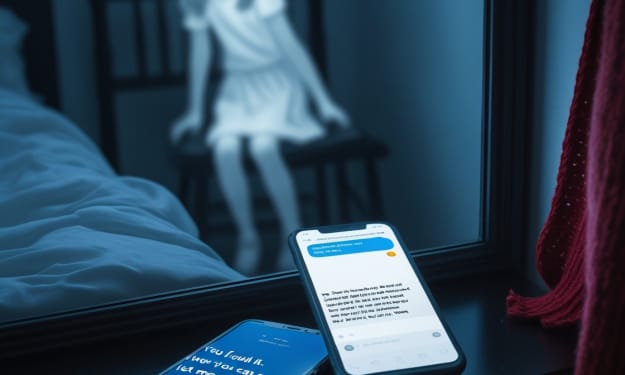
My Twin Sister Died in 2005—But She Still Texts Me
I was only fifteen when my twin sister, Eliza, died. It was a rainy October afternoon in 2005. We were supposed to walk home together from school, but I stayed behind for a group project. Eliza took the shortcut through the woods—something we’d promised Mom we wouldn’t do anymore. A fallen branch. A slippery hill. A single misstep. They found her body at the bottom of the ravine two days later. Broken. Still clutching her phone.
By Muhammad Saeedabout a year ago in Fiction
Unhelpful Friends: A Bunny’s Lesson in Self-Reliance. AI-Generated.
🐰 Unhelpful Friends: A Bunny’s Lesson in Self-Reliance When fear strikes, true friendship is tested. In a peaceful forest where the sunlight filtered softly through tall green trees, lived a cheerful little bunny named Bobo. He was a small, fluffy rabbit with snow-white fur, long pink ears, and a heart full of joy. Bobo was known across the forest not only for his friendliness but for his belief that he had the best group of friends in the world. He loved to boast, “I’m the luckiest bunny! I have the strongest, fastest, and wisest friends in the whole forest. If anything ever happens, I know they’ll protect me.” His friends were indeed impressive. There was Darren the Deer, who had sharp antlers and could run like the wind. Then there was Bruno the Bear, strong as a mountain. Milo the Monkey could swing from tree to tree faster than any creature, and Ella the Elephant was both mighty and kind. Bobo truly believed that with so many friends, he was safe from anything. One bright afternoon, as Bobo nibbled on some juicy clover near a quiet stream, a terrifying sound pierced the calm air—the howling and barking of wild dogs. Not just one or two, but an entire pack. Their growls echoed through the trees like thunder. Bobo’s heart pounded in his chest. “Oh no! Wild dogs! They’ll catch me if I don’t do something fast!” he gasped. Without wasting a second, he raced through the forest, seeking help. First, he found Darren the Deer grazing in a clearing. His tall antlers glistened in the sun. “Darren, dear friend!” panted Bobo. “A pack of wild dogs is chasing me! Please, can you chase them away with your antlers?” Darren looked alarmed, but quickly shook his head. “Oh, Bobo, I could... but I’ve twisted my leg and I’m resting. Maybe Bear can help you. He’s much stronger.” Bobo didn’t argue. He simply turned and sprinted toward Bear’s cave. “Bruno!” he cried, peeking inside the dark den. “Please help me! Wild dogs are after me. You’re the strongest animal I know—you can scare them off!” Bear rolled over with a lazy groan. “Bobo… I just woke up from hibernation. I’m tired and starving. I don’t have the energy to fight right now. Maybe Milo the Monkey can help.” Disappointed but determined, Bobo dashed to the treetops where Milo the Monkey was busy swinging from branch to branch. “Milo! Please help me!” Bobo pleaded. “You’re clever and fast—surely you can distract the dogs or lead them away!” Milo scratched his head and frowned. “Oh, Bobo… that’s so scary. But today I have to collect bananas for my family. I just can’t take the risk. Maybe ask Ella the Elephant—she’s big and brave.” One by one, Bobo visited every single friend—Ella the Elephant, Greta the Goat, Freddy the Fox—but each of them had an excuse. Some were too busy. Others were scared. A few didn’t even answer the door. Bobo’s eyes welled with tears. He had always believed that friends were there for each other, especially during hard times. But now, with danger closing in, he was completely alone. As the wild dogs’ barking grew louder, Bobo realized he had to act quickly. There was no one left to help him. Suddenly, he noticed a thick bush with low branches and dense leaves. He quickly crawled underneath it, pressing his body tightly against the ground. He didn’t make a sound. Not even a twitch. Moments later, the wild dogs arrived. Their eyes were fierce, and their noses sniffed aggressively. One of them came close to the bush, growling. Bobo’s heart thudded so loudly he feared it might give him away. But the dog hesitated, sniffed the air again, and turned away. After a few minutes, the pack gave up and ran off in another direction, chasing the scent of another animal. Bobo stayed hidden for a long while before finally crawling out. His legs trembled, but he was safe. That evening, Bobo sat alone beneath a tree, watching the sunset. The forest was calm again, but something inside him had changed. “I thought I had the best friends in the world,” he whispered. “But in the moment I needed them most, they all turned away.” He wasn’t angry—just wiser. --- 🧠 Moral: Sometimes, when danger comes knocking, you may find yourself standing alone. That’s when you learn the value of courage, quick thinking, and self-reliance. It’s better to rely on yourself than to depend entirely on others.
By Ihsanullahabout a year ago in Fiction
A Merchant and His Donkey: A Lesson in Cleverness and Consequences. AI-Generated.
A Merchant and His Donkey — A Tale of Clever Tricks and a Wiser Lesson Long ago, in a peaceful village nestled between rolling hills and flowing rivers, lived a humble merchant who made his living by selling salt. Every morning, just as the sun peeked over the horizon, the merchant would load up his loyal donkey with heavy bags of salt and set off toward the distant market to earn his daily bread.
By Ihsanullahabout a year ago in Fiction
The Rot Within: An Italian Brainrot Story
Part I: Viral Echoes 2025 was the year irony became currency. For Dante Russo, a 24-year-old freelance digital artist from Trenton, New Jersey, life had become a looping feed of surreal clips and overstimulated memes. The latest obsession? "Italian Brainrot" — a bizarre TikTok trend where AI-generated animals, food, weapons, and furniture fused into garish hybrids, narrated by over-the-top, faux-Italian voiceovers. It started as a joke. A capybara holding a pasta machine. A flamingo with sunglasses named "Spaghetti Linguini." But then came the voice — deep, melodramatic, and entirely synthetic:
By Muhammad Abbas khanabout a year ago in Fiction