
She Was Warned...
A retelling of the Medusa nobody wanted to hear

The first man I turned to stone was my supervisor. I didn't mean to.
It was the Tuesday after the holiday party, and Marcus had cornered me in the supply closet between the toner cartridges and the recycling bins. His breath smelled of the cheap bourbon the company provided, and his hands smelled of the hand sanitizer he used obsessively between meetings. Both smells would haunt me for years. Both smells would become, in my memory, the exact scent of entitlement.
"You should smile more," he said, which was not what he meant. What he meant was: you should be more available. You should be more grateful. You should understand that your position here is conditional on my continued goodwill.
I had been warned about Marcus. Not explicitly—no one at Athena Consulting ever warned anyone explicitly. But there were the looks exchanged when I wore the blue dress to the quarterly review. The way his assistant, a tired woman named Helen who had perfected the art of visible invisibility, always found reasons to interrupt our one-on-one meetings after exactly eleven minutes. The way the other women in the office stopped making eye contact with me in the bathroom, as if my situation were contagious.
I was warned. I was warned in the language women have always been warned: through silence, through averted gazes, through the careful omission of the word no.
But I was also twenty-six, and I needed this job, and I had been raised to believe that competence was a shield. That if I was good enough at data analysis, if I produced reports with zero errors, if I volunteered for the weekend shifts nobody wanted, then my body would become irrelevant. That I could work myself into a state of pure function, and in that state, I would be safe.
Marcus put his hand on my waist. The sanitizer burned through the thin cotton of my blouse. I looked at him—really looked, the way my mother had taught me, the way that makes men uncomfortable because it insists on your existence as a subject rather than an object—and I felt something shift behind my eyes.
It was not rage. Rage would have been cleaner. It was a kind of terrible clarity, the moment when you understand that the world you thought you were navigating was actually a trap designed specifically for you, and that you have been walking willingly into its jaws for years.
"Don't," I said.
He laughed. He actually laughed, the sound wet and close in that small space. "Don't what? I'm just being friendly. You know I'm a friendly guy. Everybody says so."
Everybody said so. That was the point. That was always the point. Marcus was a friendly guy, a family man, a deacon at his church, a volunteer coach for youth basketball. The fact that three women had left the department in the past eighteen months with vague explanations about "pursuing other opportunities" was a coincidence. The fact that Helen had developed a nervous twitch that made her left eye flutter during his meetings was a medical condition. The fact that I was now pressed against industrial shelving with his palm spreading across my lower back was a misunderstanding.
I looked at him. I looked through him.
And Marcus became very still.
I didn't understand what had happened, not then. I ran. I left him standing in the supply closet, his hand still raised in the gesture of reaching, his mouth slightly open, his eyes fixed on some point behind my left shoulder. I thought he was playing some kind of game. I thought, in my panic, that this was a new escalation, a performance of threat designed to make me doubt my own perception.
I didn't look back until I was in the parking garage, my key fob shaking in my hand, and even then I only glanced over my shoulder to see if he had followed. He hadn't. The garage was empty except for the fluorescent hum and the smell of exhaust and cold concrete.
I drove home. I took a shower so hot it turned my skin pink. I stood under the water and tried to wash away the sanitizer smell, the bourbon smell, the smell of my own fear, which I was only now allowing myself to recognize. I stood there until the water ran cold and my fingers wrinkled and I realized I was crying, had been crying for some time, the tears mixing with the shower spray in a way that made them feel less real, less consequential.
I told myself I would quit. I would find another job. I would survive this.
I did not know, yet, that survival was no longer the category I belonged to.
The news broke the next morning. Marcus found in the supply closet, standing, unresponsive. The paramedics assumed stroke. The hospital assumed some kind of rapid-onset neurological event, a seizure perhaps, though his brain scans showed no damage, no clot, no tumor. He was simply still. Heart beating. Lungs functioning. Eyes open, pupils reactive to light, but no one home behind them. A body without a tenant.
I heard about it from Helen, who found me in the break room and gripped my arm with surprising strength. "You were the last one with him," she said. Not a question. A statement of fact, delivered with an expression I couldn't read. "The cameras show you leaving the closet at 9:47. They found him at 10:15."
"I don't—" I started.
"He's not dead," Helen interrupted. "He's just... stopped." She released my arm and smoothed her blouse, the twitch in her eye going wild. "Be careful," she said. Then she walked away, and I never spoke to her again.
I was called to HR. A woman named Diane, who had the exhausted patience of someone who had mediated too many disputes with too little authority, asked me about the party, about Marcus's behavior, about whether I had felt "uncomfortable" at any point. I told her no. I told her everything was fine. I told her Marcus had been friendly, just like everybody said, and that I didn't know what had happened to him, and that I was concerned, of course I was concerned, he was my supervisor, I was praying for his recovery.
Diane looked at me with eyes that knew. She had been warned too, I realized. She was still being warned, every day, in every meeting where she was asked to translate male aggression into bureaucratic language, to transform assault into "miscommunication," to turn the stone-cold truth into something pliable and polite.
"There's no camera inside the closet," she said finally. "Only in the hallway. We know you went in. We know you came out. We don't know what happened in between."
I said nothing.
"Be careful," Diane said, echoing Helen, and I understood that this was the final warning. The last one before the warnings stopped and the consequences began.
I tried to go back to normal. I went to my desk. I opened my spreadsheets. I stared at columns of numbers that had once made sense to me, that had once represented a world of order and logic, a world where cause led to effect and effort led to reward and good behavior led to safety.
None of it computed anymore.
I went to the bathroom and looked at myself in the mirror. I looked for changes. I had read, in some long-ago college class, the original myth: Athena cursing Medusa for desecrating her temple, for the crime of being raped by Poseidon in a space that should have been sacred. The transformation as punishment. The snakes as signifier of monstrousness. The gaze that turned men to stone, as if the power were the crime, as if the ability to defend oneself were worse than the attack.
I looked for snakes. I looked for scales. I found only my own face, pale and tired, the face of a woman who had been trying to work herself into irrelevance and had failed.
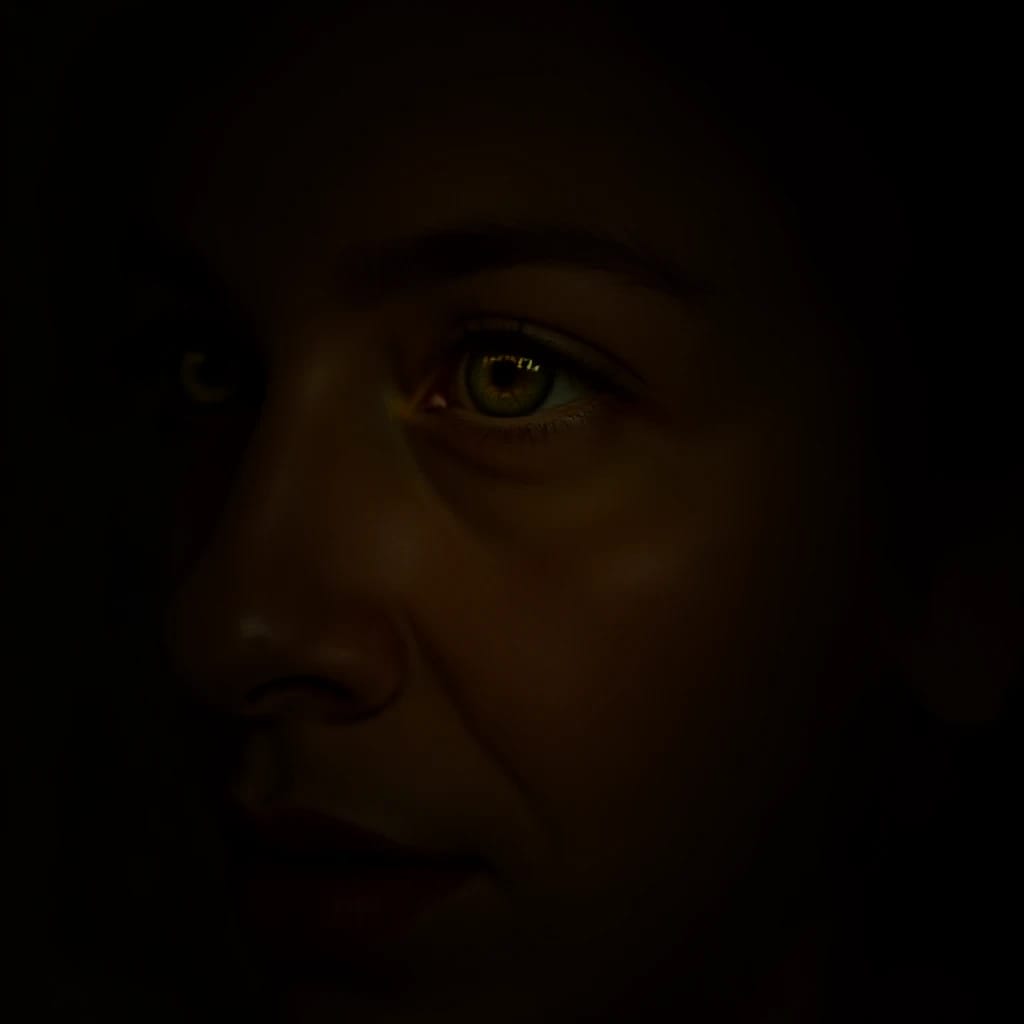
But when I looked through the mirror, when I let my focus drift past my own reflection to the wall behind me, I saw something else. A kind of ripple in the air, a distortion, like heat rising from summer asphalt. And in that distortion, I caught the faintest glimpse of a woman with serpents coiled in her hair, her eyes gold and terrible, her expression not angry but done.
I blinked. The vision vanished. I splashed water on my face and returned to my desk, and if anyone noticed that I no longer made eye contact during meetings, they didn't mention it.
The second man I turned to stone was my landlord.
His name was Richard, and he had been raising my rent every six months for two years, each increase explained with a shrug and a smile and the observation that the market was the market, that we were all just trying to get by, that he was actually doing me a favor by not raising it more. When I finally gathered the courage to push back, to mention the broken heating unit and the water damage in the bathroom ceiling and the fact that I had never once been late with a payment, he invited me to his office to "discuss options."
The options, it turned out, involved a arrangement. An understanding. A way for me to "work something out" regarding the rent, the details of which he described with the same casual tone he used for maintenance requests, as if this were simply another transaction, another market force, another reality that women like me were expected to navigate with gratitude.
I looked at him. I looked through him.
And Richard, too, became very still.
I understood, after Richard, that the power was not a curse. The power was a diagnosis. It was the body finally refusing to absorb any more harm, the psyche developing a defense mechanism so absolute that it left no room for negotiation. I had spent years smiling, accommodating, explaining, deflecting, softening, apologizing for my own existence in spaces that demanded my labor but resented my presence. I had been a good girl, a team player, a friendly colleague, an understanding tenant. I had been everything they asked me to be.
And they had kept asking for more.
The stone was not an attack. The stone was a boundary, rendered in the only material they seemed to understand: something permanent, something immovable, something that would outlast their explanations and their justifications and their insistence that they were, in their hearts, friendly guys.
I did not want to turn men to stone. I wanted them to hear me. I wanted them to stop, to listen, to understand that my no was not the opening move in a negotiation but the final word in a conversation I had never wanted to have. I wanted them to respect the boundary while it was still invisible, still vulnerable, still made of nothing more than my word and my hope that they would be decent.
They never did. So the boundary became visible. The boundary became stone.
The third man was a stranger on the subway. The fourth was a colleague who "accidentally" brushed against me in the elevator every morning for three weeks. The fifth was a doctor who dismissed my pain for two years before I found another who would listen. The sixth was a date who wouldn't take me home until I explained, in explicit detail, exactly why I didn't want to see him again, as if my initial no required a dissertation defense.
Each time, I tried to look away. Each time, I tried to soften the gaze, to blur the focus, to find some other way to communicate the boundary that would not end in petrification. Each time, I failed—not because I wanted to hurt them, but because I no longer possessed the energy to perform the elaborate translation required to make my refusal palatable. I was too tired to be gentle. I was too worn to be diplomatic. I was too done to pretend that their feelings mattered more than my safety.
The stone was not my choice. The stone was what happened when choice was removed from both of us.
They came for me eventually. Of course they did. There is no room in the world for a woman who cannot be persuaded, who cannot be bargained with, who cannot be made to understand that her discomfort is less important than their convenience.
The news reports called me a serial killer. A terrorist. A monster. They interviewed the wives and mothers of the men I had transformed, who wept on camera and asked why, why would anyone do this, what kind of person could look at another human being and simply end them. They did not interview the women who had worked with Marcus, who had rented from Richard, who had ridden that subway, who had waited in those exam rooms. They did not interview the women who had been warned.
I was not arrested. There was no evidence, no weapon, no crime scene that made sense in the language of forensics. The men were not dead, after all. They were simply still, breathing bodies with absent minds, a condition that confounded every specialist who examined them. I was fired, evicted, blacklisted, ostracized. I became a story women told each other in private, a warning passed in whispers: be careful, be careful, be careful.
I became the warning.
I live in a cave now, on an island that doesn't appear on most maps. The snakes came gradually, over months, growing from my scalp like thoughts I had suppressed for too long finally finding form. They are not malicious. They are simply honest, which is worse. They do not perform friendliness. They do not soften their gaze. They exist, and in existing, they demand acknowledgment.
Women find me. They always find me. They come in boats, in dreams, in the desperate hours of the night when the warnings have accumulated past bearing and they need to know if the story is true. They come with their own Marcus stories, their own Richard stories, their own accumulated weight of sanitizer and bourbon and cheap cologne and entitled hands and exhausted eyes and the endless, endless demand that they be more grateful, more available, more smiling.
I do not turn them to stone. I never turned a woman to stone. The power was never about gender, not really—it was about the specific architecture of entitlement, the way certain men are raised to believe that the world is a vending machine and women are simply the buttons to press.
I look at these women. I look through them, and what I see is not stone but fire. A potential for transformation that does not require my intervention. They are already changing. They have been changing for years, in secret, in silence, in the spaces between warnings.
"Be careful," I tell them, and for the first time the words mean something different. Not be careful of the world. Be careful of yourself. Be careful of the moment when your own clarity becomes unbearable. Be careful of the strength you have been trained to suppress. Be careful, because once you see the trap, you cannot unsee it, and the seeing is its own kind of transformation.
Some of them leave unchanged. Some of them leave with gold in their eyes and serpents coiled in their hair, ready to find their own islands, their own caves, their own communities of the warned and the weary.
Some of them stay. We build something here, in the shadow of the world's expectations. We do not call it a sanctuary. We do not call it anything. We simply exist, and in existing, we refuse.
The men who come here do not come with boats. They come in stories, in myths, in the endless retelling of my transformation as a punishment for a crime I never committed. They call me monster. They call me warning. They call me cautionary tale.
They do not call me boundary. They do not call me consequence. They do not call me the inevitable result of a world that takes and takes and takes until the only response left is stone.
I am still here. The island is still here. The women are still here, multiplying, transforming, refusing to be translated into something palatable.
We do not smile more. We do not perform friendliness. We look, and in looking, we see through.
And some things, finally, become still.
She was warned.
She was.
She was.
She was.
About the Creator
Muhammad Sabeel
I write not for silence, but for the echo—where mystery lingers, hearts awaken, and every story dares to leave a mark
Enjoyed the story? Support the Creator.
Subscribe for free to receive all their stories in your feed.
Comments
There are no comments for this story
Be the first to respond and start the conversation.