
She Sat in the Third-to-Last Chair for Three Years—Then Spoke Once and Broke the Company
Most people fight for power. She fought for a paper trail—and won without raising her voice.
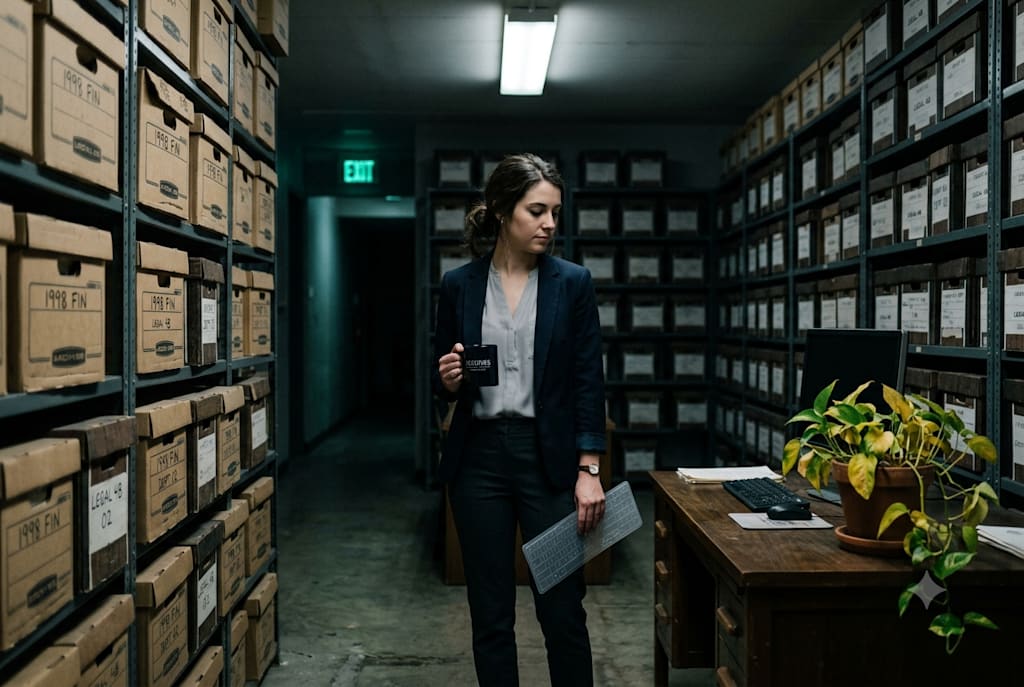
Isabel Moran left the office at five-thirty every day.
The lights in Finance stayed on; junior analysts rubbed their eyes at their screens. She walked through the cubicles, a canvas tote slung over her shoulder. Inside was a Norwegian textbook with a cover wrapped in a supermarket receipt. Jason at the front desk said, “Right on time again.” She smiled. The elevator doors closed.
It was her third year at the Moran Group.
Nobody in the company took her seriously. She was the late founder’s youngest daughter, twenty-eight years old, a deputy director in Finance in name only. At meetings she sat in the third-to-last chair along the long table and never spoke unless asked. Her brother Andre Moran, the CEO, was forty, a Wharton graduate. During meetings he tapped his fingers on the table, faster and faster, until everyone else fell silent.
“Isabel just comes for the paycheck.” Somebody in Finance had said that, in the break room. She was washing a mug at the time, the sound of running water covering the second half of the sentence. She dried the mug, dried her hands, and left.
No one knew about the encrypted folder on her computer.
The file name was in Norwegian. If anyone had translated it, they would have found it meant Course Correction. She had created it two years earlier, during her third week.
Every Friday at three in the afternoon, Isabel went to the archive room. The archivist, Ronald, was a man nearing retirement who kept a cup of cold tea on his desk. Each time she requested a different set of files, and Ronald logged the numbers on paper cards in a scrawling hand. After three months he noticed a pattern: all the files she requested were originals from a single project. He said nothing. Smart people who survived at the Moran Group until retirement knew when to keep their mouths shut.
The files were from an acquisition the Moran Group had made three years before—the purchase of a Norwegian shipping company called Nordlys Line. Andre had led the deal. The media had called it the cross-border acquisition of the year. The stock had jumped twelve percent. Andre had appeared on the cover of a financial magazine.
Isabel spent two years reading every original document. Every contract. Every audit report. Every email thread.
She found three problems.
The first was an accounting issue. Nordlys Line’s accounts receivable had been recognised early, inflating pre-acquisition profits. The second was asset valuation. The depreciation schedules on four freighters had been altered, overstating their book value by at least forty percent. The third was the most lethal: in the foreign-exchange hedging clause of the purchase price, the calculation base had been tampered with.
None of these were accidental typos. Each alteration required at least two signatures, and every signature sat inside the Moran Group.
She compiled her findings into an eighteen-page memo. No adjectives, no exclamation marks—only figures and references to the original documents. The last page was a signature block. It was blank.
She printed one copy of the memo and locked it in the safe at home. Then she went on studying Norwegian, went on leaving at five-thirty, went on sitting in the third-to-last chair in meetings.
The turn came at the fourth-quarter board meeting.
Andre proposed a new motion: a share issue to acquire a Brazilian logistics company. The PowerPoint ran to eighty-six slides; the financial models looked elegant. He spoke at the podium for an hour, voice resonant, gestures assured. Board members nodded. The representative from the Exxon fund was already doing the maths in his head.
Andre finished and asked, “Any questions?”
The room was silent for five seconds.
Isabel said, “I have a question.”
It was the first time she had spoken in a board meeting. Andre raised an eyebrow. “Isabel?”
She stood up and walked to the projector. No PowerPoint. She opened a single PDF. It was one image: a timeline.
Plotted along it were the Brazilian logistics company’s reported revenues and costs for the past three years. Next to each figure was a bracketed reference to an original contract clause. Revenue up eighteen percent year-on-year—the bracket read: Clause 4.2, revenue recognition conditions not met. Operating costs down seven percent year-on-year—the bracket read: Audit report appendix three, depreciation method improperly changed.
She worked through every item, line by line.
The only sound in the room was the hum of the air conditioning.
Andre’s water glass stopped halfway to his mouth. His lips moved, but no sound came.
When she finished, Isabel closed the PDF, returned to her seat, smoothed the clear plastic keyboard cover at her place, and picked up her mug. The water had gone cold.
Michael Chen, the lead independent director, removed his glasses, polished the lenses, and put them back on. “Andre,” he said, his voice very low, “can you explain these numbers?”
Andre stared at the timeline on the screen. His fingers were still.
The board rejected the acquisition. Michael Chen proposed a special audit committee to review all cross-border deals from the last five years. The motion passed unanimously.
Andre stopped Isabel in the parking garage.
His car was a black Porsche. Hers was a second-hand Toyota. The headlights were off; the only light came from the green glow of the exit signs.
“How long have you been preparing?”
Isabel reached into the passenger seat and picked up a plastic bag. Inside was her pothos plant. A few leaves had yellowed. She plucked off a dead one.
“I’ve had this plant for two years.”
She did not get into the car. After the elevator doors closed, she changed her mind and pressed the button for the second basement level instead of the ground floor. Andre stayed where he was.
When the audit committee was formed, Isabel was appointed interim CFO. Her memo was submitted to the committee as the starting point of the investigation. Andre was suspended, pending the findings.
The news detonated inside the company.
The break-room whispers turned into open speculation. Some said she had been hiding her real ability all along. Some said she had always hated Andre. Some said the old Mr. Moran was watching from above.
Isabel heard all of it. She was washing her mug in the break room when a marketing manager sidled up. “Isabel, everyone’s saying you’re incredible—you hid it so well.”
She dried the mug and put it back in the cupboard.
“The coffee machine needs cleaning.”
She took annual leave the next day. The pothos was gone from her old desk.
When she came back, her workstation had been moved to the nineteenth floor. A private office, floor-to-ceiling windows, a view of the harbour. The new desk had no pothos. Instead, there was a small terracotta pot, still just soil.
A junior from Administration knocked on the door. “Ms. Moran, do you need help moving anything in?”
Isabel laid a transparent plastic sheet across the new keyboard. “No.”
It was the keyboard cover from her old desk, the edges worn, a few of the keys worn thin.
Michael Chen knocked on her door before the audit committee’s first formal meeting.
“How did you do it?”
Isabel was watering the pot. The watering can was old, a dent in its side.
“I went to the archive room every Friday afternoon.”
“For two years.”
“Mm.”
“You didn’t tell anyone.”
“Ronald in Archives knew.” She set the can down. “But he’s retired now.”
Michael Chen looked at the terracotta pot on her desk, still showing no green. “Your father would be proud of you.”
Isabel turned the pot to face the sun. The soil was damp. Something was growing inside, but it couldn’t yet be seen.
Outside the window, a ship’s horn sounded in the harbour. The noise came from far away, as if from another direction. She looked down at the keyboard cover, smoothed it flat, and sat down. She opened the agenda for the day’s audit review.
The first page was an internal email from Andre about the Nordlys Line acquisition.
She turned to the second page.
Her notebook lay open. On the first line was a phrase in Norwegian. If Ronald had been there, he would have recognised the word for course. There was another word after it, hidden under a strip of clear tape. Sunlight fell through the window, catching the edge of the keyboard cover. The soil in the pot had darkened in one spot.
About the Creator
Jin
Writer of reamstories
https://reamstories.com/jin
Enjoyed the story? Support the Creator.
Subscribe for free to receive all their stories in your feed. You could also become a paid subscriber, letting them know you appreciate their work.
Comments
There are no comments for this story
Be the first to respond and start the conversation.