
Secrets of the Dwayhkieh Cave
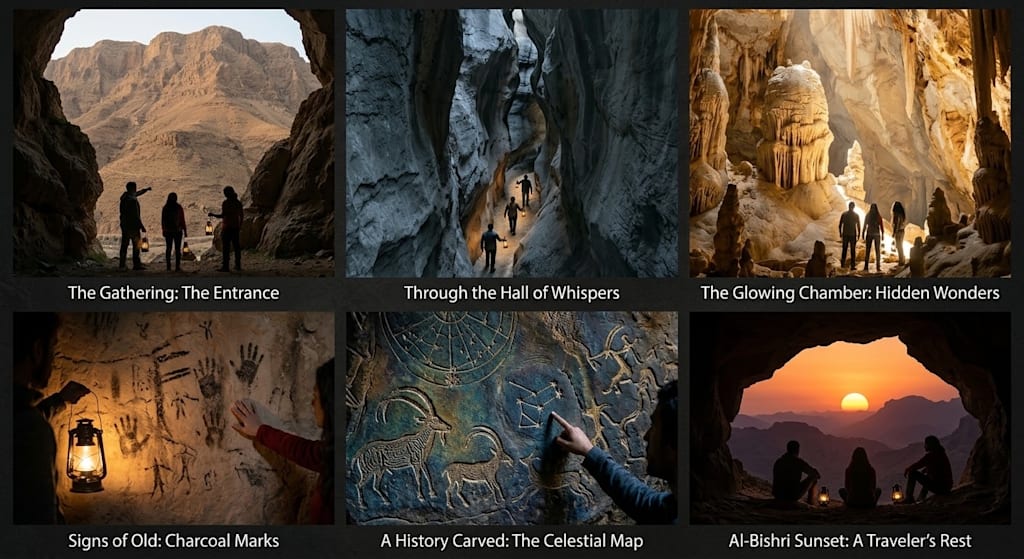
The morning sun rose over the vast golden expanse surrounding Al-Sukhnah, casting long shadows across the arid landscape of the Syrian desert. At the base of Jabal al-Bishri, three travelers stood before the narrow, shadow-draped entrance of the legendary Dwayhkieh Cave. Rumors had echoed through the local markets for generations—stories of glowing limestone walls, echoing winds that sounded like ancient whispers, and hidden chambers untouched by time. Armed with heavy lanterns and a steady resolve, the group stepped into the cool, silent threshold, feeling the immediate plunge in temperature as the subterranean world enveloped them. As they ventured deeper into the primary corridor, the harsh light of dawn was replaced by the flickering yellow glow of their flames, casting long, distorted figures on the rough-hewn surfaces. The passage narrowed into a winding stone gallery where every footstep resonated powerfully, amplifying the sense of entering a space that had remained undisturbed for untold eons. A low, rhythmic whistling sound periodically cut through the silence, created by desert gusts filtering through hidden fissures high above. The hollow reverberations filled the hall, creating a natural acoustic harmony that ancient shepherds had long mistaken for the voices of protective cave guardians. Pushing forward, the narrow gallery suddenly burst open into a vast, subterranean cavern, a space so immense the light of their lanterns was swallowed by the surrounding gloom. High above, a natural skylight had formed, perfectly aligned with the descending sun to send sharp beams of golden light slicing through the dim, vaulted ceiling. As this piercing brilliance struck the damp, mineral-rich stalactites and towering stalagmites, the calcium formations scattered the rays across the entire cavern. The crystalline walls began to shimmer softly in mesmerizing shades of amber and white, revealing the true phenomenon that gave the cave its glowing, legendary title. Every surface of the chamber seemed to vibrate with stored energy, refracting light through layers of ancient calcite and quartz. The travelers moved in near silence, mesmerized by the shifting patterns of light and shadow dancing across the cavern floor. The air, heavy with mineral perfume and perpetual dampness, felt charged with history. They discovered faint traces of charcoal along the walls, indicating that nomadic tribes had sought refuge here during sandstorms or freezing winter nights, using the cave as a sacred sanctuary and meeting point for generations. As they explored the deepest crevices, they found intricate carvings carved into the rock, depicting stylized animals and celestial maps that suggested a profound connection between the ancient inhabitants and the desert cosmos. The acoustic properties of the cave were even more pronounced here; whispers uttered in a hidden recess echoed clearly across the main hall. This remarkable natural resonance explained why local folklore spoke of singing stones and invisible singers who protected the desert's hidden treasures. By mid-afternoon, the travelers began a careful ascent back toward the surface, emerging from the cool darkness to find the sun setting behind Jabal al-Bishri. The desert horizon turned vibrant shades of orange and pink, highlighting the rugged contours of the land. They emerged fundamentally changed by the experience, carrying with them the memories of a silent ecosystem where light, sound, and stone combined in a beautiful, timeless spectacle. The mysteries of the Dwayhkieh Cave would forever be etched into their minds as a testament to the wonders hidden beneath the sands.
By Αλη ΑλαληPublished 30 days ago • 1 min read
This article was created by Artificial Intelligence.
About the Creator
Enjoyed the story? Support the Creator.
Subscribe for free to receive all their stories in your feed.
Comments
There are no comments for this story
Be the first to respond and start the conversation.