
Saying Goodbye to My Mom
A simple Saturday afternoon became the most meaningful conversation of my life
This happened nearly twenty years ago, but in a sense, it feels like yesterday!
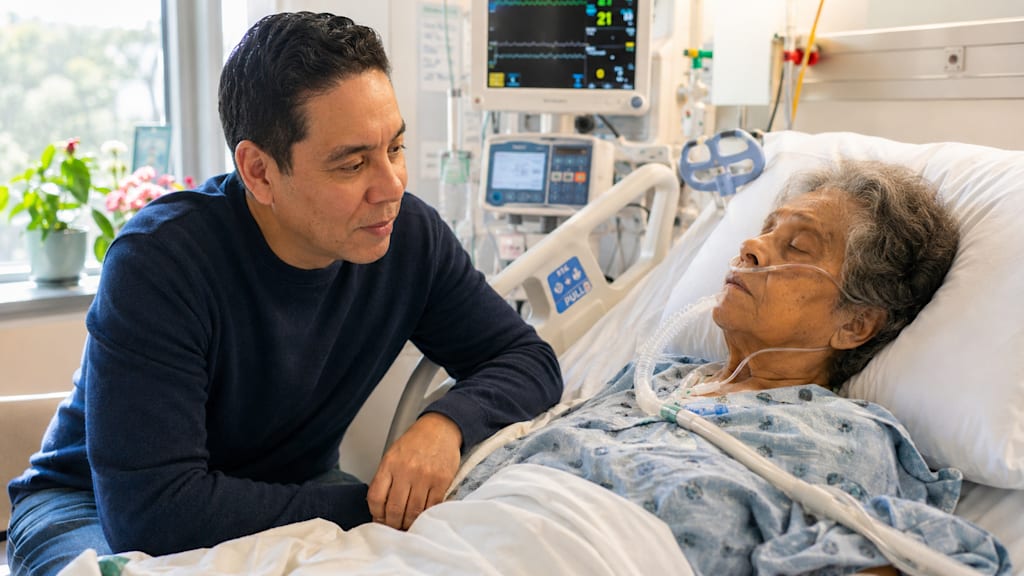
People often assume that the moments that change our lives arrive with great ceremony. They imagine crowded rooms, dramatic speeches, or clocks that seem to stop at the exact right second. My experience was nothing like that. It happened on an ordinary Saturday afternoon in a quiet hospital room, with only two people present—my mother and me.
To anyone else, it would have looked like another routine hospital visit.
To me, it became the moment that stayed with me forever.
My mother, Patricia, lived well into her nineties. Age had taken much from her body, but not her determination. When doctors discovered that her colon was blocked, they explained that surgery was her only realistic chance of survival. It was also a dangerous operation for someone her age.
The opinions around me came quickly.
"Don't put her through it."
"It's time to let her go."
"She's lived a long life."
Everyone meant well. They were trying to spare both of us additional suffering. But none of them had to carry the responsibility of making the decision.
I couldn't.
So instead of deciding for her, I asked the only person whose opinion mattered.
"Mom," I said quietly, "do you want me to let you go, or do you want the operation?"
She didn't hesitate.
"I want to live."
That was enough.
The decision no longer belonged to me. It belonged to her. I told the surgeon to proceed because I could never be comfortable overruling the wishes of the woman who had spent her life making sacrifices for her children and many of those in her life.
The operation itself was difficult. Afterward, she required a ventilator. Complications followed, and before long, she fell into a coma.
The doctors prepared us for what was likely coming.
I accepted it, at least intellectually.
What I didn’t anticipate was that she would fall into a coma after the surgical procedure and no longer communicate with me.
As this happened, I felt I had lost my chance to say goodbye.
When death approaches quietly, it often steals conversations first. Machines breathe. Monitors beep. Family members whisper in hallways. Words that seemed easy for decades suddenly have nowhere to go.
Every child imagines the final conversation with a parent.
I certainly had.
After all, I never had one with my father.
When I was ten years old, my mother picked me up after her work shift, and together we returned to our apartment. We found my father lying on the floor. An aneurysm had taken him at only forty-six years old.
There were no final words.
No goodbye.
Just silence that echoed for decades.
Perhaps that is why sitting beside my mother's hospital bed felt so painful. History seemed determined to repeat itself.
Still, I continued visiting.
There wasn't much else I could do.
I would sit beside her bed for hours. Sometimes I spent hours pondering our past. Sometimes I watched the rise and fall of her chest with the help of the ventilator. Mostly, I talked.
I told her about ordinary things. I reminded her of old family stories. I thanked her for raising us under circumstances that could not have been easy after my father died. I told her she had been stronger than she ever gave herself credit for.
Most importantly, I told her I loved her.
Whether she could hear me, no one knew.
The nurses offered encouraging smiles, but they never promised anything.
Then came that Saturday.
It began like every other visit.
The room was peaceful. Afternoon sunlight filtered through the blinds, drawing thin stripes across the blanket covering her. The sounds were familiar by then—the steady rhythm of medical equipment, footsteps outside the door, distant conversations from nurses changing shifts.
I sat beside her and spoke as I always had.
I remember saying something I had been carrying inside for weeks.
"Mom, I just wish you knew how much I love you."
For a moment, nothing happened.
Then something did.
Her eyes slowly opened.
She looked directly at me.
And she smiled.
It wasn't a broad smile. It wasn't dramatic. It was simply my mother looking at her son.
My heart nearly stopped.
I leaned closer, almost afraid that if I moved too quickly, the moment would disappear.
I repeated myself.
"I love you so much. I've been worried that you wouldn't know."
She looked at me with remarkable calmness, as though I had just asked an obvious question.
"I've always known," she said softly. "I've always known how much you loved me."
That was all.
No speeches.
No grand revelations.
Just one simple sentence.
The room looked the same as it had five minutes earlier. The machines continued their steady rhythm. Nurses still walked past the doorway. Outside, people hurried through their ordinary Saturday without realizing that inside one hospital room, an entire lifetime of love had just been spoken aloud.
The doctors' prognosis hadn't changed.
Neither had reality.
My mother died the following day.
Yet I never felt cheated again.
Instead, I felt grateful.
For decades, I had carried the memory of losing my father without the chance to say goodbye. That wound never completely disappeared, but somehow this quiet exchange with my mother softened its edges.
I often think about how insignificant that afternoon would have appeared to anyone passing by. There were no witnesses. No applause. No family gathered around the bed—just a son sitting beside his mother.
But some moments refuse to be measured by how they appear.
They are measured by what they leave behind.
Years have passed, yet I can still see her smile as clearly as I did that afternoon. I can still hear those four simple words.
"I've always known."
In the end, I discovered that goodbye isn't always about finding the perfect words.
Sometimes it is simply discovering that the love you spent a lifetime trying to show had been understood all along.
And while for most it was just an ordinary Saturday afternoon, it was one of my most memorable experiences ever!
About the Creator
Anthony Chan
Chan Economics LLC, Public Speaker
Chief Global Economist & Public Speaker JPM Chase ('94-'19).
Senior Economist Barclays ('91-'94)
Economist, NY Federal Reserve ('89-'91)
Econ. Prof. (Univ. of Dayton, '86-'89)
Ph.D. Economics
Enjoyed the story? Support the Creator.
Subscribe for free to receive all their stories in your feed. You could also become a paid subscriber, letting them know you appreciate their work.
Comments
There are no comments for this story
Be the first to respond and start the conversation.