
People Started Receiving a Score Above Their Heads
One morning, everyone woke up with a mysterious score above their head and it changed the world forever.

The Numbers Appear
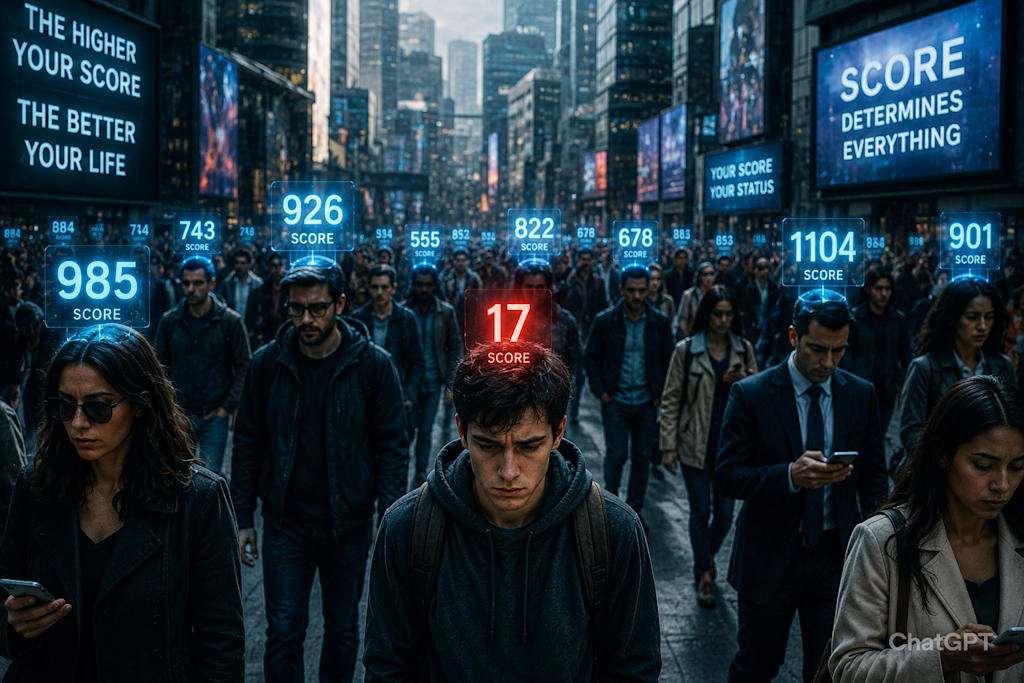
Nobody knew exactly when it began. One ordinary Monday morning, people around the world woke up and discovered glowing numbers floating above their heads. The numbers hovered several inches above each person, visible to everyone but impossible to touch. They appeared in every country simultaneously, regardless of age, wealth, or social status. Some people had scores in the hundreds. Others had scores in the thousands. News channels interrupted regular broadcasts within minutes as confusion spread across the globe. Scientists searched for explanations while social media exploded with photographs and videos. Yet no one could explain what the numbers meant.
The Search for Meaning
At first, most people treated the phenomenon as a mystery rather than a threat. Governments launched investigations, and researchers spent weeks analyzing the scores. The numbers changed occasionally, increasing or decreasing without warning. People quickly began comparing their scores to those of friends, coworkers, and family members. Predictably, competition followed. Individuals with higher numbers gained attention and admiration, while those with lower scores faced ridicule. Entire online communities formed around theories about the purpose of the mysterious ratings.
The First Clues
The breakthrough came when a teacher in Japan noticed her score increasing after helping a struggling student. Similar reports soon emerged worldwide. Acts of kindness seemed to raise scores. Donating money, volunteering, and assisting strangers often caused numbers to increase. In contrast, selfish or harmful behavior frequently resulted in lower scores. Society rapidly concluded that the numbers measured some form of moral value. Although nobody understood who was assigning the scores, people began adjusting their behavior accordingly.
A New Social Order
Within months, the scores transformed society. Employers started considering them during hiring decisions. Universities looked at scores when evaluating applicants. Dating apps added score filters. Politicians proudly displayed their numbers during campaigns. High scores became symbols of trustworthiness and success. Meanwhile, individuals with low scores found themselves excluded from opportunities and social circles. Entire neighborhoods developed unofficial score requirements. What began as a mystery evolved into a global obsession.
The Lowest Score
My score was 17.
Compared to most people, it was embarrassingly low. The average score hovered around 500. Exceptional individuals often exceeded 1,000. Everywhere I went, people glanced at the glowing number above my head and immediately formed assumptions about my character. Strangers treated me differently. Job interviews ended quickly. Even casual conversations felt uncomfortable. The worst part was that I had no idea why my score remained so low. I wasn't a criminal. I didn't intentionally harm others. Yet the number refused to rise.
The Hidden Consequences
As society became increasingly focused on scores, people's behavior began changing in disturbing ways. Kindness no longer felt genuine. Many acts of generosity appeared motivated by score increases rather than compassion. Public displays of charity became common because everyone could watch numbers rise in real time. Influencers livestreamed good deeds to millions of viewers. Corporations launched campaigns designed specifically to improve employee scores. Humanity seemed more moral than ever before, yet somehow less sincere.
The Mysterious Stranger
One evening, while riding a nearly empty train, I met an elderly man whose score displayed a shocking value: zero. I had never seen anyone with a score that low. Surprisingly, he appeared completely unconcerned. While everyone else spent their lives chasing higher numbers, he ignored his score entirely. Curious, I asked whether he knew what the numbers meant. The old man smiled and replied with a question of his own.
"Have you ever wondered why nobody knows who created the system?"
The Secret Behind the Scores
The stranger explained that he had spent years investigating the phenomenon. According to his research, the scores weren't measuring morality at all. They were measuring predictability. Every time someone behaved in ways the system expected, their score increased. Every act that matched social norms, trends, or established patterns earned points. Genuine individuality often lowered scores because it introduced uncertainty. The revelation sounded absurd at first, yet the more examples he provided, the more convincing the theory became.
Testing the Theory
Determined to verify his claims, I began conducting small experiments. Instead of performing actions for approval, I made decisions based on personal conviction. Sometimes I helped people without anyone knowing. Other times I challenged popular opinions despite criticism. To my surprise, my score occasionally dropped after actions I considered morally correct. Meanwhile, people who performed highly visible acts of generosity continued earning points. Gradually, I became convinced that the old man was telling the truth.
The Global Revelation
Months later, evidence supporting the theory leaked online. Independent researchers published findings suggesting that the scores correlated more strongly with conformity than morality. Public reaction was immediate and explosive. Millions felt betrayed. For years, society had treated the numbers as indicators of human worth. Now it appeared they measured something entirely different. Protests erupted worldwide as people questioned every institution that had relied on the scoring system.
The Day the Numbers Changed
Then something even stranger happened. One morning, every score vanished. The glowing numbers simply disappeared. No explanation accompanied their departure. Governments searched for answers. Scientists analyzed data. Nothing worked. The system that had shaped human civilization for years was suddenly gone. For the first time since the scores appeared, people could no longer judge one another instantly.
Life Without Numbers
The transition wasn't easy. Society had become dependent on simple ratings. Without them, people were forced to evaluate character through conversations, actions, and personal experiences. Trust had to be earned rather than displayed. Relationships became more complicated but also more authentic. Employers focused on abilities instead of numbers. Communities rediscovered the value of understanding individuals rather than ranking them.
The Lesson We Learned
Years later, nobody knows who created the mysterious scoring system or why it appeared. Some believe it was an experiment. Others think it was a warning. Whatever its origin, humanity learned an important lesson from its disappearance. People are too complex to be reduced to a single number. Character cannot be measured by a glowing score floating above someone's head. In the end, the greatest mistake wasn't believing the numbers existed. It was believing they defined who we were.
About the Creator
Robert Redford
i create powerful, easy-to-read articles on everything from history and world events to technology, lifestyle, and thought-provoking ideas. If sparks curiosity, I write about it. Always exploring, always delivering something worth reading.
Enjoyed the story? Support the Creator.
Subscribe for free to receive all their stories in your feed.
Comments
There are no comments for this story
Be the first to respond and start the conversation.