
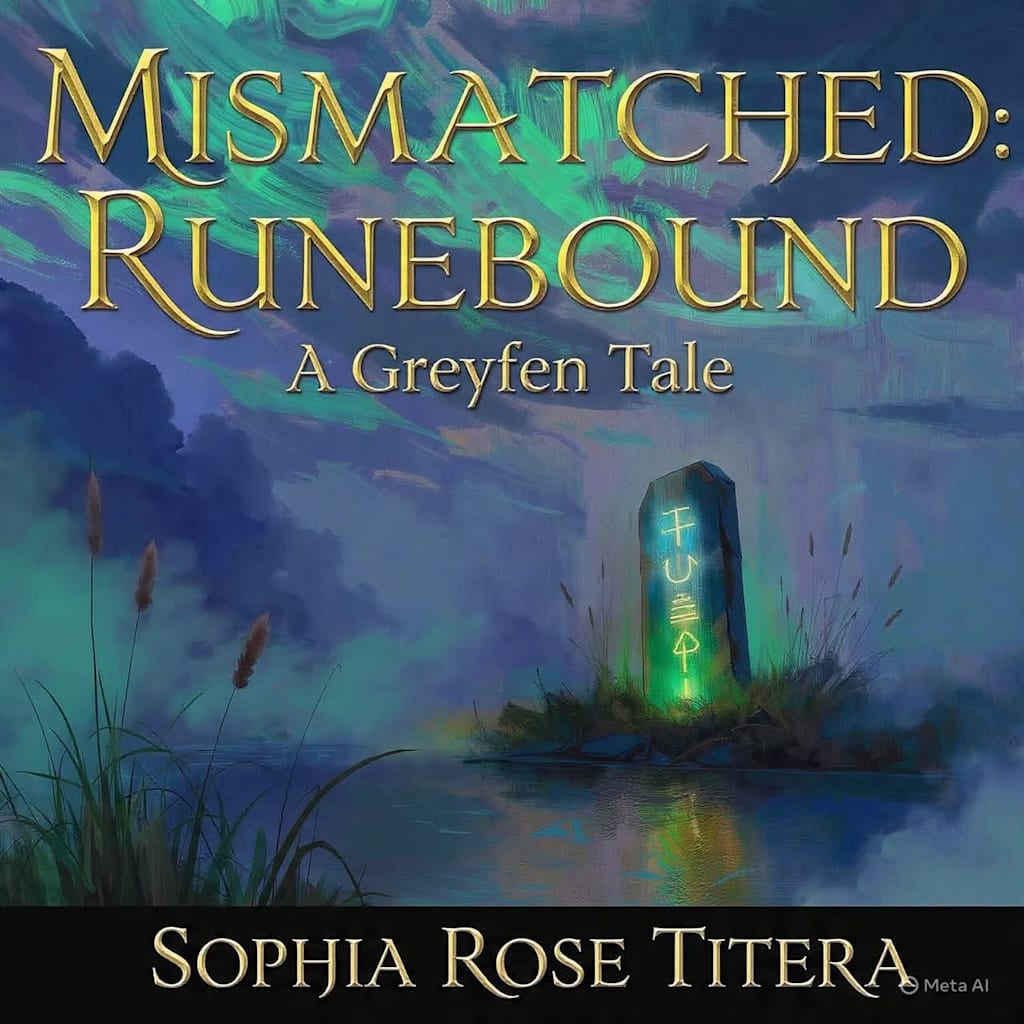
The river ran like a seam of polished silver through the valley, and the town of Greyfen gathered around it like stitches on a worn cloak. Lanterns hummed awake as dusk bled into night. From a distance, three shapes moved together down the cobbled causeway: a man in a robe that smelled faintly of ozone, an elf whose laugh preceded him like a herald, and a dwarf with a battered pack and a face that kept its calm like stone.
They had been an unlikely trio for six months now. They’d met in a tavern when the wizard, Corin Hallow, had tried to conjure mint for his tea and instead produced a knot of blue moths that had the proprietor fainting; the elf, Tharen of Lós, had distracted the innkeeper with an impromptu song and a flirtatious wink; and Brina Underbrow had, without a word, slammed the back of her hand onto the table and scooped up the moths with practiced precision. Brina had preferred the quiet of her forge to the clangor of taverns, but there was profit to be found in odd jobs and a promise of coin and purpose from Corin’s halting explanation had pulled her into company. She said little and polished her hammer while the others argued, but when danger came, she was the one who went first.
“We cross at the Old Bridge,” Tharen said now, voice bright as though the day itself were an instrument he could pluck. He bent to examine a lamppost’s ironwork as if it contained a puzzle. “There’ll be lanterns and fishermen — perfect cover.”
Corin Hallow adjusted his satchel, a leather thing heavy with books and vials. The hem of his robe was frayed where it had brushed brambles in some long-ago pursuit. He smiled with more thought than joy. “The magistrate’s orders were clear: investigate the flooding near the eastern fen and remove whatever is damming the stream. He used the phrase ‘as discreetly as possible,’” Corin added, glancing at Brina.
Brina’s eyes, slitted and sharp, gave them both the once-over. Her hair was braided into a thick rope of silver. She hoisted her pack and nodded. She preferred steel to speech, but the comradeship that had grown between them was real and steady as a mast. “We go. Quiet first, then quick.”
The eastern fen was a place where fog clung to the reeds, and things said to be older than memory slouched in the peat. They came upon it two hours later, moving in a line: Tharen leading with his bow slung loose over his shoulder, Corin trailing a careful distance putting minor wards on the air for comfort, and Brina in the rear, her boots barely making a sound.
What met them was not mere blockage. The stream had been redirected — forced into a shallow channel where stones were piled like teeth. But it wasn’t rough hands that had arranged the stones; it was deliberate, decorative, almost ritual. Carvings of spirals and half-moons marred the rocks. At the center, set like a crown, was a slab of pale stone that thrummed when Corin drew near.
He touched the slab and drew his fingers back as though burned. “It’s old magic, elf-script under the moss,” he said. “Not malicious by default, but it’s been shaped into a binding.”
Tharen stepped forward, eyes alight. “Binding for whom?”
“Something that moves the water. Perhaps a sluice for a creature’s lair, or… a ward to keep something in.” Corin’s fingers found the edge of the slab and traced an arc. He squinted, lips moving as he read rune-ghosts remembered from long-dead volumes. “If we dismantle it without care, whatever’s behind it might wake sore and furious.”
Brina crouched, lifting a small lantern to the carvings. Her fingers brushed the rune, and she frowned. “It smells wrong. Like sweet rot.” She drew her hammer closer, not in a threat but in readiness. “We can take it apart. Or we can find what set it. Which do you think will anger the thing less?”
Tharen tapped a finger to his chin. “We ask.”
It was not a plan as much as it was a proposal. Tharen’s approach to the unknown was to charm it first, assuming most things would rather talk than fight. Corin, with his books and cautions, wanted to unweave the magic in a controlled way. Brina, practical and blunt, preferred the right blow at the right time. They compromised on asking.
They spread themselves like a tripod around the stone and Tharen called into the fog with words he had learned as a child for coaxing foxes out of traps. For a long while, his voice was swallowed by the fen’s lungs. Then a ripple moved along the water as if a large something had shifted its weight.
At first, they saw only a head. It was sleek and dark, eyes like coins threaded with light that watched them with a neutrality that pricked the hair at Brina’s nape. When it rose, it revealed a body coiled within the shallow water — not entirely beast, not entirely man, more a thing of reed and shadow. Around its neck it wore a necklace of carved bone and river-glass. The thing spoke without moving its mouth.
“You knot the stream,” it said. Its voice was a chorus of small splashes and wind through grass. “You press the river to a new shape.”
Tharen, not the least intimidated, bowed with his hand on his heart. “Only to ask why. Treaties can be made without blood.”
The thing regarded them, eyes like two polished stones. “Treaty. The water remembers treaties. Long ago, the river agreed to keep a path. Then men built mills and roads and pushed. My kin took a sluice to make a place safe. A nest for the river-lings.” It puffed bubbles that popped like beads. “But a path for one is a trap for others.”
Corin stepped forward, holding up a hand. “Who are you?”
“Fen-brood.” It sharpened the name like a glint. “Naiad of marsh beings. The binding holds a child of the old waters — a weyr-thing that eats silt and sleeps soft. It was bound in kindness and fear. We wish it to be safe. You wish it to be free. The knot must be altered.”
Brina’s reply was a grunt. “If it eats the silt, what happens when the town’s fields wash out? We can’t leave it to wander.”
The naiad’s eyes softened with an expression they had not expected: almost like pity. “We do not wish to ruin. We wish to balance. Restore the channel toward the low reed, not the town. We can move the stone. Will you help?”
Here was the main quest in a curve: a being claiming an old stewardship asked aid to rebalance an ancient arrangement. The magistrate’s edict had been clear enough: remove the cause of flooding. But the trio had other values than simple obedience. Brina wanted practical resolution; Corin wanted safe, learned undoing; Tharen wanted the living river preserved. They threaded their differentities into a plan.
“Our approach will be careful,” Corin said. “We will carve runes to redirect, not shatter. We will remove the central slab and replace its groove with a new sigil. Tharen, you will talk to the naiad and the water-lings; Brina, you will shape the stones. I will anchor the new binding.”
The naiad bobbed, and with a wave of water-foam, a small cluster of reed-folk rose and flitted around them like children playing hide-and-seek. Tharen hummed a low tune and the reed-folk danced, showing clearings under piled leaves where soft eyes blinked. They learned, in small gestures, that the river-lings were indeed bound tightly to the slab.
That night they camped on the fen’s edge. Brina sat up with her back to a tree keeping watch over her comrads; Corin sat hunched over on a weathered log reading an old atlas by a lantern’s thin bell-light; Tharen polished his bow and wrote in a small book of songs all while lounging casually next to the fire. The air between them was companionable; words were not always necessary. They had trusted one another through half a year of absurd contracts and misfired spells. The trust had become a rope that could be tied to hold them all and shone bright like the flames flickering amongst the shadows.
But trust alone would not undo the binding. They needed a way to alter a bond that had been sung into shape generations ago. Corin sketched sigils in the dirt with a bone quill, testing the flow of lines with pebbles. Brina hammered small wedges into carved stones to see how the grooves could be reworked without losing the old shape entirely. Tharen walked the reed-motes singing, coaxing the water-lings to drift near and reveal where the current hurt.
Their solution was threads of both magic and muscle. Corin would cast a delicate counter-chant that would loosen, not erase, the old metaphysic. Brina would, with fine tools and a steady arm, re-carve the pale slab to open a channel toward the low reed. Tharen would keep the naiad and its brood pacified with music that mimicked river-breath. It was a delicate threefold dance.
They worked at dawn. Corin’s chant was thin and high, like wind over crystal, and it required his complete concentration; his lips bled faintly where he had bitten them in the recitation. Brina lifted stone by stone with a lever and the raw force of her shoulders. Tharen’s song made the reeds sway as if in time to a heartbeat. For hours the three labored, aligning and coaxing, and the fen watched.
Then the side quest came.
A shout from the town carried on a wind that had no place there: human voices sharper than the fen’s speech. Men and lanterns approached along the causeway, and at their head was a deputation of the magistrate's men, stern faces combed clear of any and all sympathy. The magistrate had sent them to claim credit. They brought netting and shovels and, most worryingly, a captain with a hawk of a look.
“We heard tell of a diversion,” the captain said. His voice was that of people convinced the world belonged to their tools. “If you plan to tamper with the river, you need the magistrate’s consent.”
Corin tried to explain. He spoke of balance and bindings and naiad contracts, and the words patched the gap a little but not enough. The captain’s jaw tightened. Men clutched spades and lanterns like spears. Brina could have smashed them into quiet with a swing of her hammer, but that would have broken more than bones; it would have forced the fate of the fen into war with the locals.
Tharen stepped forward, smiling like a warm hearth, defusing with a half-joke and a bartered story. He sang a short song about the river’s old lovers — a tale woven with enough truth and mystique that the men’s anger softened into curiosity. Corin, seizing the lull, brought forward the naiad, now coiled calmly and partially visible in the shallow water. The men gasped, raked by wonder.
“We are working to ensure the town’s fields are safe and the river is not punished for being itself,” Corin said. “If you give us time, no harm will come.”
The captain looked at the watery face of the naiad, then at the determined dwarf with the hammer and the elf who could charm the sun itself. He ran a hand over his chin and consulted his soldiers with eyes that were tired of being commanded by papers and eager for something solid. Finally, he nodded.
“You have until sun-down tomorrow. After that, we’ll take over and clear it by force.”
They had twenty-four hours. It was a fresh deadline on an already delicate operation, but it forced the trio to be decisive. They worked through the day with shorter rest and fewer pauses. Corin tightened his chant until his voice was cracked parchment; Brina leaned into her strength until sweat stung her eyes; Tharen kept the naiad tuned with new cadences. Each relied on the others the way a bridge relies on each stud and beam.
On the final night, as the captain’s men darted like moths across the causeway, someone — perhaps a reed-folk child, perhaps a tired heart tired of waiting — made a mistake. A stray child of the town, chasing a thrown stone, toppled into a deep pool that had formed where work had been done to redirect flow. The water claimed him with an appetite that was unaware and unblamed.
Brina was already in motion. With the speed and decisiveness of one who had spent a life beneath falling anvils, she plunged, boots cutting the water. Corin whispered a stabilizing charm and dove after her; Tharen loosed a rope ready to cast out to Brina. The naiad surged like a wave, handless and sincere, and the water-lings coalesced into a ring. Together they hauled the child out, coughing, a small human heart beating in two chests.
The captain’s men cheered, and for a moment the fen itself exhaled before retreating out of reach into the river. That night the magistrate’s deadline was forgiven as people saw the town’s life and the wild’s life were entangled like roots. Both needed the other to thrive. The captain offered a nod of respect that was not common in men of papers to the trio and the naiad itself.
With goodwill restored, they completed the re-carving in a less hurried manner. Brina’s hammer sang against the pale slab and the new groove she shaped deflected the stream along a gentler course into the low reed. Corin’s chant laced the groove with a binding that bent but did not break, giving shape without servitude. Tharen’s music braided the naiad’s consent with the work. When the last stone clicked into place, the water sighed and moved like a being relieved.
The naiad, its necklace of bone warmed by the day’s sun, rose and bowed in a manner that looked almost like gratitude. It spoke once more. “You have done what we could not alone. Keep the knot gentle, and watch where the silt goes. That is the way of the land.”
Brina wiped a smear of mud from her cheek. She had not expected to feel a lightness, but there it was. The work had been what she loved — the application of strength to truth, the satisfaction of a right lever in the right groove. Corin closed his eyes and offered a soft sobriquet of thanks to the old books that had guided his hands. Tharen laughed and tried to pull the naiad into one of his tales; the naiad merely bubbled, which in their company counted as a compliment.
They walked back to Greyfen together the next morning as if a seam had been mended not only in the river but within themselves. The captain’s men trailed behind, now reduced to curiosity rather than threat. The town’s folk pressed fingertips to foreheads in greeting. At the inn where they had first met, the proprietor poured them ale without asking their name.
Sitting at the table, Brina took a long drink and then, for only the second time since they had met, she smiled without the shield of the hammer. “I would have hammered the lot of it if you’d let me,” she said, voice low.
Corin chuckled. “And we would have been poorer for your restraint.”
Tharen grinned, clapping both of them on shoulders that had borne more than one night’s labor. “We make a fine family, don’t we? Mismatched as a pair of boots.”
They laughed, honest and easy. In the months afterwards, they returned to the fen on quiet days to check the groove, to trade stories with the naiad, to collect odd jobs that interested them. They took on small side tasks — a watch for a traveling caravan threatened by bandits, the recovery of a stolen bell from the hill-gnomes, and the delivery of a scholar’s lost map. Each little adventure braided them tighter: Corin’s patient explanations, Tharen’s open curiosity, Brina’s decisive hands.
They were not bound by love that burns or burns out but by a steadier idea — commitment, tempered in danger and soothed in laughter. They argued, yes: over routes, over whether it was prudent to sleep in a tavern or under the stars, over the correct shade for an elven tunic. But they also trusted without question that each would hold the line when neccesary. When a stray curse ricocheted across a treeless field and singed Corin’s sleeve, Brina steadied him; when an ambush came along a mountain pass, Tharen’s arrow separated friend from foe in a heartbeat. In small and large moments they proved one truth: the mismatched form of family could be forged from courage and continuous choosing.
On a washed table in an inn half a day’s walk from the fen, they would later carve a simple mark: a rune of three lines that met at a center. Tharen said it was for luck; Corin said it was for pattern; Brina said it was a convenient place to hang a lantern. For all of their reasons, it became their sign. Travelers would see it and know a safe room, a shared coin, a friend in need.
And so they went on, tethered by a solid, strong bond: a dwarf who liked being alone but had chosen hands to hold when needed, an elf who danced with danger and named things with song, and a wizard who read the world and kept the maps between the edges. They sought one main thread and followed where it led, stitched in side quests like little beads on a string. The river flowed on, neither caged nor cruel, and in the town of Greyfen, the lanterns burned a little steadier for having three odd people who kept watch over the seam.
About the Creator
Sophia Rose Titera
Greetings, I am a new author and have been dabbling in my short stories in hopes to gain inspiration for my bigger goal: a novel. I am also a lover of fantasy such as LOTR and playing DND and WOW.
Enjoyed the story? Support the Creator.
Subscribe for free to receive all their stories in your feed.
Comments
There are no comments for this story
Be the first to respond and start the conversation.