

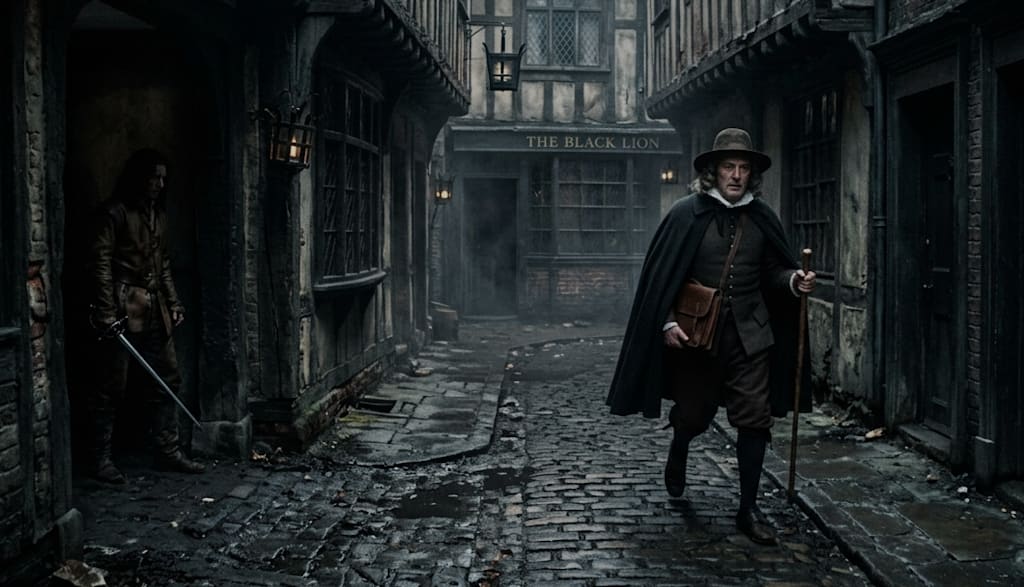
“And is that not, truly, the matter resolved, Master Coke? That Parliament hath determined to cure this mischief within the common law.”
“Truly,” agreed Coke, “it is, and thou hast resolved the question.”
At this, Coke’s companion, Raikes, took his leave, saying “I trust you will bring their Lordships’ attention to this assistance I have brought them in the matter.”
Later, as Raikes strode warily through the dank lanes beyond the Aldwych, he encountered an apparition.
“Master Coke bids you good evening,” it said. Adding, as Raikes fell to the mortal blow it struck, “And thanks you for your assistance.”
💀💀💀
In Heydon’s Case (1584) (3 Co Rep 7a), Sir Edward Coke (pronounced 'Cook') recorded the judgment of the Court of Exchequer, outlining the exact formulation of what became known as the Mischief Rule for statutory interpretation:
"And it was resolved by them, that for the sure and true interpretation of all statutes in general (be they penal or beneficial, restrictive or enlarging of the common law,) four things are to be discerned and considered:
What was the common law before the making of the Act.
What was the mischief and defect for which the common law did not provide.
What remedy the Parliament hath resolved and appointed to cure the disease of the commonwealth.
The true reason of the remedy;
The mischief rule comes after the literal rule and golden rule of interpretation. The literal rule applies when it is sufficient for the courts to interpret the words of an Act of Parliament as they are written. If, for any reason, the literal interpretation would lead to some absurdity then the courts may adopt the golden rule, by which they would interpret an Act of Parliament according to the intention of Parliament when reading the Act as a whole.
I hope this makes sense and thanks for reading my little drabble.
This is an entirely fictional story and, of course, Coke was not responsible for murdering the true author of his theory of parliamentary interpretation... or was he?
Thanks, also to Rachel Deeming, for mentioning this Drabble from the review of my little book: A Town Called Raymond.
About the Creator
Raymond G Taylor
Author based in Margate on the English Kent coast, having moved from London. Known for his short stories and flash fiction, as well as poetry and non-fiction writing on subjects such as art, science, technology and the human condition
Enjoyed the story? Support the Creator.
Subscribe for free to receive all their stories in your feed. You could also become a paid subscriber, letting them know you appreciate their work.
Comments
There are no comments for this story
Be the first to respond and start the conversation.