
Mercy Of Allah Almighty
A Love Greater Than We Can Imagine

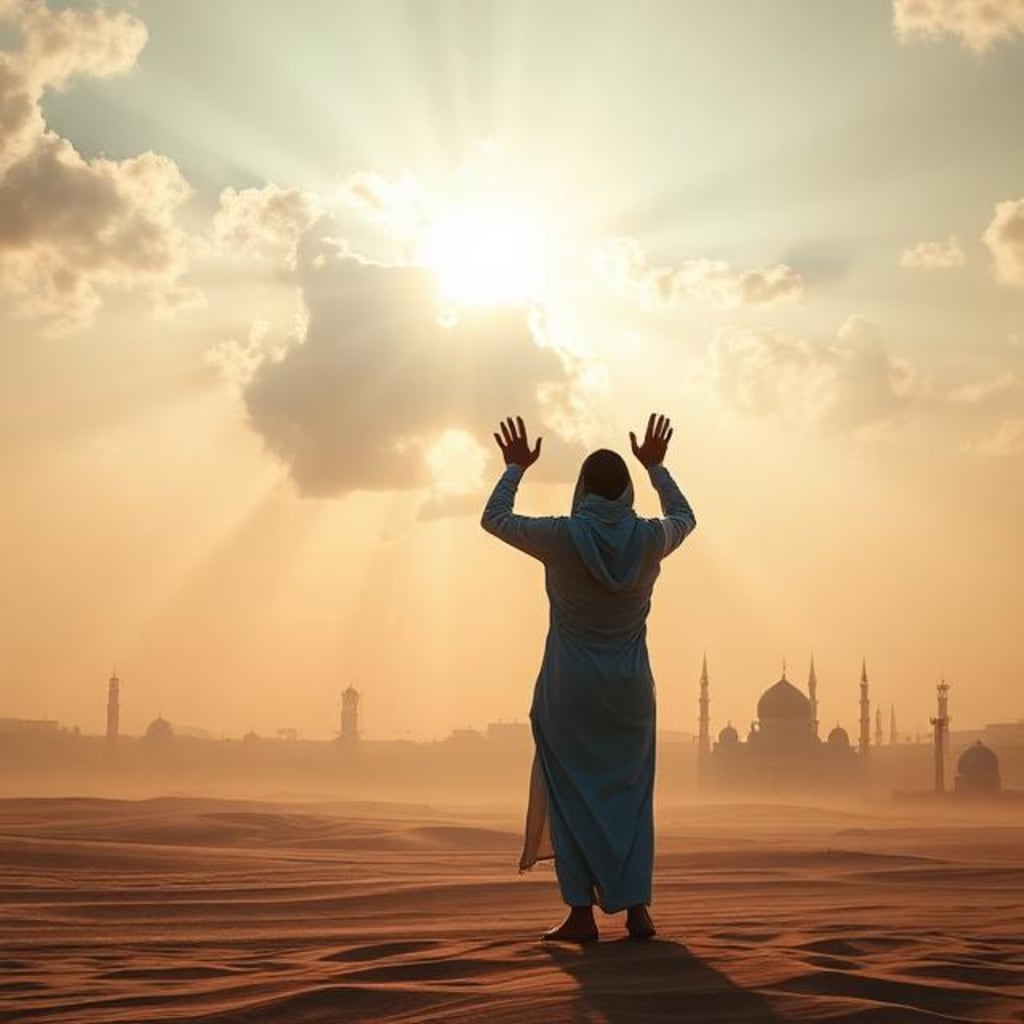
The concept of the Mercy of Allah Almighty is one of the most profound and central themes in Islam, shaping the relationship between the Creator and His creation in a way that is both deeply personal and universally encompassing. From the very beginning of the Qur’an, every chapter except one opens with the powerful declaration “Bismillah ir-Rahman ir-Raheem,” meaning “In the name of Allah, the Most Gracious, the Most Merciful.” These two attributes, Ar-Rahman and Ar-Raheem, are derived from the same root word “rahmah,” which signifies mercy, compassion, tenderness, and care. This repetition is not coincidental but intentional, emphasizing that every action, every moment, and every aspect of existence is surrounded by the mercy of Allah.The Mercy of Allah is not limited by human understanding or restricted by conditions that people often place on forgiveness. It is vast, continuous, and unconditional in ways that go beyond imagination. Allah Himself declares in the Qur’an that His mercy encompasses all things, meaning that there is no part of existence untouched by His compassion. The air we breathe, the food we eat, the love we feel, and even the ability to seek forgiveness are all manifestations of His mercy. Without it, life itself would not be possible.One of the most beautiful aspects of Allah’s mercy is that it precedes His wrath. In Islamic teachings, it is mentioned that Allah has divided mercy into one hundred parts, sending only one part to the world and keeping ninety-nine parts for the Day of Judgment. It is through this one portion that all creatures show kindness to one another—a mother caring for her child, animals protecting their young, and strangers helping each other in times of need. This understanding highlights that even the greatest acts of love and compassion witnessed in this world are only a fraction of the divine mercy that awaits believers in the Hereafter.The life of Prophet Muhammad (SAW) serves as the greatest example of how divine mercy is meant to be reflected in human behavior. He was described as a mercy to all worlds, not just to Muslims but to all of humanity and even to animals and the environment. His compassion extended to friends and enemies alike. Even when he faced persecution, rejection, and harm, his response was rooted in forgiveness and hope for guidance rather than revenge. In the conquest of Mecca, a moment where he held complete power over those who had once oppressed him, he chose forgiveness, declaring that no blame would be upon them. This act was a living demonstration of mercy in its purest form.Allah’s mercy is also evident in the way He accepts repentance. No matter how great a person’s sins may be, the door of forgiveness remains open as long as they sincerely turn back to Him. This principle provides hope to every individual, regardless of their past. The Qur’an repeatedly calls on believers not to despair of Allah’s mercy, reminding them that He forgives all sins for those who repent. This is a powerful message in a world where people often feel defined by their mistakes. In Islam, a person is not bound by their past but is always given the opportunity to start anew.The concept of mercy is deeply connected to accountability. While Allah is just and will hold individuals accountable for their actions, His mercy provides countless opportunities for redemption. Every hardship can be a means of purification, every test a chance to grow closer to Him. Even difficulties are seen as a form of mercy, as they can bring a person back to the right path, increase patience, and strengthen faith. This perspective transforms the way believers view challenges, allowing them to find meaning and hope even in difficult times.Another important aspect of Allah’s mercy is that it is accessible to everyone, regardless of status, wealth, or background. There are no barriers that prevent a person from seeking His mercy. It does not require intermediaries or complex rituals. A simple, sincere prayer from the heart is enough to connect with Allah. This direct relationship emphasizes that divine mercy is not distant or exclusive but close and available at all times.The natural world itself is a reflection of Allah’s mercy. The balance of ecosystems, the beauty of landscapes, and the provision of resources all point to a Creator who cares for His creation. Rain that nourishes the الأرض, sunlight that sustains life, and the intricate design of living beings are all signs of a mercy that is both visible and deeply embedded in the fabric of existence. These signs serve as reminders for الإنسان to recognize and appreciate the blessings that are often taken for granted.Mercy in Islam is not only something to be received but also something to be practiced. Believers are encouraged to show mercy to others, as it is through this that they receive mercy from Allah. Acts of kindness, forgiveness, charity, and compassion are all ways of embodying this divine attribute. The Prophet Muhammad (SAW) taught that those who are merciful to others will be shown mercy by the Most Merciful. This creates a cycle of goodness, where mercy spreads through human interactions, building stronger and more compassionate communities.The idea of mercy also plays a crucial role in shaping اخلاق and character. It encourages patience over anger, forgiveness over revenge, and understanding over judgment. In a world often driven by conflict and division, the principle of mercy offers a path toward peace and unity. It reminds individuals to look beyond faults, to give others the benefit of the doubt, and to strive for reconciliation rather than hostility.Even in the context of justice, mercy is never absent. Islamic teachings emphasize that justice should be balanced with compassion. While wrongdoing must be addressed, there is always room for forgiveness and leniency when appropriate. This balance ensures that justice does not become harshness and that mercy does not become ضعف or neglect of responsibility. It is a delicate equilibrium that reflects the wisdom of divine guidance.The Day of Judgment, a central belief in Islam, is also deeply connected to the mercy of Allah. While it is a day of accountability, it is also a day where His mercy will be most evident. Believers hope for His forgiveness and strive to earn His mercy through their actions in this life. The understanding that Allah is both just and merciful provides a sense of balance, motivating individuals to do good while also trusting in His compassion.Ultimately, the Mercy of Allah Almighty is a source of endless hope. It reassures believers that no matter how difficult life becomes, they are never alone or abandoned. It reminds them that every moment is an opportunity to seek forgiveness, to improve, and to draw closer to their Creator. This hope is not passive but active, encouraging continuous effort and sincere intention.The story of mercy in Islam is not just a theological concept but a lived reality that shapes the hearts and actions of millions. It is found in daily prayers, in acts of kindness, in moments of repentance, and in the quiet trust that Allah’s plan is always guided by wisdom and compassion. It is a mercy that heals, guides, and transforms, offering light in times of darkness and strength in times of ضعف.In the end, understanding the Mercy of Allah Almighty is about recognizing that His compassion is greater than any sin, His forgiveness wider than any mistake, and His love deeper than any human understanding. It is about living with hope, acting with kindness, and trusting that no matter where one stands, the door of mercy is always open.
About the Creator
Enjoyed the story? Support the Creator.
Subscribe for free to receive all their stories in your feed.
Comments
There are no comments for this story
Be the first to respond and start the conversation.