
Last Call
Last Call: What You Write Down When You're Out of Time

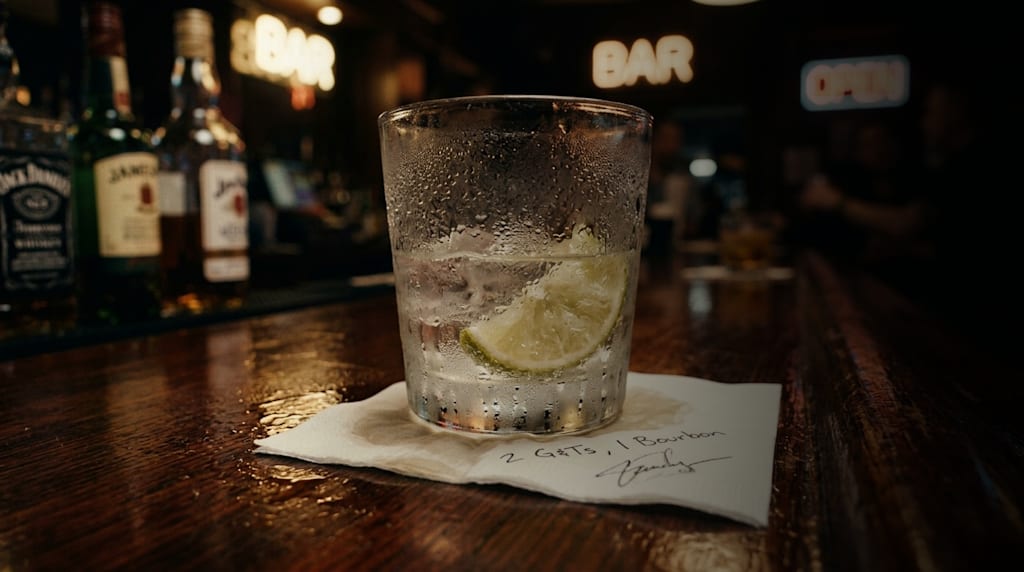
Maya watches the bartender's eyes find hers across the room. He doesn't ring a bell. He never has, not once in the four months she's been coming here. He just looks, and starts wiping down the taps.
The Holloway smells like it always does this time of night, spilled beer and the lemon oil someone uses on the bar top, and somewhere behind the register a radio is playing something with too much saxophone in it. A couple by the window is splitting a basket of fries they've mostly stopped eating. Nobody else is watching the door the way Maya is.
"Last call," the bartender says. "Anything else?"
She's been nursing the same gin and tonic for forty minutes, mostly melted now, the lime gone soft and pale at the bottom of the glass. On the napkin under it she's written a list, though she'd never call it that out loud, it sounds like something printed on a mug. Seven items. Next to number seven, Tell someone the truth, she's drawn a question mark instead of a checkmark.
The door opens, rain-cold air rolling in ahead of him, and then Jake is just there, filling the doorway before she's ready for him.
They haven't spoken in three years, not since the fight that was never really about what either of them said it was about. Jake spots her from the doorway. His jacket is soaked through at the shoulders, like he walked the last few blocks instead of finding a cab. For a second the whole bar narrows down to the six feet of space between his eyes and hers.
Maya doesn't wave. She turns the napkin over and writes one word: Stay.
Their mother worked nights at Sacred Heart. Every evening before her shift she'd kiss them both on the forehead and say the same thing. This is my last call. You need me, you call, no matter what. Then she'd grab her keys off the hook by the door, the same hook, the same three keys, and go.
The night she didn't come home, the phone rang for their father instead. Wet road. Bad timing. He hung the phone back up, sat down on the bottom stair, and didn't move for a long time.
Maya was sixteen. Jake was nineteen. Neither of them talked about it in any way that counted, not that year, not really ever after. They drifted the ordinary amount siblings drift, texting on birthdays, liking each other's photos, going months without hearing each other's voices and somehow not noticing until they did.
Then came the appointment. Maya remembers the fluorescent tube overhead had a flicker in it, a small stutter every few seconds, and she found herself counting the stutters instead of listening. She remembers the tissue paper on the exam table crinkling under her when she shifted her weight, too loud for how quiet the room had gone. She doesn't actually remember most of the sentence the doctor said. Just the word terminal landing somewhere in the middle of it, and the doctor capping the pen afterward, carefully, like it mattered. Maya went home that day and started a list.
Jake sits down without asking permission. The bartender brings him a beer without being asked either, and for a second they both let that be normal, two people doing an ordinary thing in the middle of a conversation that isn't.
"You came," she says.
"You posted on Facebook. Through Denise's account. You knew I'd see it."
"I didn't know. I hoped."
"Why now?"
She turns the list toward him instead of answering right away. He reads it the way he used to read her homework across the kitchen table when they were kids, upside down, without asking if he could.
"How long," he says.
"Six months. Maybe less."
He doesn't say anything for a while. When he finally does, his voice has gone somewhere she doesn't recognize. "Why didn't you tell me sooner."
"Because I wanted to be angry at you a little longer. It felt easier than this."
They don't talk about the fight. They talk about their mother instead, the way she used to sing off-key in the shower loud enough to hear through the wall, the casserole dish she'd bring home from the hospital cafeteria every Christmas because she liked the pattern on it more than the food it ever held.
"I still have that dish," Jake says. "I use it for everything. Lasagna, cereal, one very short stretch as an ashtray, which she would've hated."
Maya laughs, short and real, the first one that hasn't cost her anything all night.
She takes a fresh napkin from her bag, the one without a list on it, and writes her number, her address. She slides it across the table the way you'd pass someone something that could still break.
"Call me," she says. "Not because you have to."
He folds it once and tucks it into his shirt pocket, over his heart, probably without meaning to, though she notices anyway.
The bartender starts flipping chairs onto tables around them, not rushing, just working his way toward the door the way he does every night at this hour. Outside, the rain has stopped. They stand at the corner a second too long, in no hurry to pick a direction.
"I'll call," he says.
"I know," she says, and for the first time in three years, she means it the way you mean a fact instead of a hope.
Behind them, back on the bar, the old napkin sits where she left it, next to the wet ring from a glass she never finished. Seven items. One question mark. In the morning, someone will wipe it away without reading it, and refill the salt, and start the coffee, and the day will just go on from there.
About the Creator
Phil Henderson
I'm Phil Henderson. I ghostwrite for brands and founders by day as well as consult as a SAP Project Manager for major organisations. Here on Vocal I just write, essays, critiques, the odd short story.
Enjoyed the story? Support the Creator.
Subscribe for free to receive all their stories in your feed. You could also become a paid subscriber, letting them know you appreciate their work.
Comments
There are no comments for this story
Be the first to respond and start the conversation.