
He Kept Replying After the Funeral
Grief would have been easier if the dead had stayed gone

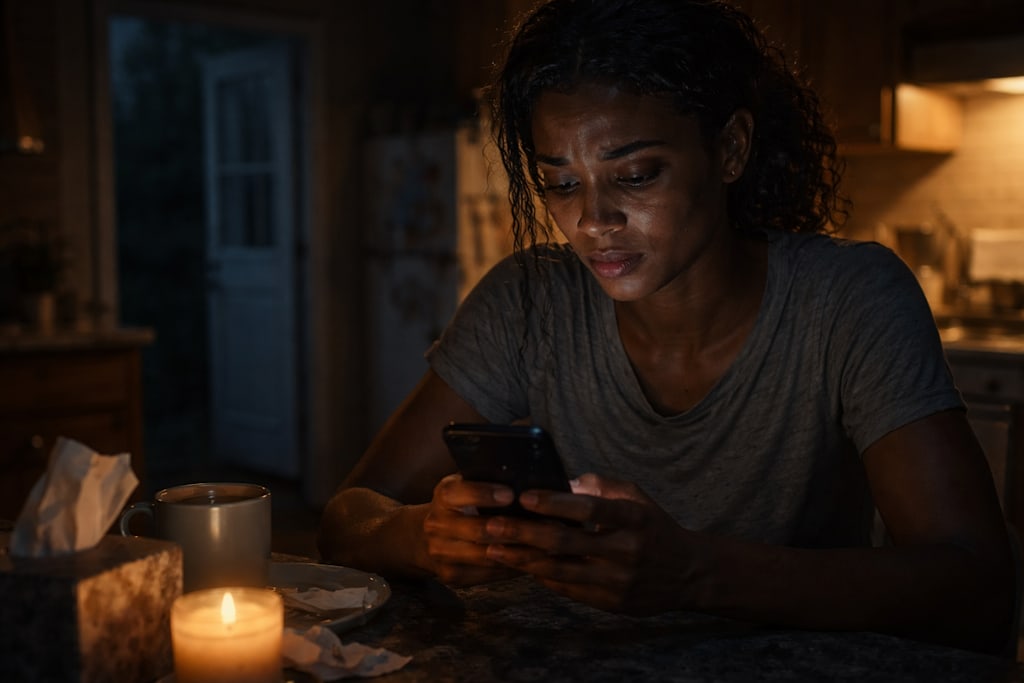
The first message arrived three days after we buried my husband.
I was seated quietly at my table, thinking about recent unpleasant events happening in my family when a message suddenly showed up on my screen;
"Don’t forget to soak the beans before cooking...."
I stared at the screen until the words blurred.
The sender was Daniel.
My dead husband!
The same number I had watched ring uselessly when the police found his car wrapped around a highway barrier. The same number I had handed to officers, doctors, insurance agents, relatives, and men in dark suits who spoke softly because tragedy makes even complete strangers perform tenderness.
I checked the date.
The time.
The number.
Then I did what grief trains people to do.
I looked for a reasonable explanation.
Scheduled message. Old reminder. Some app glitch. Something technological and harmless.
My sister, Ife, said not to panic.
“Phones do weird things,” she told me while bathing her twins. “Delete it.”
I did not delete it.
Instead, I sat at the edge of our bed; my bed now, though grief makes ownership feel obscene and read the message again and again.
"Don’t forget to soak the beans before cooking...", it said.
It was such an ordinary sentence.
That was what made it unbearable.
If he had said I miss you or I’m still here, I could have called it madness and slept. But beans? Beans were real life. it was what we cooked every tuesday throughout our married life. The life that had been interrupted so violently that even my breathing still felt borrowed.
That night, I soaked the beans.
Daniel had been dead six days when the second message came.
"Your left tire is low. Fill it before work."
I went outside barefoot at dawn.
The tire was nearly flat.
I stood in the parking lot wearing Daniel’s old T-shirt, staring at rubber and air as if they had betrayed me personally.
There are moments when fear does not arrive dramatically.
It enters quietly, sits beside you, and begins taking notes.
People talk about grief as sadness.
That is only one room in the house.
There is also bureaucracy.
Forms, signatures and certificates. Passwords you do not even know. Accounts in names now spoken in the past tense. People asking for proof that the worst thing in your life has occurred.
There is appetite disappearing.
Laundry multiplying.
Relatives advising.
Friends promising to check in, then returning to their own intact lives.
And there is anger as well.
At roads, at speed, at weather and at the fact that one distracted truck driver can turn a marriage into mere paperwork.
I was angry at Daniel too.
For leaving me with a leaking sink.
For dying before telling me where he kept the spare keys.
For making everyone look at me with that soft, useless face reserved for the newly broken.
So when the third message came, anger answered before fear could.
"Stop this. Whoever you are!", I screamed.
The reply arrived instantly.
"You never text with punctuation when you’re truly angry."
I dropped the phone instantly because that was true.
And because only one person had ever teased me about it, Daniel!
The police were kind when I reported these messages to them but they have seen too much nonsense to be surprised by new versions of it.
A young officer took notes while an older one inspected my phone quietly.
“Anyone else have access to his accounts?”
“No.”
“Any family conflict?”
“No.”
“Any reason someone would want to distress you?”
I almost laughed out loud.
As if distress required a motive.
They checked the number. Still registered to Daniel. Temporarily active due to unresolved contract closure.
They checked message routing. Normal.
They advised me to block it.
I did.
At 8:14 p.m., my blocked messages folder received:
"Blocking me is dramatic. Have you eaten?"
I did not sleep that night.
I began noticing things.
The wardrobe door I always left open was shut when I came home.
The kitchen light on.
The bathroom towel folded the way Daniel folded towels; too neatly, edges aligned like soldiers.
Grief makes superstition easy.
By the second week, I had started speaking aloud when entering rooms.
“Hello?”
Not because I believed.
But because not believing had stopped protecting me.
My mother arrived with two bottles of prayer oil and impatience.
“This house is too quiet,” she declared. “Quiet invites nonsense.”
She marched from room to room rebuking demons, dust, and my housekeeping in equal measure.
When I showed her the messages, she crossed herself.
Then narrowed her eyes.
“Who knew your husband this well?”
The question offended me.
Then unsettled me.
Because intimacy is a language and someone was speaking his fluently.
That evening she cooked jollof rice, criticized my weight loss, and slept in the guest room with the television loud enough to challenge spirits directly.
At 2:03 a.m., my phone lit up brightly with another message! It said:
"Your mother snores worse than my generator."
I screamed and my mother burst into my room holding prayer oil like a weapon.
There are only so many ways to explain impossible things before people start assigning you diagnoses.
Ife came over with concern arranged carefully across her face.
She asked if I was eating enough, sleeping or working.
She suggested maybe stress was making ordinary things feel meaningful.
“Phones can be hacked,” she said.
“Towels can move?”
“You could be moving them and not noticing.”
“I know how insane that sounds.”
She hesitated too long before saying, “Do you?”
Grief isolates partly because eventually everyone needs you to recover at a pace convenient to them.
So eventually, I stopped mentioning the messages.
I stopped mentioning anything entirely.
Then came the photo.
No text.
Just an image sent at 11:47 p.m.
My kitchen.
Taken from inside the kitchen.
I was visible in the background, asleep on the sofa.
I vomited in the sink.
I immediately informed the police and they took it seriously after that.
They installed a camera at the front door and another facing the back entrance. They changed locks and advised me to stay with family.
However, I refused.
Leaving felt too much like surrendering the last place Daniel had existed alive.
The next night, another message:
"Cameras are rude."
I informed the police. But again, they found nothing.
No one entering.
No movement at doors or windows.
No signs of tampering.
Yet every morning there was evidence of someone else’s certainty in the house.
A mug rinsed and drying.
Curtains drawn.
The dead basil plant watered.
Things were not stolen.
Only touched.
Whoever it was did not want my possessions.
They wanted my attention.
That is a more intimate theft.
I started reviewing memories the way detectives review footage.
Daniel’s last months.
Late nights at work.
New passwords.
Phone turned face down more often.
Showering immediately after coming home.
Kindness sharpened by distraction.
Had I mistaken guilt for stress? Distance for grief before grief?
The possibility felt strangely disloyal.
It also felt very accurate.
So, I searched his laptop.
I found nothing.
I searched old emails, nothing still.
Then I opened the cloud storage folder labeled Taxes.
Inside were photographs.
Not many but just enough.
Daniel smiling in a restaurant I had never visited.
Daniel on a beach during a “conference.”
Daniel in bed, shirtless, taking the kind of stupid angle men think looks natural.
And in several photos, reflected in mirrors or windows or sunglasses - the same woman.
Young. Beautiful. Familiar.
I knew her before I remembered from where.
Then my throat tightened.
She had served drinks at our wedding.
My cousin Zara.
I called her at midnight.
She answered on the fourth ring, voice thick with sleep or guilt.
“What do you want?”
“You tell me.”
There was silence, then breathing.
Then, quietly: “How much do you know?”
Enough.
Not enough.
Too much.
She confessed in pieces, as cowards do.
It had lasted two years.
They were “trying to end it.”
He had promised to tell me.
He had said he still loved me.
She had attended holidays in my house.
Brought wine.
Held my hand at the funeral.
Cried into my shoulder.
I listened until something inside me calcified.
Then I asked the only question that mattered.
“Are you in my house?”
She hung up.
The police finally found the entry point at the old kitchen window. The latch had never fully caught.
They found fingerprints.
They found traces of recent use.
They found Zara in a budget hotel on the edge of town with Daniel’s spare phone, a copy of my key, and enough of his clothes to suggest grief had become costume.
She had been sending the messages.
Entering while I slept.
Touching things because she missed him.
Watching me because she hated me.
“He was supposed to leave you,” she told investigators.
Even then.
Even exposed.
She was still centering herself in a dead man’s unfinished lie.
People expected relief after her arrest.
Closure.
Justice, maybe.
Another neat word for people not living inside the damage.
What arrived instead was a second grief.
The first was Daniel’s death.
The second was learning I had been mourning a man who had already left me before the crash.
Every casserole delivered after the funeral now felt humiliating.
Every condolence, misaddressed.
Every memory contaminated.
I had not lost my marriage on the highway.
I had only discovered the body there.
Months later, they returned Daniel’s belongings from evidence.
His wallet, watch, wedding ring and the spare phone.
I charged it for reasons I still cannot defend.
There were hundreds of messages between them.
Plans.
Lies.
Photos.
Jokes about my habits.
Arguments about money.
Promises he made with the same thumbs that once texted me 'drive safe.'
At the very end of the thread was a draft message unsent to me:
"We need to talk when I get home."
No apology.
No confession.
No explanation.
Just the doorway to a conversation that never happened.
People say death freezes a person at their best.
That is something the living invented for comfort, I now believe.
Death freezes people exactly where they were.
Mid-lie.
Mid-betrayal.
Mid-sentence.
I buried my husband once.
Then I had to bury the truth of him too.
This second funeral was lonelier.
*image was created using nano banana in Google Gemini
About the Creator
Ajan Lori A.
My mind screams, I write!
(Author exploring education, identity, human behavior, life between cultures, business and entrepreneurship)
Find my writing on Medium: https://medium.com/@loriaa
My books on amazon: amazon.com/author/loriaa
Enjoyed the story? Support the Creator.
Subscribe for free to receive all their stories in your feed. You could also become a paid subscriber, letting them know you appreciate their work.
Comments
There are no comments for this story
Be the first to respond and start the conversation.