
From Me
To You


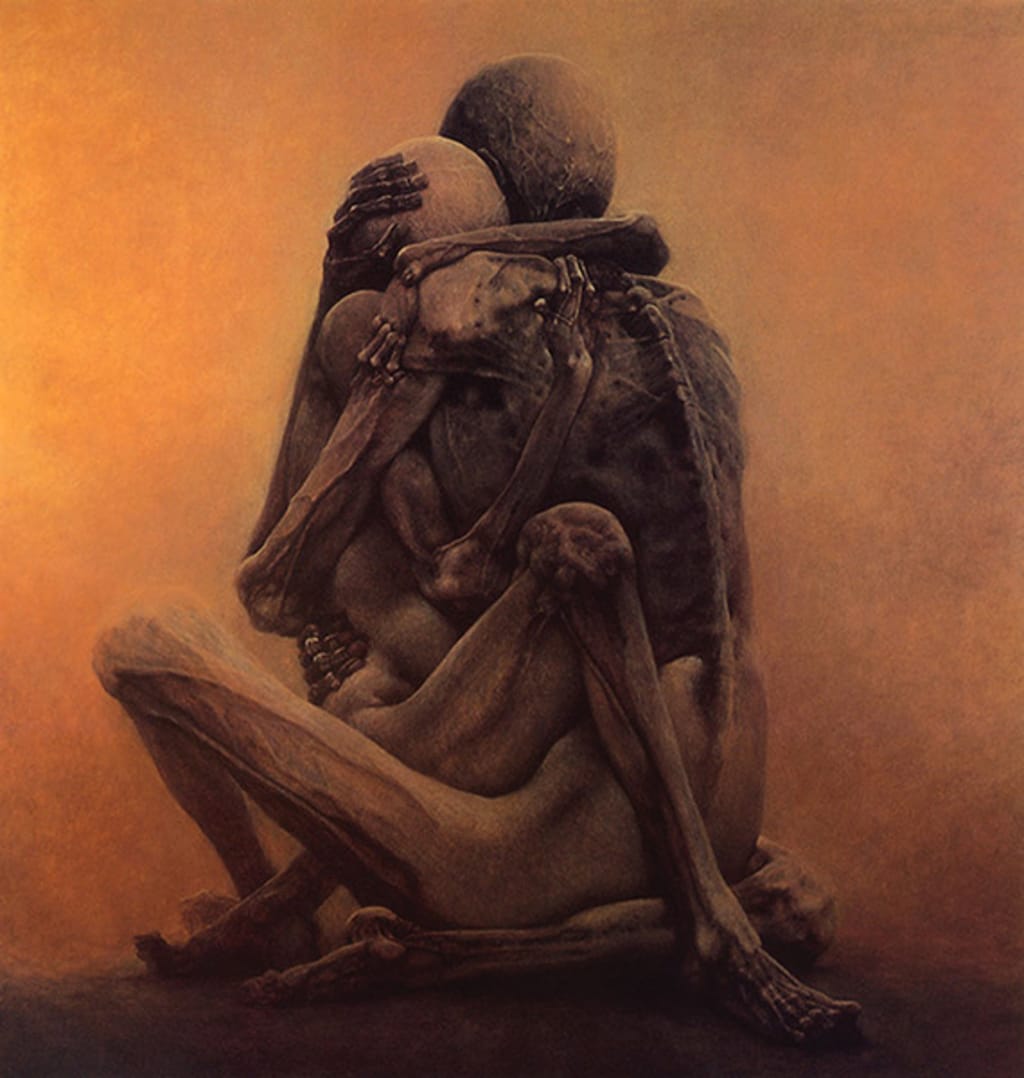
You are a prisoner.
You have been sitting in a cold, dingy cell alone for so long that you can’t remember how much time has passed.
You stood trial. You were convicted.
But you don’t know what you actually did to deserve imprisonment.
You have tried to figure it out.
At first, you searched for the obvious thing: the moment everything went wrong. A choice so terrible it could explain the sentence.
There wasn’t one.
So you went smaller.
You picked through your life piece by piece. Every person you disappointed. Every person who left. Every time someone was angry with you. Every time you were angry first.
You examined the things you wanted and the things you needed. You thought about every time you stayed when you should have left. Every time you left when maybe you should have stayed. Every yes that should have been no.
There were plenty of mistakes.
Still, they never became a crime.
You began to wonder if everyone else had known something you didn’t. Maybe there had been rules. Maybe everyone received them and somehow yours were lost.
You had spent most of your life watching other people anyway. Watching what made them happy. Watching what made them angry. Learning when to speak and when to disappear.
Adjusting. Correcting. Apologizing. Trying again.
You must have missed something.
Because you are here.
Innocent people aren’t convicted. Innocent people aren’t sentenced. Innocent people don’t spend years alone in cells.
You don’t know how many years.
There is no clock. No calendar.
You continue serving your sentence.
What else would you do?
Eventually, after searching your life again and finding nothing you haven’t already examined a thousand times, you stop.
There is nowhere else to look. No memory you haven’t questioned. No choice you haven’t reconsidered. No mistake you haven’t turned over, searching for something you missed.
You sit in the silence.
Then you speak.
“I had no motive.”
Your voice sounds strange after so much quiet.
“I had no intent.”
No one answers.
“I know I chose wrong. I know I made mistakes.”
You look around the cell.
“I was being human.”
You wait, as though someone might finally tell you.
“But what was my crime?”
You’re ready to be home.
After a packed workday, all you want is peace and quiet. Your car slides into the driveway, and for a few seconds you sit there. Nothing is asking anything from you.
Then you grab your bag and fumble with your keys on the way to the front door.
That’s when you see the envelope.
It is taped over the peephole. No stamp. No address.
In slanted red script, one word:
YOU
You smile. Maybe your partner left you something sweet.
You pull the envelope from the door and tuck it under your arm. You unlock the front door and step inside.
In the kitchen, you drop your bag beside the table and set the envelope down. You kick off your shoes, then tear it open.
There is no love note inside.
At the top of a single sheet of paper:
CELL 11549
Someone says they had no motive. No intent.
They admit they chose wrong. Made mistakes.
They were being human.
Then, at the bottom:
But what was my crime?
Beneath it:
—Me
You read it again.
Then a third time.
You turn the paper over. Blank. You shake the envelope. Nothing.
You don’t know anyone in prison.
You try anyway. Family. Old friends. People who disappeared from your life so long ago that hearing from them now would feel almost as strange as this.
No one fits.
You set the note back on the kitchen table. You make dinner. You walk past it. You clean something that doesn’t need cleaning.
You walk past it again.
Eventually, you pick it up.
The strange part isn’t the cell number. It isn’t even YOU.
It’s the question.
Whoever wrote this believes they did something wrong.
They just don’t know what.
You don’t know who Me is.
But you have a cell number.
You start searching.
At first, 11549 gives you nothing useful. You add prison. Then cell. You follow dead links, old articles and public records until the number finally leads somewhere.
A closed prison.
Nearby.
Buried in old records are references to cells numbered in the same range.
The prison closed more than a year ago.
The next morning, you call the number now listed for the facility. After two transfers and several minutes on hold, someone agrees to check the records still available to them.
“Cell 11549?”
“Yes.”
You hear typing.
“That cell doesn’t exist.”
“Could it have?”
More typing.
“Not according to what I’m looking at.”
You stare at the note.
“I received something from a person who says they’re there.”
A pause.
“The facility has been closed for over a year.”
“I know.”
You thank them and hang up.
For a few minutes, you feel stupid.
Then you get angry for feeling stupid.
You didn’t write the note. You didn’t tape it to your door. You didn’t invent Cell 11549.
So you keep looking.
Old renovation records confirm that 11549 once sat between 11548 and 11550. After the work, the number disappears. The section was reconfigured, but the remaining cells were never renumbered.
11549 had existed.
Then it hadn’t.
That could be all this is. An old cell number and a strange joke.
Then you find the demolition notice.
The prison is coming down.
Before demolition, the building was inspected for trespassers and anyone who might have taken shelter inside.
The report is clear.
VACANT.
CLEARED.
You look at the note again.
Someone brought it to your house.
Now.
You know where Cell 11549 used to be.
And soon, the building containing it won’t exist at all.
So you go.
The prison is uglier in person.
Concrete walls rise behind temporary construction fencing. Heavy equipment waits outside. Sections of the building have already been stripped for demolition.
A crew is still working.
You almost turn around.
Instead, you approach one of the workers near the fence.
“You can’t be here.”
“I know.”
He waits for you to leave.
You don’t.
“I need to ask you something.”
You show him the note and explain what you found about 11549.
“Is there any chance someone could still be inside?”
“The building was cleared before we started.”
“But could someone have gotten in since?”
He looks at the envelope. Then at you.
“They shouldn’t be in there.”
You look toward the section you traced through the old records.
Most of the windows are broken, boarded or already removed.
One remains.
Narrow. Dirty.
Right where 11549 used to be.
Something pale moves behind the glass.
A face.
“There.”
The worker turns.
“What?”
“Someone’s in there.”
He looks.
The window is empty.
“I saw someone.”
His eyes move from the window to you.
You know that look. The moment someone decides they need to be careful with you.
You almost leave.
Instead, you stand there while he calls another worker over.
“You stay here.”
You do.
The two of them disappear into the building.
Five minutes pass.
Then ten.
You keep staring at the window.
Nothing moves.
Eventually, one of the workers returns.
“There’s nobody there.”
“You checked?”
“We checked where that cell used to be. There’s a wall there now.”
“What about behind it?”
“There is no behind it. Not from in there.”
“I saw someone.”
He looks toward the window.
“I don’t know what you saw.”
The worker hands you the note.
“You need to leave.”
This time, you do.
You make it home.
You don’t stay there.
By the time you return, the equipment is silent and the workers are gone.
Temporary fencing surrounds the site. Signs tell you not to enter.
You enter anyway.
You slip through the construction perimeter and head toward one of the sections already opened by demolition.
You stop before going inside.
This is different from coming here during the day. Different from asking someone else to check.
You are deliberately entering a condemned prison in the dark.
You think of the face.
Then the note.
But what was my crime?
You step inside.
The prison smells like standing water and rust. Your phone light catches exposed concrete, torn flooring and pieces of wall marked for demolition.
You find the right section.
11547
11548
Then—
Wall.
This is where 11549 should be.
You run your phone light over the concrete.
Nothing.
You almost laugh.
You came back here for a wall.
Then—
Knock.
You freeze.
Another.
Not loud.
Somewhere behind the concrete.
“Hello?”
Silence.
You move closer.
The beam from your phone trembles over the wall.
A thin line has appeared near the floor.
You are certain it wasn’t there before.
It climbs slowly through the concrete.
Not a crack.
A seam.
You touch it.
The edge gives beneath your fingers.
There is darkness on the other side.
More of it than there should be.
You pull.
The opening widens just enough.
You could leave.
Instead, you squeeze through.
You expect the sealed remains of the old cell.
Instead, you find a corridor.
Your mind tries to correct what your eyes are seeing.
The corridor stretches farther than the building allows. Old cell doors line both sides. Your phone light disappears into darkness before reaching the end.
Behind you, the opening is still there.
You could go back.
Then—
Knock.
Farther down the corridor.
You walk toward it.
Near the end, an old desk sits against the wall. A file rests on top.
You open it.
CELL 11549
No name. No photograph. No description of the prisoner.
Only charges.
FAILURE TO PREVENT HARM
Staying.
Complying.
Not stopping things that happened.
Each entry is followed by another choice she could have made.
She could have left.
She could have refused.
She could have known.
UNAUTHORIZED DESIRE
Wanting affection.
Wanting more.
Wanting less.
Wanting to leave.
IMPROPER RESPONSE
Crying.
Anger.
Silence.
Fear.
Nothing about what came before them.
FAILURE TO CONFORM
Repeated inability to meet expectations.
No expectations are listed.
You read the pages again.
You try to imagine the person they describe.
Someone who stayed too long.
Someone who wanted things.
Someone who was afraid.
Someone who didn't always know what to do.
You cannot make a criminal out of her.
You turn the final page.
EXISTENCE
Nothing beneath it.
You close the file.
Whoever is in 11549 does not belong here.
The cell waits at the end of the corridor.
Its door is slightly open.
You push it.
A woman sits in the far corner.
Her clothes hang loosely from her body. Her hair is tangled, her face hidden beneath it and the darkness.
For a moment, neither of you speaks.
Then you say, “I found your note.”
Her head lifts.
“Did you find out what I did?”
There is something in her voice that makes you wish you had a better answer.
“Yes.”
She waits.
“Nothing.”
Her face falls.
“I had to do something.”
“You made mistakes.”
“I know.”
“So does everyone.”
She shakes her head.
“Not like me.”
You look back at the open door.
“You can leave.”
She doesn't move.
“The door is open.”
“I know.”
You wait.
“So why are you still here?”
Her answer is quiet.
“I was convicted.”
The words are so simple you almost miss what they mean.
“You don't have to stay.”
“I was told I committed a crime.”
She looks down at her hands.
“I believed it.”
You could tell her again.
You could tell her about the file. Tell her that wanting isn't a crime. That fear isn't a crime. That surviving something badly is still surviving it.
But she has been sitting here with those words for longer than she can remember.
Words are not what brought you back.
So you step into the cell.
She watches you cross the floor.
You lower yourself in front of her.
Up close, she looks tired more than anything else.
Not frightening.
Not dangerous.
Just tired.
You hold out your hand.
She looks at it.
Then at you.
You wait.
Her eyes drop to your hand again.
“You came back?”
The question catches you off guard.
“Yes.”
“For me?”
You think about the drive home.
The empty kitchen.
The note you could have thrown away.
The worker telling you to leave.
The fence you crossed anyway.
“Yes.”
Her mouth moves, but no words come.
You keep your hand where it is.
After a while, she reaches for it.
Her fingers barely touch yours before pulling away.
You don't move.
She tries again.
This time, you close your hand around hers.
She holds on.
You stand slowly, bringing her with you.
She is unsteady.
You don't let go.
Together, you walk toward the open door.
She stops at the threshold.
You feel her hand tighten around yours.
You don't pull.
You wait.
Then she steps through.
So do you.
Only then does she turn toward the light from your phone.
You see her face.
Something inside you recognizes her before you do.
The shape of her mouth.
The line between her brows.
Her eyes.
You have watched those eyes search your face in mirrors.
You stop.
She doesn't.
Her hand stays wrapped around yours.
The envelope flashes through your mind.
YOU.
The signature beneath the question.
—Me.
You look at her.
At yourself.
She watches you understand.
Your eyes drop to your joined hands.
You had reached for her before you knew.
You know now.
And you don't let go.
About the Creator
A. Bell
I write about the things we don't always know how to say out loud: grief, love, fear, hope, and all the messy spaces in between.
If something here makes you feel, I'm glad you found me.
Enjoyed the story? Support the Creator.
Subscribe for free to receive all their stories in your feed.
Comments
There are no comments for this story
Be the first to respond and start the conversation.