
Forty-One
You only realize you’re in the wrong house when someone comes home.

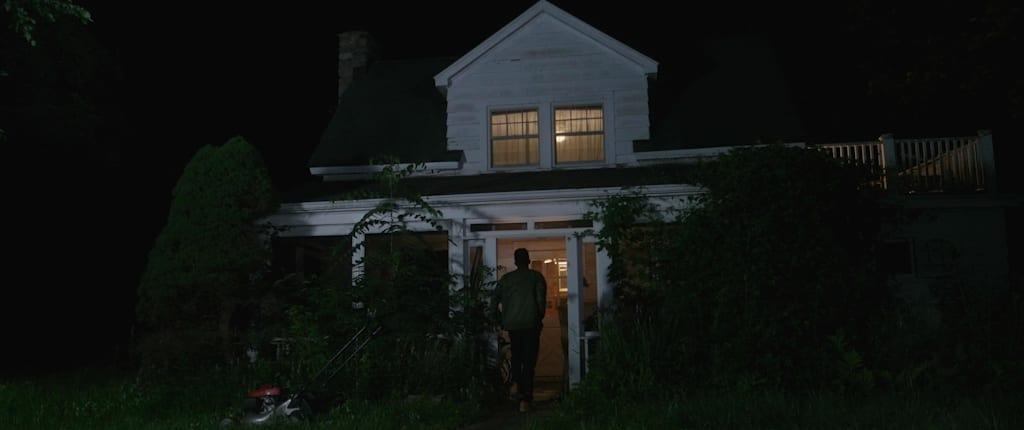
You punch the four digits into the pad by the door, and it answers with the small beep you have heard from your phone a hundred times, and the lock gives before you can second-guess yourself. Reyna gave you the code twice over text, once as a joke about trusting you with nuclear codes before she would trust you with her plants, and you laughed and saved it in your notes so you would never scroll back through the conversation again.
The porch stands dark, no lamp burning over the step, but you have done this walk before after dark, coming to feed a cat that hides under the couch until it hears the can opener. You pull the door shut behind you and the house breathes out the smell of somebody else's laundry soap, something citrus and green that never smells like your own place.
You slip off your shoes because that is a rule in Reyna's house, one she made you promise to keep even though she was leaving the country and would never know either way. The hall stretches longer than you remember, and you tell yourself the dark makes everything stretch, the way a hallway always feels bigger when you can't see where it ends. You reach for the switch by memory and the bulb above you answers with a low buzz before settling into a steady glow, and that's when the first small wrongness lands in your stomach, quick and gone before you can name it. The paint on this hall holds no color you remember, a deep blue instead of the pale one Reyna picked out last spring and complained about for a month.
You tell yourself paint changes. People repaint. Reyna could have hired someone last week and never mentioned it, because why would she mention paint in a text about a cat.
You keep walking, past a table that holds a bowl of keys that aren't yours and a stack of mail addressed to names you have never heard, Marisol and a last name you can't get your mouth around even in your head. You pick up an envelope anyway, turn it over once, and set it back exactly how you found it, because some old rule about other people's mail still lives in your body no matter what else you are doing wrong tonight.
The living room opens up on your left, and the furniture is nothing like Reyna's. Her couch is the color of a peach going soft, worn thin at both arms from a decade of a cat kneading it into submission. This couch is a deep green, straight-backed, with two cushions that still hold the shape of nobody, like no one has sat here long enough to leave a mark. There's a shelf of books with spines that mean nothing to you, and a framed photo of a woman you have never met, laughing on a beach somewhere, her arm slung around a man who has no place among Reyna's brother, her father, or anyone from the small collection of people you have heard about over three years of friendship.
Your stomach drops the rest of the way then, the small wrongness from the hallway growing into something with real size to it. You dig your phone out and pull up the address Reyna sent you weeks ago, the one you never bothered to check against the number on the door because you trusted your own steps to carry you along a street you have walked a dozen times. Fourteen. The house you are standing in right now has a brass four and a brass one screwed into the frame by the door, and you got the numbers backward somewhere between the sidewalk and the porch, half-drunk on tiredness after a long shift, walking on autopilot toward a door two houses down from the one you meant to reach.
You should leave. You know this the way you know your own birthday, no thinking required, a fact sitting in you plain and total. And still you stand in the middle of a stranger's living room with your shoes tucked under one arm, held by the small, terrible curiosity of a life that could have been laid out for a museum exhibit on somebody else's Tuesday. A glass sits abandoned on the low table, half a ring of something dark dried into the bottom of it. A cardigan hangs off the back of a chair the way a coat hangs off the back of a person who meant to come back for it in ten minutes and got pulled into a phone call that lasted an hour.
You move toward the door you came in through, telling your legs to hurry now that your head has finally caught up, and that is when the sound comes from outside, a car easing into the driveway, gravel shifting under tires, a low idle before the engine cuts. Your whole body goes still in the way an animal goes still, moved by nothing you decided, driven instead by something older, some circuit that skips the thinking part entirely.
A door opens and shuts outside, then another, two doors, two people, and you hear a voice say something to a second voice about forgetting the wine at the store, and the second voice laughs a low laugh that carries all the way through the door and into the hall where you are standing, frozen, your shoes still caught against your arm like evidence.
There is a beat, maybe two seconds, where you consider every terrible plan available to you. You could stand behind the door and try to slip out while they carry bags in. You could go still in the dark hall and hope the house is big enough to hide a stranger for the length of one evening. You could open your mouth the second the door opens and try to explain, though you already know how thin that explanation will sound out loud, a story about backward numbers and a friend named Reyna who lives nowhere near this house.
The lock turns, and you watch it turn from across the hall, the small brass tongue of it sliding back, and you think, absurdly, about how loud your own breathing has gotten, how your whole body seems to be working twice as hard only to keep you upright.
The door swings open and a woman steps through first, a bag of groceries balanced against her hip, and she sees you before her friend does, before the door has even finished swinging. Her face does the thing faces do when a stranger stands where the room should hold no one at all, a half-second of nothing, blank and searching, and then it tips over into something sharper.
You speak before she can, some reflex kicking in ahead of your better sense, and you say, I think I have the wrong house, I'm so sorry, I'm looking for Reyna, and even as it comes out of your mouth you know how small and useless it sounds standing in her hallway at nine at night with your shoes caught against your arm like a burglar who forgot to bring a bag.
The second woman comes in behind her, sets a case of something down by the door, and looks at you the way you might look at a raccoon that got into your porch, more startled than afraid, trying to work out how something so out of place got so far inside.
You explain the numbers, the code that never should have opened this door but did anyway because Reyna gave you a set of digits that happened, by some coincidence too small to be comforting, to match the lock on the house two doors down. You explain the paint you noticed and dismissed, the cat you never saw, the whole slow accumulation of small wrongness you talked yourself out of at every single step. Neither woman moves to call anyone. They stand there letting you talk, letting the story run its course, and somewhere in the middle of it the first woman starts to laugh, more startled than cruel, more like disbelief finding somewhere to go.
She says the code you used opens both doors on this side of the street, some old builder's shortcut from when the two houses were put up by the same crew forty years ago and never bothered to give each lock its own combination. She says you're the second person this year to walk in the wrong door on a dark night and stand in her hallway looking like you'd seen a ghost. She says it like she's already decided this will be a story she tells later, at some dinner, to people who will laugh the way she is laughing now.
You apologize until the word loses its shape in your mouth, and she waves it away, tells you to go find your actual friend before the cat starves waiting on you, and you laugh too, shaky and too loud for the room, grateful in a way that feels almost like grief for how easily this could have gone worse.
You step out into the dark, shoes back on now, and you look at the two houses side by side for the first time all night, the brass numbers catching what little light the street throws, four and one on one door, one and four on the other, so close in shape that your tired eyes read them as the same thing and let you walk right through a door that had no business opening for you at all.
You knock on the correct door two houses down, softer this time, more careful, and when Reyna's cat meets you at the mat, you kneel and let it put its head against your leg, and you feel, for a long moment, like the luckiest person on this street, having gotten away with something you never should have started in the first place.
About the Creator
Nolan Reed
I write true stories, including unsolved mysteries and events that actually happened.
Enjoyed the story? Support the Creator.
Subscribe for free to receive all their stories in your feed.
Comments
There are no comments for this story
Be the first to respond and start the conversation.