

The bank clerk handled the key with a kind of practiced neutrality, like this was just another small transaction in a long day. Metal against metal. A quiet click. The drawer slid open.
“My mother left instructions,” I said, though no one had asked.
The clerk nodded and stepped away.
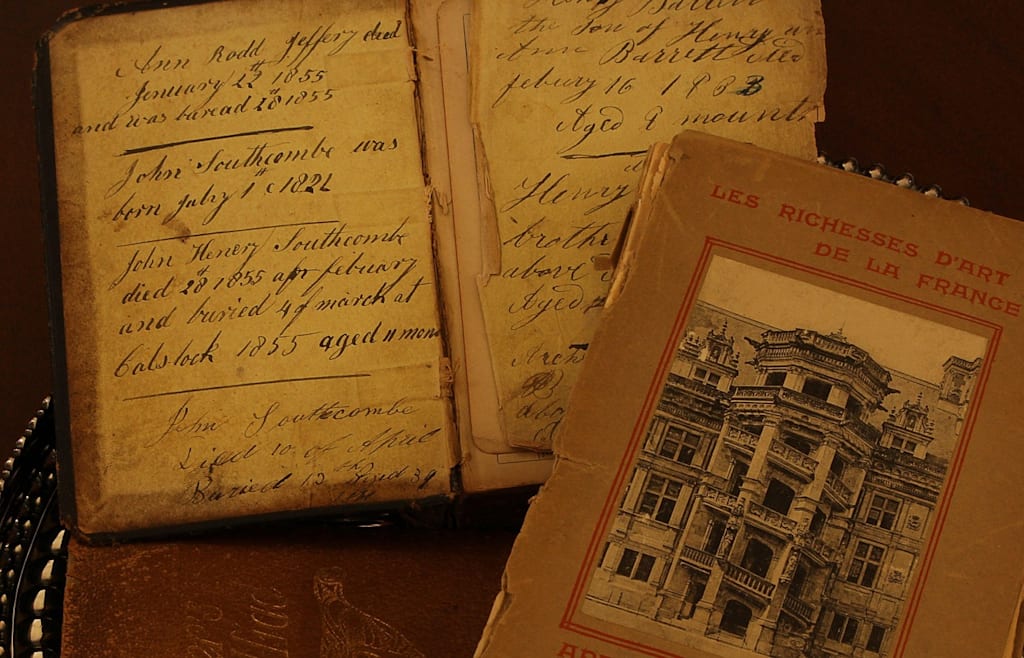
Inside the box were a massive amount of documents, jars filled with silver coins, and beneath them, a stack of worn spiral bound journals. They didn’t look like something that had been hidden for forty years. No weight to them. No warning.
Just pages.
The banker escorted me to my car and I carried these treasures home alone.
My mother couldn’t be there. She hasn’t been “there” for a long time—not in the way that means present. She lies in a bed now, in a mental care facility, caught somewhere between memory and hallucination. Some days she reaches for things that aren’t in the room. Some days she calls out to people who are long gone. Some days she asks me if something is wrong with her.
I tell her no.
I don’t tell her about the journals.
That night, I sat at the table and opened the first one.
My father’s handwriting was exactly as I remembered—precise, steady, almost too perfect. Every journal entry was placed with care. No hesitation. No emotion.
The first entry I read was simple.
Your mother was upset again today. Said I didn’t listen. I did listen. It is not enough.
I paused.
There was no anger in the words. No pleading. Just a statement. Clean. Final.
I turned the page.
She wants to remodel the kitchen. We just finished the last remodel. I agreed. It is easier this way.
Another page.
Nothing is ever quite right. She can never admit when she is wrong.
The words didn’t rise or fall. They didn’t build toward anything. They just existed—day after day, like entries in a logbook.
Growing up, we knew.
We knew when to stay quiet. We knew when her voice shifted, when something small would stretch into something we couldn’t fix. We learned how to disappear without leaving the room.
People used to say he spoiled her.
“He gives her everything,” they’d say.
They never saw the cost of that giving.
I kept reading.
She slept on the couch again. She says it was from my snoring. The kids were quiet today.
I could feel something breaking open in me, but the words didn’t meet it. They didn’t comfort or accuse. They just sat there—unmoved.
Then I found an entry about my brother.
He moved down south. I told him I understand. I do. The house feels different.
A few pages later:
Called him. Sounds like he’s doing well.
And later:
Spoke briefly. He sounds busy. That is good.
Then one line, alone on the page:
I miss him.
That was it.
No explanation. No emotion beyond the words themselves.
I closed my eyes, then kept going.
There were entries about his retirement.
Last day at the firehouse. They guys made me roast, potatoes and chocolate cake. They went out of their way to make it easier to say goodbye. I look forward to playing more tennis and working in the creek.
And he did.
Started the fence near the creek. Those concrete bags are heavy.
Hot today. Over 100. Made progress.
Back aches. Will continue tomorrow.
Page after page of heat, labor, repetition. As if motion itself could hold something in place.
Then I found myself in his writing.
She chooses men who bring her pain. I do not understand why. I want to help. She does not ask.
I stared at it.
Why can't she see it?
No anger. No judgment. Just confusion.
And distance.
I kept reading, though I wasn’t sure what I was looking for anymore.
Toward the end, nothing changed. Not the handwriting. Not the tone.
Played a long match with Don. First time I beat him in 3 sets. Back to work in the creek.
Then:
Long day. Finished another section. Will check it tomorrow.
That was the last entry.
No ending. No conclusion.
Just a plan for a day that never came. He passed suddenly the following day. No goodbye. No warm departure.
I sat there for a long time, the journal open in my hands.
Across town, my mother lay in a bed, her mind moving through rooms that no longer exist. I thought about her hands—how they still reach for things, still try to arrange a world that makes sense to her.
I thought about telling her.
About bringing the journals, reading them out loud, asking her if she remembered any of it.
But I already knew.
She wouldn’t hear the words the way they were written. She wouldn’t meet them where they lived.
And maybe he hadn’t written them for her anyway.
Maybe he wrote them because there was nowhere else for them to go.
I closed the journal.
The stack of journals sat beside it, waiting.
I didn’t open them. And I told myself I should have read from a journal of long ago. I should have read his entries from 1970.
The tension and wear of her demands was not heavy on him yet.
The house was quiet, but not empty. The words stayed with me—flat, factual, unchanged.
Morning would come, and nothing in those pages would shift. Nothing would be undone or explained.
I left the journals on the table.
Not hidden.
Not locked away.
Just there.
And still, nothing in them asked to be forgiven.
About the Creator
Lori Armstrong
Lori is an award winning author who writes multi-genre books. She has written and edited several books that are available on Amazon along with ghostwriting for clients worldwide.
She is also a published journalist for the news.
Enjoyed the story? Support the Creator.
Subscribe for free to receive all their stories in your feed. You could also become a paid subscriber, letting them know you appreciate their work.
Comments
There are no comments for this story
Be the first to respond and start the conversation.