
Fluidity
It can’t be helped


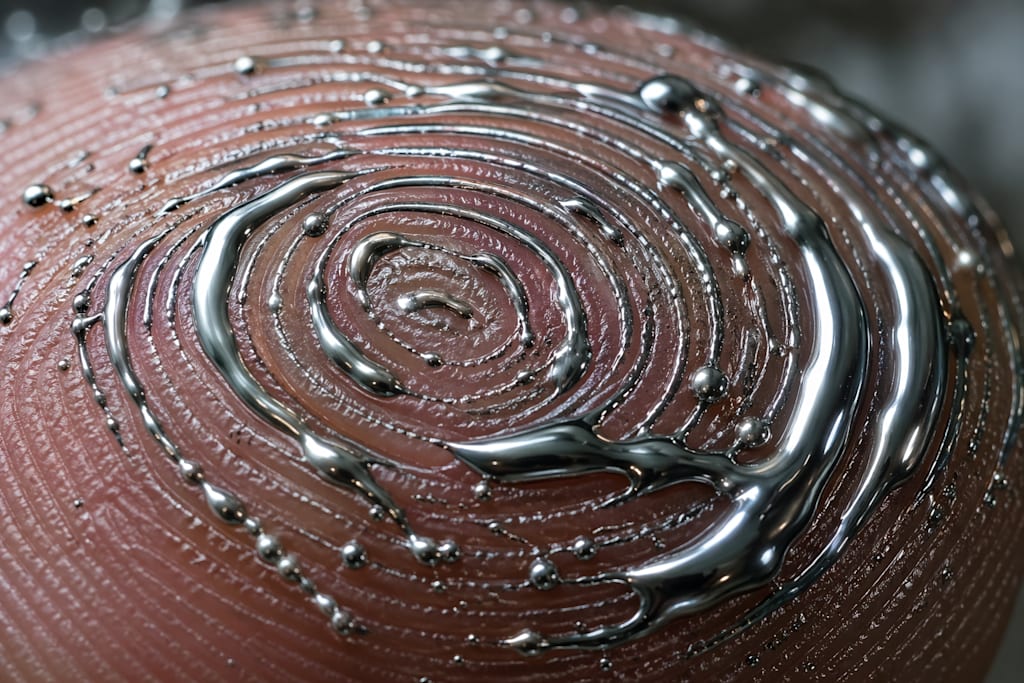
The liquid alloy implant invades the base of the skull, touring through the cerebrospinal fluid, colonizing, claiming the medulla oblongata, the cerebellum, back toward the thalamus, and up into the cerebral cortex until it goes where it's told. But before all this occurs, the extracted dose comes from a time-constrained chain of melting glaciers and heated reunion. Because of its origin, it traces a peculiar pattern, scientifically calling to life a future your body alone could not do on its own. After invading the skull, the dose moves at a pathetically glacial pace compared with the buckshot desire to live despite. Once implanted, that is, the dose comes under the mediation of machine time, which gives you plenty of ambivalence to call your own as you contemplate, in a phrase you’re robbed of the chance to abhor, "what might have been."
You will not get lost, or what you had most loved about getting lost, before it was made impossible - the thrill of not knowing but trusting it would be okay, and especially, once, maybe pissing on your own foot. You will not burst into song, sometimes with words wholly new, or have pregnancy scares - your fertility now a scheduled event.
You will not find your father's stash and pipe in his bottom bathroom drawer while searching for nail clippers, or what you would have done with that discovery, alone in the woods, the path laid, the afternoon suddenly changed.
You will not question yourself - why you live in the shadow of another, why you cannot fly your own kite - or question your gods, as Voltaire did, whether if they didn't exist we would create them anyway. None of these. Not one.
You will not cut yourself to feel something. You will not resent your mother, who would only say things like "sometimes it's better to stay together for the kids." You will not hate your father.
This is what you have instead. Location. Perfect recall. Timed cycles and pre-ordained genders all depending upon your metrics. High-sensory ceremony, the kind designed to feel like a gift. They watch from screens. Your performance is monitored. On one of the last islands of humanity, your procedure is handled by a human whose hands you will not remember feeling there.
The technician about to inject you sighs and rifles through drawers for the right syringe. She's breathing through her teeth. Swallowing audibly. She has been doing this for longer than feels right. The music loops, optimized for calm, stripped of whatever it was before it was useful, playing at the frequency that keeps you still.
Then the revolving floor spins past your parents. They're up in the observatory, behind the glass, their mouths moving at something you are already past. They might be saying your name.
The drawer closes. The crinkle of plastic wrap. Then more plastic wrap. The casings hitting the trash bin. The music shifts, lyricizes. "What is pain?" You turns toward it. You want to hear it again but know better than to turn your head. The technician will think you said something. But that isn't it, not at all. It's that the music has phrased something, by accident or by design, its pure unexpectedness and its timelessness. You close your eyes and pray to be shown.
The fluid is already settling. It can never be re-extracted or charmed into arrest. In the end, it will do its work and leave old you behind, your memory trail slurped up, flattened, and cannibalized.
It can't be helped.
But for now you can still make time. Time for the branches to hold you in rest. Time for shouting back and forth over breakfast and what a child should and shouldn’t. Time for the notebook under your mattress with etchings on their way to an unfinished story.
Insertion without consent.
About the Creator
Nicky Frankly
Writing is art - frame it.
Enjoyed the story? Support the Creator.
Subscribe for free to receive all their stories in your feed. You could also become a paid subscriber, letting them know you appreciate their work.
Comments
There are no comments for this story
Be the first to respond and start the conversation.