
Epiphany
The past is never dead. It's not even past.


The first snow was late. It fell on the fire-watchers at the Hasbaughs’ annual Epiphany tree burning. Melting flakes hissed on the Christmas trees flaming in the stone-edged pit beside the house at the top of the lawn. Neighbors had strapped the season's desiccated totems to the tops of their cars. And brought them for a final salute to another Christmas past.
Three Kings Day celebrated the Magi. People drank hot wine and cold beer and ate potluck in the January chill of a Cotswolds’ winter. Conversation hummed as you greeted dear friends and tried to attach names to faces you hadn't seen since last year’s tree burning.
It wasn’t just the adults who enjoyed the night. From beyond a tree line painted by the firelight but otherwise hidden in the darkness, the piercing treble yells of young children splashing in a swimming pool echoed through the still air from a neighbor’s house. It was my house. And they were my children - all three of them.
My oldest was Francis. It was always Francis. He could not abide Frank. He was a serious, taciturn boy with too much on his mind to permit conversation. Abigail, who preferred Abby, was his Irish twin. She was eight, her brother nine. And she had red hair and a gift of the gab, as she liked to say. Or a motor mouth, as Charles would observe to me without rancor.
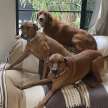
Last was Valencia. Val to her friends. And she had many. She was a joy. As a baby, she slept without fuss. Her twos were not terrible. And at four, she sparkled with the sophistication of a diminutive woman of the world. No one could match the weariness with which she draped herself across a sofa.
We hadn’t always lived in England, although I was Cotswolds-born and raised. Some 23 years ago, during my gap year, I had decamped to the Australian Outback to make a man of myself by working on a distant uncle’s cattle station. Like so many Englishmen with wanderlust, the weather had a lot to do with it.
I was tired of Britain’s incessant drizzle. I could live with an aggressive climate, where the sun shone with confidence between towering thunderstorms. But that is not how the English do weather. The days dawn grey, and the moisture thickens to mist. Every once in a while, a brief shower gives way to five minutes of hesitant light. Until that effort proves too much and the gray returns. It was indeed a climate sent to try men’s souls.
So after I sat my Oxbridge exams at the beginning of December, I decamped for a hotter climate. I pocketed the ticket my father had bought me along with enough cash to lubricate my journey to the eastern end of Western Australia. Landing in Perth, I boarded a local flight to Leonora, a speck of an Outback town.
I stepped off the plane into hot, dry sunshine. The pilot had announced the temperature was 35ºC. More than 95º if you reckon these things in Fahrenheit. It was about average for a December day in the area. And I soon discovered it only got hotter. I am not one to take a pessimistic view of things. But I did wonder if I had fallen for the romance of the idea without thinking it through.
A cheerful man greeted me at the gate with a hearty “How are you getting along, mate.” His name was Garrett. He was leathery. He drove a large, old American pickup that paid in diesel fumes for what it lacked in AC. Fortunately, it was only a thirty-mile trip to the Glenora cattle station. And the roads were paved.
Garrett had a thirst for all things English. There weren’t many city folk around, let alone global travelers. Civilization had adopted the internet. But back then rural Australia was beyond its reach. And newspaper delivery was limited to the Western Australian - which understandably focused on news from Western Australia.
Driving through an automatic gate, we arrived at a large utilitarian building that turned out to be my relative’s home and office. The rest of the compound housed the station’s workers, maintenance facilities, feed storage bins, diesel and gas pumps, barns and stables.
It was surprisingly modern. Most of the work was done on ATVs and the like. And only the more remote areas required a horse.
My uncle was out somewhere, so Garrett showed me to my room. I had been granted no blood privileges and was housed in the stockmen’s quarters. It was clean and functional and reminded me of my bedroom at boarding school. There was no luxury, but it was more than spartan.
“Frank’s back,” Garrett announced as I was stowing my kit. I went with him to the big house. There, in a communal office with unremarkable desks, files, and computer monitors, was a tall, red-headed, lean man. Francis Fitzgerald in all his Hibernian glory.
I had been briefed before my departure. Frank had emigrated from Killarney at the same age I was now. Over the next 40 years, he built himself up from an ambitious youth to a man of property. But he still spoke with the brogue of the Irish Southwest. But with brevity, not blarney.
“There you are.” he said.
“Yes I am.” I replied to be agreeable.
“Right. Here’s Ian. He’ll set you up.”
I assumed Ian was the man standing next to him, as I already knew Garrett. And no one else was in the room.
“Good trip?” Ian said as if he were Frank’s designated conversationalist.
“Not bad.” I replied.
“Take him around then,” Frank interjected, signaling the pleasantries had been sufficiently observed.
Ian was the foreman. He gave me a tour of the station’s headquarters, commenting on the various facilities. By the time we were done, 10 other men had returned from the wild. They were a friendly mix of white and Aboriginal, with none of the airs of the English boarding-school class.
At six, a bell rang to signal dinner. Kath cooked and served the food on a refectory table. All bantered good-naturedly. As I looked for my place, Ian informed me that Frank had ‘requested the pleasure of my company for dinner’. It was a gentle mocking of my accent and provenance to let me know I was welcome, but on probation.
At the main house, Frank welcomed me laconically. Invited me into the kitchen. And introduced me to a young woman named Chris. He gave me a beer without asking. I submitted to his authority, as a beer was what I wanted. Chris had a glass of white wine. Frank drank tea.
He commanded, “You two talk. I’m cooking.” And so we did.
Her full name was the lyrical Christobel O’Dell. She was the daughter of Frank's dead partner, Eamon, an Irishman raised in Liverpool who had married an Englishwoman. She wore no makeup. Dressed plainly. But her conversation sparkled even as she spoke of tragedy.
Chris set the table. Frank finished cooking. He served spaghetti bolognese. It turned out it was all he cooked. And he only did it once a week. It was a coincidence that I arrived on the day he made it. It was good.
Frank didn’t say much. But he learned what he needed to know about me from Chris’s inquisition. She was fascinated by my experience. She had never traveled outside of Australia. Or even much further than Perth. But she had read books about life in England and tried to imagine what it had been like for her mother as a girl. I did my best to paint a picture. Chris thanked me with her smile.
The evening ended early. On my way out, Frank, as a concession to our distant familial bonds, invited me for another round of the same the following week.
I returned to my room ruminating on my conversation with Chris. She was unlike any debutante I had squired to a ball. She was without artifice, and spoke her mind. She liked what she liked. And dismissed what she didn’t.
I thought about that as I stood looking at the fire, listening to the happy splashing of the children.
Life at the station was hard and confusing. But knowledge comes with repetition. Eventually, I felt as if my labor was paying my keep. Frank was so unemotionally impressed by my effort that he allowed that I could be a cattleman in a few decades if I put my mind to it.
He might have said it in jest. It was hard to tell. But if he meant it, he was closer to the mark than he suspected. I wanted to be a cattleman, despite the news from home.
I had been accepted at Oxford. My parents congratulated me on the achievement. My friends sent sardonic letters demanding I flee back to England before I went native and acquired the filthy accent. And a pair of casual old girlfriends kept their options open by hinting that my return would not be met with disfavor.
Arriving in Australia, I would have wagered my return was a near certainty barring kidnapping. But my certainty faded. The work was hard but honest. Frank showed me respect. The men accepted me. And I liked Chris.
As my gap year’s finish line came into view, I decided my future. And talked with Frank about it. It was spaghetti night. Chris was listening to her iPod as she did the dishes.
“Frank, I want to stay.”
“You mean that, don’t you?”
“Yes”
“Did you tell Chris?”
“No, I wanted to talk to you first.”
”What I think doesn’t matter. Chris owns half of this place, and I’m dying. It’s all hers when I’m gone.”
I contemplated this development. Frank didn’t look ill. Yet his brevity had never extended to dishonesty. So I took him at his word. And submitted my request to Chris. She agreed to the arrangement. It did not surprise her.
“I was wondering if you would ask,” she replied. “It was obvious you wanted to stay.”
Back in England, my parents were disappointed. My friends toasted the loss of a comrade to the antipodes. And the two old girlfriends updated their eligibility lists by striking my name from consideration.
Within two years, Frank was dead.
Chris was a natural leader. Even the oldest ranch hands accepted her management. Some people are born to be in charge. And others are born to marry them. So I did. I had no plan to do so. But there comes a moment in every man’s life (if my experience is typical), when a roaming eye becomes fixed on one object.
Looking at it unemotionally, I cannot identify the moment I knew I loved Chris. One evening it was not on the radar. The next morning it was as if it had always been so. However, while I realized the change in circumstances, I shielded Chris from this update. Being a well-bred Englishman, it would have been bad manners to spring it on her. So our affair remained one-sided and spiritual.
Until one day, Chris asked how long it would be before I kissed her.
Of course she knew. A man in love lets it be known despite his attempt to cover his feelings with cruelty, kindness, or studied indifference. Thank God women are decisive. If it were left to men, half of history’s great romances wouldn’t have made it out of the starting gate.
So I leaned in to kiss her. And she kissed me back.
A year later, I proposed. She agreed. Within a year, Francis was born. Abigail soon followed. In due course, Valencia completed the triad. They were part of a large family. The stockmen declared themselves uncles. They treated Francis as a miniature equal. Drank many cups of Abby’s imaginary tea. And they made faces at baby Val.
I watched Francis grow. He was thin but sturdy. He honored his namesake uncle with his observant reticence. His monosyllabism masked an unquenchable curiosity.
Abby was Chris’s child. People did what she said. She wasn’t bossy. But her understated conviction and evident common sense rendered opposition to her suggestions seem misguided.
Little Val defined insouciance.
We built a pool. And taught the kids to swim. I would watch them yelling and wonder how I would feel when they grew up and had children of their own.
We hired a new cook for the men. Kath became the children’s nanny and confidant. She drove the older two to school while Val toddled around the office where Chris managed the money and paperwork.
Outside, I grew into a confident man directing the endless physical labor of maintaining the place.
The pool soon became the station's social hub. On Friday nights, the guys would drive to the White House Hotel in Leonora and try to drink the place dry. But on Saturday afternoons all the hands and whatever girlfriends were currently on the roster would stop by for beer and barbecue. All were welcome to swim, and most did.
The biggest shindig of the year was the Christmas pool party. The neighbors came with their potluck. The stockmen would come with whatever. And tubs of ice were crammed with beer and wine.
We would throw tinsel and ornaments on the large gum tree in the yard and pretend that snow was falling in the 100º heat. Garrett would dress in a well-worn Santa outfit and give the children prezzies from an old canvas feed sack.
The kids would shriek and splash until the sun started to set. And we would light an unnecessary fire in the stone-edged pit beside the house at the top of a rise. And all would gather to celebrate the season.
I had been blessed. But life is like English weather. Changeable.
Ten years ago, Kath was visiting a sick sister on a January day, so Chris drove the children to school. A gasoline truck heading the other way blew a tire, swerved over the yellow line, and hit them head-on. Nobody survived. And I lost everything that counted.
My grief has become a black companion. It is never far away. I inherited the station. And sold it. I returned to England fifteen Decembers after I had left. The Cotswolds were as I remembered them. Chill and grey in winter. The nights long and dark. I holed up in the family home. Sullen and quiet.
Yet even the greatest grief loses its edge. The pain never goes away. But it dulls into a burden to be borne. I did go out again. I met the neighbors. One year, I went to their tree burning. And every year after that. It was always on January 6, the day the Three Wise Men visited Jesus in the stable. And the anniversary of the day my family died.
Every time I watch the trees burn, I can hear my children, now frozen in time, celebrating their immortal youth by splashing in the pool, impervious to the northern chill. And as I stare into the fire, I can feel Chris’s hand in mine as she whispers, “I love you,” in my ear.
About the Creator
Pitt Griffin
Once upon a midnight dreary, while I pondered, weak and weary, it occurred to me I should write things down. It allows you to live wherever you want - at least for awhile.
Enjoyed the story? Support the Creator.
Subscribe for free to receive all their stories in your feed.
Comments
There are no comments for this story
Be the first to respond and start the conversation.