
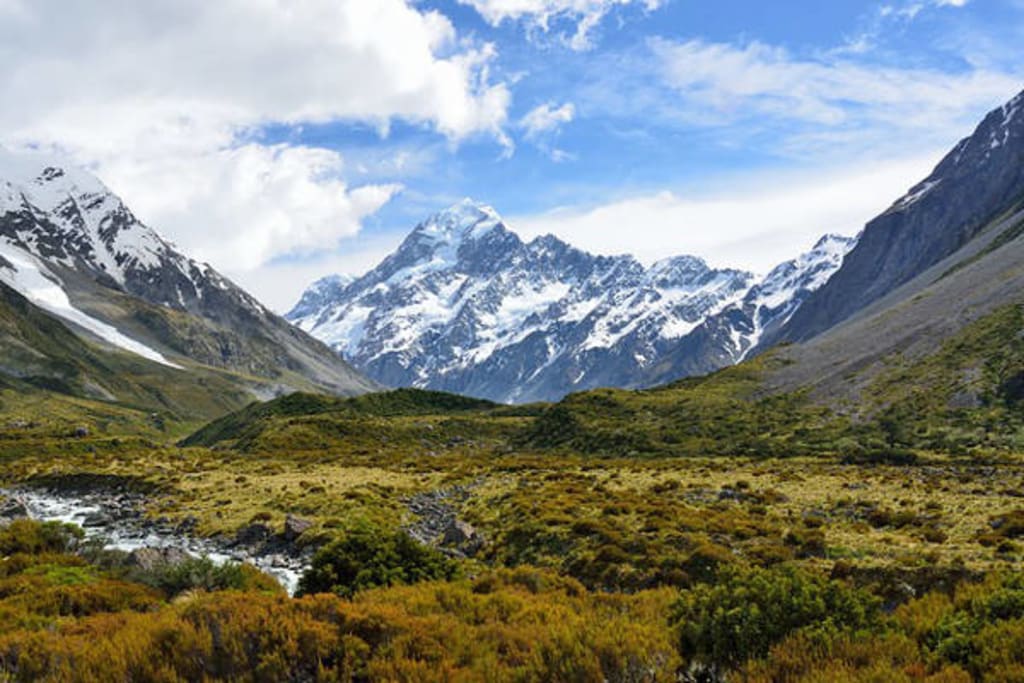
There weren’t always dragons in the Valley. The Valley, a relatively peaceful name for a land that provided the only refuge from the Dragon War – a war which had ended over one-thousand years ago, leaving much of the land scorched and bare. Four great Kingdoms had once existed throughout the land. The land flourished and thrived. Treaties were formed, wars were fought, trust was betrayed. Yet the Kingdoms still stood. Once.
Until one long, unforgiving winter, when vast hordes of soldiers covered in black and blood-crimson armour, called the Ishkan, or Dragon Warriors, sailed from the west. They brought with them terrible, fire-breathing beasts, easily ten metres in length, with wings that beat like thunder. There were hundreds, even thousands of dragons. War raged along the western coastline, in the Kingdom of Arnon. The other three Kingdoms stood still and waited, watching to see if Arnon and its King, Phillip, could turn back the invaders. Alarmingly quickly the Ishkan armies advanced east, north and south, leaving the land blackened and burned, devoid of life.
The Arnon fought fiercely and courageously, but they were overwhelmed by the sheer number of the enemy and their dragons. They gave way. It started as a slow trickle, becoming a river of retreat. The King would not send all his people to death in a hopeless battle. He took his people south to Hadorr, seeking refuge and aid from King Balan. Phillip had sent pleas for help to all three other Kingdoms, with no reply. When King Balan saw the devastation that had come on Arnon’s people, fear and rage gripped him and he pledged allegiance to King Phillip to help rid the land of the Ishkan. He sent riders to Gillam in the north and Shardan in the east, calling for an alliance with them. Both Kings accepted and so begun the Dragon War.
The war lasted for fifty long, bloody years. At the time of the Alliance, Gillam and its King Foldor, as well as Hadorr, had had first contact with the Ishkan. King Ludak sent his army west from Shardan to hold back the Dragon warriors. At first, the Alliance held off the invasion, even gaining victories in various places, but as more ships kept bringing more dragons and more soldiers, they began to falter.
The Ishkan took the northern Kingdom and, from the coast, had come as far east as the Grey Mountains, just within the borders of Hadorr. The armies of the Alliance were beginning to be hemmed off as the armies retreated, and the Ishkan and their dragons held more and more of the land. The smoke of burning towns and cities rose menacingly behind them, darkening the sky and hiding the sun. The stench of char and death was in the air, the fear of attack was constant, defeat was closing in, and hope was fading like the smoke blocking out the light.
In the final years of the war, the remaining armies and people of the four Kingdoms had slowly given way and been pushed south and had found themselves surrounded by Ishkan soldiers and dragons to the north, east and west, and trapped by the Ocean of Storms to the south. Shardan had fallen, its King along with it. Ludak’s son Hal had replaced him as King, leading his people to the remaining armies in the south. The invaders could sense that victory was close at hand, and they pressed forward with vigour and without relent.
The Alliance found themselves backed up to the slopes of the mountains, the Grey Mountains around to the White Mountains in the east, joined in a horseshoe shape, creating the defensive border of Hadorr. Fighting with soldiers and the Gar’vanan, mysterious men and women who had power over some aspects of nature, the line held against the unstoppable Dragon Warriors. The rocky terrain and icy chill of the mountains seemed to have an effect on the dragons, they could not breathe fire to the extent they had been, and they could not fly as far as elsewhere. The Alliance had the advantage of elevation and could launch rocks and logs and fireballs, and rain arrow fire down on the enemy from the towers built on the mountains to defend Hadorr.
Something changed as the war was coming to an end though. The Ishkan assault slowed, the attacks still came, but in lesser numbers. A dusty messenger came to the Kings one night, covered in sand brown clothing and grey head wrappings so only his eyes were showing. He was armed with war javelins and a short recurve bow, a large quiver bristling with arrows hung by his side. His dark skin and amber eyes marked him undoubtedly as one of the savage sand warriors from the desert, east of the high, frozen mountains of the Serpents Spine that divided the continent. For the first time in 500 years, the Haakim had crossed over the mountains, to make war with the Ishkan. The Haakim were a mysterious and feared people, and little was known about them. But they were forcing the invaders back, not taking prisoners. They fought with javelin and bow with uncanny accuracy from horseback, fighting along side the great cats that roamed the deserts. Since the beginning of the war, the dragons had feared nothing, but at the devastating, lightning attacks of the Haakim, the great beasts fled and scattered.
The messenger urged the Kings to gather their entire armies and march on the Ishkan, for the tide of the war had been turned. Sparked with hope, vengeance and hate, the Kings agreed to make one major, final effort that would result in the end of the war, one way or another.
So soon after, the four Kings of the Alliance gathered what remained of their armies and went down from the mountains and charged the ranks of the Dragon Warriors. For days the bloody battle raged, neither side gaining or losing ground. Until the fifth day. The Ishkan line in the east, at the slopes of the White Mountains fell back, and the armies pursued them, defeating them. The northern border armies held strong but on the same day, the Ishkan army fell to disarray and fear gripped them. The Haakim had come on them from the rear and they were finished.
At the base of the Grey Mountains, the war raged hard and costly to both sides. For a week it held, then another, but the Alliance forces were exhausting. King Balan was killed, the young prince Neren taking his place. They began to fall, the army was backed up all the way to the mountains and again, the enemy was closing in for a final onslaught. The Ishkan had just received reinforcements from the coast and the defending army was far outnumbered. Then, on the twentieth day of the battle, reinforcements from the northern and western border came rushing down the mountain side, the two other Kings leading their men. Haakim came riding around from the north, flanking the Dragon Warriors. But the Ishkan were still great in number, and a bloody battle ensued.
It was there, on the slopes of the Grey Mountains of Hadorr that the young King Neren stopped at the body of a solider, lying lifeless on the rocks, helmet lying nearby. The young Queen Rina lay dead, arrows pierced her breastplate, and claw marks had marred her face. But it was undoubtedly her. Neren screamed in pain and anguish, beating his chest, tears streaming down his face, carving tracks through the dry, crusted dirt and blood. She should have been safe in the capital with her people. Why did she come to this fight?
Neren stood and took in the battle around him, his heart threatening to burst out of his chest. A soldier came to him, informing him that the other three Kings had fallen, that he was in command of the Alliance now. The King ordered that the body be taken to safety and turned his eyes to the enemy after looking at his Queen one last time. His body trembled, his hands were white knuckled as he gripped his shield and spear. And then he ran. He charged the enemy lines with no notion of survival. The only thought that went through his head was death. Death to those who had taken his loving wife from him, whether it be man or dragon.
The men rallied to his cry and followed him, even the Gar’vanan, who had allegiance to no one, followed him. He hacked through the ranks of the Ishkan, in a berserker rage. He was struck multiple times, having no effect, his eyes glowing with hate and desire for revenge. Lightning fell around him, blasting his enemies, the earth erupted sending men and dragons alike flying, rocks shattered, the shards being flung forward by the wind into the Ishkan. Thunder roared deafeningly overhead, and the battle was almost over.
Never before had a King had the abilities of the Gar’vanan, but Neren had caused devastating effects with that power to an extent never recorded before. And the Ishkan ran. The dragons fled in any direction away from the mad King. The King and his army pursued the enemy to the edge of the Misty Forest, where their numbers were now too few to regroup and return. And there the King finally fell to his knees, bloodied sword in his hand, for his spear and shield had broken long ago. Neren collapsed from exhaustion and pain as the berserk faded, and the sun was sinking over the tips of the Grey Mountains in magnificent hues of red and orange. He was carried victoriously back to the capital city of Cairnin in a stretcher, where the Gar’vanan worked to heal him of his wounds, which were many and great.
Four months later, he was crowned King of all four Kingdoms, who now lived in the naturally fortified area of Hadorr, now called Nerendarr, or The Valley.
After Neren’s final charge, some of the dragons had found their way into The Valley. They did not continue fighting and destroying, they had hidden in caves or woods or swamps, fearful of the terrible wrath that had come upon them. The Gar’vanan were sent with soldiers to find them and to try and calm them. Many were successfully calmed, the Gar’vanan removing their hunger for war and blood. Other were not so easy and had to be killed. The ones that were calmed were allowed to live freely but their fear was still there, so they stayed away from the humans.
The Haakim had not wasted time in heading back across the Serpents Spine to their homeland. They wanted no recognition or glory for aiding the Alliance, they lived ready for war and to protect only their homeland and that is what they had done, the dragons that lived in what was now called Dragon land or the Dragon Waste, would not cross the icy passes of the Serpents Spine without the Ishkan to force them, as it was too cold for them and the desert warriors waited on the other side.
The land had been left ravaged by the fifty years of war. Where once stood towns and cities, were now blackened wastelands. Forests were burned, some starting to produce new growth, but rivers were tainted, causing the land to grow back differently, sick and poisoned. The great plains in the west, once lush with green grass, surrounded by low, rolling hills and groves of oaks and birch, with vibrant colourful flowers interspersed among them, were now vast, grey-black areas of dirt and rock. The only place for the people now was in Nerendarr, The Valley.
In the forty-three years of King Neren’s reign, the people grew and prospered. The towers that had been broken were rebuilt and dragon defences were added to them, all along the mountains surrounding The Valley, and the Dragon Guard was formed. Elite warriors and soldiers who had survived the war were the backbone of this special unit, in charge of overseeing defences and training the next generation of Dragon Guards to defend Nerendarr from further dragon attacks, of which there were many minor skirmishes, mostly in the west, and so the Grey Mountains were given the name Dragonwall.
In the thousand years since then, Nerendarr had split into two Kingdoms, Nerendarr in the south and Ba’alon in the north. The two nations had times of prosperity and good relations, and also times of war. The peace and security provided by the Dragon Guard led the two nations to become complacent, forgetting the threat from outside their mountain defences. But the one thing that remained was the Dragon Guard. They were not aligned with either Kingdom, but both Kingdoms maintained the force and provided warriors and resources for it. Over the years, the supply or resources and soldiers dropped as both nations felt that the resources could be used elsewhere. They still provided, but not to the same extent. The Dragon Guard did not take any part in the wars of the Kingdoms though, they had a higher purpose.
*****
A cold breeze drifted over the Dragonwall, it was mid-June, and the snow was late in coming. It had been a surprisingly warm Autumn, keeping the cold and snow at bay, not that many folks complained about it though. Crops had been still growing steadily for much longer than usual that year and when harvest time came, there had been an abundance. The people were all saying that it was the most plentiful year that had ever been recorded on this side of the Dragon War. Not that many records still existed of the times before the Great War, they had all been destroyed, names of places and Kingdoms all but forgotten. What remained in great detail was kept in the libraries of the Gar’vanan, always seeking knowledge and documentation of the past.
But that was of no concern to Manhan Valarson, Commander of, and currently on watch for the Dragon’s Fang tower, one of the most well-known towers on the Dragonwall. Said to be the very one that Queen Rina, wife of Neren the Great, had been taken to after she had been found dead on the battlefield over a thousand years ago. Manhan Valarson was a hard-faced man, strong, determined and calm when all hell broke loose. He was forty-seven and had been a member of the Dragon Guard since fifteen. He had showed remarkable talent with both blade and bow as a young lad and had quickly been sent to train as one of the Dragon Guard. He had fought many battles in his time on the Dragonwall, ranging from small outlander bands, attempting to come in and pillage smaller villages or farms, to dragons, deciding they wanted to come over the mountains to find food and blood.
Commander Valarson had shown valour and determination and had quickly risen through the ranks of the Guard to Commander, at the young age of twenty-eight. He had scars down the left side of his face where he had come very near to death by the hands of a dragon many years ago. He had not much of a sense of humour anymore and scowled at the young recruits when they joked around. But as for now, he was staring out over Nerendarr, the land where he had come from.
He saw towns, bustling with people in the markets, and farmland spreading out beyond. To rolling hills and forests. He turned to look south, where there were not many villages or houses, this was territory that only the brave or foolish wandered into. This was where the dragons had made their home. While their race inside The Valley had been calmed, this still made them no less dangerous or protective of their territory and families. As he turned back to look out west, down the mountains towards the hills and beyond that the Misty Forest, a snowflake landed on his shoulder, and then another, and then another. The winter had finally arrived.
He heard conversation from the level below him in the tower and soon after, a warrior appeared out the trapdoor to the open top level of the tower where the Commander was.
“News from Nerendarr, Commander” he said. “The Ba’alon are attempting to take the city of Gorl, near the border.”
“What could they possibly be doing that for!?” Manhan replied straight faced, though confusion seeped into his voice. “Surely they know that this could very likely lead to war with King Domin?”
“We have no further information currently sir.”
“Hmm, well keep me informed when you receive more Bran.”
“Yes sir!” Bran replied with a knowing smile. It had been an unnecessary instruction, all soldiers on the Dragon Guard were highly trained and knew to keep their Commanders informed of any changes inside or outside The Valley. Bran had worked alongside Manhan for many years and had a deep respect for him. He also knew now that the Commander was trying to figure out on his own why Ba’alon would try to take Gorl, without any further information. He would proceed to enter a distant mood for about half an hour, till he either figured something out, or puzzled himself bored.
Manhan had wandered down to the lower levels of the tower after his watch was over, to warm himself up and grab something to eat. He had just sat down at a table when one of the younger soldiers burst into the room, red-faced and puffing, as if he had just run a race. Manhan recognised the solider as Haran, one of the new recruits. It was imperative that Commanders know all of the names of the soldiers under them by sight. Haran quickly scanned the room until his eyes landed on him, he came over quickly to the table.
“Commander, the beacon to the north has been lit!” he explained breathlessly.
At that very moment, Bran came down from the top of the tower to relay the same information. Valarson stood up immediately and strode purposefully to the door and went outside to see for himself. As he went, thoughts were racing through his head. First, potential war in The Valley, and now this!! Is the world falling to pieces?
He came around to the north side of the Dragon’s Fang, hoping beyond hope that his men were just fooling with him. Of course, they were a very high-level unit, and joking like this was intolerable and would result in severe punishment. But Manhan knew his men. They all loved to have a laugh, but in matters such as this, they were as trustworthy as any men he had known.
He looked through the snow that was falling heavier now, but there could be no mistake. The beacon of Ironstone tower was blazing bright. He turned and ordered Bran, who had followed him out, to have their own beacon lit immediately, to pass the message on to the towers to the south. Bran gave a nod and hurried back to get it done.
Commander Valarson stood there in the now icy wind and light snow, staring towards the north. For seven-hundred years the beacons had not been lit. His heart was pounding in his chest, and he did not feel the cold. He had fought battles before, but this would not be like anything he had faced. The beacons were signals of death that always stood there and were maintained, but never used. But the beacons could only mean one thing. War was coming.
About the Creator
Enjoyed the story? Support the Creator.
Subscribe for free to receive all their stories in your feed.
Comments
There are no comments for this story
Be the first to respond and start the conversation.