

There weren't always dragons in the Valley. If it weren’t for the arrogance of men, it would have stayed that way; In another time, when the Roman Republic ruled across the Mediterranean with a conquering iron fist, their brutality spread rapidly, imposing their rule on other tribes and nations they deemed lesser than themselves. As they conquered, as well as imposing their rule on those they conquered, they also imposed their own religion on the native tribes and nations, as they would destroy worship sites and temples they deemed unworthy, especially if the religion was an insult to the Roman pagan gods. There was one such religion that caught the attention of the Republic.
In the Bay of Naples, with the great Mount Vesuvius overlooking it, at the base of the mountain, hidden within a seemingly secret cave, a Roman General named Marcus Claudius Marcellus found an temple from a bygone era carved into the bedrock of the mountain and a great altar with carvings of what Marcellus figured must of been the name of the god that had been worshiped here, Dracos. In the Roman Latin language, Marcellus understood exactly what this god was; Dragons. As a child he had heard stories and legends of ancient dragons roaming the skies, with the names of brave men who had slayed them. Most people didn’t believe these stories, including Marcellus. They were just myths. Stories. He couldn’t believe his eyes, could the dragons really have existed? With his curiosity getting the better of him, he ventured further into the cave, coming to the entrance of a pit that dropped straight down as far as he could see, and on the rock above the pit, a carving of a great dragon. Dropping his torch into the pit, it was deep enough that he couldn’t see the torch hit the bottom. He told himself he needed to come back with a legion, rope and equipment to get them down the pit. Marcellus had to know if there were dragons down there.
Marcellus and his legion ventured down the pit, reaching the bottom, and they found catacombs with tunnels going deeper into the mountain. Excited, he continued through the tunnels, not being seen for months. Word traveled around the Bay how Marcellus found a Dragon god Temple with a hidden cave, most laughed calling him mad, some at least curious, but after a while, people forgot about Marcellus and Dragon god Temple, or at least didn’t care. Finally, after nearly 5 months, Marcellus and his legion emerged from the cave. Proud and boastful, Marcellus revealed they had found a hidden world within the depths of the earth with more than “a thousand thousand dragons”, as he had put it. Everyone laughed and ridiculed him. There was no way there was a hidden world under the mountain. But what the people didn’t expect was that Marcellus and the legion had brought back proof; a real, dead, dragon. Unveiling the beast, the people were in awe. The size of a large horse, with four legs and great talons, hard scales, long tail and wings that spanned the length of twenty men standing side by side. By the wounds in the beast, it must have taken the entire legion to bring it down. Marcellus was very impressed with himself. He revealed that the dragons he saw ranged from the size of a small dog, to three times the size of an elephant, all in a variety of colors and shapes, some with scales, some with hair and fur, and even some with feathers like a bird. Then, he revealed something even greater than he had already revealed. There was a “king” of the dragons. Its size was greater than any building that had been built in Rome at the time. Marcellus described this dragon king, standing up straight on all four legs, its shoulders would only just reach the top of the Parthenon in Athens, with its neck and head towering even further. Marcellus said its head would be twice the size of a large elephant, and its body and tail almost as long as the Parthenon itself. This description of the dragon king sent the people into a frenzy of shock, awe, fascination, amazement, and fear, and right then and there, Marcellus declared he would go to Rome the show the Consul Gaius Lutatius Catulus the dragon he had killed, and declared he would establish an order of bravest men from throughout Rome, return back into the mountain and capture or kill the dragon king for Rome.
The word spread across the known world, from Rome to Greece, Egypt to Carthage, creating a buzz. Creating the Order of Dragon Wraiths for Rome, Catulus called the bravest and strongest men of Rome to join Marcellus and venture back into the depths of Mount Vesuvius. As these men followed Marcellus, and word spread of the new Order of Dragon Wraiths, other nations wanted a piece of the glory of capturing these dragons. Within a year, the Egyptians, Carthaginians, and even the Illyrians and the Gauls, established their own orders and were preparing to march for Mount Vesuvius. Rome had enemies on all sides. It was time to prepare for war. Finally, when Hannibal Barca of Carthage landed in Iberia, with the plan to march to Rome across the Alps of Gaul with his Carthaginian war elephants, first capturing the Roman ally city of Saguntum, with the sole purpose to take the Dragon King from Rome, the newly elected Consul Publius Cornelius Scipio declared war on Carthage. Over the next several years, Illyria, Gaul and Egypt suffered terrible losses; they weren't even able to land on roman soil. Hannibal and his Elephants were the only ones that successfully broke the Roman lines. He was determined to claim the Dragons of Vesuvius for Carthage, and conquer Rome.
When word spread that Hannibal had entered Rome, an embarrassment for the republic, Marcellus was summoned to Rome. Even though he still had not successfully killed or captured the dragon king, he had personally killed dozens of smaller dragons. The dragon Skulls, bones, teeth and talons became sought after, making Marcellus, other Dragon Wraiths and the republic very rich, which made him revered throughout the republic. Because of this, Marcellus was elected Consul of Rome several times over the ensuing years, to make sure that Hannibal never reached Mount Vesuvius. There was no one else Rome trusted more to defeat the Carthage General and his elephants. This war between Rome and Carthage, raging for more than a decade with both having their victories and defeats, caused so much turmoil throughout the republic, Marcellus’ popularity waned. Then finally after the battle of Sicily, even though he was victorious, when he returned to Rome, he was met with resentment for not being able to properly eradicate the Carthage threat. While still being elected for a fourth time, Marcellus was kept under close scrutiny, but he eventually was named proconsul, though he still retained command of his army.
For the next year, still determined to take control of Mount Vesuvius, Hannibal’s chances of being victorious grew more remote. He just could not match Rome’s resources. Marcellus was also a formidable opponent and tactician, keeping Hannibal and the Carthage army in check, without meeting in open battle. Proving himself, and defending his actions and tactics in front of the Senate, Marcellus was elected Consul for a fifth and final time. Confident he would be able to finally defeat Hannibal, Macellus started preparing his final battle at Venusia. Unfortunately, before he was even able to meet Hannibal in the field of battle in Venusia, while on a scouting mission with his closest advisor and 220 horsemen, they were ambushed by a much larger Carthaginian force, most of which were slaughtered, including Marcellus who was impaled by a spear and died on the field. Respecting his battle opponent who held the Roman lines so well, Hannibal gave Marcellus a proper funeral of a warrior, and sent his ashes to his son.
When word hit Rome of Marcellus’ death, the entire republic mourned their great leader and venerated him up with the great heroes of Rome. His discovery of the Dragon Mountain, the abundant wealth for the republic that came with it, as well as his defense of Rome against the Carthage forces, Marcellus was named the “Sword of Rome”, ensuring his name was etched into the history books.
Over the following months, Hannibal continued his march for Vesuvius, however he was unable to cross into the borders of Campania, the region of Naples and Vesuvius. The Roman forces were determined to stop Hannibal in memory of Marcellus. Finally, when Hannibal’s brother Hasdrubal Barca was defeated and killed at The Battle of the Metaurus, with hearing this news, while also being unable to break the Roman forces in Campania, Hannibal retreated to Calabria where he stayed for the remaining few years. Then finally, with depleted resources, and word of Publius Cornelius Scipio II, the newly elected Roman Consul and son of Scipio I, planning on destroying the unguarded Carthage for revenge of Hannibal’s invasion of Rome, had landed near Utica in Carthage. Hannibal was summoned back to Carthage to lead the defense of the Roman invasion of Scipio II, who had already successfully sieged the city of Utica, decimating the Carthage and allied forces. Arriving in Carthage, whose allies had abandoned after the Siege of Utica leaving them vulnerable, Hannibal and Carthage entered diplomatic negotiations with Scipio II. However, due to the bad history with Rome, Carthage pulled out of negotiations with Scipio II, leading them to the final battle that defeated Hannibal in the battle of Zuma. The humiliating defeat crushed Hannibal. 17 years of war wasted. All because of his envy for Rome finding the greatest discovery in human history. Surrendering himself and his nation to Scipio II and Rome, ready for his death and destruction of his home, Hannibal was given clemency by Scipio II for the respect and admiration of the Carthage General. Agreeing to conditions of surrender, Carthage no longer being able to battle for Mediterranean supremacy, Scipio II gave his consent for Hannibal to be named Civic Leader of Carthage, creating an ally with Rome for the first time in centuries.
Returning to Rome with the new found ally in Carthage, Scipio II is celebrated by all of Rome. After 17 years of war and suffering, the republic finally has peace. Honored for his triumph in Africa, Scipio II is bestowed the agnomen of Africanus, giving him the full title of Publius Cornelius Scipio Africanus.
Even with all his achievements as Consul, Scipio Africanus continued to serve Rome, turning his focus to Mount Vesuvius like his predecessor all those years earlier, establishing a dragon trade with a new vocation of dragon wraiths and slayers, throughout the Mediterranean, sharing the new found wealth with the entire region. For the next few hundred years, Rome continued to expand their wealth, selling and trading Dragon resources like meat, hide and armor, establishing dragon pits for the dragons they were able to capture alive to fight Gladiators, eventually building the Colosseum for the newly established sport. Rome was able to bring so much wealth, they expanded and established a new empire. Rome was on its way to establishing an empire that was going to last another thousand years, Until it all came to an abrupt end which they could not recover from.
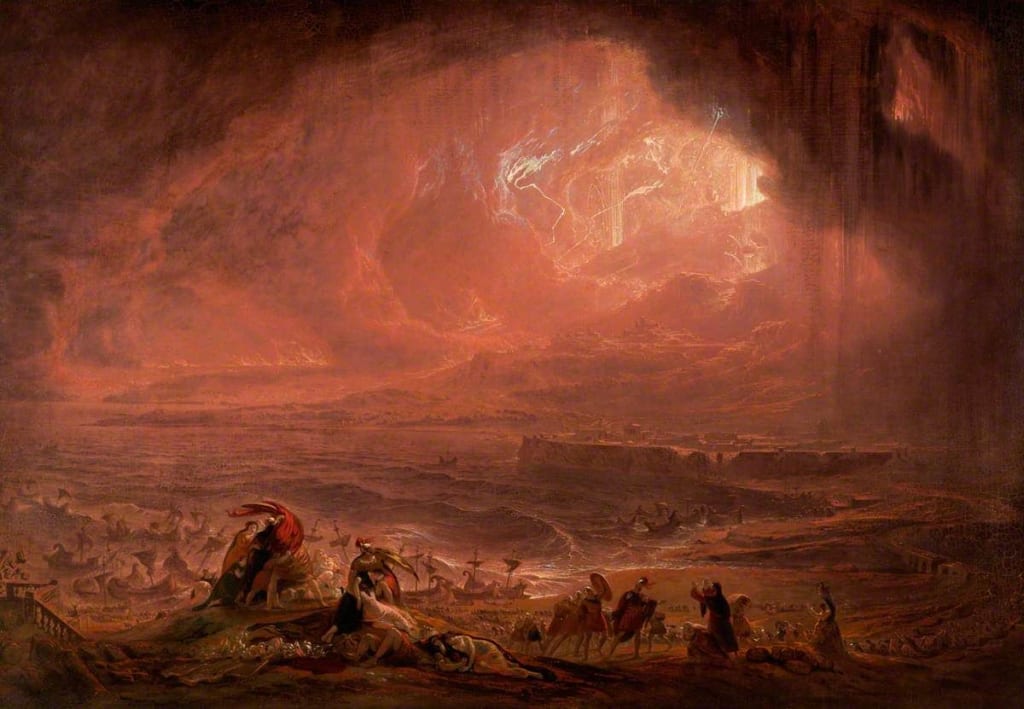
On one faithful day, like any other day, the people of Pompeii and Herculaneum around the base of Mount Vesuvius were going about their business. Then it started. Not long after midday the ground began to shake, just like it had done several times before, with the people of Pompeii and Herculaneum unfazed by the tremors. Except this time the top of Mount Vesuvius began to smoke, with a cloud of smoke, dirt and ash billowing into the sky. Looking up with amazement, and awe, people in the streets of the two cities stop to look as the cloud rises higher and higher, covering the blue sky like a thick blanket as the light of the day slowly faded. After a brief moment of amazement, everyone goes back to their day, not really expecting much more to happen. Some people do decide to leave the cities, however this phenomenon isn’t treated seriously at all. After a few hours, now completely dark like a night sky, with a red glow of fire coming from the mountain, thick ash falling onto the cities covering the ground looking like a winter snowfall, with smoke filling the streets creating a thick haze, bits of pumice and blackened rock began falling, causing people in the streets to hide for cover. Then the tremors began to intensify. People began to panic, some trying to escape by boat from the beach, or running for cover, covering their heads with pillows to shield from falling rock, and covering their faces with cloth to protect them from breathing in the smoke.
For a total of 12 hours of all of this happening, looking like an apocalyptic nightmare, no one expected the next thing to happen. Now in the middle of the night, but still with the red glow illuminating the night sky, the top of Mount Vesuvius explodes with red hot fire. But not just fire. Thousands and thousands of dragons begin to fly out, filling the sky and spreading across the bay. Then there is a second, and third explosion. More and more dragons billow out. As they fly closer to the ground, they begin to light the cities of Pompeii and Herculaneum on fire, burning houses, livestock and people, screaming as their flesh melts. But this isn’t any normal fire. This is Dragon fire. Dragon fire is like a thick mixture of flammable gas and liquid, with an almost lava-like thick texture. It doesn’t just burn, it melts, and boils everything it touches. Flesh, rock, clay. All within seconds. Not a single person stands a chance. Tens of thousands of people dead, in an instant. Then, as the two cities burn and melt, one final explosion. This time, more intense than the previous three combined. And then it happens. What the last 300 years of dragon slaying has led to. A great shadow flys up and out of the top of the mountain into the dark. The great Dragon King Marcellus told us about all those years ago.
The aftermath of the eruption of Vesuvius is worse than a thousand war zones. There is nothing left of the cities of Pompeii and Herculaneum, with the surrounding areas charred black. It takes three days for the black ash cloud to dissipate, and only then are people able to see the true horror of what happened. People are lost for words. There is nothing that can be said. Friends and loved ones are dead, and there is no way anyone can comprehend what just happened. For the next number of years, the entire area of Naples is abandoned, and the people that were lucky enough to survive spread the word about what happened. The fire. The dragons. The Death. It’s all nothing but a cautionary tale. Rome abandons the no longer lucrative Dragon Trade. All the dragon pits, and every remaining dragon is destroyed. The shame Rome holds for what they did, simply because of the sheer arrogance of thinking that they could conquer and control a great beast like a dragon.
Over the next 500 years, the dragons spread across the world. Reports and stories spread from Rome to Brittania, from Egypt to India, From China to the Americas. As for the Dragon King, People can only speculate what happened to it, and where it went. Appropriately, people started to give it a new name. Vesuvius, who is never seen again.
Until now. And this is where I come in.
About the Creator
R. L. Turner
An avid writer since a very young age and with a personal interest in history, philosophy and ethics, Ryan has a passion for stories that asks the hard questions. Ryan is inspired by authors like Victor Hugo, J. D. Salinger and Dostoyevsky.
Enjoyed the story? Support the Creator.
Subscribe for free to receive all their stories in your feed.
Comments
There are no comments for this story
Be the first to respond and start the conversation.