
David Allan Coe: The Outlaw Country Legend Passes Away at 86.
David allan coe the legend of american.

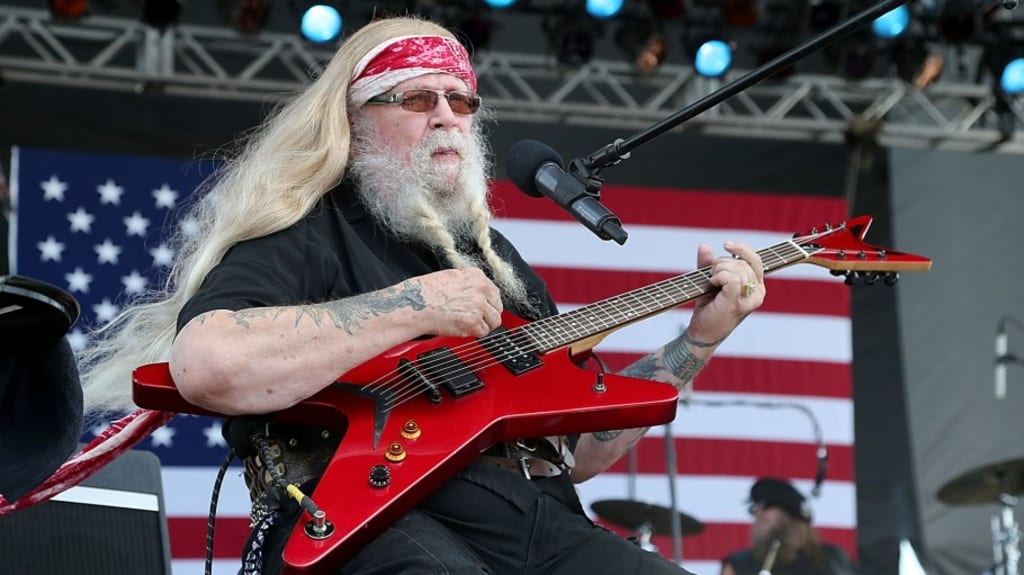
David Allan Coe: The Outlaw Country Legend Passes Away at 86. The controversial singer-songwriter behind "Take This Job and Shove It" and "You Never Even Called Me By My Name" has died. David Allan Coe, the fiery, unapologetic renegade who helped define outlaw country music and then spent decades challenging its boundaries, died on Wednesday, April 29, 2026 . He was 86 years old. The singer passed away in an intensive care unit at approximately 5:00 p.m. ET, according to a representative . His wife, Kimberly Hastings Coe, confirmed the news, and while a specific cause of death has not been disclosed, Coe had faced several health challenges in recent years, including a bout with COVID-19 in 2021 and knee replacement surgery in 2019 . For nearly six decades, Coe was the living embodiment of the "outlaw" persona. He was a man who spent time in prison, wrote songs in his cell, and then took those raw narratives to Nashville, where he refused to play by the rules. He was a brilliant songwriter capable of penning tender ballads and rowdy anthems, but he was also a deeply divisive figure who courted controversy with explicit albums and provocative imagery. Love him or hate him, David Allan Coe was undeniably one of the most authentic and influential voices in American music . From Reform School to the Ryman Auditorium David Allan Coe was born on September 6, 1939, in Akron, Ohio. His early life reads less like a country music biography and more like a crime novel. He spent much of his youth in reformatories and correctional facilities . From 1963 to 1967, he served time in an Ohio prison for possession of burglary tools . It was behind bars that the seeds of his musical career were planted. "I'd have never made it through prison without my music," he told the Associated Press in 1983. "No one could take it away from me. They could put me in the hole with nothing to do but I could still make up a song in my head" . Upon his release in 1967, Coe took his guitar and his hardened attitude straight to Nashville, the heart of the country music establishment. The stories from this period are the stuff of legend. Broke and living on the fringes, he reportedly slept in a hearse parked outside the legendary Ryman Auditorium . On weekends, he would climb on top of the vehicle and perform for the crowds heading in to see the Grand Ole Opry . It was a gritty, bizarre, and perfect introduction for a man who would become famous for the song "Longhaired Redneck." The Songwriter's Breakthrough Before he became a star in his own right, David Allan Coe proved his genius on paper. While he was still an outsider, his songs were being sung by the biggest names in the business. In 1973, a 16-year-old Tanya Tucker took a song Coe had written and turned "Would You Lay With Me (In a Field of Stone)" into a number-one hit . The song was a beautiful, haunting ballad—a stark contrast to the rough-and-tumble image Coe would later cultivate—and it announced him as a writer of immense talent. Then came the anthem that would define the working class. In 1977, Johnny Paycheck took Coe's "Take This Job and Shove It" to the top of the charts . The song was a raw, cathartic explosion of frustration that resonated with millions of Americans feeling trapped by the daily grind. It earned Coe a Grammy nomination and cemented his place in country music history, even inspiring a film of the same name . The Outlaw's Own Hits While he was a hitmaker for others, Coe's own recording career was building a fiercely loyal cult following. He adopted the flashy persona of "The Mysterious Rhinestone Cowboy," often performing in a mask and a glittering suit . He was heavily tattooed, wore his hair long, and rode with bikers, embodying the "outlaw" image alongside icons like Willie Nelson and Waylon Jennings . In 1975, he released "Once Upon a Rhyme," the album that featured his signature song, "You Never Even Called Me By My Name." It became his biggest hit, peaking at number eight on the charts . The song, famously co-written by Steve Goodman and an uncredited John Prine, is a self-aware parody of the cliches of country music. It counts off the required elements: "mama, trains, trucks, prison, and getting' drunk." It remains a beloved classic. Other radio hits followed, including "Long-haired Redneck" (1976), "The Ride" (1983)—a mysterious tale about a hitchhiker who catches a ride with a ghostly Hank Williams—and the tender "Mona Lisa Lost Her Smile" (1984) . He was also the first artist to record "Tennessee Whiskey," a song that would later become a massive standard for George Jones and, decades later, Chris Stapleton . The Shadow of Controversy To tell the story of David Allan COE, you cannot ignore the darkness. For every beautiful ballad like "Would You Lay With Me," there were far darker tunes in his catalog. In 1978 and 1982, he released two explicit albums—"Nothing Sacred" and the "Underground Album"—which he sold primarily through biker magazines . These records contained lyrics that were racist, homophobic, misogynistic, and laced with grotesque imagery. The New York Times famously described them as "among the most racist, misogynist, homophobic and obscene songs recorded by a popular songwriter" . Throughout his life, COE had a complicated relationship with this material. He sometimes claimed the songs were meant as satire, intended only for a specific audience of bikers around a campfire . He also noted that the famous children's author and songwriter Shel Silverstein convinced him to record the underground material . In a 2001 interview with Billboard, he expressed regret, stating, "Those were meant to be sung around the campfire for bikers, and I still don't sing those songs in concert" . He consistently denied that he was a racist or white supremacist, telling one publication, "I'm the farthest thing from a white supremacist that anybody could ever be" . Nevertheless, the controversy and his use of Confederate imagery permanently stained his legacy, ensuring he would never be a comfortable fit for mainstream country radio or the Nashville establishment he loved to mock. Legal Troubles and Final Years Even in his later years, Coe remained a renegade. In 2015, he pleaded guilty to tax-related charges for failing to file returns on income from hundreds of concerts. He was sentenced to three years of probation and ordered to pay nearly $1 million in restitution to the IRS . His health declined in the 2020s, leading to fewer public appearances. But his influence never waned. His last record, released in 2006, was a surprising collaboration with "Dimebag" Darrell Abbott and other former members of the heavy metal band Pantera, proving that his musical reach extended far beyond the Nashville city limits . The Legacy of an Outlaw David Allan Coe is survived by his wife, Kimberly, and his children, including his son Tyler Mahan Coe, who has become a prominent voice in country music as the host of the acclaimed podcast "Cocaine & Rhinestones" . In the hours following his death, tributes poured in from fans who saw him as the truest of the true outlaws. His official Facebook page shared a final message that encapsulates his spirit: "David Allan Coe was more than a singer, songwriter, and outlaw country legend, he was a voice for generations of fans who found truth, grit, pain, and life in his music... Rest easy, David. Your ride here may be over, but your music will never die" . He was never a consistent fixture on the pop charts like some of his peers. He was too rough, too mean, and too complicated for that. But David Allan Coe lived every word he ever wrote. He was a prison inmate who became a poet, a supposed "outlaw" who wrote the song that sent millions of angry workers home, and a man of undeniable talent who reveled in his own contradictions. The ride is over. But the Rhinestone Cowboy will not be forgotten. Share this article with your friends and family. The more people understand the complex legacy of David Allan Coe, the better we remember the true history of outlaw country. Written by DDM ATIQ #ddmatiq #ddmatiq #atiqur_rahman
About the Creator
DDM ATIQ
ll
Enjoyed the story? Support the Creator.
Subscribe for free to receive all their stories in your feed.
Comments
There are no comments for this story
Be the first to respond and start the conversation.