
Beyond Science Fiction: Terraforming Mars with High-Tech Innovations
Terraforming Mars

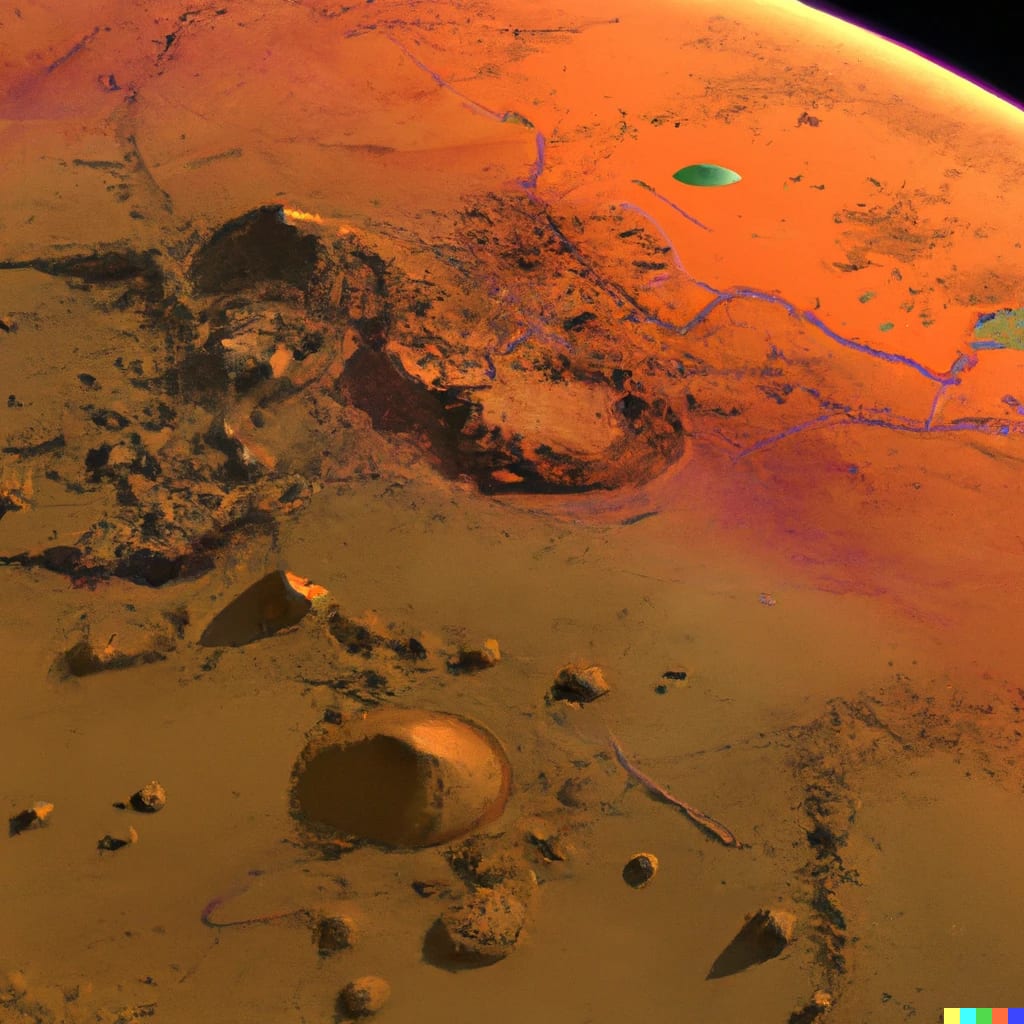
Mars is currently a harsh and inhospitable environment that lacks many essential elements for sustaining human life. The prospect of human colonization on Mars seems challenging, with small crews likely having to endure difficult conditions underground. However, the concept of terraforming Mars offers hope for transforming the planet into a lush and habitable world.
Terraforming Mars is not mere science fiction; it's a plausible idea that could be achieved over a considerable timescale, similar to the great monuments built by our ancestors. Solving pressing global challenges and advancing space exploration might bring this dream closer to reality.
However, the process of terraforming Mars is complex and demanding. It involves carefully orchestrated steps to alter the planet's atmosphere, temperature, and surface conditions gradually. Introducing greenhouse gases, utilizing large mirrors to trap heat, melting ice caps, and cultivating life are among the proposed strategies. Such a transformation, though possible, would require significant technological advancements, international cooperation, and substantial resources.
Leveraging advanced technology: Lasers
Mars is a harsh and barren planet, lacking a breathable atmosphere and fertile soil to support life. To make it a habitable place for humanity, a comprehensive terraforming process is essential.
The initial step involves creating an Earth-like atmosphere on Mars, comprising 21% oxygen, 79% nitrogen, and a small amount of CO2. Maintaining this atmosphere at an average temperature of 14°C and a pressure below 1 bar is crucial.
Subsequently, the transformation requires the establishment of oceans and rivers, along with weathering the Martian surface to generate fertile soil capable of sustaining diverse living organisms.
The installation of a biosphere on the Martian surface is vital to initiate life, but ensuring long-term sustainability necessitates the implementation of durable protective measures capable of enduring the test of time.
While the terraforming process is undoubtedly challenging, leveraging advanced technologies, such as powerful lasers, can significantly facilitate and streamline the efforts involved.
First Challenge: The Atmosphere
Around 4 billion years ago, Mars boasted a flourishing atmosphere rich in oxygen and harbored vast oceans and rivers. This life-sustaining environment persisted for hundreds of millions of years until detrimental forces, like ultraviolet rays and solar wind, gradually eroded the atmosphere and caused the oceans to vanish, transforming Mars into the barren wasteland we see today.
Fortunately, a substantial amount of water remains frozen in deep reservoirs and polar ice caps, enough to form a shallow ocean. Additionally, considerable quantities of oxygen are locked in Martian rocks, including iron oxides responsible for the planet's distinctive rust-red color, as well as carbon dioxide in carbonates.
To release these trapped gases, scientists propose employing thermolysis, a process that requires surface temperatures as high as those on the Sun. Effectively, we aim to melt Mars' surface to unlock its potential.
The most viable method to achieve this ambitious goal involves placing lasers in orbit, directing their beams toward Mars. One of the most potent lasers currently available is the ELI-NP, which can produce brief pulses of 10 Petawatts of power. To achieve continuous melting, a laser twice as powerful would be required. A feasible approach is utilizing a solar-pumped laser, directly powered by sunlight. This laser relies on metal-infused glass rods that absorb energy and emit powerful laser beams. By constructing an array of mirrors in space, approximately 11 times the size of the United States, we could concentrate enough sunlight to melt the Martian surface.
By employing the lasers, approximately 750 kg of oxygen, along with some carbon dioxide, would be released from each cubic meter of melted rock on the Martian surface. Efficiently, the lasers would only need to penetrate the top 8 meters of the surface to obtain the required oxygen.
The visual spectacle would be both awe-inspiring and intimidating. Storm clouds would enshroud the skies as the ground glows red-hot, adorned with crisscrossing lava currents. The relentless sweep of laser beams would leave trails of intense brightness. Once they pass, the ground cools rapidly, resulting in an unusual snowfall of solidifying elements like silicon and iron. However, Mars would still maintain its cold nature during this phase.
An unintended positive consequence of this fiery process is the elevation of all water from the polar ice caps and deep underground as hot steam, forming clouds that precipitate over the entire planet. This rain would cleanse the atmosphere of noxious gases, such as chlorine, and carry away harmful elements accumulated on the surface. Eventually, this process would create shallow oceans, though they would be saltier than Earth's. Additional cleanup efforts might be required post-terraforming.
To complete the oxygen atmosphere, continuous lasering for approximately 50 years would be necessary. During this time, targeted excavation could be performed in specific regions to create basins for salty oceans or rivers while preserving notable features like Mons Olympus and Valles Marineris.
This achieved atmosphere is still problematic, being almost entirely oxygen and having a low pressure of only 0.2 bar. This composition is difficult to breathe and highly flammable. To make it safer and similar to Earth's atmosphere, a significant amount of nitrogen needs to be added. Unfortunately, Mars lacks an abundant source of nitrogen, and thus, we must import it.
The ideal source for nitrogen is Titan, a large moon of Saturn known for its thick nitrogen-rich atmosphere. To accomplish this, we need to move a staggering 3000 trillion tons of nitrogen from the outer solar system to Mars.
While it may seem like an enormous undertaking, it is feasible. Constructing large, automated factories on Titan's surface, powered by lasers, would be necessary to extract and compress its atmosphere into liquid form. This liquid nitrogen would then be transported in bullet-shaped tanks and shot to Mars using a mass driver. Upon arrival, the tanks would explode, allowing the nitrogen to mix with the oxygen in the Martian atmosphere. Although challenging, with sufficient resources, this task could be completed within two generations. Additionally, any remaining nitrogen from terraforming Venus could prove useful and convenient for the process.
Approximately a century after commencing the terraforming process, Mars would have a breathable atmosphere with the right gas composition. If the liberated CO2 is insufficient to warm up the planet to habitable temperatures, the addition of super greenhouse gases could rectify the situation. By this point, Mars would resemble a black marble, adorned with cooling lava and developing oceans, alongside untouched patches of the old surface. However, it remains a barren wasteland akin to an arid desert on Earth. The next crucial step is to fill it with life.
Second Challenge: Biosphere
Creating a functioning biosphere on a new planet is an immensely challenging task due to potential unexpected species interactions and the risk of sudden diseases destabilizing the ecosystem.
A strategic approach would begin by seeding the young Martian oceans with phytoplankton. With minimal competition, they would flourish rapidly, forming the foundation of an aquatic food chain. Successive introductions of tiny zooplankton, fish, and even larger marine life like sharks and whales could follow, with the hope of thriving ocean ecosystems.
The challenge intensifies when turning to land. Nutrient-rich soil is essential for plant growth, but much of the Martian surface is composed of hardened lava and ashes. While natural processes like water and wind could gradually grind these materials into finer sands, we opt for a quicker solution using a powerful laser. By turning the laser beam on and off in rapid succession, the ground heats up, contracts, and breaks into smaller pieces. Adding water to this treated ground creates a dark mud that serves as a fertile medium.
Fungi and nitrogen-fixing bacteria can be mixed into this mud, capable of absorbing nitrogen and converting it into nitrate compounds to nourish plants. We would introduce native plant species from volcanic islands on Earth, as they are well-suited to survive in the laser-blasted Martian landscape. As the mud becomes enriched, it forms the basis for the growth of grasslands and forests.
Mars' lower gravity allows trees to grow exceptionally tall and rapidly. Their roots gather essential nutrients and further transform rocks into soil, leading to a self-sustaining ecosystem on land.
Gradually, we can introduce more plant varieties, insects, and animals, but careful maintenance is vital to prevent ecological imbalances. Rapid plant growth and excessive carbon dioxide absorption could lead to undesirable cooling of the planet. Moreover, if crucial species were to die out, population collapses could occur, as the Martian biosphere lacks the flexibility of Earth's ecosystems.
Third Challenge: The long-term future
One critical challenge we must address in terraforming Mars is the absence of a natural magnetic field. Without this protection, the planet is vulnerable to harmful solar radiation and cosmic rays, posing a significant threat to the long-term health of future Martian populations. To safeguard against this danger, the final step in the terraforming process involves creating an artificial magnetic field.
Unlike Earth's massive magnetic field, Mars requires a smaller one capable of deflecting the solar wind away from its surface. The most straightforward approach is constructing a magnetic umbrella situated far ahead of Mars, effectively diverting the solar wind to the sides. This magnetic umbrella can be achieved using a large, superconducting ring powered by nuclear facilities. It would be positioned at the Mars-Sun L1 point, constantly shielding Mars and protecting its new atmosphere.
Terraforming Mars demands considerable effort, substantial resources, and likely several decades or even a century to achieve. Nevertheless, it would mark a groundbreaking achievement as it would be the first time we inhabit a home designed and shaped entirely for human needs. This monumental endeavor signifies a significant step toward our future as a spacefaring civilization among the stars.
About the Creator
Enjoyed the story? Support the Creator.
Subscribe for free to receive all their stories in your feed.
Comments
There are no comments for this story
Be the first to respond and start the conversation.