
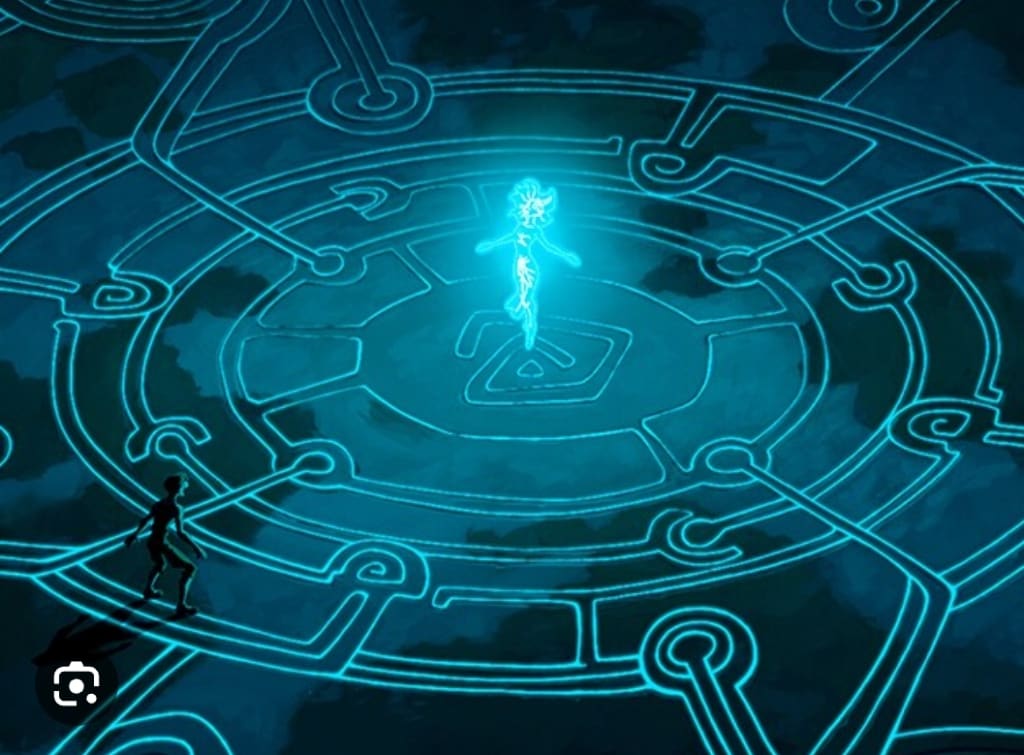
Atlantis "the lost city " is a legendary and mysterious world that had captivated the imagination of people for centuries. First mentioned by the Greek philosopher Plato around 360 BC, Atlantis is said to have been a prosperous and advanced society that eventually fell out of favor with the gods and met a catastrophic end. Despite its enigmatic nature and lack of concrete evidence, the tale of Atlantis continues to be a topic of fascination, exploration, and speculation. According to Plato's dialogues "Timaeus" and "Critias," Atlantis was situated beyond the "Pillars of Hercules," often identified with the Strait of Gibraltar. The island was described as being larger than Asia and Libya combined, possessing fertile lands, grand architecture, and advanced technology. The Atlanteans were said to have built impressive structures, engineered waterways, and enjoyed a harmonious existence. However, as their power grew, their values eroded, and they began to subjugate neighboring lands, angering the gods. In Plato's narrative, the gods decided to punish Atlantis by triggering earthquakes and floods, causing the island to sink into the ocean in a single day and night. This cataclysmic event wiped out the once-great civilization, leaving behind only remnants of its glory. Despite the captivating nature of the story, no physical evidence of Atlantis has been discovered, leading many to debate whether it was a fictional allegory or a real historical place. Over the centuries, numerous theories and hypotheses have emerged about the possible location and existence of Atlantis. Some suggest that it could have been situated in the Mediterranean, while others propose locations as far afield as the Caribbean, Antarctica, or even under the ocean. Geological explanations have been put forth, suggesting that a volcanic eruption or a tsunami might have caused the landmass to disappear beneath the waves. Interest in Atlantis was rekindled in the late 19th and early 20th centuries with the advent of new scientific and archaeological discoveries. Adventurers and researchers, inspired by the legend, embarked on expeditions to uncover the truth. One such notable figure was Ignatius Donnelly, whose 1882 book "Atlantis: The Antediluvian World" argued for the historical reality of Atlantis and its influence on various ancient cultures. Despite these efforts, no conclusive evidence has been found, leaving Atlantis predominantly in the realm of myth and speculation. However, its impact on popular culture and modern thought remains undeniable. The story of a highly advanced civilization meeting a tragic end serves as a cautionary tale about human hubris and the potential consequences of unchecked power. Atlantis continues to inspire literature, films, television shows, and even video games. Its allure lies in the tantalizing prospect of discovering an ancient civilization that may have held the key to lost knowledge and technological advancements. The mystery of Atlantis also invites us to reflect on the impermanence of human achievements and the importance of humility in the face of nature's forces. In conclusion, "Atlantis: The Lost City" is a captivating and enduring legend that has captivated imaginations for centuries. Plato's account of a prosperous civilization's downfall due to arrogance and divine punishment has left a lasting impact on literature, art, and popular culture. While no concrete evidence of Atlantis has been found, its allure persists as a symbol of the unknown and a reminder of the potential consequences of human actions. Whether Atlantis was a real place or a metaphorical tale, its legacy continues to enrich our understanding of human history and our fascination with the mysteries of the past. Just like Atlantis there are lots more enigmas in the world ready to be descovered or they may remain hidden until somebody with a good spirit of adventure and guts can come accros them
About the Creator
Enjoyed the story? Support the Creator.
Subscribe for free to receive all their stories in your feed.
Comments