
Nobody can hear a scream in the vacuum of space, or so they say. When it’s your father, though, you don’t need to hear it. You can feel it.
Simon Sahli floated across the backdrop of stars. What was left of humanity watched in silence as he drifted into the points of light that silhouetted his thrashing body.
It wasn’t peaceful. His arms flailed. After a few seconds, the oxygen in his blood evaporated, and his body began to bruise. Everyone could see his skin turn blue, then blossom into deeper purples, eventually blending in with the starless patches of space that began to engulf him. There was a rustling among the crowd as Simon’s body drifted out of view. They all murmured the same thing.
Thank you, stardust.
Aster heard his sister choke on the words. It was just the two of them now, and he had to be strong for her. He was 9 years old– old enough to understand that his father’s sacrifice meant he would have enough oxygen to live and see humanity become a planetary species once again.
Aster cleared his throat and wrapped an arm around his sister’s waist. He had to be strong for her. Even though she was 18 and nearly twice his height, Aster knew he had to be a solid rock for her to lean on.
He squared his shoulders and slowed his breathing. He had to be strong for her.
“Thank you, stardust,” he said, clear and level.
His sister, Uzma, started to sob silently. Tears streamed down her cheeks, splashing the top of Aster’s head. He could feel Uzma’s core contract with every inaudible shudder. He wished he could join her in mourning. But he had to be strong for her. If she sobbed for too long, she would undoubtedly pass out. The oxygen level onboard the ship was much too low for her to be wasting breath on that.
In the old days, NASA didn’t even allow family members to watch the launch of space shuttles. Aster knew this. He loved learning history. Aster knew the rule started during the aftermath of the Challenger catastrophe. Seven families stood by to watch their beloved astronauts take off, but instead of flinging into orbit, the spacecraft exploded seconds after launch. In the old days, NASA didn’t want to risk putting other families through the same trauma.
Those days are long gone. The old rules changed the moment NASA detected the Bugs’ first probe.
Since first contact with the Bugs, humanity had to move on to survive. It’s now important, even essential, that every human recognizes the sacrifice made by heroes like Aster’s father. Without their sacrifice, without their return to stardust, humanity would have gone extinct when the Bugs first overran Earth and Mars.
The crowd started thinning a few minutes after Simon’s body drifted out of view. Aster and Uzma held hands as they left the ejection room, falling in line with everyone else heading back to their stations.
The ejection room was usually the cleanest part of the ship, as it was frequented most often. It was the center, the hub, of the spacecraft Simon Sahli laid down his life for. The spacecraft was nothing special in the old days– before the Bugs invaded, there were thousands of freighters that possessed the same screaming monotony which was now only carried by freighter 2356.
As far as Aster was concerned, every other freighter was stardust. He was the last of a dying species, hunted to the brink of extinction by a superior alien race. Everything Aster and the crew of 2356 did now was for survival. Each day was planned, organized, and built for maximum efficiency. The freighter was a precariously balanced ecosystem– a single deviation from equilibrium had consequences years down the line. One crew member (anyone between the ages of 8 and 58) taking a holiday spelled hundreds of deaths for the human race centuries from now.
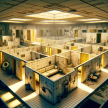
This fatal fragility existed because freighter 2356 was never designed to leave the solar system, much less travel over a hundred thousand years to the nearest habitable planet. As Aster and his sister trudged through the never-ending main hall, evidence of this repurposing littered the walls. Everything nonessential was stripped, leaving gaps between panels and frayed wires poking through like scarecrow fingers.
The siblings rounded a corner, bringing them to the dining hall. Both pairs of eyes were glued to the floor, avoiding the sympathetic glances from other crew members.
As they joined in line for breakfast, a young man tapped Uzma on the shoulder. He had a head of bleach blond hair, and a work vest slung across his shoulders. His hair was a rarity these days, as most recessive traits had been eliminated generations ago. Aster was jealous of his hair– he wished he had something special as well.
“Hey,” he began, “I just… I don’t know what to say.”
Uzma whirled around, exclaiming.
“You scared me!” she yelped, raising her eyebrows. Her brow unfurled for the first time this morning when she realized it was Chris. They embraced for a few seconds, and Uzma promptly nuzzled her tear-stricken face into Chris’s neck.
Aster didn’t mind Chris– he was always kind enough. Chris and Uzma were also deemed potential mates by the council, as their bloodlines haven’t mixed in a few generations.
Chris turned and offered Aster a fist bump.
“Mind if I join y’all for breakfast?” he asked, aiming the question at Aster.
Aster shrugged, returning the fist bump.
Uzma sniffled and murmured “Please do.”
Aster let his eyes wander as Chris comforted Uzma. The dining hall was in absolute disarray compared to its normal orderliness, as it stood directly above the main fuel cell. Crew members were buzzing in and out, pulling wires from the walls and triple checking that their connections were solid.
The floor paneling was nearly all missing, leaving the massive fuel cell visible far below. Hundreds of steel cables spun away from it, giving the illusion that it was a fly trapped in a spider’s web. In reality, the cables were there to support crew members in making last minute reinforcements to the fuel cell.
Chris waved down at someone carrying a chemtorch. They waved back without removing their welding goggles.
“That’s Mauricio,” Chris explained, “God… you think you know everyone on this ship, but I just met that guy yesterday. We’re both even assigned to the main fuel cell, and I never even knew his name. Crazy how that happens.”
Aster gave him another shrug and went back to watching the crew members zip around on the steel cables. They were performing a mesmerizing dance, sometimes throwing up sparks, sometimes jumping from panel to panel in quick succession. Aster let his eyes go a little fuzzy. It made the sparks blossom into fireworks– something he only heard about in history lessons.
The trio finally made it to the front of the line, stepping over gaps in the flooring and avoiding loose cables.
After each grabbing a bowl of algae, Chris led them to a piece of solid flooring to stand and eat. There was nowhere to sit– all the chairs were deemed nonessential and were melted down to reinforce the makeshift landing gears months ago.
Although oxygen levels were dangerously low, a sense of determination and hope permeated the crew’s actions today. For them, it was the last day anyone would be floated to maintain habitability onboard the ship. Freighter 2356 would be landing on a habitable world in 13 days, making humanity a planetary species for the first time in over a hundred thousand years.
When the Bugs were first detected, freighter 2356 was beginning to haul raw ore from the asteroid belt to Mars. By the time the Bugs reached the Kuiper Belt, NASA had already started to sound alarm bells.
The Bugs are bringers of death. This thought terrifies Aster.
The Bugs know the language of the universe– mathematics, that is– and used it to travel immense distances in amounts of time we only understand as hypothetical. The Bugs stop at nothing to destroy life. They come like the universe’s plague, stimulated to reproduce and destroy by the simple hubbub surrounding life.
The Bugs annihilated Mars in just under 24 hours.
It took them 36 hours to cleanly erase humanity from Earth.
Aster couldn’t even stay awake for 36 hours straight. He tried, once, as many crew members did.
“How’s the algae today, champ?” Chris questioned, trying to start a conversation.
Aster thought it tasted bleaker than usual. He wasn’t even hungry in the slightest, but he still forced himself to eat. He knew what it was like to be hungry– last year, an elderly crew member had a heart attack while servicing the algae vats. 200 crew members had to be floated, and still rations had to be cut in half.
“It’s fine,” Aster said without looking up from his bowl.
* * *
The original crew of 2356 watched the invasion unfold from their vantage point in the asteroid belt. With the destruction of humanity’s planets behind them, they made the calculated decision to attempt an escape with the rest of the spacecraft. Whether a cosmic stroke of good luck or sheer genius, freighter 2356 was one of two spacecraft to successfully escape into interstellar space and have enough fuel to make the journey of over a hundred thousand years to the nearest habitable star system.
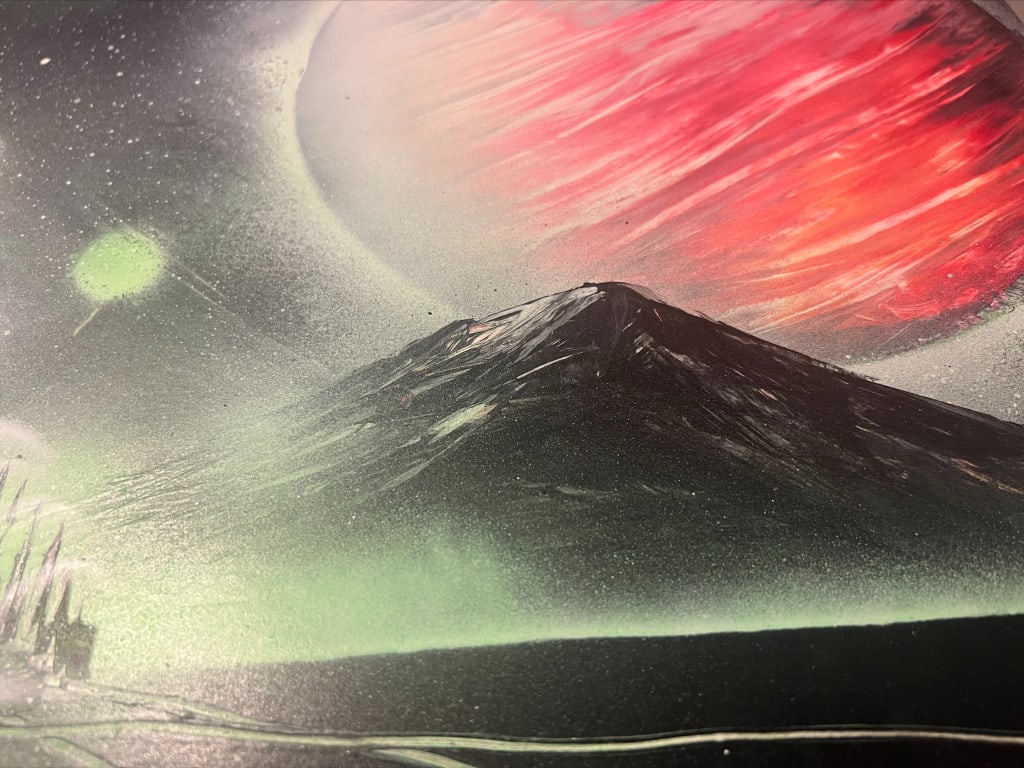
The system, Alpha 1, has a red supergiant at its center. The only two habitable planets, Fides and Fortuna, are both tidally locked with their host star. Freighter 2356 is set to reach Fides, the outermost planet, in 13 days.
Its stellar companion, a yacht style spaceship Luxoft, will reach Fides in over a year. It’s understood that both freighter 2356 and Luxoft probably have Bug eggs on their outside shields. If even one microscopic egg was dusted onto a panel during the mad scramble away from the asteroid belt ages ago, it would hatch the moment it came into contact with either Fides’s or Fortuna’s atmospheres. When Luxoft reaches the system, it won’t land on Fides. If 2356’s landing on Fides is a success (Bug free), it’s not worth the risk of Luxoft being contaminated.
In that case, 2356 will set up a beacon and Luxoft will return to stardust.
If no beacon is detected, Luxoft’s crew will attempt a landing on Fortuna and pray the Bugs on Fides don’t find them.
About the Creator
Enjoyed the story? Support the Creator.
Subscribe for free to receive all their stories in your feed.
Comments
There are no comments for this story
Be the first to respond and start the conversation.