
A Fine Day in June
Acting with Reserve
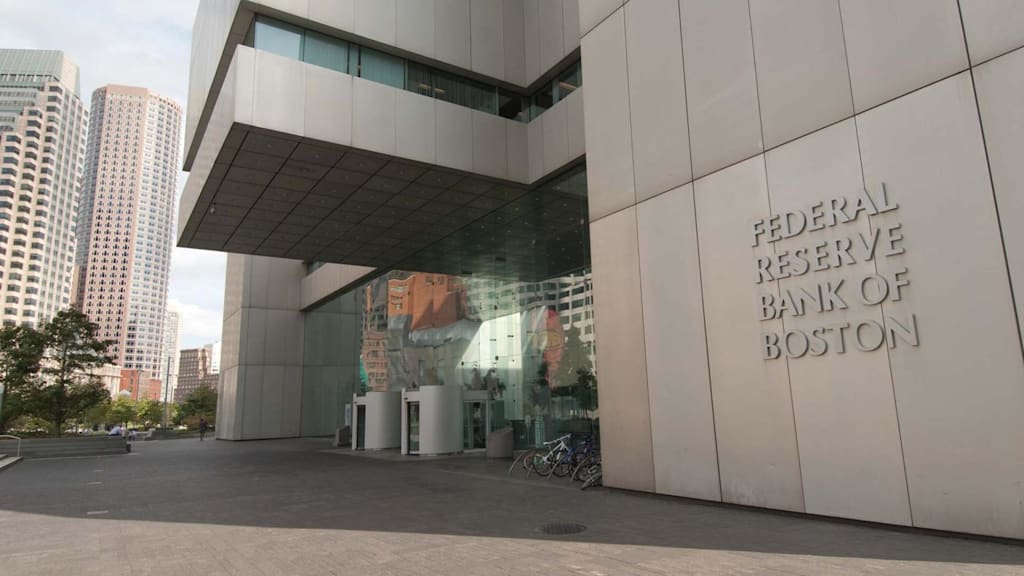
My name is Sandy Genovese. I grew up in Boston, in the North End. Do you know the Boston weather? Fall is best. My father used to say, "For all this talk of a fine day in June it's pretty hard to find one." My parents sacrificed a lot for me. I won a math contest in high school. After that I went to Harvard, did a degree in economics, worked as a broker for a couple of years, then got admitted to the Sloane MBA at MIT just down the Red Line. I wrote a thesis, which was a lot of work, but very rewarding. My topic was how to construct an Exchange Traded Fund for AI. I know, I know, there are ETFs for that sector, but not for Generative AI, more for robotics, and for the infrastructure businesses that make their money supplying what AI needs, not really for direct AI applications. I researched how to set up my theoretical ETF, put together the tools to follow my mockup in the market, tracked it for three months, and wrote up the results. My software has a very serious, official sounding name, but I just call it HAL for short.
My thesis got traction. My supervisor put a version of it in a chapter of a book he published. I taught an intersession course. When it got passed around, I had two offers from Venture Capital firms, one in New York, one in San Diego. These were big job offers, and my parents encouraged me to take one of them, but neither of them is well, and they’re certainly not young, and I’m their only daughter, so. Risk with money is one thing. That can be managed. Principally, that's what I do for a living. Risks with family, bets on longevity, health, that’s something entirely different.
A job came up in the Boston Federal Reserve, a position in the Macro Finance group, four economists plus one MBA (me). Oh it doesn't pay nearly as much as the VC jobs, but it’s an important position, and it can lead to other jobs later. The building’s right on Atlantic Avenue, overlooking the harbor. I live in a high rise just down the street, and the office is next to South Station. It’s just one subway transfer to my parents’ house.
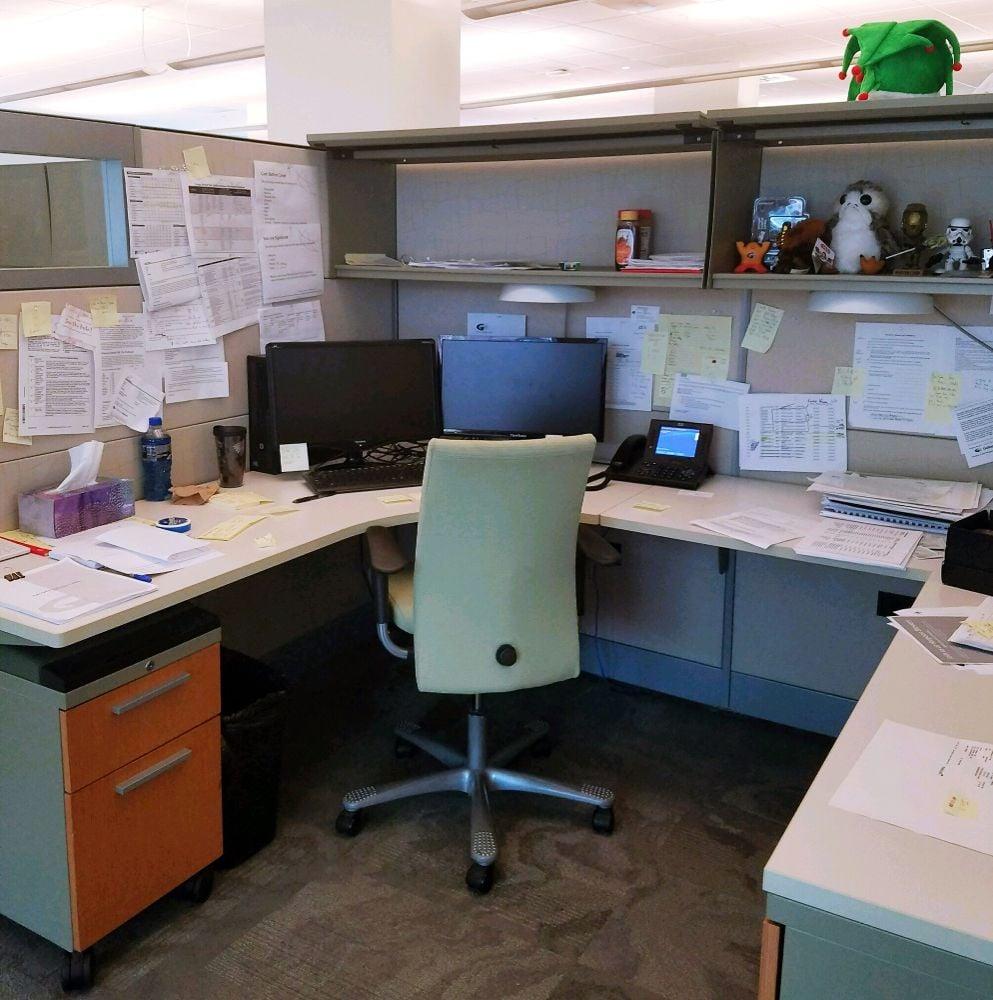
My cubicle probably wouldn’t impress you. It’s very functional. And yes I’m tech savvy, but I like post-it notes. My jester's cap is a stress buster, and my little storm trooper travels everywhere with me, in case someone needs to get blasted. My ex-boyfriend Jack said he thought the paper notes gave me a ‘conspectus,’ which it does. He chased after a girl with a better conspectus, and my new name for him is Jack ASSpectus. No loss, my mother said. My father offered to beat him up. I said that wasn’t practical, but I appreciate the sentiment.
Friday June 4, 2027, 7:00 a.m.
I followed my morning routine: a quick jog along the waterfront, shower, and breakfast. There’s only one good way to make coffee, and I do that: a small, stove-top espresso maker. Leave the lid up so you hear the hiss of the steam, put the lid down to keep it hot while the liquid comes up the center stem, pour some into a small espresso cup, stir in a Stevia packet, drink it with a Briorche and I’m set to go. I usually grab a salad at the Reserve building. Back home I’ll cook one of Chef Massimo’s quick recipes, quick but GOOD!
9:15 a.m.
I arrived in my cubicle on the third floor. We have an interlacing structure. I’m positioned with the other members of the Macro Finance Group, but I’m also affiliated with two “Risk” Groups: Enterprise Risk, and Systemic Risk, fifth floor. All the groups meet regularly and when needed. There's little stress in my area of the Reserve. I'm not involved with interest rates. AI is going great as the new economic growth sector and the stock market is humming. Spring is always upbeat.
I opened my souped-up laptop and started the day as usual, asking "What's up HAL?" It whirred for a few seconds, then showed me something unexpected.
I didn’t like what I saw. I opened my direct trading platform (I've kept my broker's licence so I trade directly). I went to the shares of myself and my parents and offered them all for sale immediately. I would be notified when the sale went through, and all proceeds would go to cash.
Okay, family taken care of, now time to think about this unexpected anomaly carefully before pulling the fire alarm bell at the Federal Reserve. The bosses would need explanations, certainties. I started to check and cross-check. Same result. Same anomaly. A text came from the Exchange. All our shares sold.
9:45 a.m.
Still the same anomaly, same picture, and any further speculation, let alone a remedy, well above my pay grade. I called Chet, head of my Macro Group. “I need to take something upstairs, right away,” I said.
“What is it?” Chet asked.
“No time,” I answered briefly. People think of the Federal Reserve as moving slowly, but things can happen fast when they have to.
“Then I’m coming with you,” he added. “Where are we going?” he asked.
I told him, Systemic Risk. John, head of Systemic Risk, was in his early 50s, and he had seen a lot.
10:10 a.m.
We met on the fifth floor, in a small working room with a table and swivel chairs. There was a monitor at one end of the room. I plugged my laptop into it.
Chet began, “Sandy wants to show us something,” he said simply. John leaned one arm on his swivel chair and gestured to me to go ahead.
I began. “There’s an important line crossing.” Both men looked interested. John motioned to continue. “I use my own mocked up ETF to track changes in generative AI companies." John nodded.
“The price line has crossed the moving average, there's a high volume of selling. The asked line is going to cross the bid line, and the futures prices are far apart. I displayed my charts.
John looked serious. “Show me,” he said, and handed me a straight edge off the counter. I walked to the monitor and held the ruler up, extrapolating the line that showed offers to sell, and offers to buy, hour by hour.
“The lines will cross at 1 o’clock,” I said.
Chet objected. “Okay Sandy, good catch, but nothing's going to happen today,” he said, "the individual stocks all have their value.”
“That's just it, Chet,” John countered, "they don't. Businesses in this sector have borrowed heavily. They don’t have earnings yet. They’ve made big bets on growth projections. If this is a bubble, and it bursts…"
Chet demurred. "It's June. Bubbles burst in October, not in June. Besides, market sentiment is favorable."
John glanced at his watch. He looked askance at Chet. "A crash is preceded by universal optimism. We've known that since 1929." It was past eleven. "Sit tight. I’m calling Alan.”
In ten minutes we were joined by the First Vice President of the Reserve. He leaned over my shoulder as I took him through both programs. "You created these?" he asked, and I nodded. "Impressive. If this is right we have to pull out all the stops. If this is an error, a glitch, a hiccup of some kind, and we pull out all the stops, we could create the crisis ourselves. I'm getting S," he said quickly. "There's no one in the Montgomery Room. Everybody go down there now, carry everything with you, especially any notes or data. Give your phones to me in this bag. Clear this monitor, and don't talk to anyone on the way down. No communication at all."
11:15
Everything was becoming much more official. The Montgomery Room is on the fourth floor, a smaller meeting room next to the large conference room.
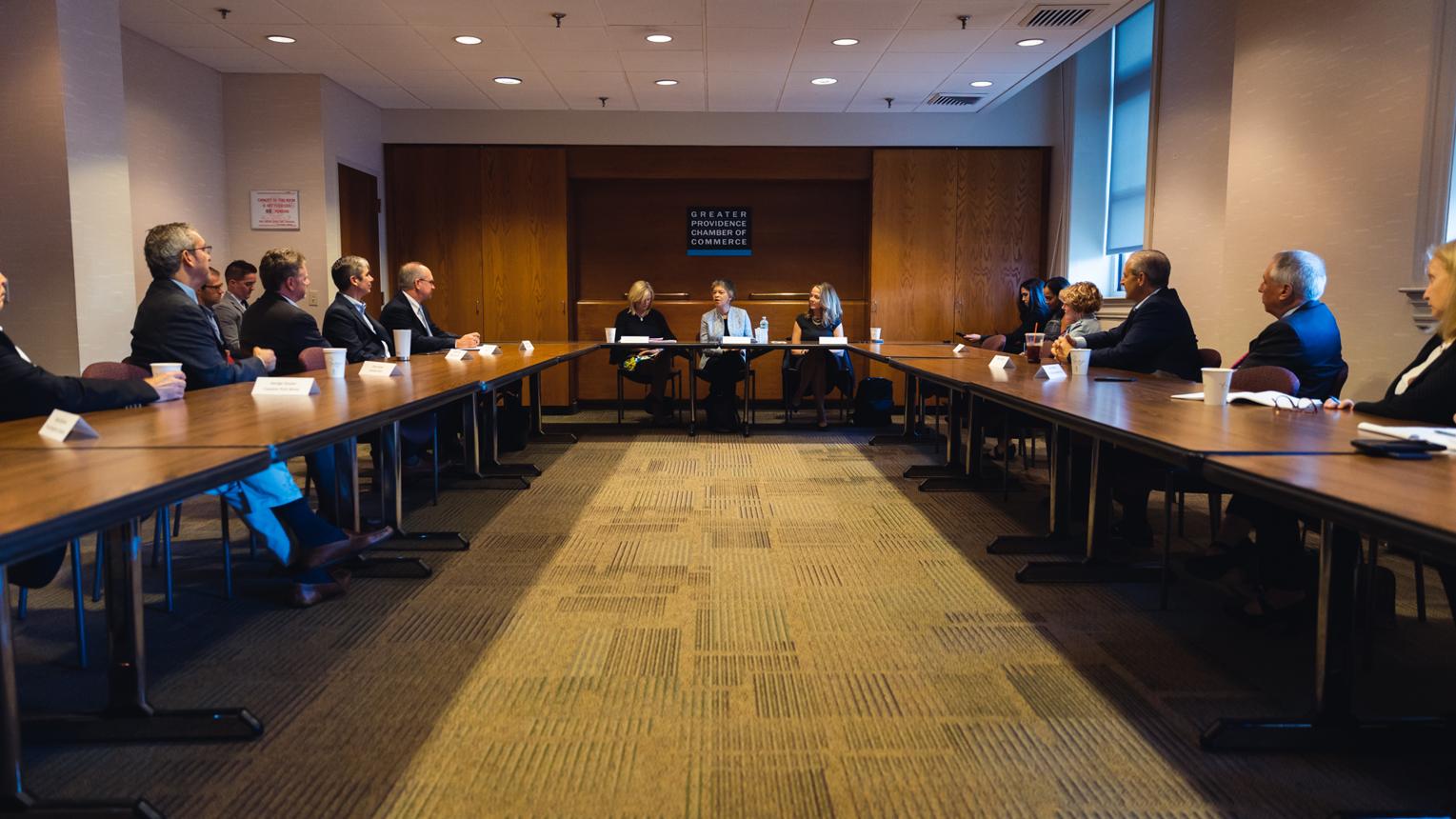
I had never met S, President of the Federal Reserve Bank of Boston. I was not hired at that level. She appeared in moments with her confidential secretary. The VP had her up to speed quickly. "Whose software?" she asked. I raised my hand. She nodded. "One o'clock?" she continued. I nodded. "Is our discussion contained? Have you kept all of this private to the people in this room?" she asked the VP. He nodded and handed her the bag with cell phones. She held up a finger for silence and concentrated for a couple of minutes.
"We have corporate tenants and a lot of employees," she noted. "I have to clear the building without anyone outside this room knowing why." She strode purposefully to the wall and pulled the fire alarm. Instantly an obstreperous noise began, followed by the sounds of people running.
She turned to her assistant. "Call the Boston Fire Dept. Tell them this is a false alarm. Then wait a few minutes and go down to the main exit. Take the stairs. Go outside. Tell everyone there is a lot of water damage, and the building is closed for the rest of the day. Send the employees home. Lock the door. Then come back here."
"If your software's right, how big a sell signal at 1 o'clock?" S asked.
"I don't know. The volume is high and the spread is wide. Big, I think," I answered.
"Could be very big," the VP interjected. "These companies are all in debt over their hats. Technically speaking there's no level of strong support, no secure price floor. What do we do? Call New York? Call the Secretary of Commerce?"
"No," S said flatly. "No disrespect," she turned to me, "but if your software is off we risk creating the crisis ourselves. No, we wait. We're all here for the duration. There's stuff to eat in the restaurant upstairs. We'll see what happens at 1 o'clock. Depending on that, New York Futures re-open at 6, and Tokyo futures open at --"
"8 p.m. Eastern Time," the VP finished her sentence.
"Then we wait," S said, "and we analyze." She made me show her my programs, and how they work, nodding her head, and smiling to break the tension. She asked me about my education. "I loved my time at MIT," she said, "and do they still have that room with all the bananas?" I nodded.
"Alan, you're good at forensics," S remarked. "Drill Sandy's data down. I want to know who's doing this trading. Who's shorting the sector and how heavily?"
The pair hunched over the laptop. The minutes ticked by slowly as they carried out her audit. "John," she said at length, "have you ever heard of a broker called "Q Dot 5?" He shook his head.
"One o'clock," the VP called out, and we all trained our eyes on the chart. The whole exchange leapt downards. Trading was halted for three minutes.
The pitch of S's voice moved up. She turned to her assistant. "Get the President of the New York reserve on the phone. Tell him it's urgent. Are we sure that nobody knows that broker's name?"
"I do, but it's not a broker," I answered, "That's the name of an AI program, a new one." S knit her brows.
"Are you suggesting," she said pointedly, that someone in that company is dumping tech shares and selling short?"
I swallowed hard. I knew I would sound crazy, but it was not the moment to hold back. "No," I said, "I mean that it could be the software itself, attacking other companies by selling their stock short." S let out a sharp hiss of breath. The VP was astonished. John and Chet looked confused.
"It can do that?" Chet asked, incredulous.
"It can learn how to do that," I explained.
"Why would it do such a thing?" Alan asked.
"Depends on the algorithm," I said. "It's probably programmed to compete with other AI companies. Shorting their stocks would be a good strategy."
New York came on the phone. Chairman of the Reserve. S put him on speaker. "What is happening?" New York asked. S explained. "What are you talking about? This could be a crisis and you're talking sci-fi fantasy! Are you telling me that because a junior analyst, not even with a PhD in Economics, has a home-made program, we should call a halt to trading on the NASDAQ and elsewhere? That's crazy! Get a grip S! This could ripple across the globe!"
The VP chimed in. "The index is down 7%. Trading has been paused for fifteen minutes."
"Still think I'm crazy?" S asked New York, fury in her tone. "If you won't close the exchanges, close the Federal Reserve. That will stop the slide."
"I have to go," New York said, "The Secretary of Commerce wants me on the phone. And what's this about a fire in your building?"
The call was lost. S turned to me. "If you're right, what happens now?" she asked urgently.
"The software will keep trying to sell the shares short. If it can't short them on the NASDAQ it will turn to the New York futures market at 6. It's Friday. This is the perfect time to short. By Monday morning there could be a trading gap. Prices could be down at least 15%, down more in this sector."
"Defaults and bankruptcies," Alan added. "It will affect the lenders too."
S was alarmed. "I know those people." She turned to her assistant. "Get the futures index on the phone now."
Chet wheeled a television into our conference room. The networks were all over the crisis. Commentators were openly making comparisons with 1929. Brokers all over the country were reporting a flood of sell orders. Overwhelmed, down 10% and uncomprehending, the New York markets closed for the day, for the week in fact. News commentators speculated that the Commerce Secretary had ordered this. He had nothing to answer except to mutter something about "foreign interference." That promted an interview with a confused FBI Futures official.
S could not reach the overnight futures market. One of them appeared on CNN, assuring viewers that there was no crisis, just some technical circumstances that caused trading to be halted, and that their index would open at 6.
A Boston TV news program wanted to tie the crisis to the fire in our building. The reporter stood outside our front door and said people were demanding to know what had happened and how we were involved. One of our tenants described the fire alarm and the evacuation. The reporter said she had been unable to reach the President of the Boston Reserve. New York's assistant called and ordered us to talk to no one.
6:00 p.m.
The New York Futures exchange opened at 6, and prices fell two percent in the first hour. S's assistant brought us a hamper of food and drink. At 6 we ate our cold supper while watching the exchange, which lost another four percent of its value in the next hour and closed for the weekend. Then Tokyo came on line. Matters moved faster. As panic took hold in Asian markets the seven percent price drop limit was reached there and all Asian markets closed until the morning. The European futures market did not open at all.
S took a breath. "I've had no orders from New York or the secretary. I don't want what we know revealed, but I don't see any purpose in quarantining ourselves here. The damage is already done. Take your phones. Go home. Get some rest. We'll follow developments in the morning."
There was a message from my father to call, so I did. My parents were distressed that their investments were tanking. "Don't worry, Dad," I explained, "I cashed in all our stocks."
"You knew?" my father asked, with a mixture of pride and disbelief.
"Yes, Dad," I answered easily.
"And you saved our money, you preserved our savings," he said.
"Yes Dad, no need for you to worry."
"But a lot of people have lost a lot of money."
"Yes, Dad, but not you. Good night."
I slept soundly and was awoken by a buzz from the front door of the apartment building. It was S. "Throw some clothes on, and get down here pronto," she said. "Commerce and FBI are here. We're meeting them in fifteen minutes."
Slacks and tweed jackets are made for just such occasions. Pop tarts too. A government car drove us the short distance to the office and we went straight to an empty room on the sixth floor. Undersecretaries of State and Commerce were in the room. I was asked to explain what I knew or suspected. The undersecretary of State confirmed my analysis. I was ordered to keep it all secret, and the meeting broke up. The government closed all exchanges until they could straighten things out. S was moved to the New York Reserve. And I was promoted, the new VP of cyber risk.
About the Creator
Paul A. Merkley
Mental traveller. Idealist. Try to be low-key but sometimes hothead. Curious George. "Ardent desire is the squire of the heart." Love Tolkien, Cinephile. Awards ASCAP, Royal Society. Music as Brain Fitness: www.musicandmemoryjunction.com
Enjoyed the story? Support the Creator.
Subscribe for free to receive all their stories in your feed. You could also become a paid subscriber, letting them know you appreciate their work.
Comments
There are no comments for this story
Be the first to respond and start the conversation.