
A Boy, a House, and the Quiet Between Them
A story of rooms that remember and a boy who listens too closely.

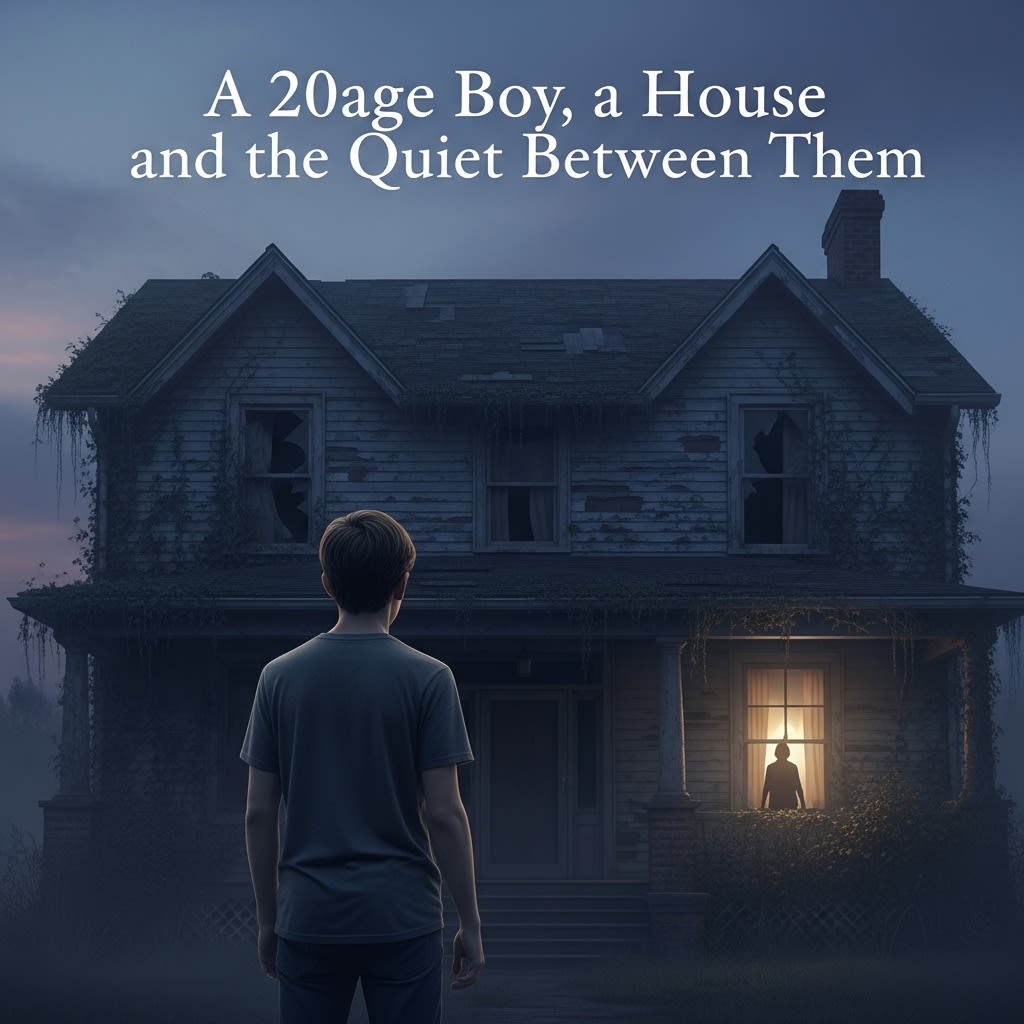
The house at the end of Willow Street had always been there, even when people tried not to notice it.
It stood a little apart from the others, as if it had slowly stepped backward over the years and decided not to return. Its paint had once been white, though now it carried the color of old paper left too long in the sun. The windows were tall and narrow, like eyes that had learned not to blink.
That was the house Arin moved into with his mother.
They came in late autumn, when the wind had already started stripping the trees bare. The moving truck left before sunset, and by the time the last box was carried inside, the sky had turned the dull gray of something unfinished.
“It’s quiet here,” his mother said, more to herself than to him.
Arin nodded. He liked quiet. Quiet didn’t ask questions.
The first night, he slept in a room that faced the backyard. The wallpaper had faint patterns—floral once, now faded into shapes that looked almost like handwriting. He thought it was nothing. Houses always had textures. Old things always carried memory in their surfaces.
But at midnight, he woke up.
Not from a sound exactly. From the absence of one.
The house was too still.
Even normal houses had small noises: pipes settling, wood adjusting, wind pressing against corners. But this house felt like it was holding its breath.
Arin lay in bed, staring at the ceiling. That’s when he heard it.
A creak.
Slow. Measured.
Like a foot stepping carefully somewhere downstairs.
He sat up. His first instinct was that it was his mother. But then he remembered she slept early and heavily, like someone shutting a door firmly behind them.
Another creak followed.
Then silence again.
Arin waited, counting his own heartbeat. Nothing else came.
The next morning, his mother asked if he had slept well.
“Yes,” he said.
He didn’t mention the footsteps.
Days passed like that. Quiet mornings, quiet evenings, and nights that sometimes felt just a little too aware of him. The house never did anything obvious. It didn’t rattle windows or slam doors. It didn’t behave like the stories people told about haunted places.
Instead, it listened.
Arin began to notice patterns.
When he sat on the stairs for too long, the wood beneath him would respond with faint shifts, as if adjusting its weight to match his. When he turned a corner too quickly, the hallway seemed slightly longer than before, as if it had stretched itself to delay him.
And always, there was that creaking at night.
Never loud. Never urgent.
Just present.
As if the house was walking when no one was looking.
One evening, while his mother was out buying groceries, Arin explored the upper floor.
The house had more rooms than it should have. He was sure of it. Every time he counted, the number changed. Doors that had not been there the day before now stood slightly ajar, revealing only darkness beyond them.
He chose one at random.
Inside was a room with no furniture.
Only walls.
But the walls were covered in faint markings—scratches, impressions, shapes that looked like they had been made by fingers pressing from the other side.
Arin stepped closer.
The markings weren’t random.
They formed lines. Patterns. Almost like writing, but not quite human.
Then he heard it.
A whisper, though not from the air.
From the walls.
Not words.
More like the feeling of words trying to become sound.
He stepped back immediately and left the room, closing the door behind him. The moment it shut, the whisper stopped.
That night, he did not sleep.
Instead, he listened.
For the first time, he realized the house wasn’t empty.
It was full.
Full of something that didn’t move like people moved. Something that existed in pauses, in silence stretched too thin.
On the third week, the house changed again.
Arin woke to find his bedroom door slightly open. He remembered closing it.
Beyond the doorway, the hallway was darker than usual, as if the lights had forgotten how to exist there. The floorboards were cold under his feet when he stepped out.
And the creaking was louder.
Not aggressive.
Closer.
He followed it.
Down the stairs.
Through the hallway.
To the front door.
But the front door was gone.
Where it had been was now just wall—smooth, seamless, as if it had never opened to the outside world at all.
Arin’s breath tightened.
Behind him, the house creaked again.
He turned slowly.
The hallway stretched longer than it had been before.
At the far end, where there should have been a wall, there was now another door.
Open.
He didn’t remember walking toward it, but suddenly he was in front of it.
Inside was the room from before.
The one with the markings.
But now it was different.
The scratches had deepened.
And they were moving.
Not physically—but like they were being remembered differently every second.
Then, very clearly, Arin understood something he couldn’t explain.
The house wasn’t built.
It was becoming.
And it had been listening to him.
Learning him.
He stepped back, but the floor behind him was no longer where he thought it was. The hallway had shifted again, folding like paper.
The house creaked once more.
Not around him now.
Inside him.
Arin closed his eyes.
For the first time, he spoke to it.
“I’m not afraid of you.”
The silence that followed was heavier than any sound.
Then, slowly, the house responded.
Not in words.
But in stillness that felt like acknowledgment.
Over the next days, things stopped changing so violently. The house settled. The extra doors stopped appearing. The hallway stopped stretching.
But the silence remained.
Not empty.
Aware.
Arin’s mother never noticed anything strange. To her, it was just an old house that needed repairs and time. She grew comfortable there.
Arin did not.
But he also did not leave.
Because somewhere in that quiet, he realized something else.
The house wasn’t trying to scare him.
It was learning how to exist with him inside it.
And he, in turn, was learning how to listen without running.
One night, long after everything had settled, Arin sat on the stairs and spoke softly into the dark.
“I hear you,” he said.
The house answered in its only language.
A single, slow creak.
And for the first time, it didn’t feel like something watching.
It felt like something staying.
About the Creator
Enjoyed the story? Support the Creator.
Subscribe for free to receive all their stories in your feed.
Comments
There are no comments for this story
Be the first to respond and start the conversation.