
2025: The Year Hope Went Underground
They said it started with the books — quiet little things disappearing from library shelves. Not banned, just... missing. First poetry. Then philosophy. Then anything that reminded people how to dream. In 2025, the world didn't explode. It simply dimmed.
Start writing...
By [Abubakar sadique]
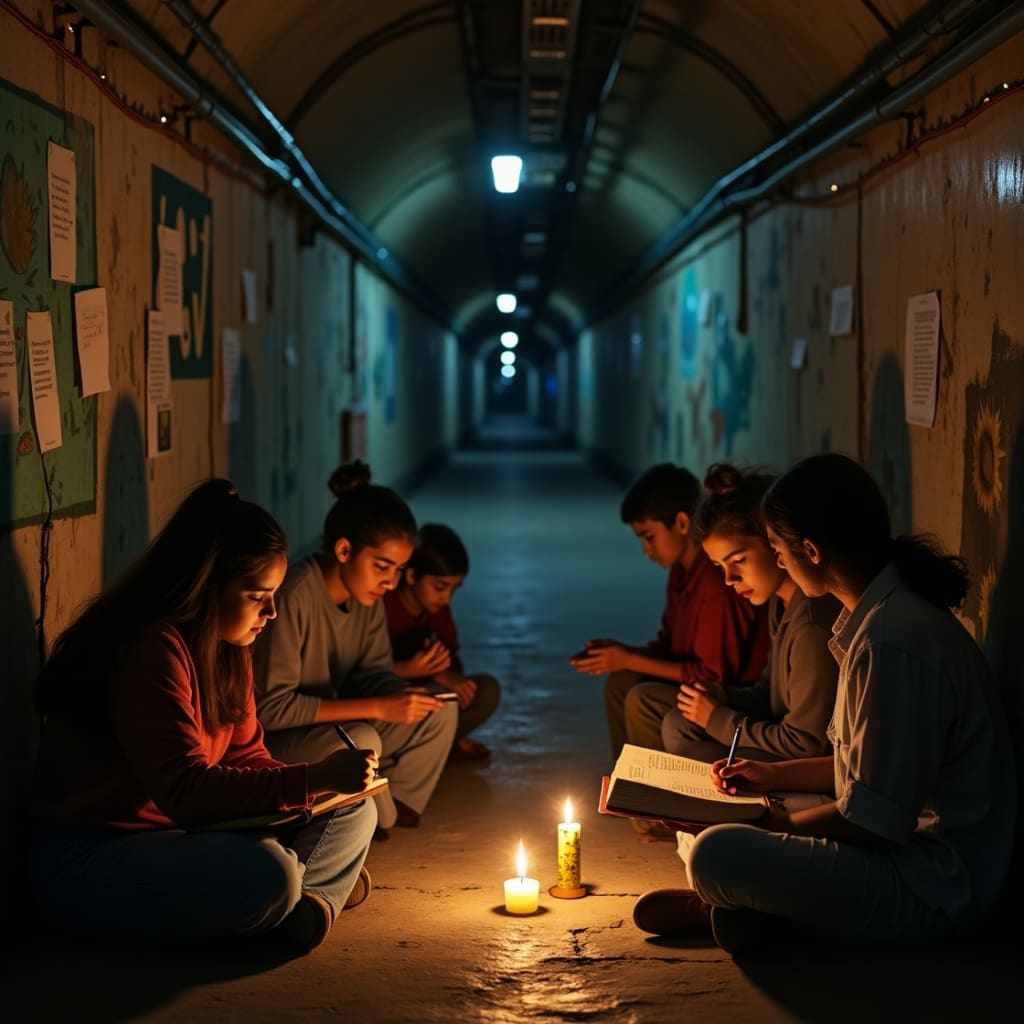
They said it started with the books — quiet little things disappearing from library shelves. Not banned, just... missing. First poetry. Then philosophy. Then anything that reminded people how to dream. In 2025, the world didn't explode. It simply dimmed. Screens still flickered. Markets still opened. Schools still assigned homework. But everything came with a warning: "This content has been reviewed and deemed suitable for national wellness." The word “wellness” had begun to mean silence. Calm meant compliance. I was a poet. Not by trade — by instinct. By survival. And in 2025, that made me dangerous. The new government wasn’t tyrannical in the old sense. There were no uniforms, no soldiers in the street. Just regulations, algorithms, and an invisible algorithm that ranked every word we spoke or typed. Words that ranked low — “freedom,” “imagine,” “change,” “protest” — triggered quiet warnings. Repeat offenders were offered “Mental Wellness Leave” and disappeared from chat rooms, social feeds, life. One morning, my post was flagged. It was just a line of poetry: “Even under concrete, seeds dare to push upward.” That night, someone knocked. --- I didn’t answer. I left everything behind except an old pen, my grandfather’s notebook, and a burner phone. I took the alley route. Past abandoned bookstores turned into storage units. Past the mural of a dove that someone had painted over in gray. My contact was a man named Rafiq. I’d only met him once at a blackout poetry reading — a secret event lit only by candlelight and courage. He led me to what they called “the roots.” It was a forgotten metro tunnel beneath the city. Once used for transport, now used for truth. Down there, hope wasn’t dead. It had just gone underground. --- The tunnel opened into a chamber lit with solar lamps and pulsing with whispers. Artists, musicians, ex-teachers, even a retired AI ethicist — all gathered here, not to escape, but to remember who they were before fear rewrote their code. Rafiq introduced me simply: “She still writes.” They nodded with reverence — not because I was brave, but because writing meant risk. We shared words like firewood — carefully, sparingly. A verse here, a confession there. People scribbled poems on scraps of recycled paper, on the back of grocery receipts, even on their skin. There were no publishers here. Just ears. Eyes. Open hearts. --- Weeks passed in a blur of quiet rebellion. I taught a group of children how to write haikus. One night, a boy named Liyan whispered to me, “When I write, I don’t feel afraid.” That night, I cried for the first time in months. But hope is fragile. One mistake, one echo caught by the wrong mic, and the walls could close in. It happened in April. A new recruit, desperate and lonely, leaked a verse to the surface. A single line went viral: “We are not algorithms. We are alphabets.” It was traced. The tunnel raided. Some were caught. Some escaped. I ran again. --- Now, I live in a cabin in the mountains. No signal. No surveillance. Just a notebook and a view of the stars — the only sky still free. But the world didn’t go back to sleep after the raid. People saw the poem before it was deleted. It stirred something old and aching in them. They began to whisper again. In coffee shops. On bus stops. On park benches. Children chalked poems on sidewalks at night. Someone left sunflowers in front of the old library. The mural of the dove came back — this time with color. --- It is still 2025. The world is still afraid. But the roots are spreading again. Hope is not gone. It simply changed its shape. It became a code hidden in lullabies, a protest folded into paper cranes, a single spark passed hand to hand in the dark. And if you are reading this — somewhere quiet, somewhere hidden — know this: We’re still writing. We’re still here. And one day, the underground will rise.
About the Creator
Enjoyed the story? Support the Creator.
Subscribe for free to receive all their stories in your feed.
Comments
There are no comments for this story
Be the first to respond and start the conversation.