
Would You Rather Eat Spaghetti With Your Hands?
How a silly question game can turn picky eaters into curious tasters
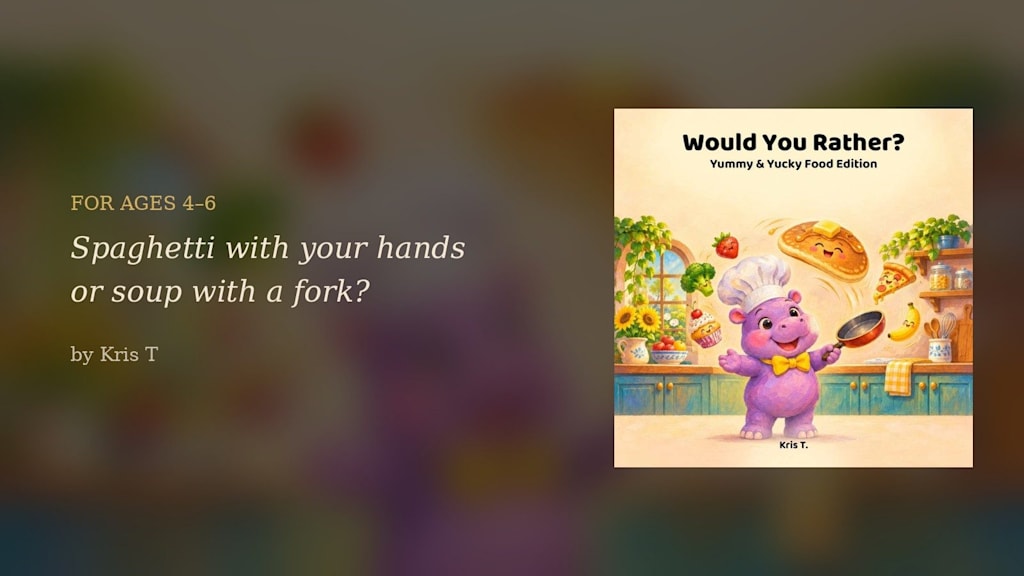
"Would you rather eat spaghetti with your hands or soup with a fork?"
Ask a four-year-old that question at the dinner table and watch what happens. First comes a shriek of laughter. Then comes a decision, a reason ("because the soup would fall out!") and, very often, a question back to you.
That small exchange is why I wrote Would You Rather? Yummy & Yucky Food Edition, a picture book of 26 silly food questions for children aged 4 to 6.
Picky eating is often about control
Many parents know the feeling of a meal turning into a negotiation. Young children who refuse new foods are not always being difficult. Being cautious about unfamiliar food is a normal stage, and children are also discovering that "no" is one of the few things they control.
A "would you rather" game gives that control back in a safe way. The child gets to choose, and every choice is a good answer. Talking about food becomes a game instead of a test, and that is usually the first step toward actually tasting something new.
How the book works
Each page has one illustrated question, and children can answer just by pointing. Bo the hippo chef guides them through choices that range from silly to wonderfully gross. After every question there is a healthy tip and a fun fact, so curious children learn something along the way.
At the end there are mini challenges and a Brave Taster Chart, where children can mark each new food they have been brave enough to try. Two printable activities come with the direct edition: "Invent a Silly Food Choice", where children make up their own questions, and "My Food Explorer Notes".
What the research on picky eating suggests
Paediatric feeding advice tends to agree on a few points. Children often need to see and taste a new food many times before they accept it, so a single refusal says very little. Pressure usually backfires: being pushed to "just try it" tends to make a cautious child more cautious. And children copy the people they eat with, so a parent who enjoys vegetables at the table does more than any lecture.
A question game fits all three. It brings food into the conversation without pressure. It can be repeated as often as children like. And because the adults answer too, it shows children that grown-ups have funny food opinions of their own.
Make your own questions
Once children know the format, the best questions are the ones you invent together. Mix one familiar food with one new one ("would you rather have a carrot that tastes like strawberries, or a strawberry that tastes like carrots?"). Ask about textures, colours and temperatures, not only flavours. Let children ask you questions in return; they will be far sillier than yours, and that is the point.
Three ways to use it at home
At the table. Read one question before dinner and let everyone answer, including the adults.
In the car or in a queue. Once children know the format, they will start inventing questions of their own.
Before a new food. Pick a question that features something similar, talk about it, then offer a single "brave bite" for the chart.
The goal is not a clean plate. It is a child who is curious about food and enjoys talking about it, which is where a lifetime of better eating starts.
Try one question at dinner tonight and see where the conversation goes. You may be surprised which food your child suddenly wants to taste, just to have a better answer next time.
Kris T is the author of the picture book Would You Rather? Yummy & Yucky Food Edition for ages 4 to 6.
About the Creator
Enjoyed the story? Support the Creator.
Subscribe for free to receive all their stories in your feed.
Comments
There are no comments for this story
Be the first to respond and start the conversation.