
Why Animal Facts Can Inspire a Love of Learning in Children
Simple Educational Activities That Encourage Curiosity, Reading, and Imagination

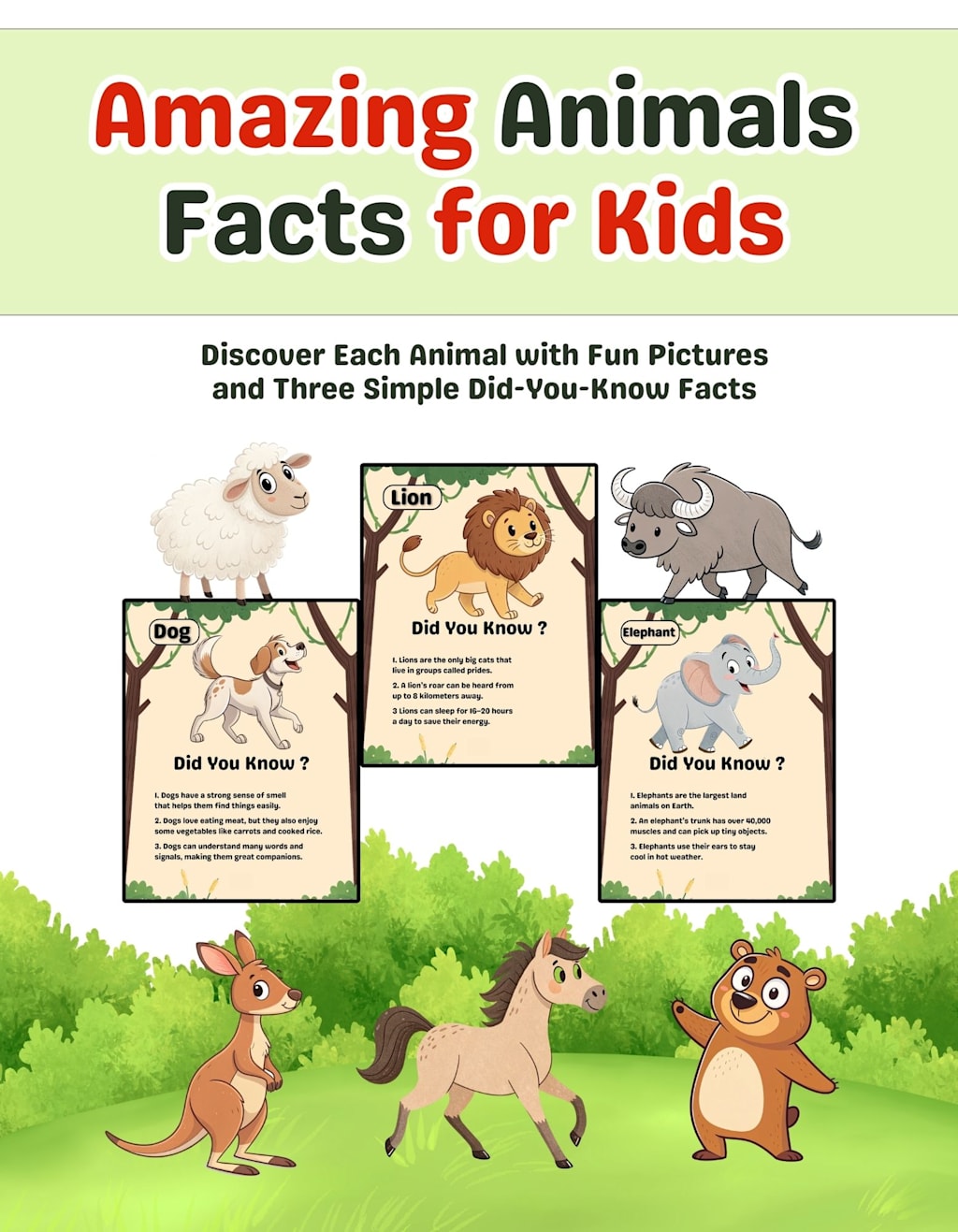
Children are naturally curious about the world around them. From the moment they begin asking questions, they want to explore how things work, why animals behave differently, and what makes nature so interesting. Among the many topics children enjoy learning about, animals remain one of the most exciting and engaging subjects for young minds.
Many children can spend hours talking about lions, elephants, dolphins, birds, or even tiny insects. Animals spark imagination because they are diverse, colorful, and full of surprises. For this reason, animal-based learning activities are often one of the easiest ways to encourage children to read, ask questions, and stay interested in educational content.
Parents and teachers often search for educational activities that feel enjoyable rather than stressful. Young children usually learn best when information is presented in a fun and approachable way. Reading short animal facts, looking at illustrations, and discussing wildlife can turn learning into an experience children genuinely enjoy instead of something that feels forced or difficult.
One reason animal facts are effective for young learners is that they are easy to remember. Children tend to connect strongly with interesting or surprising information. Learning that giraffes have long tongues, elephants communicate in unique ways, or some animals can survive in extreme environments often leaves children excited to discover more. These small moments of curiosity can encourage children to continue reading and exploring new topics independently.
Reading simple educational content can also help children become more confident readers. Short facts and easy sentences allow younger readers to practice without becoming overwhelmed by long paragraphs or difficult vocabulary. As children successfully understand new information, they often feel more motivated to continue reading and learning on their own.
Another important benefit of animal-themed educational content is that it encourages observation and imagination. Children often begin thinking more carefully about nature, habitats, and the world around them. They may start asking questions about forests, oceans, deserts, or different species they encounter in books or documentaries. Curiosity like this can become the foundation for stronger learning habits in the future.
Animal learning activities can also create valuable opportunities for families to spend time together. Reading animal facts before bedtime, discussing favorite animals during the day, or exploring wildlife topics together can become meaningful shared experiences. Even simple conversations about animals can help children practice communication skills and express their thoughts more confidently.
Teachers and homeschool families also appreciate educational materials that are flexible and easy to use. Animal topics work well in classrooms because they naturally attract children’s attention. Educational reading activities based on animals can support vocabulary development, reading comprehension, memory skills, and creative thinking in a relaxed and engaging way.
In recent years, many families have become more interested in finding screen-free activities for children. While technology can be useful, parents also want children to spend time reading, imagining, and learning away from digital devices. Books and educational activities focused on animals offer an alternative form of entertainment that still feels exciting and interactive for young readers.
Another reason children connect strongly with animals is emotional connection. Many children develop favorite animals at an early age and feel emotionally attached to them. This emotional interest makes learning more memorable because children pay closer attention to subjects they genuinely care about. Educational experiences become stronger when curiosity and enjoyment are involved.
Children also benefit from educational content that feels calm and pressure-free. Learning does not always need to feel like schoolwork to be meaningful. In fact, some of the most valuable learning experiences happen naturally through curiosity, reading, and exploration. Animal facts encourage children to discover information at their own pace while staying entertained and engaged.
Colorful illustrations and simple layouts can further improve the learning experience for younger readers. Visual learning plays an important role in helping children stay focused and interested. When educational content is visually inviting, children are often more willing to spend time reading and exploring independently.
Educational books and activities centered around animals can also inspire creativity. After learning about different animals, children may want to draw pictures, write stories, ask questions, or imagine adventures involving wildlife and nature. Creative thinking is an important part of childhood learning because it helps children develop confidence and self-expression.
For many families, the goal is not simply to teach children facts but to help them enjoy learning itself. When children associate reading with curiosity and fun, they are more likely to continue exploring books and educational activities as they grow older. Topics like animals provide a natural pathway toward building these positive learning habits.
Simple educational experiences can have a lasting impact on children when they are connected to curiosity, imagination, and enjoyment. Animal facts continue to be one of the easiest ways to encourage reading, inspire questions, and help children develop a stronger connection with learning in everyday life.
About the Creator
Meshal Sprout
Author of fun & educational kids books | Inspiring creativity & imagination
Enjoyed the story? Support the Creator.
Subscribe for free to receive all their stories in your feed.
Comments
There are no comments for this story
Be the first to respond and start the conversation.