
Volcanoes and the Natural Forces That Shape Our Planet
Understanding Volcanoes Through Simple Educational Reading

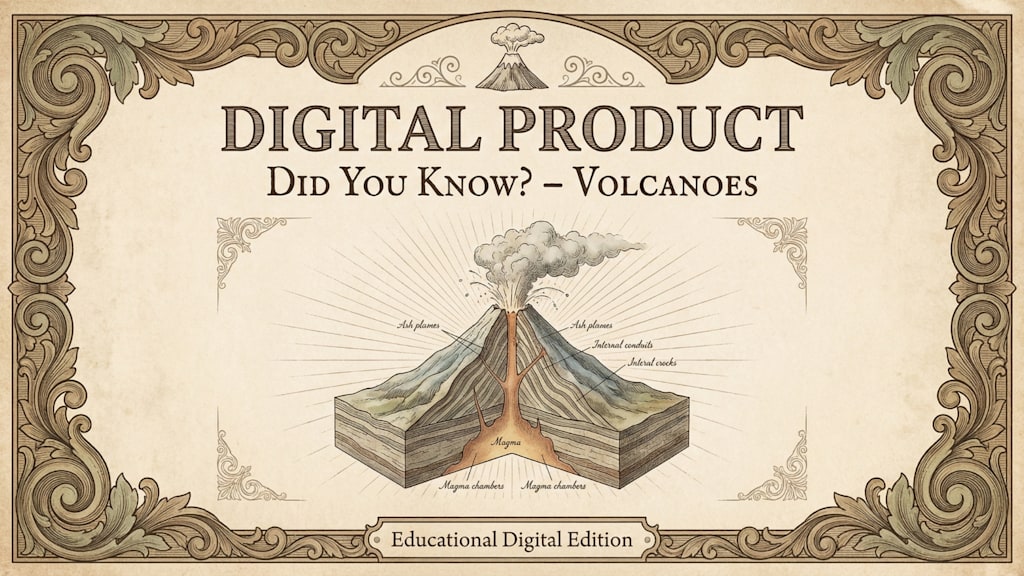
Volcanoes are among the most interesting natural features found on Earth. For thousands of years, they have influenced landscapes, affected weather patterns, and shaped human history. Today, volcanoes continue to attract the attention of scientists, travelers, teachers, and young learners who are curious about how the planet works.
Learning about volcanoes can help children better understand nature and Earth science. Educational reading materials that explain natural phenomena in a simple way are often useful for encouraging curiosity and supporting independent learning. Topics connected to geography and science can also help children develop observation and critical thinking skills at an early age.
A volcano is an opening in the Earth’s surface where molten rock, gases, and ash can escape from deep underground. Some volcanoes remain inactive for long periods, while others erupt more frequently. Volcanic eruptions can create mountains, islands, and new landforms over time. Although eruptions can sometimes be dangerous, volcanoes also contribute to the Earth’s natural balance by creating fertile soil and changing landscapes.
There are many famous volcanoes around the world that are often discussed in educational books and science lessons. Mount Fuji in Japan is known for its symmetrical shape and cultural importance. Mount Etna in Italy is one of the most active volcanoes in Europe. Krakatoa in Indonesia became widely known because of its powerful eruption in the nineteenth century. Mount St. Helens in the United States is also frequently studied because of its major eruption in 1980.
Children are often interested in volcanoes because the topic combines science, history, and nature in a visually engaging way. Lava flows, ash clouds, and volcanic mountains create strong images that are easy for young readers to imagine. Educational books that include maps, illustrations, and simplified explanations can make these topics easier to understand.
Reading science-based books outside the classroom may also help children become more confident readers. When educational topics are presented clearly and in an engaging format, children are more likely to stay interested and continue exploring new subjects. Science education does not always need to feel formal or difficult. In many cases, curiosity and imagination are important parts of the learning process.
Parents and teachers often look for educational materials that encourage learning while remaining accessible for younger audiences. Nature and Earth science topics are commonly used in homeschool lessons, reading activities, and classroom discussions because they connect directly to the real world. Volcanoes are especially useful as a learning topic because they introduce children to geography, environmental science, and natural processes at the same time.
Visual learning can also support educational development. Books that combine written information with illustrations and diagrams often help children remember details more effectively. Young readers may better understand scientific ideas when they can connect information with images and examples.
Educational reading habits developed during childhood may continue to benefit students as they grow older. Books that encourage observation, exploration, and curiosity can help children develop a positive relationship with learning. Reading about nature and science may also inspire interest in future subjects such as geology, geography, environmental studies, or biology.
Volcanoes remain one of the most fascinating natural subjects because they demonstrate the power and complexity of the Earth. Even simple introductions to volcanoes can encourage children to ask questions about mountains, earthquakes, continents, and natural change. This type of curiosity is an important part of learning and discovery.
Educational books designed for children often aim to present information in a way that feels approachable and enjoyable. Instead of focusing only on facts, many books encourage readers to explore ideas and think about how the natural world works. This balance between learning and curiosity can create a more meaningful reading experience.
As educational resources continue to evolve, science books for children remain valuable tools for supporting reading development and general knowledge. Topics related to Earth and nature continue to be popular because they help children connect learning with the world around them.
Understanding volcanoes is not only about learning scientific facts. It is also about exploring how natural forces shape landscapes, influence history, and inspire curiosity across generations.
About the Creator
Meshal Sprout
Author of fun & educational kids books | Inspiring creativity & imagination
Enjoyed the story? Support the Creator.
Subscribe for free to receive all their stories in your feed.
Comments
There are no comments for this story
Be the first to respond and start the conversation.