

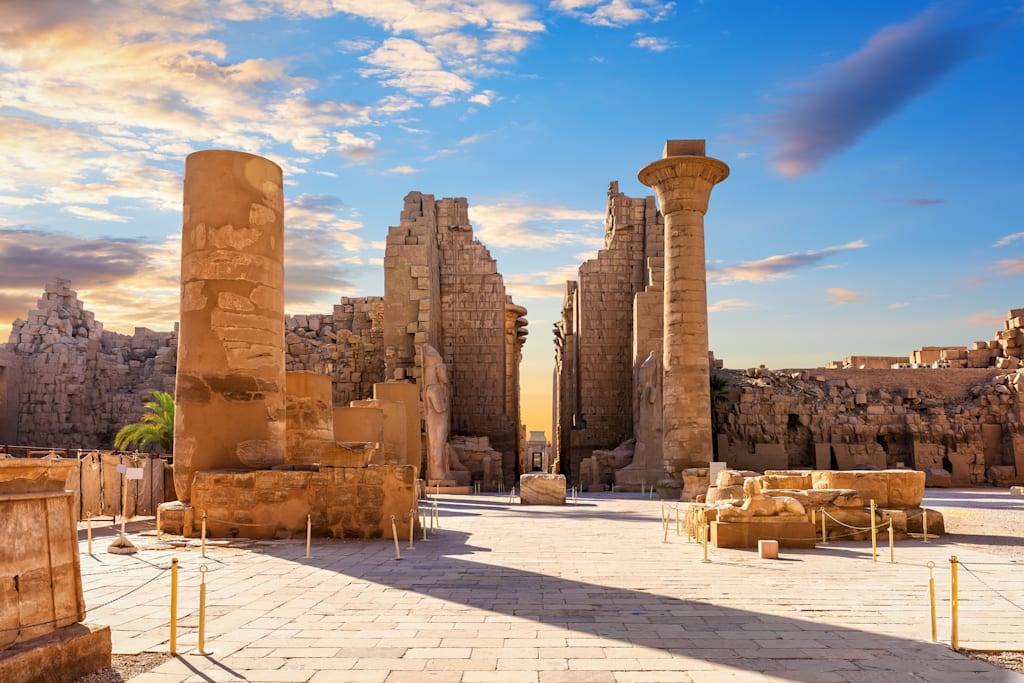
Karnak Temple Complex is one of the largest and most impressive religious sites ever built in the ancient world, located in Luxor on the east bank of the Nile River. This vast complex is not a single temple but a collection of temples, chapels, pylons, and sanctuaries constructed over more than 2,000 years by successive pharaohs. It was primarily dedicated to the god Amun-Ra, the chief deity of ancient Egypt, along with his consort Mut and their son Khonsu.
Karnak Temple was the religious heart of ancient Egypt during the New Kingdom period, and it served as a major center of worship and power. Pharaohs such as Seti I, Ramses II, Hatshepsut, and Thutmose III all contributed to its construction, each adding new structures to honor the gods and demonstrate their devotion and authority. As a result, the complex reflects different architectural styles and historical periods, making it a rich and layered site for visitors to explore.
One of the most iconic features of Karnak is the Great Hypostyle Hall, a massive open hall supported by 134 gigantic columns arranged in rows. These towering columns are decorated with intricate carvings and hieroglyphs that depict religious scenes, royal achievements, and offerings to the gods. Walking through this hall is an unforgettable experience, as the sheer scale of the columns creates a sense of awe and wonder. It is considered one of the greatest architectural achievements of ancient Egypt.
The entrance to Karnak Temple is marked by a large pylon and a processional avenue lined with ram-headed sphinxes, known as the Avenue of Sphinxes. This sacred pathway once connected Karnak to the nearby Luxor Temple and was used during religious festivals, especially the Opet Festival, when statues of the gods were carried between the two temples in grand ceremonies.
Inside the complex, visitors can explore various sections, including the Temple of Amun, the Temple of Mut, and the Temple of Khonsu. There are also obelisks, statues, and sacred lakes scattered throughout the site. One of the most famous obelisks belongs to Queen Hatshepsut and stands as one of the tallest surviving ancient obelisks in Egypt.
The Sacred Lake at Karnak is another important feature. It was used by priests for ritual purification and symbolizes the primeval waters from which creation began in ancient Egyptian mythology. The lake adds a peaceful element to the otherwise monumental and grand setting of the temple.
Karnak is also known for its detailed inscriptions and reliefs, which provide valuable information about ancient Egyptian religion, politics, and daily life. These carvings have helped historians understand the beliefs and practices of one of the world’s earliest civilizations.
Today, Karnak Temple Complex is one of Egypt’s most visited archaeological sites and a UNESCO World Heritage Site. Many visitors explore the temple during the day, while others attend the evening sound and light show, which brings the history of the temple to life through narration and illumination.
Overall, Karnak Temple is a must-see destination for anyone interested in ancient history and architecture. Its immense size, detailed artistry, and historical significance make it one of the most remarkable landmarks in Egypt and a powerful reminder of the greatness of ancient Egyptian civilization.
About the Creator
Enjoyed the story? Support the Creator.
Subscribe for free to receive all their stories in your feed.
Comments
There are no comments for this story
Be the first to respond and start the conversation.