
Things to Do in Luxor:(Temple of Hatshepsut)
Things to Do in Luxor: Temple of Hatshepsut

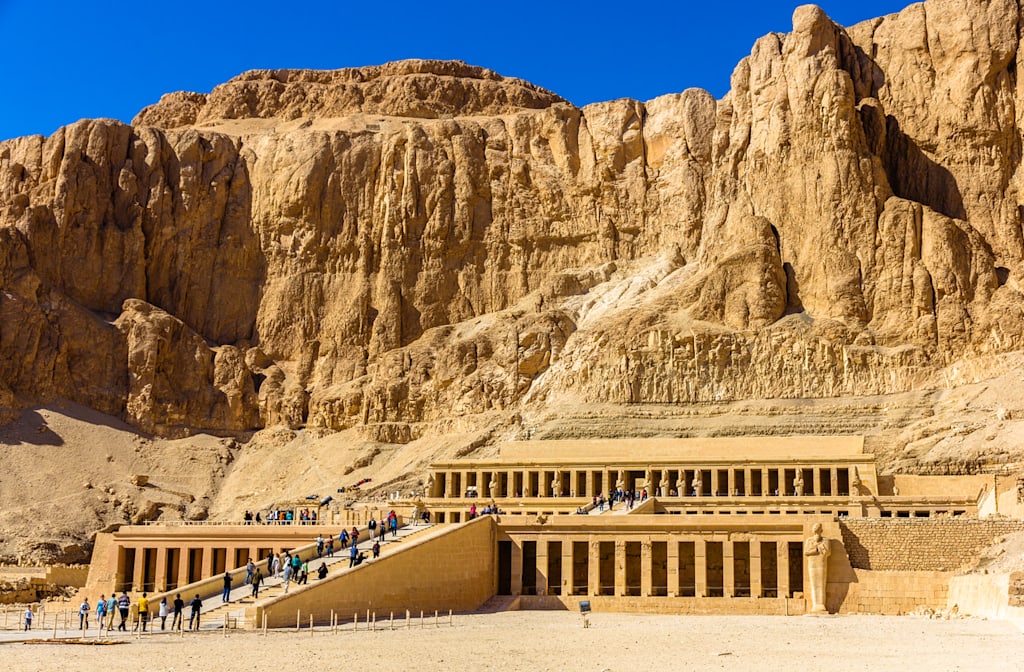
One of the most remarkable historical attractions in Luxor is the magnificent Mortuary Temple of Hatshepsut. Located at Deir el-Bahari on the west bank of the Nile River, this extraordinary temple is considered one of the greatest architectural achievements of ancient Egypt. Built more than 3,500 years ago, it was dedicated to Queen Hatshepsut, one of the most successful and influential rulers in Egyptian history. Today, the temple is one of Luxor’s most visited landmarks and a must-see destination for anyone interested in ancient Egyptian civilization.
Hatshepsut was one of the few women to rule Egypt as pharaoh. During her reign in the 18th Dynasty, she brought stability, prosperity, and economic growth to the kingdom. Rather than presenting herself solely as a queen, Hatshepsut adopted the full title and symbols of a pharaoh, including traditional royal clothing and ceremonial regalia. Her successful leadership helped strengthen Egypt’s wealth through trade, construction projects, and diplomatic relations. To celebrate her achievements and ensure her legacy would endure, she commissioned the construction of her magnificent mortuary temple at Deir el-Bahari.
The Temple of Hatshepsut stands out because of its unique architectural design. Unlike many other Egyptian temples, which feature massive enclosed courtyards and towering pylons, this temple is built into the dramatic limestone cliffs of the Theban Mountains. Its structure consists of three large terraces connected by broad ramps, creating a harmonious blend between human engineering and the natural landscape. The symmetry and elegance of the design continue to impress architects, historians, and visitors from around the world.
As visitors approach the temple, they are immediately struck by its grand scale and stunning location. The bright stone terraces contrast beautifully with the towering cliffs behind them, creating one of the most iconic views in Egypt. The temple’s open courtyards, colonnades, and elevated walkways offer spectacular perspectives of both the surrounding desert and the fertile Nile Valley in the distance.
The walls of the temple are covered with detailed carvings and reliefs that tell the story of Hatshepsut’s reign. One of the most famous scenes depicts her expedition to the Land of Punt, a prosperous trading region believed to have been located along the Horn of Africa. These reliefs show ships, exotic animals, valuable goods, and foreign landscapes, providing valuable historical information about ancient Egyptian trade and exploration. The carvings also celebrate Hatshepsut’s divine birth and emphasize her legitimacy as ruler of Egypt.
Inside the temple, visitors can explore a variety of chapels and sacred spaces dedicated to different deities, including Amun-Ra, Hathor, and Anubis. The Chapel of Hathor contains beautifully preserved columns decorated with the goddess’s distinctive face, while the Chapel of Anubis features detailed artwork dedicated to the god associated with mummification and the afterlife. These religious areas reflect the deep spiritual significance of the temple and its role in ancient Egyptian worship.
The Temple of Hatshepsut has experienced a long and fascinating history. After Hatshepsut’s death, some of her monuments and inscriptions were deliberately damaged or removed by later rulers, likely in an attempt to erase her memory from official history. Despite these efforts, much of the temple survived, allowing archaeologists and historians to reconstruct her remarkable story. Extensive restoration work has helped preserve the monument, making it one of the best-maintained ancient sites in Egypt.
Most visitors include the Temple of Hatshepsut as part of a tour of Luxor’s West Bank, often alongside the Valley of the Kings and the Colossi of Memnon. Early morning visits are particularly popular because the temperatures are cooler and the sunlight beautifully illuminates the temple’s terraces and carvings. The peaceful atmosphere of the site, combined with its impressive architecture, creates an unforgettable experience.
The temple is also a favorite destination for photographers due to its dramatic setting and unique design. The contrast between the golden desert cliffs, the pale stone structure, and the blue Egyptian sky provides stunning opportunities for photography throughout the day.
In conclusion, the Mortuary Temple of Hatshepsut is one of the greatest treasures of ancient Egypt. Its elegant architecture, historical significance, and breathtaking location make it one of the most impressive attractions in Luxor. Whether you are fascinated by history, architecture, archaeology, or simply the beauty of ancient monuments, a visit to the Temple of Hatshepsut offers an unforgettable journey into the legacy of one of Egypt’s most extraordinary pharaohs.
About the Creator
Enjoyed the story? Support the Creator.
Subscribe for free to receive all their stories in your feed.
Comments
There are no comments for this story
Be the first to respond and start the conversation.