
Things To Do In Luxor
Things to Do in Luxor: Colossi of Memnon

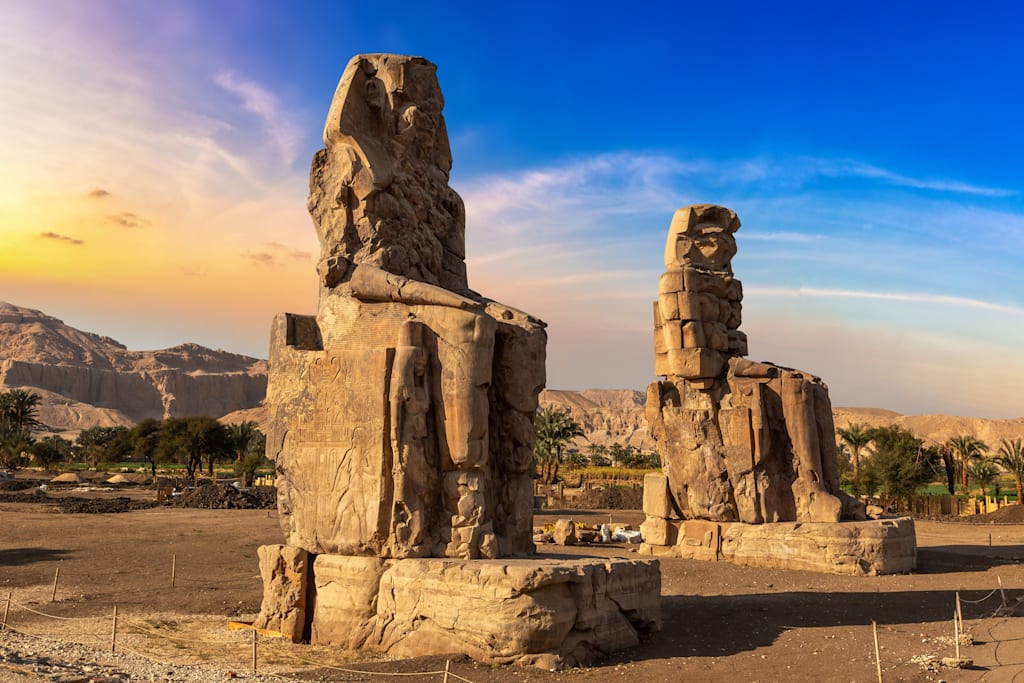
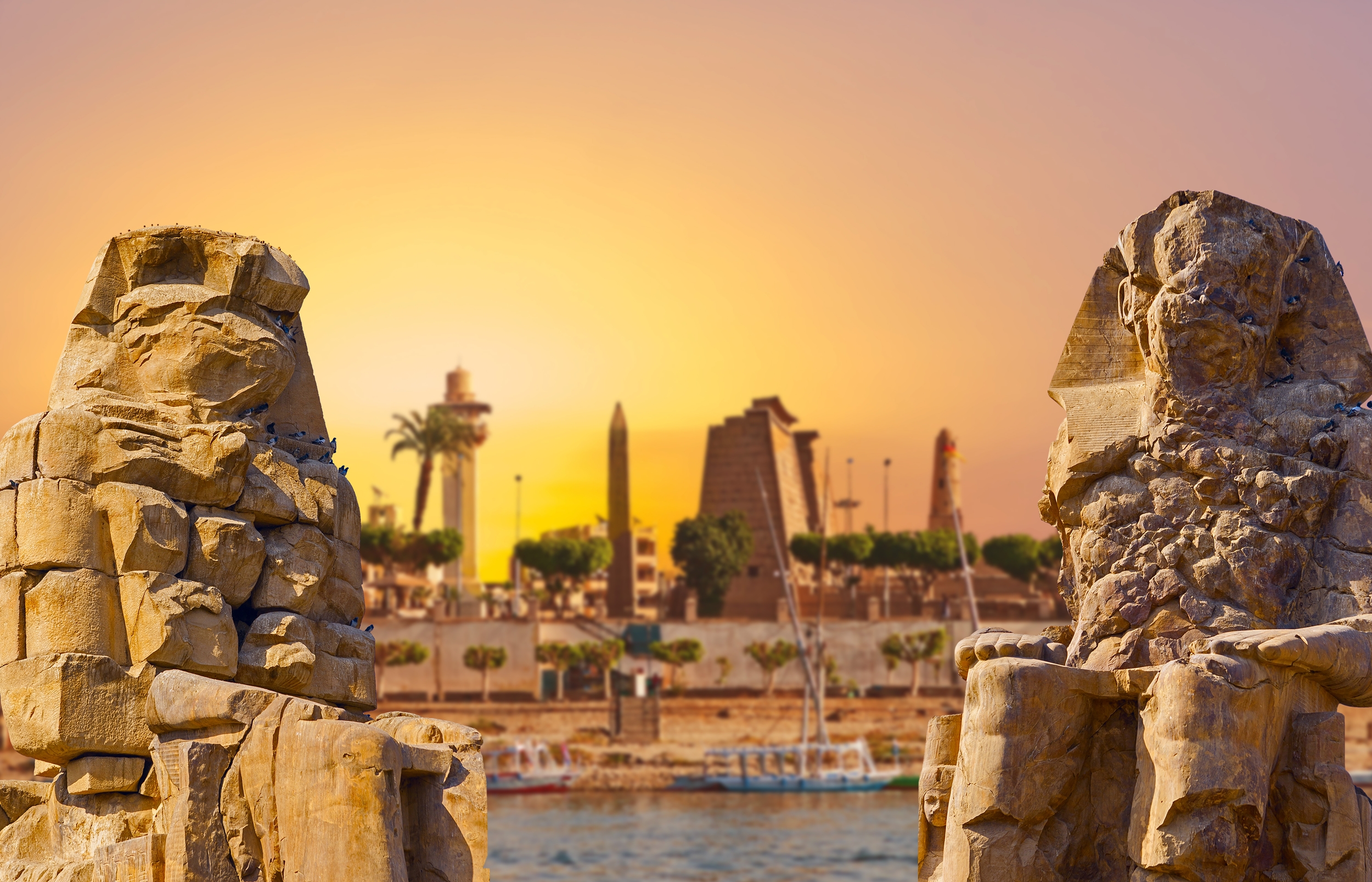
One of the most iconic and historically significant landmarks in Luxor is the Colossi of Memnon. These two massive stone statues are located on the west bank of the Nile River and are among the first monuments visitors encounter when exploring Luxor’s famous West Bank archaeological sites. They stand as silent guardians of ancient Thebes and are part of a much larger historical landscape that includes temples, tombs, and royal mortuary complexes.
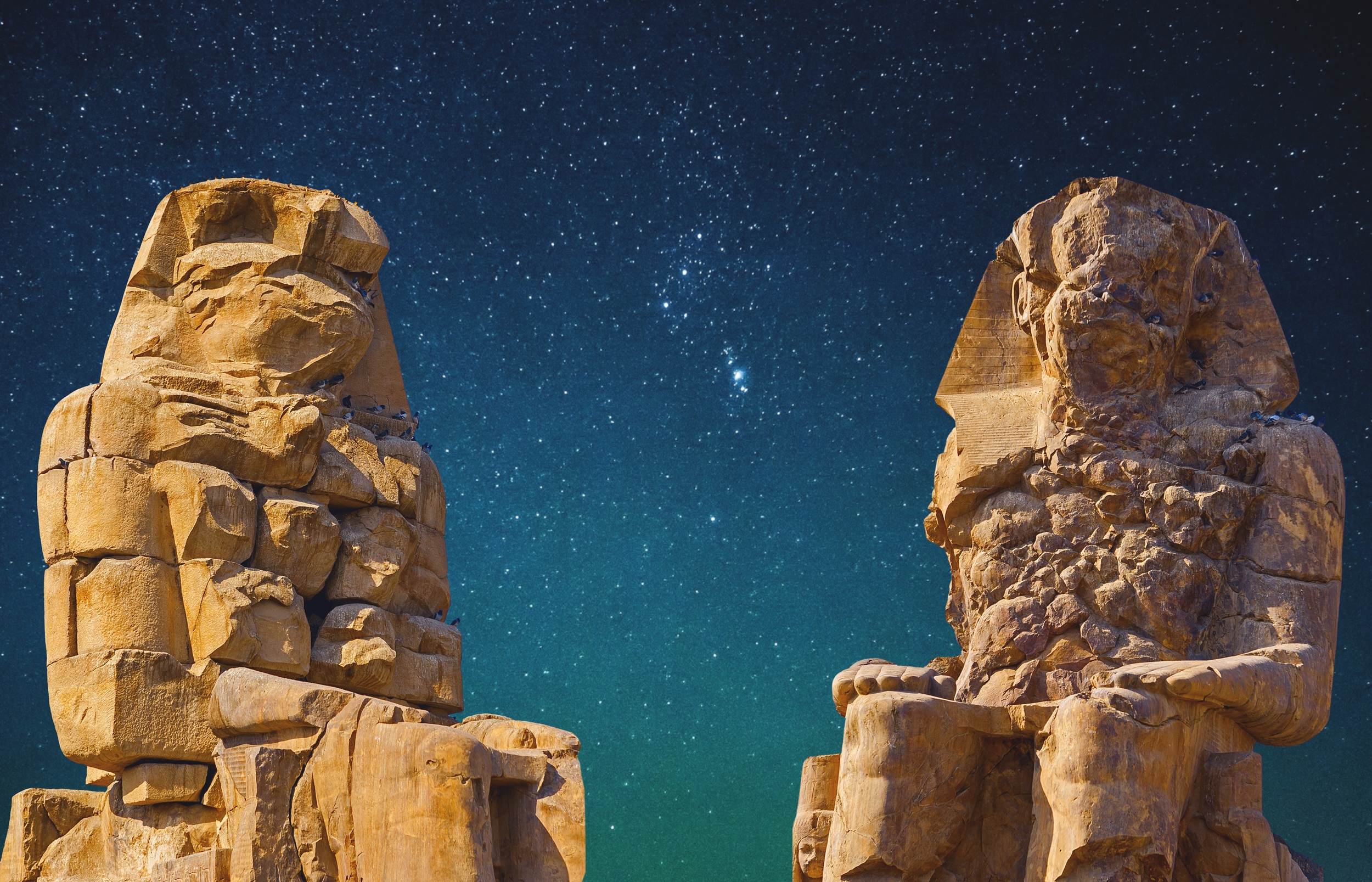
The Colossi of Memnon represent Pharaoh Amenhotep III, one of the most powerful rulers of the 18th Dynasty of ancient Egypt, who reigned more than 3,000 years ago. Each statue is carved from quartzite sandstone and originally stood at the entrance of his enormous mortuary temple. At the time of its construction, this temple was one of the largest religious complexes in Egypt, even larger in scale than many structures that still survive today. Although the temple itself was largely destroyed over time due to flooding, earthquakes, and reuse of materials in later periods, the two colossal statues remain standing, giving visitors a glimpse into the grandeur of ancient Egyptian architecture.
Each of the statues rises to about 18 meters in height and weighs several hundred tons. They are seated in a traditional pharaonic pose, with hands resting on their knees and facing east toward the rising sun. This orientation was not accidental; in ancient Egyptian belief, the east symbolized rebirth, renewal, and the cycle of life. The statues were designed not only as artistic masterpieces but also as spiritual symbols meant to protect the mortuary temple and honor the pharaoh in the afterlife.
The name “Memnon” was given to these statues by ancient Greek travelers who visited Egypt centuries after their construction. They associated the statues with Memnon, a hero from Greek mythology who fought in the Trojan War. According to ancient accounts, one of the statues reportedly produced a mysterious sound at sunrise, which the Greeks believed was the voice of Memnon greeting his mother, the goddess Eos. In reality, this sound was likely caused by temperature changes that created cracks or vibrations within the stone. Interestingly, this phenomenon made the statues famous throughout the ancient world and attracted travelers from Greece and Rome, turning the site into an early tourist attraction.
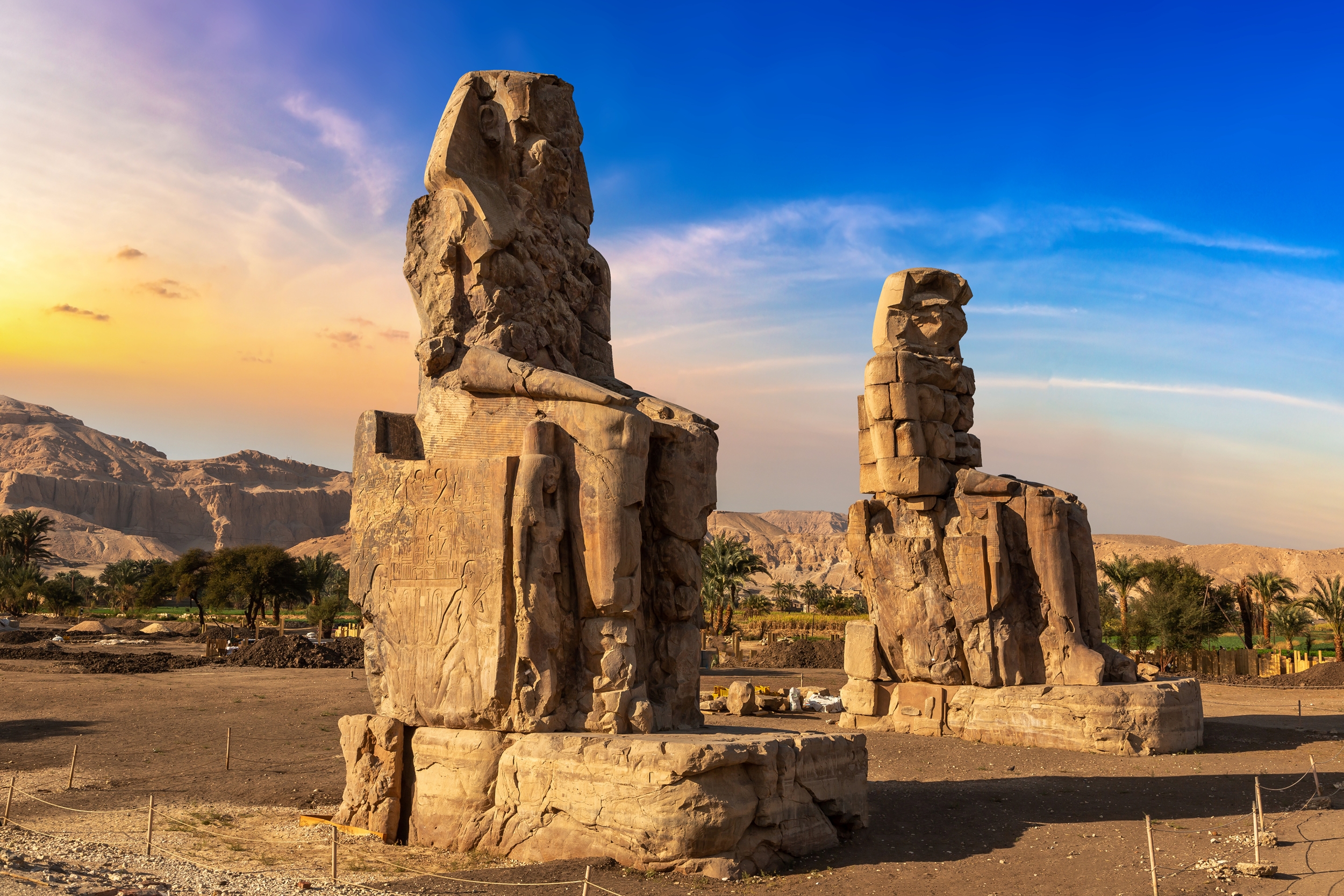
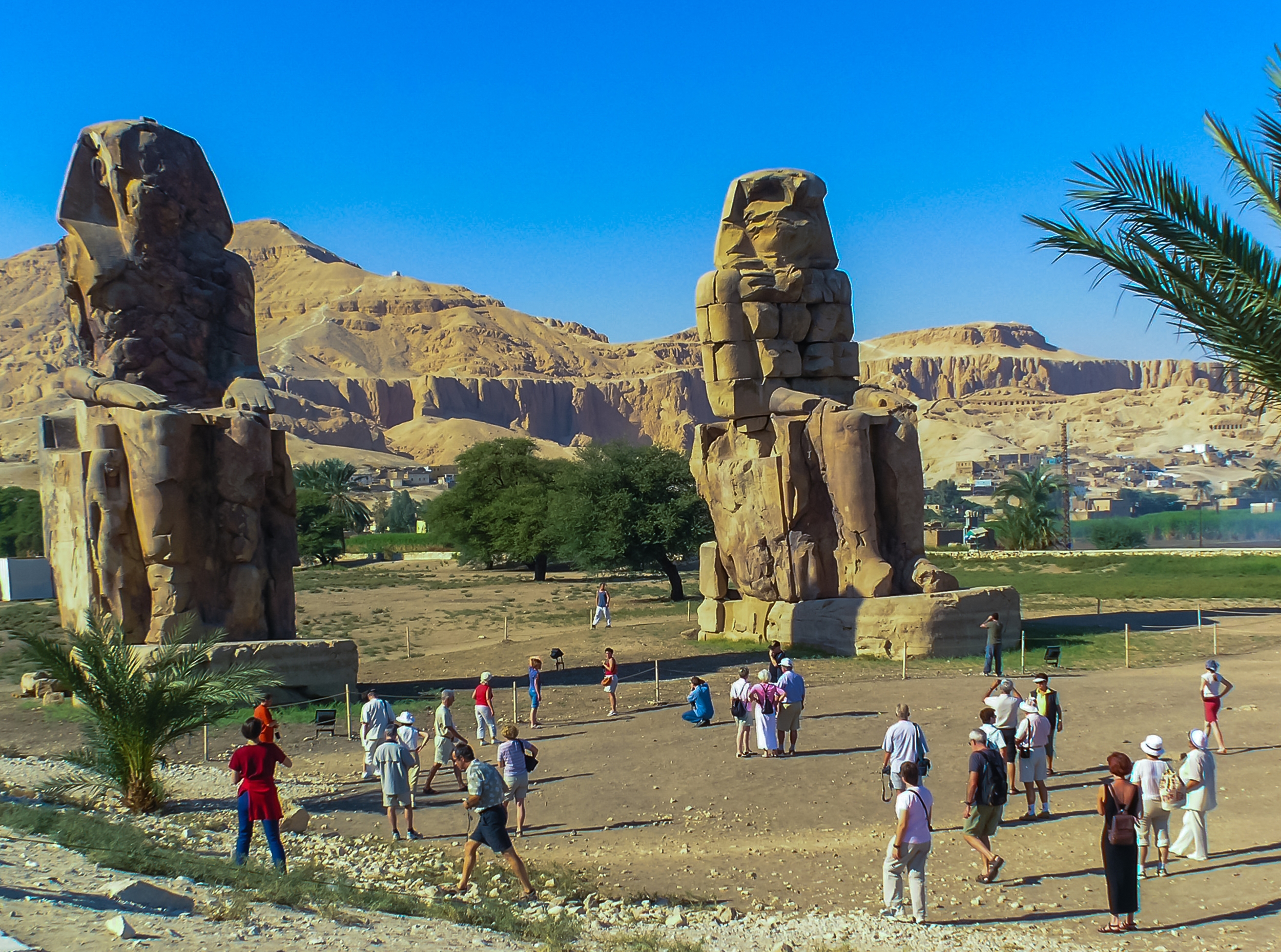
Visiting the Colossi of Memnon today is a simple but powerful experience. Unlike many other ancient sites that require entering enclosed temples or tombs, the statues are located in an open field, allowing visitors to walk right up to them and appreciate their size and detail up close. Tourists can take photographs from different angles and observe the weathered inscriptions and damage that reflect thousands of years of exposure to natural elements.

Most visitors include the Colossi of Memnon as part of a larger West Bank tour in Luxor. This area is one of the richest archaeological regions in the world and includes major attractions such as the Valley of the Kings, the Temple of Hatshepsut, and the tombs of nobles. The Colossi are usually the first or last stop on these tours, serving as a symbolic entrance to the ancient necropolis of Thebes.
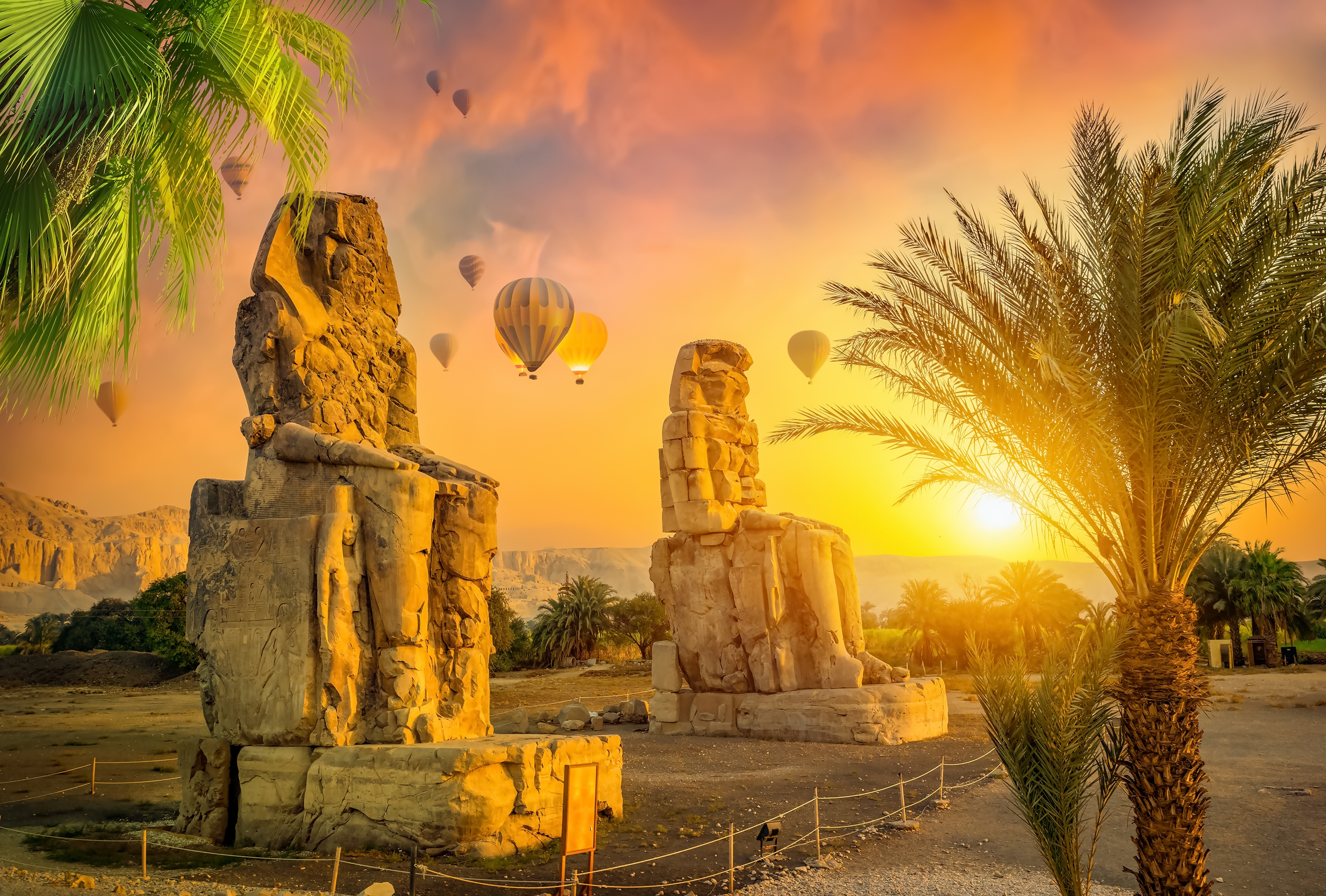
The surrounding landscape also adds to the experience. The statues stand against a backdrop of desert plains and agricultural fields, with the Nile River nearby. This contrast between fertile land and desert reflects the unique geography that allowed ancient Egyptian civilization to flourish. Early morning and late afternoon are considered the best times to visit, as the lighting enhances the details of the statues and the temperatures are more comfortable for exploration.
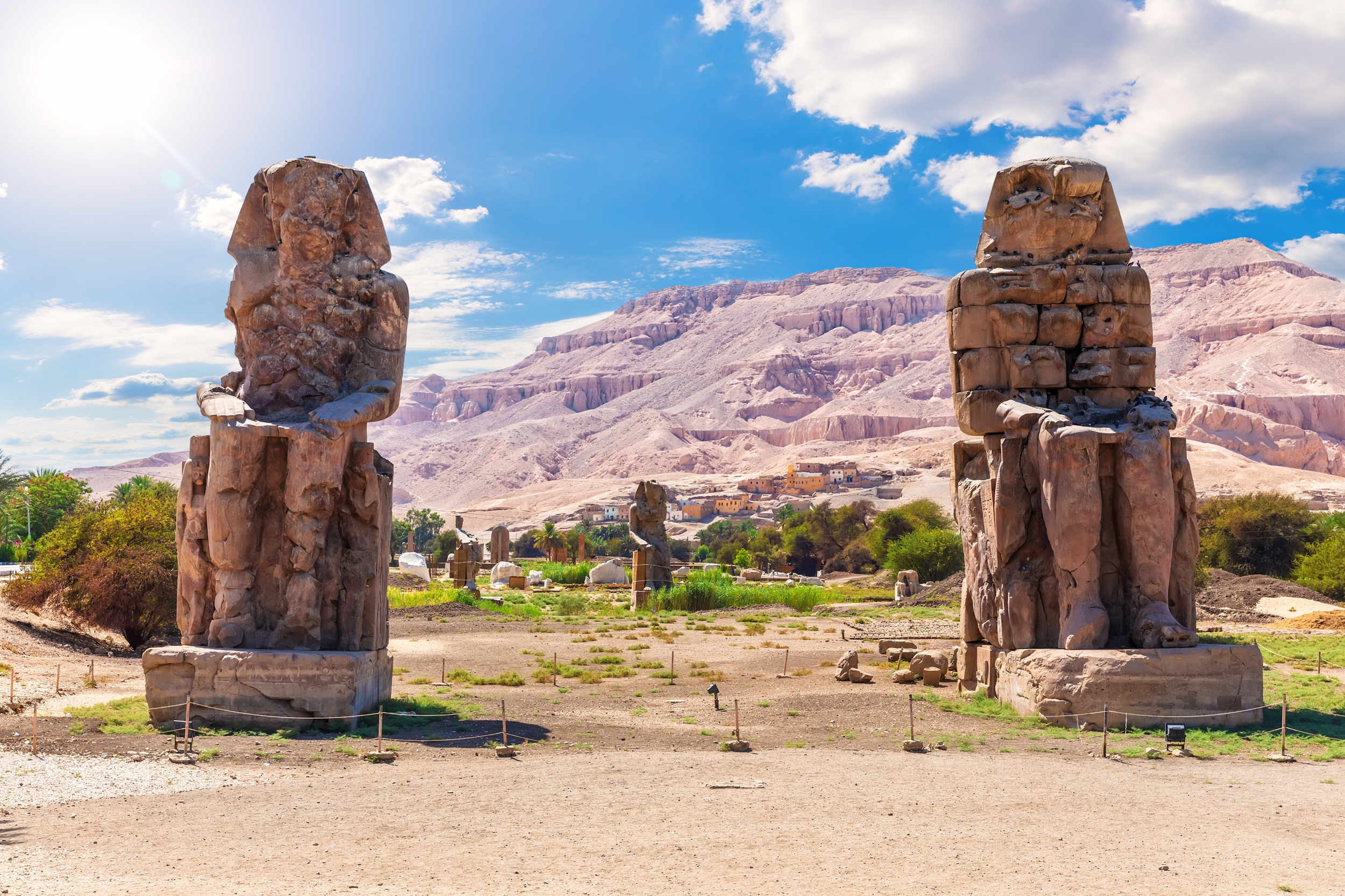
Archaeological research is still ongoing in the area around the Colossi of Memnon. Experts continue to study the remains of Amenhotep III’s mortuary temple in hopes of understanding more about its original layout and design. These efforts help historians reconstruct one of the most important royal complexes of ancient Egypt.In conclusion, the Colossi of Memnon are more than just ancient statues; they are powerful symbols of Egypt’s rich history, artistic achievement, and cultural legacy. Standing for over three millennia, they continue to impress visitors from around the world and serve as a gateway to the wonders of Luxor’s West Bank.
About the Creator
Enjoyed the story? Support the Creator.
Subscribe for free to receive all their stories in your feed.
Comments
There are no comments for this story
Be the first to respond and start the conversation.