

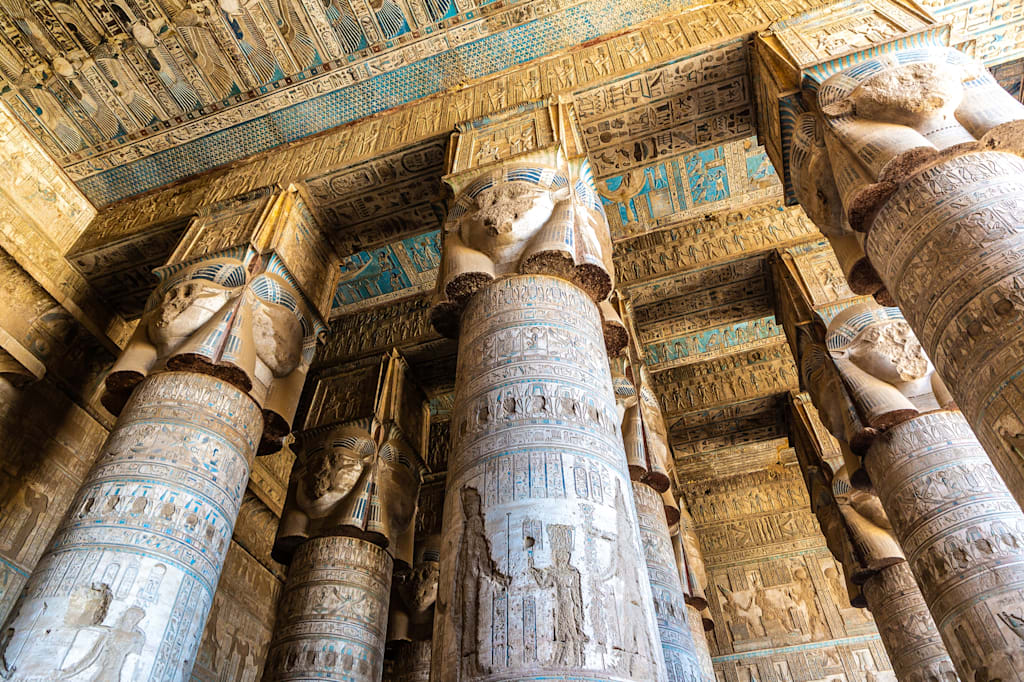
Dendera Temple Complex is one of the best-preserved and most fascinating ancient sites in Egypt, located near the city of Qena, about 60 kilometers north of Luxor. This remarkable temple complex is dedicated primarily to Hathor, the ancient Egyptian goddess of love, beauty, music, and motherhood. Unlike many other ancient temples in Egypt, Dendera stands out for its exceptional state of preservation, allowing visitors to experience detailed carvings, vibrant colors, and architectural features that have survived for thousands of years.
The main structure within the complex is the Temple of Hathor, which dates back to the Ptolemaic period, around the 1st century BCE, although it was built on the site of much older structures. As visitors approach the temple, they are greeted by a massive stone façade supported by towering columns, each decorated with the face of Hathor, easily recognizable by her distinctive features and headdress. These columns lead into a large hypostyle hall, one of the most impressive parts of the temple, where the سقف (ceiling) is covered in beautifully preserved astronomical scenes and religious artwork.
One of the most famous features of Dendera Temple is the “Dendera Zodiac,” an ancient astronomical relief that once decorated the ceiling of a chapel within the complex. The original is now displayed in the Louvre Museum in Paris, but a detailed replica can still be seen at the site. This zodiac is significant because it shows how the ancient Egyptians understood the stars, planets, and constellations, blending astronomy with religion and mythology.
Another fascinating aspect of the temple is the series of underground crypts hidden beneath the structure. These narrow passageways were used to store sacred objects and are decorated with mysterious carvings and symbols. Some of these carvings have sparked modern curiosity and debate, particularly those that appear to resemble unusual shapes, sometimes referred to as the “Dendera light.” While scholars explain these as symbolic religious imagery, they continue to capture the imagination of visitors.
The temple complex also includes smaller chapels, a sacred lake, and a birth house (mammisi), where rituals related to the birth of divine figures were performed. The entire site reflects the importance of Hathor worship in ancient Egyptian religion and provides insight into rituals, beliefs, and daily life during that time.
One of the most remarkable things about visiting Dendera Temple is how much color remains on the walls and ceilings. Unlike many other temples where the original paint has faded, Dendera still displays vibrant blues, reds, and gold tones, giving visitors a rare glimpse of how ancient Egyptian temples once looked in their full glory. This makes the experience more immersive and visually striking.
Dendera is often visited as a day trip from Luxor, and it is considered less crowded than other major sites, allowing for a more relaxed and enjoyable exploration. The peaceful atmosphere, combined with the temple’s impressive preservation, makes it a favorite among travelers who want to explore ancient Egypt beyond the most famous landmarks.
In conclusion, Dendera Temple Complex is a hidden gem that offers a unique and well-preserved look into ancient Egyptian civilization. From its grand columns and colorful ceilings to its mysterious crypts and astronomical carvings, the temple provides an unforgettable journey into the past and stands as one of the most beautiful and intriguing historical sites in Egypt.
About the Creator
Enjoyed the story? Support the Creator.
Subscribe for free to receive all their stories in your feed.
Comments
There are no comments for this story
Be the first to respond and start the conversation.