
The Easter Basket Mystery That Turns Kids Into Detectives
A rhyming clue hunt for ages 4 to 7, and easy ways to bring it off the page
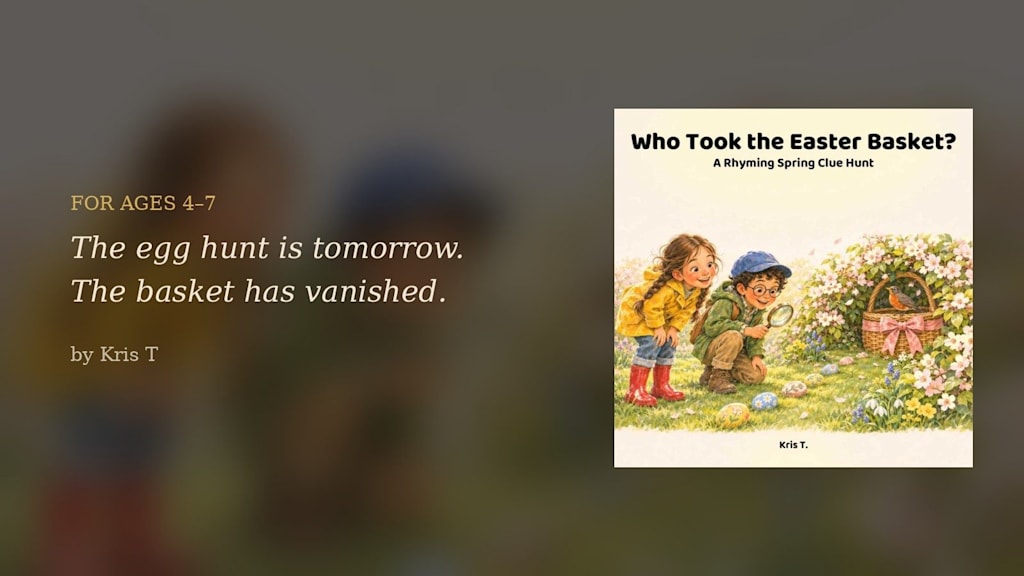
The Easter egg hunt is tomorrow, and the basket of painted eggs has vanished.
That is the whole setup of Who Took the Easter Basket?, a rhyming picture book for children aged 4 to 7. Maya and Noah follow a trail of colourful eggs to find out what happened. I wrote it because young children love two things above almost everything else: a mystery, and being the first to spot something the grown-up missed.
Why rhyme and clues work so well together
Rhyme helps young listeners predict what comes next, and predicting is one of the things that makes reading aloud so satisfying for a small child. A clue hunt does the same thing with the story itself: every page asks "what do you think happened?", and the child gets to guess before the page turns.
Each spread also hides eggs to spot and count, so children who are not reading yet are still doing something active on every page. Along the way the story weaves in real facts about birds and their eggs, because the best answer to "who took the basket?" turns out to be a little bit of nature.
Make it a real clue hunt
The direct edition includes two printable activities that take the story off the page:
My Clue Hunt. Hide a few paper eggs or small objects around the room and let children track them down with the clue sheet, just like Maya and Noah.
Design a Secret Egg. Children colour and decorate their own egg, then hide it for someone else to find.
Neither needs anything more than a printer and some crayons, and both work just as well on a rainy afternoon as at Easter.
What children practise without noticing
A picture-book mystery is a small workout in thinking. To follow the clues, children have to notice details, remember what happened on the page before and connect two things that are not side by side. When they guess wrong, they get to revise their idea, which is a skill grown-ups spend years practising.
Counting the hidden eggs adds early maths in a way that does not feel like maths. Some children count every egg on every spread; others start comparing which page has the most. Both are useful, and neither needs to be corrected.
Reading it aloud
Rhyming books reward a little performance. Slow down before the last word of a rhyme and let your child finish the line. Pause at each clue and ask "where do you think they should look next?" before turning the page. On a second or third reading, let your child be the detective and tell the story to you. Children who can retell a story in their own words are building exactly the language skills that early reading depends on.
Not only for Easter
Spring is the obvious time for this book, but children ask for favourite stories all year round. The mystery, the counting and the bird facts work in any season. Many families keep a box of seasonal books and bring them out again each year. A story children helped to solve tends to stay a favourite.
It also makes a good gift for a spring birthday, a classroom reading corner or a grandparent who likes to read aloud. The printable activities can be used again and again, so the same book can carry a whole afternoon of play for a small group of children.
Whichever way you read it, the goal is the same: a child who closes the book and wants to go looking for clues of their own, around the house and out in the garden.
Kris T is the author of the picture book Who Took the Easter Basket? A Rhyming Spring Clue Hunt for ages 4 to 7.
About the Creator
Enjoyed the story? Support the Creator.
Subscribe for free to receive all their stories in your feed.
Comments
There are no comments for this story
Be the first to respond and start the conversation.