vintage
Vintage content about families throughout history; all about ancient ancestors, heirlooms, royal families and beyond.
The Last Cup of Tea
The house hadn’t changed. The cracked veranda tiles still sighed under his feet, just as they did when he used to chase after the neighborhood kids. The faded wind chime still hung by the front door, though it no longer sang. Dust lay gently on the windows, as if time itself had exhaled and settled in. Aariz turned the key in the rusted lock. The door opened slowly, creaking like an old memory resurfacing. It had been four months since his mother passed away. He hadn’t come back since the funeral. Couldn’t. Everything in this home reeked of her – her scent, her scolding, her soft humming in the kitchen when she made her famous cardamom chai. Coming back felt like walking into a memory he wasn’t ready to relive. But the lawyer had called. The property needed to be emptied. Sold. It was time. He stepped inside, half expecting to hear her call out his name the way she always did: “Aariz beta, chai thandi ho jayegi!” But the only voice that greeted him was silence — heavy, solemn, and absolute. The living room was untouched. Her shawl still hung on the back of the armchair. Her reading glasses were resting on the open pages of a half-finished Urdu novel. A pair of her slippers peeked out from under the coffee table. Aariz sat down on the couch, closed his eyes, and for a brief moment, pretended she was in the kitchen — that at any second, the whistle of the kettle would sound, and she’d come in carrying a tray of tea and biscuits, smiling through her tired eyes. But there was no kettle. No tea. Just silence. He wandered into the kitchen. The same rusted stove. The same spice rack she refused to replace. A little chalkboard still hung by the fridge, with her last written note: “Aariz will come next week. Must buy his favorite cake.” His chest tightened. He remembered the last phone call — two days before she passed. "Are you eating properly?" "Yes, Ammi." "When are you visiting again?" "Soon, just finishing up work." "Don’t wait too long, beta. Mothers don’t live forever." She had laughed when she said that. He didn’t. She died of a silent heart attack two mornings later. Alone. In this house. With no one to hold her hand. He had arrived too late. The tears came uninvited, hot and bitter, as Aariz stood by the stove and imagined her standing there in her worn-out apron, stirring tea, tasting it with her pinky, then insisting it needed "just one more elaichi." He wiped his face and opened the cabinet. There, neatly arranged, were the teacups they always used. One of them had a tiny chip on the rim — his favorite. He pulled it out, along with her special tea tin. He made the tea slowly, deliberately. He boiled the milk, added sugar the way she did — not too much, just enough. Crushed the cardamom pods the way she taught him. Let it steep just a little longer for the stronger flavor. He poured it into both cups — hers and his. Then he sat across from her empty chair. For a while, he didn’t speak. He just sat there, the cup warming his hands, the steam rising slowly between them like an unfinished goodbye. Then softly, almost brokenly, he whispered: "I’m sorry, Ammi." "I should have come back sooner." "I thought there would be more time." The chair didn’t respond. But the house listened. And somehow, he felt she heard him. When he left later that evening, he didn’t take much — just her shawl, the tea tin, and the chipped teacup. He locked the house gently, like tucking a child into bed. As he walked away, he looked back one last time. The wind chime moved — just slightly — and this time, it rang. Epilogue: Grief doesn’t ask for permission. It arrives when you’re unready, and stays longer than you want. It isn’t loud or dramatic. Sometimes, grief is just a cold cup of tea on the table — untouched, but filled with memories.
By Ikram Ullahabout a year ago in Families
Saudi Arabia Sees Surge in Early Divorces: Sociologists Reveal the Hidden Causes
Saudi Arabia, a country where traditional family values are held in high regard, is facing an unexpected and rising social challenge — the increasing rate of early divorces, often just weeks or months after lavish wedding celebrations. Despite promises of love and commitment, many couples in the Kingdom are separating before even completing their first year together. According to the 2025 report issued by the Saudi Ministry of Justice and the General Authority for Statistics, an average of 157 divorce cases are registered daily across the country. That’s roughly one divorce every 9 minutes. More alarmingly, divorces now account for 12.6% of all marriages in Saudi Arabia, a trend that experts say is both socially and psychologically concerning. Al-Baha Tops the Divorce Charts The report further reveals that the Al-Baha region, located in the southwestern part of Saudi Arabia, recorded the highest divorce rate in the country — with 36% of marriages ending in separation. Following closely are Riyadh with 21.7% and Hail with 19.2%. One particularly eye-opening statistic is that 65% of all divorces occurred within the first year of marriage. This finding strongly suggests that many couples lack compatibility from the start, or are unprepared for the realities of married life. Real-Life Cases: Love Turned Cold Take, for instance, the cases of Fahad Al-Otaibi and Reem Al-Qahtani, whose marriages lasted less than six weeks. Both unions ended over misunderstandings, lack of shared responsibilities, and poor communication. In another case, Ahmed Al-Raythi’s honeymoon became a turning point, not for joy, but for separation. His wife expected a luxurious and highly curated lifestyle, while Ahmed desired a simpler, more grounded life. Their differences, which seemed manageable during courtship, became insurmountable after marriage. These are not isolated stories — they reflect a growing number of couples who enter marriage with unrealistic expectations, often shaped by social media, peer pressure, and idealized romantic fantasies. Sociologist Insights: The Root Causes Prominent Saudi sociologist Dr. Ahmed Al-Najjar has weighed in on the alarming trend. He attributes the rise in divorces to a combination of social, economic, and psychological factors: 1. Excessive Wedding Expenses: Lavish weddings often leave couples (or their families) in significant debt. Once the celebrations are over, financial strain takes a toll on the relationship. 2. Immature Decision-Making: Many young couples rush into marriage without understanding the long-term responsibilities that come with it. Dr. Al-Najjar warns that emotional impulsivity is replacing thoughtful compatibility assessments. 3. Superficial Relationships: Pre-marital interactions, often limited or virtual, don’t provide a deep understanding of the partner’s personality, values, or expectations. 4. Over-involvement of Families: In many cases, extended family interference exacerbates even minor disagreements, especially in traditional households where parents may try to control the marriage. 5. Unrealistic Expectations: A marriage is more than just a celebration. It demands emotional intelligence, communication skills, and mutual respect — qualities that Dr. Al-Najjar says are often underdeveloped. > “Marriage is not just an event; it’s a lifetime partnership,” says Dr. Al-Najjar. “Without conscious effort, patience, and maturity, even the grandest wedding won’t survive the realities of everyday life.” Culture Shift: From Romance to Reality While arranged marriages still exist in Saudi Arabia, there has been a growing trend toward love marriages and self-selected partners, particularly in urban centers like Riyadh and Jeddah. However, this shift has not necessarily decreased divorce rates. In fact, romantic relationships formed without deep understanding may inflate emotional expectations, which later clash with the practical demands of cohabitation. Another emerging challenge is the influence of social media culture. Instagram-perfect weddings, filtered photos of couple goals, and viral videos promoting luxury lifestyles have created false ideals. When real life fails to live up to those illusions, disappointment sets in fast. Legal Developments and Women's Rights Interestingly, Saudi Arabia has also made strides in women’s legal empowerment in recent years, including reforms that now allow women to be notified via SMS when they are officially divorced. This transparency has encouraged many women to stand up for their rights, but it has also contributed to a spike in mutual or initiated divorces by women, particularly when the marriage lacks respect or compatibility. The Ministry of Justice reported over 350,000 divorce cases in one year alone, indicating that the issue is national in scale, not just regional. What Can Be Done? Experts suggest several long-term strategies to address this growing crisis: Pre-marital counseling programs to educate couples on marital roles and expectations. Promoting simpler wedding ceremonies to reduce financial pressure. Encouraging family boundaries, ensuring that newlyweds have space to build their own dynamic. Public awareness campaigns on mental and emotional maturity in marriage. Legal initiatives to streamline conflict resolution and post-divorce counseling for both men and women. Final Thoughts The rising divorce rate in Saudi Arabia, particularly among young couples and newlyweds, is a wake-up call for both individuals and society. It highlights the urgent need for a cultural shift in how marriage is viewed — not as a social milestone or display of wealth, but as a meaningful, lifelong commitment. As sociologists, religious leaders, and policymakers debate the root causes, one truth remains clear: a wedding can last one night, but a marriage demands a lifetime of patience, understanding, and effort.
By Ikram Ullahabout a year ago in Families
The Day I Let Go of My Hero
I always believed that love stories end in togetherness. But some of the most powerful ones end in goodbye. His name was Nunez. I met him during my final year of school — a quiet boy with kind eyes and a smile that rarely reached his lips. He wasn’t the loudest in the room, nor the most noticed. But when I first saw him, something in my heart whispered, He’s different. We sat two rows apart in class. At first, we didn’t talk. I’d see him scribble poems in the margins of his notebook. They were beautiful — raw and honest, and often sad. I was drawn to that sadness. One day, I gathered the courage to tell him I liked his writing. He looked up, surprised. Then he smiled, softly. “Thank you,” he said. “I didn’t think anyone noticed.” From that moment, a bond began to form. It wasn’t loud or sudden. It grew like rain soaking into dry soil — slowly, deeply, quietly. Nunez became my best friend. We talked about everything — books, fears, dreams, the weight of expectations. He shared how he lost his father young and how his mother worked two jobs to raise him. He said he never wanted to be a burden to anyone. I told him how I always felt invisible in a house full of noise. He listened like no one ever had — like my voice mattered. We never said “I love you.” Not once. But our silences said it all. He would wait at the school gate for me every morning. He brought me warm tea during exams. He noticed when I changed my hairstyle. He remembered the date my cat passed away. He wasn’t just a boy I liked — he became my safe place. But love, I’ve learned, doesn’t always protect us from life. One day, Nunez stopped waiting at the gate. He stopped replying to my messages. The boy who was once a constant in my world became a ghost. I panicked. I called. I waited. I cried. A week later, he finally came to see me — thinner, paler, his eyes darker. “I got accepted,” he said. “Accepted?” “To the Air Force Academy,” he smiled faintly. “I leave next week.” My heart sank. He had never told me he applied. Not once. Maybe because he didn’t want me to hope. Or maybe… he didn’t want me to hurt. “I didn’t tell you,” he continued, “because I knew you’d ask me to stay.” I stood frozen. Would I have? Yes. Without a doubt. But I didn’t say that. Instead, I whispered, “I’m proud of you.” He looked at me, and for the first time, I saw tears in his eyes. “I don’t want to go without saying goodbye,” he said. “Then don’t go,” I wanted to scream. But my lips betrayed me. “Goodbye,” I whispered. That was the day I let go of my hero. I watched him walk away, his figure slowly fading under the sunset sky, carrying dreams bigger than my heart could hold. For months after he left, I replayed every memory. Every laugh, every walk home, every unspoken “I love you.” Some nights, I’d lie in bed, wondering if he thought of me. If he missed the girl who believed in his poetry, who saw him before the uniform and the medals. He sent me one letter. “Dear Umme,” it read, “I carry you with me — in the quiet moments between duty and sleep. You are the calm I return to in my mind. If this life were kinder, I would’ve stayed. But I hope one day, we’ll meet as people who made it through, who chased their callings… even if it meant letting go of love. — Nunez.” I cried until the ink blurred. But that letter gave me closure. Years have passed since then. Sometimes, I still dream of him — not as the boy I loved, but as the man I let go. Love taught me many things. That it’s not always about holding on. Sometimes, it’s about loving someone enough to watch them fly. He was my hero — not because he saved me, but because he gave me the courage to save myself. And though he’s gone, his memory lives in every poem I write, every quiet moment I carry with grace. This isn’t a story of heartbreak. It’s a story of love — deep, silent, and strong enough to survive goodbye. Because some heroes aren’t meant to stay. Some just pass through… to remind us what love should feel like.
By Hamid khanabout a year ago in Families
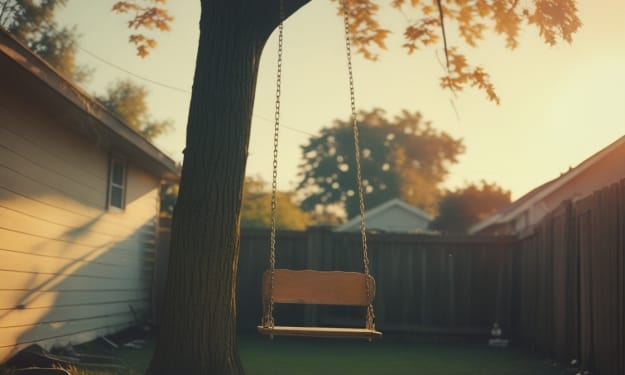
The Swing Still Moves
We never took the swing down. Even after three years, it still hangs quietly in the backyard, suspended between the thick arms of our old maple tree. Its ropes are faded now, the seat sun-bleached and cracking at the edges, but somehow it keeps holding on — just like us. It creaks in the breeze some mornings, as if moved not by wind but by memory.
By Hamid khanabout a year ago in Families
The Teacher in Black
🎓 The Teacher in Black – Part 1 A Widow, A Pioneer, A Legacy Begins By Chrystalleni (Lenia) Mitsidou Kalli. In a small Cypriot village in 1891, a girl was born who would one day become a legend. This is the true story of my grandmother, Chrystalleni, the first woman in our family to break barriers, raise four remarkable sons alone, and leave behind a legacy that shaped generations.
By Lenia M. K.about a year ago in Families
How to Boost Your Immune System Naturally
Your immune system is your body’s defense against germs, viruses, and infections. A strong immune system helps you stay healthy and fight off sickness. The good news is that you can improve your immunity naturally with simple lifestyle changes.
By MUHAMMAD Abbasabout a year ago in Families
Sunday Best. AI-Generated.
Sunday Best by T.D Carter As I sit here and reminisce, I can see myself vividly—like a lucid dream—at five years old. The image is so clear and real, I can still smell the bergamot grease in my freshly pressed hair. My golden-brown skin shines like a new copper penny, slick with coconut butter and Vaseline. The smells bring it all back, and I close my eyes as I remember that hot, humid, sticky Sunday morning.
By T.D.Carterabout a year ago in Families
Batteries Not Included: The Joy of Playing Like It’s 1985
There’s something strangely hilarious—and unexpectedly heartwarming—about watching a kid today try to figure out a Slinky. No Wi-Fi, no screen, no app—just a shiny coil of metal that walks downstairs if the planets are aligned just right. And yet, somehow, it still sparks joy.
By Buckie Thompsonabout a year ago in Families