values
Cultivating Kind Hearts: Nurturing Empathy and Compassion in Children
Developing empathy and compassion in children is one of the most valuable gifts parents and educators can provide. By teaching children to understand and feel the experiences of others, we help them build essential life skills that support healthy relationships, resilience, and a sense of responsibility toward the community. Let’s explore some effective strategies to encourage empathy and compassion in children.
By mureed hussain2 years ago in Families
Unbreakable Bonds
Liza never imagined her life would take such a turn. Two years ago, she was part of a happy family, sharing laughter and struggles alongside her husband and their two young children, Ethan, eight, and Sara, ten. But in the blink of an eye, everything changed. Her husband’s sudden passing shattered her world, and she found herself alone, left to shoulder the weight of being both a mother and a father. The challenge was monumental, but with a steely resolve, Liza made the commitment to raise her children with love, stability, and resilience, no matter what it took.
By mureed hussain2 years ago in Families
A Warm Fire
It's been snowing and it's cold outside. We have been out walking, the whole family. Snowball fights and building a snowman after rolling a huge snowball that was much too big to throw, the snow was quite deep this year but not too deep to walk through with our wellingtons on.
By Mike Singleton 💜 Mikeydred 2 years ago in Families
The brave one
Once upon a time, in a small village nestled between towering mountains and thick forests, there lived a young girl named Amara. From a young age, Amara had always been known for her courage, though few people could understand it. She wasn’t the biggest or the strongest; in fact, she was quite small compared to others her age. But Amara possessed a heart that was fierce and fearless.
By Taviii🇨🇦♐️2 years ago in Families
Identifying Key Issues and How to Keep Families United
Introduction Families are meant to be places of love, warmth, and support. They give us a sense of belonging and stand by us in good times and bad. But, not all families can keep these close bonds forever. Sadly, many families today are facing separation and drifting apart. This can cause pain and sadness for everyone involved.
By saiqa nazim2 years ago in Families
Extraordinary Parenting: Practical Solutions for Today’s Complex Parenting Challenges
Parenting in today’s world is filled with complex challenges. From single parenting to balancing mental health, communication, finances, and even social media, it often feels overwhelming to address all aspects successfully. However, the path to raising well-rounded, healthy, and happy children doesn’t have to be filled with stress. Here’s a look at some of the major issues parents face today and practical tips to overcome them.
By mureed hussain2 years ago in Families
An Objective Christmas
With her riches, she could have dined anywhere. The Mercier Hotel provided a lavish meal that included succulent feasant and an unprecedented supply of endless champagne and eggnog. She questioned this last part. Mariana Gaines couldn’t imagine bubbly nog. A successful analyst at Diamante Bank in Wilmington, Delaware, she had amassed a modest fortune of five million dollars. When she walked through her lavish apartment like a vagabond searching to grasp a golden dream, she felt that she accomplished everything. Except, she felt unfulfilled. No husband or kids to speak of, she wanted to experience the holidays as she had done as a kid.
By Skyler Saunders2 years ago in Families
From Earth to Stardust : The Children’s Tale
In a world that grows increasingly interconnected, it is vital for children to understand, respect, and appreciate the richness of different cultures. The ability to view the world through a multifaceted lens can profoundly shape a child's worldview, fostering empathy, adaptability, and open-mindedness. This is precisely where From Earth to Stardust: The Children’s Tale excels as a powerful resource.
By Estalontech2 years ago in Families
Learn to Recognize the Language of Sight
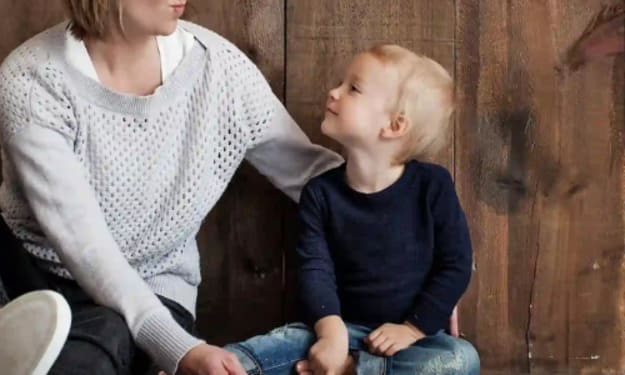
Learn to Recognize the Language of Sight There is a language spoken not with words, but with a gaze, a gesture, or a mere glimpse. This is the language of sight—a powerful form of communication that bridges gaps and connects people in ways that spoken words cannot always achieve. Learning to recognize this language can enrich our lives, helping us empathize with others, understand unspoken emotions, and respond to the needs of those around us. When we look closely into someone’s eyes, we often see a reflection of their soul, their struggles, and their hopes. Our eyes are storytellers. They reveal our deepest emotions—joy, sorrow, longing, love, and even despair—without uttering a single word. Learning to recognize this language of sight is about developing the sensitivity to perceive what lies beneath a person’s outward expression. Consider, for instance, the glance of a child looking up at their parent. There is often a trust, a dependency that needs no verbal affirmation. Their wide-eyed gaze speaks of innocence, love, and a craving for security. For the parent, understanding this silent message means more than just taking care of the child’s physical needs—it means comforting them, offering emotional warmth, and a feeling of safety. The language of sight can be seen in the elderly as well. In their eyes, we often find stories of resilience, nostalgia, and a lifetime of memories. Sometimes, an elderly person may sit quietly in a room, surrounded by family but feeling unseen or unheard. Yet, with a single look—perhaps a softened gaze directed toward a family photo or a brief, wistful glance—they communicate a lifetime of love and loss. Those who can read this language of sight will know that what the elder person truly seeks is connection, a recognition of the life they have lived and the love they still hold. In our busy lives, we often pass by strangers on the street without truly noticing them. But if we take a moment to look, we might see an entire world within them. Imagine seeing someone sitting alone on a bench, their eyes cast down, shoulders slumped. Their posture and the faint sadness in their eyes tell a story of loneliness. Perhaps they have lost a loved one, or they feel isolated in a city full of people. Recognizing this silent message allows us to respond with compassion. A simple smile or a nod can acknowledge their existence and, in a small way, ease their burden. Even in relationships, the language of sight plays an essential role. In romantic partnerships, a glance exchanged across a crowded room can convey love and understanding more profoundly than words ever could. For instance, when a partner sees their loved one struggling, they might silently communicate their support through a steady, reassuring look. That gaze tells the other person, “I am here with you; you are not alone.” In friendships, too, the language of sight bridges gaps. A friend’s knowing look can be a balm in moments of self-doubt, giving assurance without a single word spoken. The language of sight also extends to understanding ourselves. When we look in the mirror, we sometimes avoid making direct eye contact with our reflection. There may be fears, regrets, or unprocessed emotions staring back at us, and looking away feels easier. But learning to face ourselves and read our own eyes with honesty and compassion can be a transformative experience. By recognizing our own silent language, we cultivate self-acceptance and acknowledge our journey, with all its highs and lows. The ability to recognize the language of sight can be particularly powerful in professions like healthcare. Doctors, nurses, and therapists are often trained to observe their patients beyond mere physical symptoms. A doctor who notices the apprehension in a patient’s eyes may sense fear about an impending diagnosis. This awareness allows the doctor to address the patient’s emotional state, offering reassurance and a comforting presence. Learning to read this language takes practice and patience. It requires an openness to observe without judgment, to allow ourselves to be present with others, and to care genuinely. In our increasingly digital world, where conversations are often reduced to text on a screen, it becomes even more crucial to preserve and cherish this form of human connection. Meeting someone's gaze and truly seeing them is a simple act, yet it can carry an incredible weight. It affirms a shared humanity and reminds us that, beyond our differences, we all seek the same sense of recognition and connection. Ultimately, to learn the language of sight is to embrace the beauty of silence, to find meaning in the space between words. When we listen with our eyes, we open ourselves to a world rich with unspoken emotion, fostering compassion and understanding that transcend verbal communication. In every fleeting glance and every unspoken exchange, there lies a profound opportunity—to understand, to connect, and to care.
By Dipak Pawar2 years ago in Families
The Brave Little Firefly's Adventure. AI-Generated.
Once upon a time, in a beautiful green forest, there lived a small firefly named Flicker. Flicker was different from the other fireflies that shone brightly at night. His light was small and weak, hardly lighting up the area around him. While other fireflies danced happily, Flicker often felt lonely, sitting quietly on the branches of tall trees.
By Muhammad Bin Ali2 years ago in Families
The Role of Conflict Resolution in a Healthy Marriage
Marriage is often romanticized as a journey filled with love, laughter, and endless support. However, like any meaningful relationship, it also comes with its fair share of challenges. Conflict is a natural part of life, and in marriage, it can be a significant source of stress if not handled properly. Yet, when approached with understanding and compassion, conflict resolution can become a powerful tool that strengthens the bond between partners. Let’s dive into the essential role of conflict resolution in fostering a healthy marriage and how it can lead to deeper intimacy and connection.
By Future of Resilience 2 years ago in Families