values
The Unspoken Bond
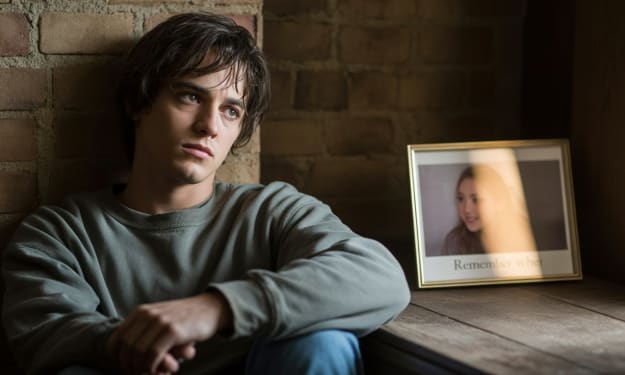
The late afternoon sun cast long shadows across the narrow street where Ayaan’s family home stood — a modest two-story house, weathered by time but filled with memories. Inside, Ayaan sat motionless on the faded sofa, his gaze fixed on a photograph resting on the wooden table.
By Shehzad Anjumabout a year ago in Families
"The family star". Content Warning. AI-Generated.
So You was only twenty-five when he graduated from university. Life should have been just beginning for him, but instead, he carried the weight of his entire family on his shoulders. His family’s condition was poor. His two older brothers, both married with children, had chosen different paths. The eldest drowned himself in alcohol, spending whatever little money he could get his hands on. The younger one wandered without ambition, doing nothing meaningful to support the household. Their children needed food, school fees, and love, but both men failed to provide. So You, the youngest, unmarried, and with a modest salary, became the pillar of the family. Every morning, he left home with determination. He paid for his nieces’ and nephews’ schooling, bought groceries, covered the electricity bills, and even gave money to his brothers despite their careless choices. His parents, growing old and frail, relied on him for stability. He gave all he had, even when it meant nothing was left for himself. “Why don’t you marry?” relatives would ask. He would always smile and say, “First I must make sure my family can stand on its feet. My time will come later.” But even sacrifices have limits. There were days when So You felt crushed — his brothers stealing his wages for alcohol, neighbors mocking him, loneliness tightening around his heart. Still, he endured. --- A New Light One day, a young woman named Hindo came into their lives. At first, So You kept his distance, uncomfortable with change. But slowly, Hindo became part of the family. She cared for the children as if they were her own, cooked meals with his mother, and encouraged So You when he felt exhausted. Her kindness became a light in the house. She believed in So You when no one else did. “You are stronger than you know,” she told him once. “One star can brighten even the darkest night.” He didn’t realize it then, but she was planting hope in his heart. --- The Turning Point One evening, So You was invited to give a presentation at a local university. Nervous but prepared, he poured all his effort into it. His speech caught the attention of a wealthy company owner in the audience. Impressed by his talent, the man offered him a position abroad — a job with a high salary, medical care for his parents, and scholarships for his nieces and nephews. It was the opportunity So You had been waiting for his whole life. With the new job, everything began to change. His brothers, though slow to learn, started respecting him. His parents finally lived in comfort. The children went to school without worry. And Hindo, always by his side, became his greatest companion. --- Love That Lasts But behind success was still an unspoken love. Hindo had once written in a private journal: > “If I could marry So You, I would be the luckiest girl in the world. He may not see it, but his heart is pure. He sacrifices without asking for anything in return.” When So You finally discovered her words, he realized what he had been blind to all along — she wasn’t just a part of his family’s story, she was part of his story. On a quiet evening, he asked her, “Will you walk this journey with me, not as a helper of my family, but as my partner in life?” Tears filled her eyes. She said yes. --- The Family Star So You’s life was never easy, but his sacrifices transformed everything. His family rose from despair to dignity. His parents lived their last years in peace. His nieces and nephews grew into educated, confident young people. And he built a new life with Hindo, not just for himself, but for everyone who had once leaned on him. He became the star his family followed — the light that guided them out of darkness. --- The Lesson This story reminds us of one simple truth: Family is the first nation we must build. When one person works hard and gives selflessly, the entire family — and even the community — can rise. Sacrifice, love, and unity are the seeds of greatness. In the end, The Family Star is not about wealth or success. It is about the power of one heart, shining bright enough to lift everyone around it. --- ✨ Moral: Support your family. Work hard. Love selflessly. When one shines, the whole family rises.
By Ihtisham Ulhaqabout a year ago in Families
My Grandma Wasn’t Who She Said She Was
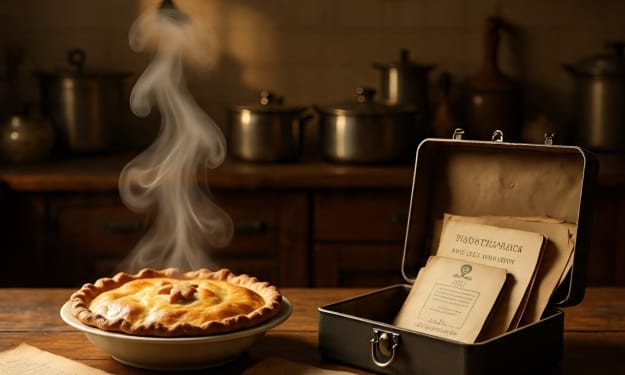
When I was a child, my grandmother was my safe place. Her tiny kitchen always smelled like warm cinnamon, and her arms were the softest blanket after a bad day. She told the best stories—often about her childhood on a small farm in Kansas, her secret apple pie recipe, and how she met my grandfather during a war-time dance. She was sweet, gentle, and full of life lessons. But what if I told you that everything I knew about her was a lie? It all began the day she died. The Lockbox in the Closet After her funeral, my family gathered in her small cottage to sort through her belongings. I volunteered to clean out her bedroom closet—mostly because it was where she kept old photos, letters, and maybe, just maybe, her recipe book. I wanted a piece of her to hold onto. That's when I found it. Tucked behind some coats was a small metal lockbox. It was heavy, cold, and out of place. I had never seen it before, and neither had my mother. After some hesitation, we pried it open with a screwdriver. What we found inside turned our grief into confusion—and then, into something darker. The False Identity Inside were several passports—all with different names, birth dates, and countries of origin. Some listed her as an American. Others showed her as being from Russia, Germany, and even Argentina. The photographs were all of her, but subtly altered. Hair color, age, even eye color—she had gone through great lengths to change her appearance over time. Alongside the passports were old, yellowing documents. Letters written in different languages. A Soviet-era military ID. A photograph of her with people we didn’t recognize—standing in front of a building bearing the insignia of what looked like an intelligence agency. The woman who taught me how to knit and bake cookies… may have been a spy.
By LUNA EDITHabout a year ago in Families
Killed by His Own Child
In Faisalabad lived Iftikhar Ahmed, a quiet, hardworking mechanic. His hands were always stained with grease, but his heart carried nothing except dreams for his only son, Sameer. Life was never easy—he earned just enough to cover rent, feed his family, and save a little for his boy’s future. Yet he never once complained. His greatest wish was simple: to see Sameer climb higher than he ever could.
By Shehzad Anjumabout a year ago in Families
Wings Without Landing
A Father’s Sacrifice Shabbir Ahmed did not have big aspirations—just one. America. In 2005, after years of grinding through Karachi’s noisy streets as a van driver, he had finally secured a chance: a truck-driving job in New Jersey. His passport was stamped. His ticket deposit was paid. He had even imagined the wide highways he would drive across.
By Shehzad Anjumabout a year ago in Families
Trinity Health Ann Arbor
Trinity Health Ann Arbor, located in Ypsilanti, Michigan, is a nationally recognized teaching hospital that continues to set the standard for compassionate, high-quality care. As part of the Trinity Health Michigan network, this 560-bed facility has built a reputation for combining advanced medical expertise with a strong commitment to community well-being. Whether it’s through groundbreaking treatments, award-winning specialty programs, or outreach initiatives, Trinity Health Ann Arbor remains a trusted partner in health for thousands of families across southeast Michigan.
By salamguideabout a year ago in Families
From Battles to Bond.
I never thought I’d be one of those people who’d openly admit that my marriage was falling apart. But here I am, sharing a story that could easily have ended in heartbreak, but instead became a testament to love, growth, and patience.
By Muhammad Ilyasabout a year ago in Families
At Papa’s Funeral, I Learned That Some Legacies Can’t Be Buried
I can’t tell if the yowling’s for the dead or the heat. It’s cicada hiss and lawn mower growl hot—so hot, it’s disrespectful. But as Dad shovels dirt over Papa, I’m cold. I can't cry, and it feels like sin. “It's alright to grieve,” Aunt June whispers. “Ain't no shame in it.” She fans herself with a program as tears drip below her sunglasses. She means it's shameful not to cry, especially for your own. But I can't put on grief like wide-brimmed hats and pearls and black dresses. Can't wear it if I don't mean it. “Who’s catering?” I say. “I'm starved.” “Lawd!” June scowls and whacks my shoulder with the program. Bone-white laurels punch through the dirt like defiant little fists. My uncle stomps over their petals, a banjolele slung over his shoulder. A stringed thing torn between a banjo and ukulele, mourning and joy. He stops beside the gravediggers and smiles. “For Papa,” he says, and strums. The bluegrass starts low but swings lighter, too cheery. Feet thump against dirt. A few hips sway. The song almost turns Papa’s funeral into a shindig, like we can't decide whether to celebrate or sob. At least, I can't. I don’t hate Papa. Just never knew how to like him. War, whiskey, and whatever else made him mean. A monster most days. But human, somehow, when he told stories. The man could lie like a Craigslist landlord. But a few of his tales were true, like how his Pops made him wait outside town shops, too ashamed of the darkness of his own son's skin. He also told war stories. Well, started them. They ended like his altar boy stories, in a grunt, silence, and another bottle. Last time I saw Papa, a few months before he died, he slumped in that ugly olive recliner, its guts spilling out the side. Cancer made him thinner, weaker, but no less angry. “He still flies off the handle over nothin’,” June muttered. She told me Papa had been phoning friends and bragging to the neighbors about how his grandkid got into college—akin to an Olympic gold medal in our small Appalachian town. So he hugged me when he saw me and stuck a cigar in my palm, even though he always said smokes weren't for girls. We rocked on the porch and talked, smoking as the sky turned from gold to dusky purple. Fireflies sparked in the weeds. Papa slapped his knee when I told him how I aced my first exam, and asked all about school more than he'd ever asked me about anything. Dad and his siblings didn't make it through high school, and my cousins spent more time behind bars than out 'cause they couldn't keep away from dope. Papa didn't get boys to brag on. He got me. “There's a spirit in these woods,” Papa said. He told me the legend of a lost soul who whistles past the willows, only in summer, near graves. He carries the bones of his father in a sack over his shoulder. “He just keeps walkin’, bones clackin’ like ice in a cup, lookin’ for a place to lay it down. But never does.” “Why not?” I asked. Papa scratched his beard. “Some things can’t be put away, no matter how hard ya try.” He went quiet for a moment, then shouted at June to bring him a beer. She took too long. When she finally handed it over, he tossed it at her and shattered it against the brick, just shy of her head. June still kept his meds organized, drove him to appointments, even helped bathe him when his legs started to give. She looked after him, and that's how he thanked her. Papa asked if I’d come back soon. I said maybe, but lied. To him, women were maids and half-brains. But even my half a brain knew to get out before he made me into June. Now, past the freshly buried casket and teary crowd, willow trees line the graveyard. They're bent and mournful. A brief gust makes the boughs drift slow and ghost-like as Papa’s voice echoes in my head: “Only in summer, by the graves. He carries a sack of his father’s bones. Looks for a spot to bury ‘em. Never finds one. Can’t let go.” But I don't see a spirit by the willows. Just Dad standing stiff, shoulders tight. No ghostly whistle, only sniffles and wailing from the people Papa hurt most. As if he didn't flick his family away like a cigarette out of a car window. Dad stares at me and marches over. I see that tiny patch of dark skin on his left arm, still there from when Papa stuck a lighter to him after he “stole” a pack of gum as a toddler. Dad waves a hand in front of my face. “It's hotter than the hinges of hell out here. Y’alright?” I nod. It's not a lie. Papa’s gone, and I'm fine. Cold. And that feels worse than being sad. Makes me feel like a beast, like I belong out in the woods on all fours more than in a dress and heels. Finally, everyone shuffles back through the grass, to a narrow path leading to the church. It's a white stoned building, sticking out of our godforsaken town like a diamond in dirt. I’m glad it’s almost done—the wails, the fake condolences, the platitudes. They say Papa lit up every room, but don't say how. They don't admit he doused it in gasoline and struck a match—just say he had a nice smile. Like most of his stories, his eulogy’s a tall tale. One I'm tired of hearing. We step past a wrought-iron gate screaming at the joints. A heavy silence makes my body tense. Even the birds hush. I walk beside Dad, no noise except the crunch of gravel beneath our feet. June stops at the open church doors, dabbing her eyes, and waves us over. But Dad doesn't follow the crowd inside. He nods to the parking lot and I follow, until we plop onto his truck bed. The metal sears through cotton into my thighs. I don't move. Dad doesn’t say anything as he passes me a steaming water bottle buried under a towel, hands shaking a little. Mine shake too. I want to ask if he’s glad Papa’s gone, but the question feels wicked. Does Dad feel the same? Is he…relieved? Ashamed? Done with this funeral, too? “Think you'll miss him?” Dad doesn't answer right away. Doesn't look at me when he does. “I’ll miss who he coulda been.” I nod and squeeze my hands together tight. “I'm proud of you, you know that?” Dad says. “Hell, you’re the only good thing about me.” I force a smile. Dad’s never been good with feelings. Neither have I. But if I’d been raised by Papa—never told I was loved, hit instead of held—I’d be worse. At least I got more than he did. I got scraps, but Dad got starved. And I know Dad cares. I see it in his eyes, and in the way he calls on my breaks to ask if I’ll come visit. He looks like he wants to say more, but sighs and picks at a hangnail. I want to ask if Papa ever told Dad he was proud, but I already know. Dad yanks out a cigarette and marches toward the tree line. He leans against a trunk, folds his arms, and whistles. A tear burns down my cheek, and I'm relieved. Maybe flesh beats behind my chest instead of granite after all. But I don’t cry for Papa. I cry for Dad. Just ‘cause you bury a man doesn’t mean the hurt goes down with him. Maybe Papa learned that from his Pops, Dad learned it from Papa, and I learned it from Dad. I pray mine won't learn it from me. If Papa were here, what story would he tell? I’ll never know—and maybe that’s best. As Dad finishes his smoke, I head for the church. Sun whips my skin. My tears are already dry as I walk on, quietly carrying his bones.
By DigitalAddiabout a year ago in Families
She Left a Note on the Coffee Table—Three Words That Broke Me
I still remember the way the light filtered through the curtains that morning. It was one of those soft, golden mornings that should have promised peace. But instead, it delivered heartbreak. The coffee was still warm in the pot. The silence of the apartment was heavy, unnatural. And there, in the center of the living room, was a note.
By Engr. Mansoor Ahmadabout a year ago in Families