product review
You can't choose your family, but you can choose what you get them; Product reviews for familial gifts, game night, home goods and group activities.
Best Humidifier Warm and Cool Mist
It crept in slowly first my skin felt tighter than usual, then my throat began to feel scratchy in the mornings. My indoor plants started drooping despite regular watering, and my wood furniture looked dull and lifeless. The culprit? Dry, moisture-starved air that no amount of sipping water could fix.
By Katie Collinsabout a year ago in Families
Best Polaroid Camera for Kids
The first time I saw my niece clutch a photo like it was treasure, I realized something profound kids experience photographs differently than adults. While we scroll endlessly on phones, children hold a printed photo as if it’s a portal back to laughter, color, and warmth. One afternoon, I watched her flip through a tiny pile of instant snapshots we’d taken. She was pointing out people, telling little stories, and even giggling over blurry shots.
By Katie Collinsabout a year ago in Families
Best Cases for iPhone 16 Pro
There’s a moment too quick to stop when your phone slips out of your hand. Mine tumbled in slow motion toward the sidewalk, and the sound of it landing still makes me wince. The screen survived, but the scuffed edges of my old case told me I had been one fall away from an expensive disaster.
By Katie Collinsabout a year ago in Families
Best Case for iPhone 16
It was one of those mornings when my coffee cup seemed determined to defy gravity. The cup tipped, the liquid launched, and my iPhone 16 sat directly in the splash zone. My heart sank but my phone survived. Why? Because it wasn’t just in a case; it was in the right case. That moment reminded me that for a device we carry almost everywhere, a case is not just an accessory it’s protection, personality, and peace of mind.
By Katie Collinsabout a year ago in Families
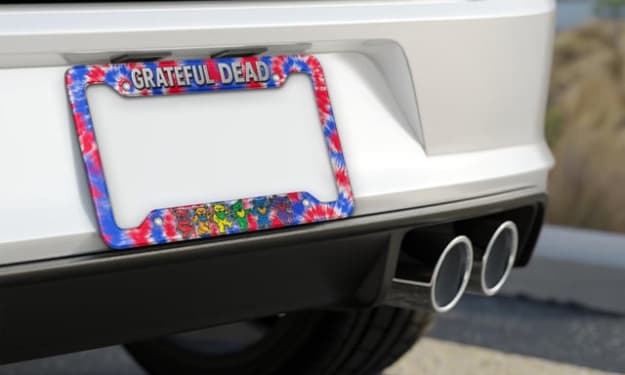
A Rolling Tribute: The Grateful Dead License Plate Frame. AI-Generated.
Among the broad sweep of rock music, the Grateful Dead is not just a band; it is a counterculture movement, an existence, and the symbol of an entire generation's quest for peace, love, and sonic exploration. The band's iconic imagery—the psychedelic tie-dye, the far-out "Dancing Bears," the unmistakable "Steal Your Face" skull—is iconically recognizable and richly symbolic to their devoted fan base, affectionately known as "Deadheads." For Deadheads, announcing allegiance is a matter of identity, and what more invigorating way to do so than a Grateful Dead License Plate Frame? This is not a piece of metal, it's a colorful, rolling celebration of the band's ageless reputation and the counter-cultural ethos that it represents.
By Belkova Alyonaabout a year ago in Families
Best Case for iPhone 16 Pro Max
The first time my phone slipped from my hands that day, I brushed it off. It landed on my couch no harm done. The second time, it bounced off my hardwood floor with a sound that could only be described as “wallet-draining.” That hairline crack across the corner of my display? A silent reminder that I had been treating my $1,000+ device like it was invincible.
By Katie Collinsabout a year ago in Families
Best Case for iPhone 16 Pro
There’s a moment every smartphone owner dreads that split second between your phone slipping from your hand and the dull thud as it meets the ground. My last phone? It didn’t survive that meeting. The corner cracked, the screen spidered, and my wallet felt the sting almost as much as my heart. That was the day I decided I’d never treat a phone case like an afterthought again.
By Katie Collinsabout a year ago in Families
The Chair at the End of the Table
The Chair at the End of the Table By: Abdullah Khan The chair at the end of the table was never just a chair. It was his chair. It had been his place for as long as I could remember the spot where Dad would sit every evening, one arm resting lazily on the table’s edge, the other cradling his cup of tea. The head of the table wasn’t about authority in our home. It was about presence. His presence. The chair faced the kitchen, angled just so that he could watch Mom fuss over the final touches of dinner. He never offered to help not because he didn’t want to, but because he knew Mom’s kitchen was her domain. Instead, he’d keep her company, telling her about his day, asking about hers, or teasing her about how much salt she put in the stew. Even after we grew up and left home, whenever we visited, there he was. Same chair. Same smile. Same steady warmth, as dependable as the old grandfather clock ticking in the corner. And then, one winter evening, he was gone. It wasn’t sudden we’d known he was sick for months but knowing doesn’t soften the blow. We buried him on a Wednesday. By Saturday, the family gathered for dinner as we always did. It was the first meal without him, and the air was heavy with the absence. No one mentioned the chair. No one asked who should sit there. It just stayed empty. I thought it would be temporary. Maybe we’d avoid it for a week or two, and then life, stubborn as ever, would shift things back into place. But weeks turned into months, and still, no one sat there. We filled the other seats easily, laughter and chatter spilling across the table, but that end stayed untouched. It wasn’t a rule anyone spoke aloud. It didn’t need to be. We all understood. Every so often, my eyes would wander to it during dinner. The wood was scratched from years of his restless fingers drumming on the edge. The cushion sagged where he’d sat for hours at a time. Sometimes I swore I could still see the shape of his shoulders in the way the fabric folded. Holidays were the hardest. Thanksgiving, Christmas, birthdays each one came with the same quiet ache. We’d decorate, cook too much food, and try to carry on with the same traditions, but there was always that one gap in the circle. I remember one Christmas Eve, my niece she was six at the time — climbed up into the chair. She didn’t know. She just wanted to be near the cookies. But the moment she sat down, the room went still. Mom’s eyes flicked up from the roast, and my brother stopped mid-sentence. “You can’t sit there, sweetheart,” my sister-in-law said gently, lifting her out of the seat. My niece looked confused but didn’t argue. The chair was pushed back in, its space restored. It became almost sacred not in a religious sense, but in the way certain objects hold the weight of memory. Sitting in it felt like breaking a spell. Years passed. Mom eventually moved to a smaller house, and the dining table went with her. But when it came time to arrange the chairs in the new place, the end seat stayed empty. One evening, while helping Mom set the table, I asked her why we still kept it that way. She paused, holding a stack of plates, and said, “Because when we leave it open, it feels like he’s still here. Like he’s just late, and he’ll walk in any minute, complaining about traffic.” I didn’t say anything, but I understood. The chair wasn’t a void — it was a placeholder for love. A reminder that absence can be felt as strongly as presence. Last month, we gathered again, this time for Mom’s birthday. She’s eighty now, but still insists on cooking herself. The table was set as always, the chair untouched at the end. But after dinner, when the plates were cleared and the cake crumbs were all that remained, Mom did something she’d never done before. She pulled the chair out, sat down in it, and sighed. “I think,” she said, looking around at all of us, “it’s time someone sat here again.” No one moved at first. It felt wrong, like crossing an invisible line we’d all agreed not to touch. But then my brother slid into the seat, resting his arms on the table just as Dad used to. He didn’t say anything, but I noticed the way his shoulders softened, as if the chair had passed something invisible to him. The conversation slowly resumed. The laughter came back. And in that moment, I realized the chair had done its job. It had held the space for him until we were ready to carry it ourselves. Now, when I visit, someone always sits there. Not every time, and not in the same way he did but the emptiness is gone. And still, when I glance at it, I feel him. Not as a ghost, not as a loss, but as a quiet thread running through our family, holding us together. Some chairs are just furniture. This one will always be a place where love learned how to stay.
By Abdullah Khan about a year ago in Families