pregnancy
Growing your family, one baby bump at a time. All about the ups and downs of nature's 9 month miracle.
The Search for Fulfillment:
Blog Title: The Search for Fulfillment: Breaking Free from the Cycle of Loneliness and Self-Sabotage We all have those moments of deep reflection when certain patterns and habits in our lives start to make sense, and we realize how much they’ve shaped us. I recently had one of those moments while talking to a friend. After a lot of soul-searching, I discovered something that was right in front of me but hadn’t been fully clear until now: I keep sabotaging my own success, and it all seems to come back to one thing—loneliness.
By J. OCTOBER2 years ago in Families
Signs of Preterm Labor: When to Seek Medical Help
Preterm labor, which occurs before 37 weeks of pregnancy, can lead to early delivery and potential health risks for both the baby and the mother. Recognizing the signs of preterm labor early is essential to ensure you get prompt medical care and the best possible outcome. If you’re pregnant, especially if you are at high risk, it’s important to be aware of the symptoms that could indicate preterm labor. Consulting the best gynaecologist in Greater Noida West or the best doctor for pregnancy can help you manage any potential risks.
By Nix Healthcare2 years ago in Families
Understanding Domestic Violence: What It Means for Families in India
Patriarchy is a societal framework that promotes and rewards men for benefiting from the exploitation and oppression of women, compelling women to accept their subordinate status. It also pressures men to neglect their emotional well-being and conform to prevailing hypermasculine ideals. Unfortunately, this institution is widespread and influences the behaviours, attitudes, and perceptions of people across various class, religious, caste, and ethnic backgrounds.
By Hridya Sharma2 years ago in Families
Learn to Recognize the Language of Sight
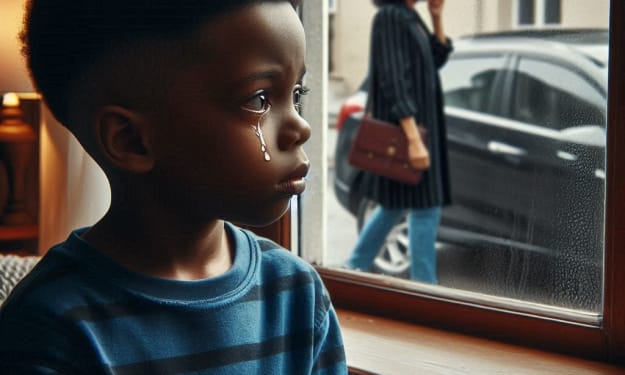
Learn to Recognize the Language of Sight There is a language spoken not with words, but with a gaze, a gesture, or a mere glimpse. This is the language of sight—a powerful form of communication that bridges gaps and connects people in ways that spoken words cannot always achieve. Learning to recognize this language can enrich our lives, helping us empathize with others, understand unspoken emotions, and respond to the needs of those around us. When we look closely into someone’s eyes, we often see a reflection of their soul, their struggles, and their hopes. Our eyes are storytellers. They reveal our deepest emotions—joy, sorrow, longing, love, and even despair—without uttering a single word. Learning to recognize this language of sight is about developing the sensitivity to perceive what lies beneath a person’s outward expression. Consider, for instance, the glance of a child looking up at their parent. There is often a trust, a dependency that needs no verbal affirmation. Their wide-eyed gaze speaks of innocence, love, and a craving for security. For the parent, understanding this silent message means more than just taking care of the child’s physical needs—it means comforting them, offering emotional warmth, and a feeling of safety. The language of sight can be seen in the elderly as well. In their eyes, we often find stories of resilience, nostalgia, and a lifetime of memories. Sometimes, an elderly person may sit quietly in a room, surrounded by family but feeling unseen or unheard. Yet, with a single look—perhaps a softened gaze directed toward a family photo or a brief, wistful glance—they communicate a lifetime of love and loss. Those who can read this language of sight will know that what the elder person truly seeks is connection, a recognition of the life they have lived and the love they still hold. In our busy lives, we often pass by strangers on the street without truly noticing them. But if we take a moment to look, we might see an entire world within them. Imagine seeing someone sitting alone on a bench, their eyes cast down, shoulders slumped. Their posture and the faint sadness in their eyes tell a story of loneliness. Perhaps they have lost a loved one, or they feel isolated in a city full of people. Recognizing this silent message allows us to respond with compassion. A simple smile or a nod can acknowledge their existence and, in a small way, ease their burden. Even in relationships, the language of sight plays an essential role. In romantic partnerships, a glance exchanged across a crowded room can convey love and understanding more profoundly than words ever could. For instance, when a partner sees their loved one struggling, they might silently communicate their support through a steady, reassuring look. That gaze tells the other person, “I am here with you; you are not alone.” In friendships, too, the language of sight bridges gaps. A friend’s knowing look can be a balm in moments of self-doubt, giving assurance without a single word spoken. The language of sight also extends to understanding ourselves. When we look in the mirror, we sometimes avoid making direct eye contact with our reflection. There may be fears, regrets, or unprocessed emotions staring back at us, and looking away feels easier. But learning to face ourselves and read our own eyes with honesty and compassion can be a transformative experience. By recognizing our own silent language, we cultivate self-acceptance and acknowledge our journey, with all its highs and lows. The ability to recognize the language of sight can be particularly powerful in professions like healthcare. Doctors, nurses, and therapists are often trained to observe their patients beyond mere physical symptoms. A doctor who notices the apprehension in a patient’s eyes may sense fear about an impending diagnosis. This awareness allows the doctor to address the patient’s emotional state, offering reassurance and a comforting presence. Learning to read this language takes practice and patience. It requires an openness to observe without judgment, to allow ourselves to be present with others, and to care genuinely. In our increasingly digital world, where conversations are often reduced to text on a screen, it becomes even more crucial to preserve and cherish this form of human connection. Meeting someone's gaze and truly seeing them is a simple act, yet it can carry an incredible weight. It affirms a shared humanity and reminds us that, beyond our differences, we all seek the same sense of recognition and connection. Ultimately, to learn the language of sight is to embrace the beauty of silence, to find meaning in the space between words. When we listen with our eyes, we open ourselves to a world rich with unspoken emotion, fostering compassion and understanding that transcend verbal communication. In every fleeting glance and every unspoken exchange, there lies a profound opportunity—to understand, to connect, and to care.
By Dipak Pawar2 years ago in Families
The Journey of Pregnancy
Pregnancy is a period of critical physical, close-to-home, and mental change, as another life creates more than nine months. This excursion from origination to labor is set apart by a progression of changes that influence practically all aspects of a lady's body and life. Understanding what's in store during each stage, how to explore the difficulties, and the significance of taking care of oneself can engage ladies to have a better, more satisfying pregnancy experience.
By nadia khanom2 years ago in Families
Tangled threads
Chapter 1: The Unraveling It was supposed to be a night of celebration. My best friend, Layla, had just landed a big promotion at work, and she invited me over to toast her success. As I arrived at her apartment, I could feel the excitement in the air. The place was lit with soft candlelight, and the aroma of her famous pasta filled the room. But as I stepped inside, I was also aware of the undercurrents of tension. Layla’s husband, Jonathan, seemed distracted, casting quick glances at his phone while trying to engage in conversation.
By Taviii🇨🇦♐️2 years ago in Families
Cycles of Inheritance
I found myself lying in a nearly pitch-dark room, surrounded by shadows of conversations I wasn’t part of, conversations that seemed to move around me in a cycle I could neither claim nor escape. It was as if I had been placed in the middle of a story already in progress, a narrative as old as time and as familiar as the air I breathe. In that dim light, I overheard two women speaking—a woman, perhaps an employer, congratulated another woman, acknowledging her rise within the workplace. I murmured just enough to prove my relevance, hoping to claim my own place in the world they had carved out. Yet, I felt like an outsider, as if there was a barrier between me and that congratulatory moment, one that was both impenetrable and rooted in history, shaped by generations of the same cycle.
By T. E. Door2 years ago in Families
Preparing For Conception: How Naturopathy Can Help
Preparing for conception is a significant step in many people's lives. It involves optimising both physical and mental health to create a conducive environment for a healthy pregnancy. While conventional medicine offers valuable guidance, the holistic approach of naturopathy provides a complementary perspective. By focusing on natural remedies, lifestyle modifications, and stress reduction, naturopathy can empower individuals to enhance their fertility and support a healthy pregnancy journey.
By Daniel Clarke2 years ago in Families