parents
The boundless love a parent has for their child is matched only by their capacity to embarrass them.
Buy Italian Wine Online Shop – Your Taste of Authentic Italy at Home
For those who cherish the depth of Italian wines and the warmth of traditional Mediterranean flavours, finding a Buy Italian Wine Online shop that truly understands heritage, quality, and authenticity can be a real game-changer. At Casa Tua Delizie, the focus has always been on staying true to its roots — offering carefully selected wines from across Italy, made with passion, character, and care.
By Casatua Delizieabout a year ago in Families
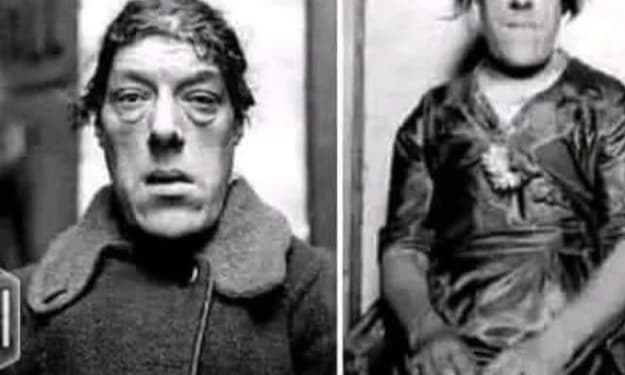
The Price of Survival: The Mary Ann Bevan Story
When we speak of beauty and ugliness, we often forget that these are fleeting masks—subject to time, fate, and perception. But for Mary Ann Bevan, the label of “ugliest woman in the world” wasn't just a cruel judgment. It became her identity—one she never chose but bravely wore in order to survive. This is not a fairy tale, but a true story. A story of a woman who faced unimaginable cruelty from the world but chose not to be broken. She became a symbol of strength, resilience, and the selfless love of a mother. --- Chapter 1: A Beautiful Beginning Mary Ann Webster was born in 1874 in Plaistow, East London, into a working-class family. Growing up, Mary Ann was bright, cheerful, and by all accounts, attractive. She trained as a nurse—an occupation that suited her nurturing spirit—and was known for her gentle care and strong work ethic. Her life, at the time, seemed ordinary but full of promise. In 1903, she married Thomas Bevan, a kind and loving man. Together, they had four children and built a modest, happy life. Mary Ann was not only a devoted mother and wife but also a woman deeply in love with her family. But fate had a different plan. --- Chapter 2: The Slow, Silent Change After several years of marriage, Mary Ann began noticing strange changes in her body. Her hands and feet started to enlarge. Her facial features became coarser and more pronounced. Her head grew disproportionately large. The once-beautiful woman began to see her reflection turn into something unfamiliar—even frightening. The diagnosis, which came later, was acromegaly—a rare hormonal disorder caused by an excess of growth hormone, typically due to a benign tumor on the pituitary gland. In the early 20th century, treatment options were either limited or nonexistent. The disease gradually disfigures the face and body, and in Mary Ann’s case, it would change her life forever. Despite the physical pain and emotional toll, she carried on with grace. She continued her role as a caregiver—both in her home and professionally. Her husband remained by her side, offering support and love. But tragedy would strike once again. --- Chapter 3: A Mother’s Desperation In 1914, Thomas Bevan died suddenly, leaving Mary Ann a widow with four young children to feed. Grief-stricken and alone, her financial situation became dire. Her condition had worsened, making it nearly impossible to find conventional work. Employers were put off by her appearance. People stared. Children pointed. The world had become cruel. But Mary Ann was a mother first. And mothers will do anything for their children. She came across a bizarre but real opportunity—a newspaper advertisement seeking contestants for the title of “The Ugliest Woman in the World.” As horrifying as it sounds, the winner would be awarded a cash prize and potential employment in sideshows or circuses. With no options left, Mary Ann made a choice that would change the course of her life. She entered the contest—and won. --- Chapter 4: The Freak Show Life Mary Ann's new identity was cemented in the pages of newspapers and posters: “Mary Ann Bevan: The Ugliest Woman in the World.” She was hired by traveling circuses and sideshows in Britain and later in the United States, including the famous Coney Island Dreamland Show in New York. She was displayed alongside bearded ladies, giants, and other so-called “freaks of nature.” People paid money to see her. They laughed, pointed, and whispered cruel things. She stood under the spotlight, enduring ridicule while keeping her dignity intact. But behind the public humiliation was a purpose. Mary Ann sent nearly every penny she earned back home to support her children. They had food, clothes, and education—because of the sacrifices their mother made. --- Chapter 5: The Woman Behind the Label What most people never saw was the real Mary Ann Bevan. The mother who sang lullabies to her children at night. The nurse who once comforted the sick. The woman who, despite being mocked by strangers, remained kind and gentle to those around her. Those who knew her behind the scenes described her as warm, funny, and intelligent. She was never bitter about her condition. Instead, she carried herself with quiet strength, knowing the pain she endured served a higher purpose. At one point, Mary Ann even fell in love again—with a fellow performer who worked with giraffes. For a short time, they tried to leave the circus life. Mary Ann attempted to live in the shadows, away from the spotlight. She used hats and veils to hide her face in public. But society wasn’t ready to look past her appearance. Strangers still gawked. The judgment followed her everywhere. In the end, she returned to the circus—not because she loved it, but because she knew it was the only way to ensure her children’s future. --- Chapter 6: Death and Legacy Mary Ann Bevan passed away in 1933 at the age of 59. She was buried in Brockley and Ladywell Cemetery in South London. Her grave is simple, unremarkable—but her story is not. In death, as in life, she remained misunderstood for many years. In the 21st century, her image resurfaced online in memes and jokes, often with no context, just cruel captions mocking her appearance. But a new wave of awareness began to change that. Medical historians and writers began sharing her full story. The world slowly came to see Mary Ann Bevan not as a grotesque curiosity, but as a mother who made unimaginable sacrifices out of love. --- Chapter 7: More Than a Face Mary Ann Bevan’s story is more than a tale of disfigurement. It’s a mirror reflecting how society defines worth and beauty. It questions our instinct to mock what we don’t understand. It asks: what would you do if the world only saw your face and not your heart? Mary Ann did not seek fame. She didn’t want the title of “the ugliest woman.” She only wanted to provide a future for her children. Her courage, her love, and her quiet endurance make her a hero in every sense of the word. In a world obsessed with appearance, Mary Ann Bevan teaches us the value of inner beauty—the kind that never fades, never distorts, and never gives up. --- Final Thoughts In the grand circus of life, Mary Ann Bevan was not the freak. She was the fighter. And she deserves to be remembered not for her face—but for her heart.
By Hasbanullahabout a year ago in Families
From Tears to Triumph: Imran Khan’s Journey from Struggle to Success
1. A Home Without Peace Imran Khan’s life started in chaos. His earliest memories were not of toys or laughter, but of his mother crying silently and his father shouting in anger. His father married a second wife when Imran was just two years old. After that, their home was no longer a home—it became a battlefield. His mother, once full of life, became a shadow of herself. She sat by the window for hours, lost in thought. His stepmother ruled the house and never missed a chance to remind Imran of his place. “You don’t belong here. You’re just a leftover from your mother’s fate.” Those words cut deeper than any wound. His father never stopped her. In fact, he acted as if Imran didn’t exist anymore. Imran learned to stay quiet, to listen more, and to speak less. He became a silent witness to daily arguments, fights, and endless emotional abuse. At night, he would lie on his thin mattress, staring at the ceiling fan, asking: “Why was I born into this mess?” But deep in his heart, he made a silent promise: “One day, I’ll create a life where no one will ever call me a burden again.” 2. Education in the Face of Hunger School became Imran’s only escape. But even that wasn’t simple. He walked barefoot to school every morning because he had no shoes. His uniform was stitched so many times that it looked more like a cloth patched together than a proper outfit. Still, he went every day. At school, he sat in the last bench, quietly absorbing every word. His classmates made fun of his torn clothes, but Imran didn’t care. His goal was clear: “I must change my fate.” At home, there was no place to study. His stepmother made sure the lights went out early, so Imran sat outside under a streetlamp, scribbling notes in his old, tattered notebook. There were days he studied with an empty stomach. His mother tried to save food for him, but often there was nothing left after his step-siblings ate. Yet, hunger could not defeat his determination. 3. Small Jobs, Big Lessons When school finished, Imran worked small jobs to support himself and his mother. He washed cars in the morning before class. In the evenings, he sold boiled eggs on the roadside. At night, he worked in a mechanic’s garage, wiping oil from tools and learning how to fix punctured tires. His hands were rough, his back hurt, but he never complained. Every rupee he earned went into two things: his mother’s medicines and his education. His friends bought new clothes and phones. Imran bought second-hand books. When other boys watched movies, Imran watched motivational videos on shopkeepers' old phones. He wasn’t just dreaming of success—he was building it, one small step at a time. 4. College and the Fire of Failure After school, Imran got admission to college. But he had no money to pay the fee. So, he sold his bicycle—the only gift his mother had given him. He worked in the day and studied at night, often sleeping just three or four hours. After graduation, he decided to start his own small business. He opened a stall selling mobile accessories in the local market. It wasn’t much, but to him, it was everything—a symbol of freedom from poverty. But fate tested him again. One winter night, a fire broke out in the market. His stall burned to ashes. Every cable, charger, and cover he had purchased with his life’s savings was gone. For three days, he didn’t speak to anyone. He sat silently in his room, staring at the wall, thinking: “Maybe life will never let me win.” But then he remembered his mother’s words: “Imran, never let pain stop you. Use it to grow.” And so, he stood up and started again. 5. Rising from Ashes Imran borrowed small amounts from friends. He started another business—this time more carefully, more wisely. He learned to deal with suppliers directly, cut costs, and use social media to market his products. Within three years, he expanded from a stall to a shop, and then from one shop to three. He started his own online store, selling accessories to customers all over the country. People who once mocked him now respected him. Shopkeepers who ignored him now asked for his advice. But Imran never became arrogant. He knew the taste of struggle too well to forget it. 6. Giving Back to the Community With success, Imran did not just think about himself. He started free classes for young boys who wanted to learn small business skills. He gave part-time jobs to orphans and street kids. He donated school bags and books to poor children. His employees were not just workers—they were students of his life lessons. Whenever he interviewed someone, he asked one simple question: “Are you ready to work hard, no matter how unfair life has been to you?” Because Imran knew: success isn’t about talent alone—it’s about never giving up. --- 7. Healing Old Wounds As Imran’s business grew, he still carried the scars of childhood. But he chose not to let those scars turn into hatred. He forgave his father. He built a new house for his mother—a house with peace, no arguments, and no insults. But he also helped his father and stepmother in their old age. When his father became sick, it was Imran who paid the hospital bills. When his stepmother needed surgery, Imran arranged it. People asked him: “How can you help those who treated you so badly?” Imran smiled and replied: “Because if I don’t break the cycle of cruelty, who will? I chose to be different.” 8. The Last Conversation One peaceful evening, sitting on the terrace of their new house, his mother held Imran’s hand. Her eyes were filled with tears—not of sadness this time, but of pride. “Imran, you changed your life and mine too. I always prayed for this day.” Imran’s voice cracked as he replied: “Ammi, all I ever wanted was to see you happy before life ends.” She smiled and closed her eyes, resting in peace. 9. A Legacy of Hope When Imran Khan passed away many years later, he left a note behind for the young boys of his town. It read: “If you are born in pain, don’t stay in pain. Use your struggle to build your life. And when you succeed, help others too. That’s how you make life beautiful.”
By Saad Iqbalabout a year ago in Families
Stay Full and Energized All Day with These High-Fiber Snacks for Weight Loss
When it comes to managing your weight and maintaining steady energy levels throughout the day, snacking can either be your best friend or your worst enemy. Many of the convenient, processed snacks available on the market are packed with refined carbs and added sugars, offering a quick energy boost followed by a crash that leaves you hungrier than before. Instead of reaching for chips or candy bars, consider fiber-rich snacks that support weight loss, gut health, and long-lasting energy.
By Ahmad shahabout a year ago in Families
The Chair by the Mango Tree
I never thought a simple wooden chair could hold so much meaning. It sat under the mango tree in our ancestral courtyard for over two decades, weathered by time, dust, and laughter. But to us, it was Dada’s throne — my grandfather’s favorite place in the whole world. Dada wasn’t a man of many words. He was gentle, observant, and carried a kind of calm that made you want to sit near him even when he wasn’t saying a thing. Every evening, after prayers and tea, he would quietly carry his chair beneath the tree, take a seat, and watch the world go by. To a stranger, it would look like nothing. But to us — it was the center of our home. --- I remember summers in that house. My cousins and I would run barefoot across the dusty yard, our shirts sticking to our backs, mango juice dripping from our chins. Dadi would yell from the kitchen, warning us not to climb the tree again, and we’d pretend we didn’t hear. And Dada would just sit there — in that chair — sometimes smiling, sometimes pretending to be stern. That chair saw every scraped knee, every fight over the last mango, every childhood secret whispered just within earshot. He never interrupted. He never scolded. But we all behaved better when he was there. It’s strange how one person’s quiet presence can be more powerful than a dozen lectures. --- In winter, Dada wrapped a shawl around himself and sat in the same chair with the sun on his face. He'd sip tea slowly, always from a chipped white cup with a blue rim. And when I grew older, he let me make his tea — just the way he liked it: strong, no sugar, a pinch of cardamom. That was our thing. I’d sit on the edge of the step while he sat in his chair, and we’d talk about everything — and sometimes nothing. He once told me: > “When you get older, you'll learn that silence is a kind of wisdom. People chase noise to feel full. But peace... peace is found in the quiet.” I didn’t understand it then. But I do now. --- The year he fell ill, the chair remained empty. He was in bed most of the time, and though he never complained, we could see it pained him not to be outside. One day, he asked me, “Is the tree still green?” I nodded, hiding my tears. “Very green.” He smiled. “Then it’s still home.” --- Dada passed away peacefully a few months later. We buried him near the garden he loved. The mango tree bloomed that year like never before. And the chair? It stayed where it was — untouched, almost sacred. No one had the heart to move it. --- Years passed. We grew up, moved away, and life became busier. But every time I visited that house, I’d go straight to the chair. I’d sit for a while, let the wind carry the smell of ripe mangoes, and listen for echoes of our childhood. One afternoon, my own son — barely five — climbed into my lap while I sat in Dada’s chair. He looked up at the tree and said, “Was this your favorite place when you were little?” “No,” I whispered, “it was his.” And then I told him stories of my grandfather. About the man who never yelled. The one who taught me silence. The one who sat under this very tree and watched the world with kindness in his eyes. --- Grief softens with time, but some places remain sacred forever. That chair, under that tree, became more than furniture. It became a legacy. A reminder that the most valuable parts of family aren’t loud or grand — they are built in moments so small, we don’t realize how deeply they matter until they’re gone.
By Muhammad Usamaabout a year ago in Families
My Mother’s Hands Still Cook in My Kitchen
My Mother’s Hands Still Cook in My Kitchen The first time I tried to replicate my mother’s chicken curry after her passing, I stood in the kitchen staring at the spices like they were foreign objects. It wasn’t the complexity of the dish that made my hands tremble—it was the silence. The silence where her voice should have been, guiding me. No sound of bangles clinking as she stirred the pot, no gentle scolding when I added too much chili. Just me, a wooden spoon, and a memory that refused to sit still.
By Huzaifa Dzineabout a year ago in Families