parents
The boundless love a parent has for their child is matched only by their capacity to embarrass them.
The Day I Became a Parent
People tell you your life will change the day you become a parent. They say it casually, almost like a friendly warning. But what they don’t tell you is that the moment itself is so much more than a single event. It’s a thousand little feelings colliding at once — joy, fear, awe, and a kind of love you didn’t know your heart could hold.
By Habib kingabout a year ago in Families
Maryland’s Parent-Erasure Pattern
Introduction The recent Anne Arundel County ruling in Reichert v. Hornbeck—where Judge Elizabeth S. Morris granted John H. Michel de facto legal standing in a child custody matter without setting forth any factual basis or evidentiary support—reflects more than judicial oversight: it mirrors a growing trend in Maryland law that risks sidelining fit biological parents.
By Michael Phillipsabout a year ago in Families
Your Dad’s a Great Man
Your Dad’s a Great Man When someone says, “Your dad’s a great man,” those words can carry a world of meaning. They might seem simple on the surface, but for me, they speak volumes about a lifetime of quiet strength, unwavering love, and lessons learned without ever needing to be said aloud.
By Muhammad aliabout a year ago in Families
The Chair at the End of the Table
The Chair at the End of the Table By: Abdullah Khan The chair at the end of the table was never just a chair. It was his chair. It had been his place for as long as I could remember the spot where Dad would sit every evening, one arm resting lazily on the table’s edge, the other cradling his cup of tea. The head of the table wasn’t about authority in our home. It was about presence. His presence. The chair faced the kitchen, angled just so that he could watch Mom fuss over the final touches of dinner. He never offered to help not because he didn’t want to, but because he knew Mom’s kitchen was her domain. Instead, he’d keep her company, telling her about his day, asking about hers, or teasing her about how much salt she put in the stew. Even after we grew up and left home, whenever we visited, there he was. Same chair. Same smile. Same steady warmth, as dependable as the old grandfather clock ticking in the corner. And then, one winter evening, he was gone. It wasn’t sudden we’d known he was sick for months but knowing doesn’t soften the blow. We buried him on a Wednesday. By Saturday, the family gathered for dinner as we always did. It was the first meal without him, and the air was heavy with the absence. No one mentioned the chair. No one asked who should sit there. It just stayed empty. I thought it would be temporary. Maybe we’d avoid it for a week or two, and then life, stubborn as ever, would shift things back into place. But weeks turned into months, and still, no one sat there. We filled the other seats easily, laughter and chatter spilling across the table, but that end stayed untouched. It wasn’t a rule anyone spoke aloud. It didn’t need to be. We all understood. Every so often, my eyes would wander to it during dinner. The wood was scratched from years of his restless fingers drumming on the edge. The cushion sagged where he’d sat for hours at a time. Sometimes I swore I could still see the shape of his shoulders in the way the fabric folded. Holidays were the hardest. Thanksgiving, Christmas, birthdays each one came with the same quiet ache. We’d decorate, cook too much food, and try to carry on with the same traditions, but there was always that one gap in the circle. I remember one Christmas Eve, my niece she was six at the time — climbed up into the chair. She didn’t know. She just wanted to be near the cookies. But the moment she sat down, the room went still. Mom’s eyes flicked up from the roast, and my brother stopped mid-sentence. “You can’t sit there, sweetheart,” my sister-in-law said gently, lifting her out of the seat. My niece looked confused but didn’t argue. The chair was pushed back in, its space restored. It became almost sacred not in a religious sense, but in the way certain objects hold the weight of memory. Sitting in it felt like breaking a spell. Years passed. Mom eventually moved to a smaller house, and the dining table went with her. But when it came time to arrange the chairs in the new place, the end seat stayed empty. One evening, while helping Mom set the table, I asked her why we still kept it that way. She paused, holding a stack of plates, and said, “Because when we leave it open, it feels like he’s still here. Like he’s just late, and he’ll walk in any minute, complaining about traffic.” I didn’t say anything, but I understood. The chair wasn’t a void — it was a placeholder for love. A reminder that absence can be felt as strongly as presence. Last month, we gathered again, this time for Mom’s birthday. She’s eighty now, but still insists on cooking herself. The table was set as always, the chair untouched at the end. But after dinner, when the plates were cleared and the cake crumbs were all that remained, Mom did something she’d never done before. She pulled the chair out, sat down in it, and sighed. “I think,” she said, looking around at all of us, “it’s time someone sat here again.” No one moved at first. It felt wrong, like crossing an invisible line we’d all agreed not to touch. But then my brother slid into the seat, resting his arms on the table just as Dad used to. He didn’t say anything, but I noticed the way his shoulders softened, as if the chair had passed something invisible to him. The conversation slowly resumed. The laughter came back. And in that moment, I realized the chair had done its job. It had held the space for him until we were ready to carry it ourselves. Now, when I visit, someone always sits there. Not every time, and not in the same way he did but the emptiness is gone. And still, when I glance at it, I feel him. Not as a ghost, not as a loss, but as a quiet thread running through our family, holding us together. Some chairs are just furniture. This one will always be a place where love learned how to stay.
By Abdullah Khan about a year ago in Families
THE LOVE WITH FAMILY. Content Warning.
As I sat around the dinner table with my family, surrounded by the warm glow of candies and the delicious aroma of homemade cooking, I felt a deep sense of gratitude and love for people who had been my rock throughout the years. My family had always been there for me, through thick and thin, and I knew that I could count on them no metter what.
By Shamsher Khanabout a year ago in Families
THE MOTHER LOVE. Content Warning.
As bi sat by my mother's bedside, holding her frail hand gazing into her tired eyes, I couldn't help but think about the countless sacrifices she had made for me throughout the years. Her love had been my guiding light, my shelter in the storm, and my beacon of hope. In that moment, I realized that mother love is truely one of the most selfless and unconditional forms of love in the world.
By Shamsher Khanabout a year ago in Families
LOVE
Alin and Andreea's Story: A Symphony of Everyday Love In a city where the rhythm of life sweeps you into a whirlwind, the story of Alin and Andreea unfolded—a symphony of everyday love, woven with patience, smiles, and sometimes, tears. They weren't fairytale characters, but two real people, with dreams and fears, united by a profound love and two wonderful children: Adela, a 4-year-old girl with sparkling eyes and a crystalline laugh, and Niko, a 7-year-old boy, full of energy and curiosity, a little explorer of the world.
By alin butucabout a year ago in Families
Teaching Boys Emotional Intelligence and Empathy:
In today’s fast-paced, often tough world, teaching boys emotional intelligence (EI) and empathy isn’t just a nice-to-have — it’s essential. For decades, society has pushed boys toward “toughness” and “stoicism,” often discouraging emotional expression. But the tide is turning. Parents, educators, and caregivers are recognizing that raising emotionally intelligent boys creates healthier relationships, better mental health, and stronger leaders.
By Katina Banksabout a year ago in Families
The art of loving and being loved. . AI-Generated.
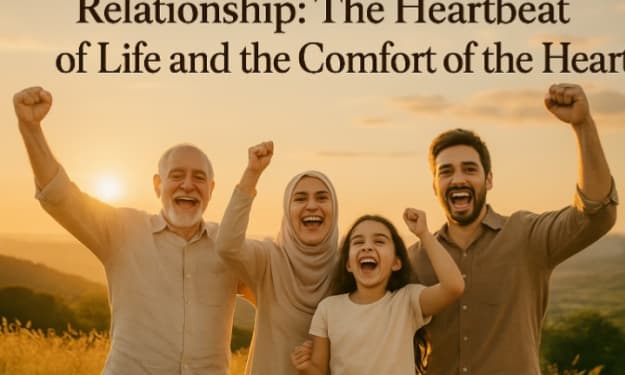
Relationship: The Heartbeat of Life and the Comfort of the Heart Life is not measured merely in years, possessions, or achievements. It is measured in the warmth of connections, the comfort of belonging, and the bonds that make our existence meaningful. No matter how far we travel, how high we climb, or how much we own, there is always a silent truth shaping our journey: we live for the people we love, and they, in turn, breathe life into us. That truth is wrapped in a single word — relationship. A relationship is not just a label or a title; it is a living thread that connects one heart to another. It can be woven by blood, built through friendship, nurtured by care, or cemented by shared experiences. Whether it’s a parent’s selfless devotion, a friend’s unwavering loyalty, or a life partner’s gentle companionship, relationships are the invisible architecture of our lives. --- The Essence of a Relationship At its core, a relationship is a promise — spoken or unspoken — to walk alongside someone through the twists and turns of life. It is the tenderness in a mother’s touch, the steadfast shield of a father’s protection, the mischief and support of a sibling, and the unshakable trust of a true friend. It is the comfort of knowing there is someone to share your joy, absorb your tears, and remind you of your worth when you forget it yourself. True relationships are not confined to blood ties. A teacher who believes in you, a neighbor who stands by you in hardship, a mentor who guides you with wisdom — these are relationships just as sacred and impactful as family bonds. --- The Colors of Connection If life is a canvas, relationships are its colors. Each hue brings a unique beauty: 1. Family Bonds – Parents, children, and siblings form our first circle of connection. They witness our beginnings, share our roots, and shape the foundation of our character. 2. Friendship – Friends are the family we choose. They bring laughter, shared adventures, and the comforting knowledge that someone accepts us as we are. 3. Romantic Partnerships – The union of two hearts in trust and affection builds a bond where dreams are shared, and burdens are halved. 4. Spiritual and Mentor Relationships – These connections nourish the soul, offering guidance, clarity, and purpose beyond the material world. 5. Community Ties – Neighbors, colleagues, and fellow citizens create the social fabric that supports our daily lives. --- Why Relationships Matter We are wired for connection. From our first breath to our last, we seek love, understanding, and companionship. Here’s why relationships are not just important but essential: They Provide a Sense of Belonging The world can be overwhelming and unpredictable, but knowing there is a place — or a person — where you belong brings peace to the heart. They Offer Emotional Strength In joy, we multiply happiness by sharing it. In grief, we divide the burden by leaning on those who care. They Shape Our Identity We are molded by the values, habits, and perspectives of those around us. Loving and supportive relationships help us become our best selves. They Build Resilience Life will test us. Relationships give us the courage to endure, to heal, and to rise again after we fall. They Enrich Our Purpose Success is sweeter when celebrated with others. Even the grandest achievements can feel hollow without someone to share them with. --- The Art of Nurturing Relationships A relationship, like a delicate plant, needs consistent care to flourish. Left unattended, it may wither. Here are timeless principles to keep relationships alive and strong: Trust is the Foundation – Without trust, no relationship can thrive. Trust is built through honesty, reliability, and integrity. Respect is the Language of Love – Treating others with dignity, listening without judgment, and valuing their feelings are acts that preserve closeness. Sacrifice Strengthens Bonds – Placing someone else’s happiness ahead of your own, even in small ways, deepens love and loyalty. Communication is the Bridge – Speak openly. Listen deeply. Misunderstandings are inevitable, but open dialogue resolves them before they become walls. Time is the Greatest Gift – In a world rushing forward, giving your time is a rare and precious act. Shared moments create shared memories, the building blocks of intimacy. --- Challenges in the Modern World Relationships today face challenges our grandparents never imagined. Digital Distraction – Screens have replaced face-to-face connection. We often scroll through pictures instead of living in moments. Busy Lifestyles – The pressure to succeed leaves little time for personal connections. Materialism – In a world focused on possessions, the value of people is sometimes overlooked. Global Mobility – Moving cities or countries for education or work can strain even the strongest bonds. But these challenges are not unbeatable. They simply demand greater intentionality — to send that message, make that call, arrange that visit, or say “I appreciate you” before it’s too late. --- Relationships as a Reflection Every relationship mirrors who we are. If we offer kindness, we often receive it back. If we sow trust, we harvest loyalty. If we give bitterness, it will return to us. This truth challenges us to be the kind of person we would want in our own lives — to be supportive, empathetic, patient, and present. --- Stories That Stay With Us Think back to the times you felt truly alive. Chances are, those moments involved other people — holding a newborn for the first time, laughing with friends until your stomach hurt, standing together in the face of hardship, or watching someone you love achieve their dream. We remember people, not possessions. We carry conversations, not bank balances, in our hearts. The comfort of a relationship often outlasts the thrill of any material gain. --- The Eternal Value of Relationships We may outgrow our clothes, careers, or even certain places, but we never outgrow the need for connection. In the end, relationships are the only treasure we can leave behind that truly matters. A legacy of love is far more powerful than any monument of stone or wealth. --- Final Thoughts A relationship is more than just a part of life — it is life. It is the heartbeat that keeps our emotional world alive and the comfort that soothes our soul in turbulent times. In a society obsessed with speed and self-interest, the simple act of caring for another person becomes revolutionary. And in the end, it is not the number of followers, awards, or digits in a bank account that defines us. It is the way we have touched other lives, the hearts we have warmed, and the hands we have held. So, cherish your relationships. Give them time. Water them with kindness. Protect them with loyalty. And when you find someone who walks with you through life’s storms and sunshine alike, hold on to them — because that, more than anything else, is what makes life worth living.
By MUSLIM Talk about a year ago in Families