parents
The boundless love a parent has for their child is matched only by their capacity to embarrass them.
Why Thousands of B.C. Families Are Choosing Alberta: Inside Canada’s New Cost-of-Living Migration
British Columbia has always been a sought-after place to live, but the increasing costs of housing are giving rise to a subtle but important trend of moving east.
By Deborah Fergusonabout a year ago in Families
Pain in absence, not action
There are many ways a parent can wound a child. Some wounds come from anger, some from criticism, and others from absence. But the deepest wound my father ever left me wasn’t carved by shouting, or rejection, or even neglect. It came from his silence. It wasn’t the peaceful kind of silence you find after a long day, the type that feels restful and safe. His silence was heavy, suffocating—like a locked door between us. It stretched across dinner tables, lingered in car rides, and filled every room of our home. When I was little, I thought love was supposed to be loud. I believed fathers were supposed to cheer from the sidelines, clap at school plays, and say things like, “I’m proud of you.” Instead, my father’s love—if it was there at all—hid behind quiet walls I never learned how to climb. The Empty Chair at the Table Our house was never without food, never without safety. In many ways, we had what other families might envy. But warmth? That was missing. My father would come home after long shifts and sit at the dinner table with the newspaper spread wide in his hands. His body was there, but his attention wasn’t. If I told him about scoring a goal in soccer or about the teacher who praised my essay, he would give me a quick nod, maybe murmur “Good,” and then return to the newsprint. I would stare at his hands, hoping he might lower the paper and look at me. Hoping for eye contact, a smile, maybe even a simple acknowledgment that he heard me. But the paper stayed up, and his silence said everything I wished he wouldn’t. As a child, I didn’t understand. I thought I was doing something wrong. I wondered why he didn’t ask me questions, why he didn’t laugh at my stories the way other dads did. His silence wrapped itself around me like a cold blanket, and I wore it without realizing how much it was shaping me. Silence that Screams When parents yell, at least you know they feel something. Anger, disappointment, frustration—those are emotions you can recognize. But silence? Silence is harder. Silence makes you guess, and in the guessing, you build painful stories in your own mind. My father’s silence screamed at me. It told me I wasn’t interesting. That I wasn’t worth speaking to. That my achievements, no matter how big, weren’t important enough to break through his wall of quiet. That belief followed me into adulthood. I remember graduating high school and looking for his face in the crowd. He was there, I knew he was. But I don’t remember him clapping or smiling. I only remember the hollow ache of absence, even when he was sitting just a few feet away. Learning What Silence Really Means For a long time, I thought his silence meant I wasn’t good enough. But as I grew older, I began to realize something: his silence wasn’t always about me. My father grew up in a world where men were expected to be providers, not nurturers. His own father had been distant and cold, and he had inherited that way of living without ever questioning it. He believed love was shown by keeping the lights on, by working hard, by being present physically—even if he was never present emotionally. Understanding that truth gave me some peace, but it didn’t erase the damage. Because children don’t analyze family histories. They don’t say, “My father is emotionally unavailable because his father was too.” They just feel the ache of being unseen. Breaking the Cycle The silence left its mark on me, and for years, I was afraid I’d repeat it. I worried that one day I’d become a parent who struggled to say the words my father never said. But when I held my own child for the first time, something in me shifted. I looked down at that tiny face and made a promise: I would not stay quiet. I would not let silence be my legacy. The first time I said “I love you” to my child, the words felt awkward, almost foreign. But I said them anyway. I keep saying them—every day—because I know how heavy silence can be. I know the way it lingers, the way it makes you doubt your worth. Breaking the cycle isn’t easy. Sometimes, the weight of old habits tugs at me. But I remind myself: my child deserves more than nods and folded newspapers. My child deserves words, affection, and presence in more than just the physical sense. Finding Peace Today, when I see my father, the silence is still there. It lives in the pauses, in the half-sentences, in the way he nods instead of speaks. Part of me still aches for words that will likely never come. But I’ve stopped expecting him to be someone he cannot be. Instead, I’ve learned to fill the silence myself. I speak the words I needed to hear when I was young. I give the love I once longed for. And in doing so, I’ve discovered that silence doesn’t have to define me forever. Yes, my father’s silence hurt more than his words ever could. But it also taught me something valuable: sometimes the greatest vow you can make is to break the silence. To use your voice where another could not. To speak love loudly, so no one you care about ever has to doubt it. Because love left unspoken can wound, but love spoken—clearly, openly, and often—can heal.
By LUNA EDITHabout a year ago in Families
The Secret to Visiting Petting Zoos: Baby Animal Season Revealed 🐑🐐
If you’ve ever taken your kids to a petting zoo, you know the look on their faces when they meet a goat or a lamb up close—it’s pure wonder. But here’s something most parents don’t realize: there’s a right time to visit if you want those once-in-a-lifetime encounters.
By PettingZoo.Funabout a year ago in Families
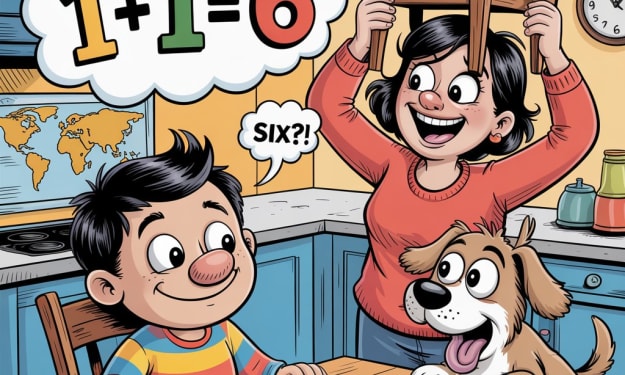
Homework With Mom: The Day 1 + 1 Became 6
Homework is supposed to be simple. A quiet kitchen table, a child doing sums, a mother sipping coffee nearby. That’s how it looks in the movies. But in real life? Homework time is a circus act, a battlefield, and sometimes a full-on comedy show that makes the neighbors wonder if they should sell tickets.
By Life Hopesabout a year ago in Families
Check their reflection
I was skimming an article on Emotional Vampires this afternoon and contemplating the vampires in my life. It took me a long time to recognize them; even longer to accept without trying to change, or fix, or fight, about the fact that my family is maybe… not as supportive as the say they are.
By Celeste c Nicholsonabout a year ago in Families
What medical conditions qualify for long-term disability
Imagine waking up one day and finding yourself unable to work due to a severe health condition. This is the reality for millions every year, making long-term disability (LTD) benefits a critical safety net. Long-term disability insurance replaces a portion of your income when a serious illness or injury prevents you from working for an extended period. Knowing what medical conditions qualify for long term disability is key to accessing these benefits—whether through Social Security Disability Insurance (SSDI) or private insurance policies.
By PURE HEALTH BLOGSabout a year ago in Families
Supporting a Loved One with Dementia: How Progression Scales Can Help
Caring for a loved one who has dementia is physically and emotionally demanding. Families are often left wondering what is going to happen next and how they should prepare themselves for what is ahead. Perhaps the most useful instrument that is at the fingertips of caregivers and medical professionals is the use of progression scales, such as the Global Deterioration Scale (GDS) or the dementia fast scale (Functional Assessment Staging Tool, FAST). These structured tools provide insight into the stages of progression in dementia, guiding care planning and facilitating patients to receive appropriate support at all stages of the condition.
By Jame Roarkabout a year ago in Families
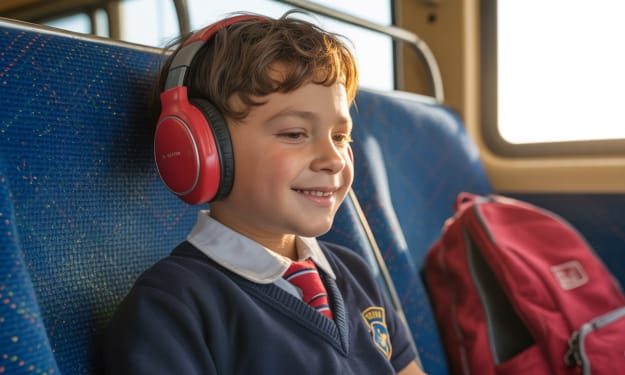
Kid Not Into Reading? Try an Audiobook!
Hey there, parents, teachers, and anyone who's ever tried to get a kid excited about a book – buckle up! In a world where screens dominate, audiobooks are stepping up as the unsung heroes of storytelling. A recent bombshell from The Guardian has everyone buzzing: England's schools might soon officially embrace audiobooks in their curriculum, thanks to eye-opening data from the National Literacy Trust. This isn't about ditching traditional reading; it's about amplifying the joy of stories in a way that clicks with today's tech-savvy kids. Let's break it down in a fun, positive vibe, exploring how listening to books can spark imaginations, build skills, and create lifelong book lovers. Trust me, by the end, you'll see why this is a game-changer for children everywhere.
By Francisco Navarroabout a year ago in Families
Parenting Strategies Inspired by Tennis Matches
Tennis and parenting might appear unrelated at first glance, yet they share a surprising number of core principles. Tennis requires discipline, patience, focus, and emotional control—qualities that are also essential for effective parenting. Observing how players and coaches interact on the court reveals patterns that can be directly applied to guiding children at home. These parenting lessons from tennis highlight how structured guidance, balanced independence, and constructive feedback can help children develop into resilient and self-assured individuals. Understanding these connections allows parents to use proven strategies from the tennis world to support their children’s growth.
By Brian Kashmanabout a year ago in Families
Factors that Influence Longevity in Older Adults with Dementia
Dementia is a degenerative neurological disease that profoundly impacts thinking, memory, and daily living. Perhaps the biggest worry for families is comprehending what determines longevity in older people who have dementia. Although each person's experience is special, a great deal of study has identified some primary factors, ranging from age and dementia type to health control and social support, upon which outcomes heavily depend.
By Amiee Fraleyabout a year ago in Families