parents
The boundless love a parent has for their child is matched only by their capacity to embarrass them.
Reaching Peak Fitness After 40
In the past, 40 was regarded as the beginning of a deterioration in athletic performance. However, we are seeing more athletes challenge that stereotype, such as Lindsey Vonn, 40, and Chris Sharma, a 43-year-old mountain climber, who are still doing remarkable things. This success is not confined to the elite; even regular individuals may attain their optimum fitness beyond 40, as did Ken Rideout, a father of four from Nashville, who began running actively in his mid-40s and was one of the fastest marathon runners in his age category by his 50s.
By Pedro Wilson2 years ago in Families
Drinking Water: The Secret to a Longer, Healthier Life
As the New Year begins, many of us are looking to improve our overall health. While regular exercise and a plant-based diet are effective ways to improve your well-being, getting enough sleep, reducing stress, limiting alcohol, and engaging in active socializing are just as important.
By Pedro Wilson2 years ago in Families
Title: A Journey of Self-Reliance And Healing
Growing up ,my life was shaped with hardship,abandonments , and the constant struggle to survive. When my dad walked out of our home, I didn’t fully understand what was happening. I was too young to grasp the weight of his absence, but I felt its impact immediately. My mother, left to shoulder the burden of raising me, became a fighter overnight. She struggled to provide, and there were days when the fridge was empty, and the hope of a meal was as distant as the man who left us.
By Oyindamola Ogunsola2 years ago in Families
A Guide for Parents: 5 Ways to Understand Your Children’s Emotions
Why Should We Understand Children’s Emotions? Hello everyone, I’m Super Bulldog! Today, I want to discuss something very important: Why should we understand our children’s emotions? Let me explain this by drawing on my own experiences and observations.
By Super Bulldog2 years ago in Families
Unveiling the Visual Symptoms of Frontotemporal Dementia
Frontotemporal dementia is a complex, little-understood condition that primarily involves the frontal and temporal lobes of the brain. These lobes are the areas of the brain that are associated with behavior, personality, and language. Though many are aware of the cognitive and behavioral manifestations of FTD, the visual symptoms are underrepresented in these discussions. This article explores the visual symptoms of frontotemporal dementia and how they might manifest in daily life.
By Jane Rockwell2 years ago in Families
Teen Mental Health Concerns in the Digital Age
In today's fast-paced, technologically advanced society, digital media has a significant impact on youth. While the internet has transformed how we interact, study, and share information, it has also created substantial issues for young mental health. Understanding these problems is crucial for promoting our youth's well-being.
By Teenage Parenting2 years ago in Families
Why Do We Stay Silent in the Face of Injustice?
Silence can be powerful. It can be a tool for reflection, a moment to gather strength, or a gesture of solidarity. But silence can also weigh heavy when it becomes a shield we use to avoid conflict, discomfort, or fear. When faced with injustice, why do so many of us remain quiet, choosing to turn away rather than speak up? The reasons are complex, layered with personal history, cultural expectations, and the dynamics of power. Yet, if we don’t take the time to understand this silence, to interrogate where it comes from, we risk letting it define us in ways that diminish our humanity. One reason we stay silent is fear—fear of standing out, fear of retaliation, fear of being judged. Speaking up against injustice often comes with consequences. It can disrupt relationships, challenge authority, or expose us to criticism. For many, the cost feels too high. So, instead, we retreat into ourselves, convincing ourselves that staying quiet is safer. But fear isn’t the only thing that holds us back. There’s also the weight of doubt. How many times have we questioned ourselves, wondering, “Is this really my place? Am I sure this is wrong?” In moments like these, we may hesitate, unsure whether our voice will make a difference or whether we even have the right to intervene. Another piece of the puzzle lies in the influence of the crowd. When we’re part of a group, it’s easy to assume someone else will step up. Psychologists call this the “bystander effect,” and it’s a powerful force. The larger the group, the more likely we are to blend into the background, waiting for someone else to take the lead. Cultural norms play a role, too. Many of us are raised in environments that prioritize harmony over confrontation. We’re taught to avoid “making waves” or drawing attention to ourselves. This conditioning can make speaking up feel not just uncomfortable but fundamentally wrong. Yet, there’s something deeper we need to confront. Sometimes, silence comes from a place of resignation. We’ve seen injustice so often that it starts to feel inevitable. We tell ourselves, “This is just how the world works,” and we choose to adapt rather than resist. But let’s be clear about what’s at stake. Every time we stay silent in the face of injustice, we send a message—not just to others, but to ourselves. We tell ourselves that our voice doesn’t matter, that change is impossible, that the status quo is unshakable. Over time, this silence doesn’t just protect us; it also confines us, shrinking the space where courage and empathy can thrive. So how do we break free? How do we find the strength to speak when everything inside us is telling us to stay quiet? It starts with self-awareness. We need to recognize the moments when fear or doubt is holding us back. We need to ask ourselves, “What am I afraid of? What’s the cost of staying silent?” Sometimes, just naming the barriers can help us begin to overcome them. Next, we have to redefine what it means to take a stand. Speaking up doesn’t always mean shouting from the rooftops. It can be a quiet conversation, a question posed at the right moment, or a gesture of support to someone who’s been wronged. Every act, no matter how small, carries weight. We also need to remind ourselves that we’re not alone. While it may feel like stepping up isolates us, the truth is that courage is contagious. When one person breaks the silence, it creates space for others to do the same. It reminds us that our voices have power—not because they’re perfect, but because they’re human. And finally, we have to embrace the discomfort that comes with challenging injustice. Growth is never easy. It requires us to sit with difficult truths, to confront our own biases and limitations. But that discomfort is where change begins. Choosing to speak up doesn’t mean we’ll always get it right. There will be moments when we stumble, when our words fall short, when the outcome isn’t what we hoped for. But what matters is that we tried, that we didn’t let fear or doubt silence the parts of us that long for a better world. Because here’s the truth: silence may feel safe, but it’s also heavy. It keeps us from living fully, from connecting deeply, from honoring the values we hold dear. When we break that silence, when we let our voices rise, we do more than resist injustice—we reclaim our humanity. The next time you find yourself on the edge of speaking out, take a breath. Feel the weight of your silence, but also the possibility of your voice. Remember that even in the face of injustice, you have a choice. And that choice has the power to change everything.
By Laney Matthews2 years ago in Families
A Comprehensive Guide: How to Help Your Teen Be a Good Person
Introduction As parents, we all want the best for our children. We want them to grow up to be kind, empathetic and responsible individuals. Teaching your teenager to be a good person is a crucial aspect of their development. In this comprehensive guide, we'll explore effective ways to nurture positive character traits in your teen from fostering empathy to instilling a strong sense of responsibility. By the end of this article, you'll have a clear roadmap to help your teenager become a better person.
By Sachin Kudav2 years ago in Families
How to make exercise a non-negotiable issue in 2025. AI-Generated.
In an era where health and wellness are paramount, making exercise a non-negotiable part of your life in 2025 is essential for both physical and mental well-being. This document outlines practical strategies to integrate exercise into your daily routine, ensuring it becomes an integral part of your lifestyle rather than an optional activity. By adopting these methods, you can cultivate a sustainable exercise habit that enhances your quality of life.
By Haven Off Health2 years ago in Families
Disney Pulls Transgender Storyline from Pixar’s ‘Win or Lose’ Streaming Series
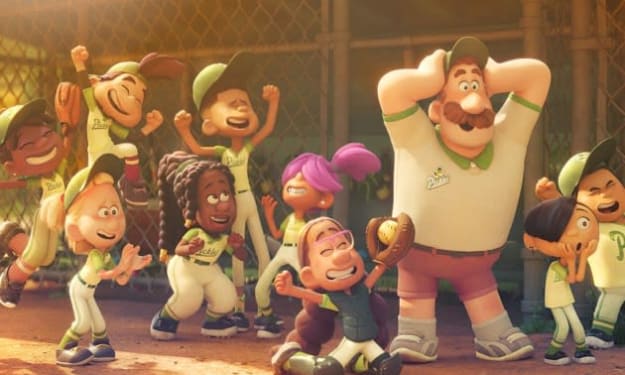
Pixar’s highly anticipated original animated series, Win or Lose, will no longer include a transgender storyline in one of its episodes, as reported by The Hollywood Reporter. The decision marks the latest chapter in Disney’s ongoing balancing act between creative expression and public perception.
By Rachel LaBella2 years ago in Families