literature
Families and literature go hand in hand; fictional families to entertain, reflect and inspire.
When Motherhood Dies.
When Motherhood Dies: The Tragedy of Cruelty and the Loss of Humanity. Have you ever wondered: Can a mother really kill her own child? Not by accident. Not out of desperation. But by a cold, conscious decision. If the question alone moves you, the answer will haunt you. This is not fiction. It is not an exaggerated drama. It is a true story set in a lush, green village in one of Africa's most vibrant and contrasting countries, where the beauty of nature often masks the brutality of the people. A story in which motherhood was not celebrated, but rather suppressed.
By Sayed Zewayedabout a year ago in Families
Hills Like White Elephants
Unpacking Hemingway’s Silent Tension Ernest Hemingway’s short story Hills Like White Elephants is one of the most widely analyzed pieces in modern literature. First published in 1927, the story offers a minimalist yet powerfully emotional look into a conversation between a man and a woman waiting for a train in Spain. On the surface, it appears to be a simple dialogue. However, its deeper meanings reveal themes of communication, choice, gender roles, and power dynamics—all hidden beneath Hemingway’s characteristic iceberg style.
By its_ishfaq_ahmadabout a year ago in Families
"I Opened a Stranger’s Letter by Mistake—Now I'm Being Watched"
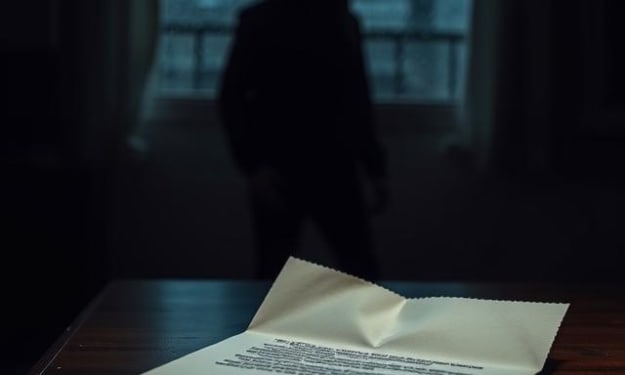
It was just a letter. A plain white envelope, no return address, my apartment number scribbled in blue ink. I didn’t think twice when I picked it up from the mail slot. Bills, junk mail, and a single envelope addressed to “A. Miller.” That was me—or so I thought. I slit it open absentmindedly as I walked up to my third-floor apartment. Inside was a single sheet of paper, neatly typed, with no signature: > "We know what you did. You’ve been warned once. There won’t be another." I stopped in my tracks. I read it again. And again. My heart began to pound—not because I understood what it meant, but because I didn’t. Was this some kind of prank? A mistake? It wasn’t until I glanced at the envelope again that I noticed the handwriting more carefully. “A. Miller,” yes—but the number wasn’t 3C. It was 3E. I lived in 3C. I stared down the hallway. 3E was just across from me. I didn’t know the person who lived there. I had only moved into this building six weeks ago, and I'd never seen anyone come or go from that door. The name on the buzzer said “A. Miller,” just like mine—but what were the odds? I slid the letter back into the envelope and crossed the hall. I raised my hand to knock—then stopped. What if they thought I’d opened it on purpose? I looked again at the door. No sound, no light beneath it. Just silence. I returned to my apartment, locked the door, and placed the letter on the table. That night, I barely slept. Every creak of the floorboards above, every gust of wind rattling the fire escape made me jump. I kept thinking about the letter’s words: There won’t be another. By morning, I decided to forget it. A simple mistake. Maybe it was some weird joke between friends or roommates. I’d return the letter when I had the chance and be done with it. But when I checked the hallway the next day, something had changed. The name on the buzzer for 3E was gone. Just blank metal where it used to say “A. Miller.” --- That evening, I came home to find the envelope was missing from my kitchen table. I froze. I live alone. No one else has a key. The lock wasn’t broken. Nothing else was touched. Just the letter—gone. I searched the apartment from top to bottom. Every drawer, closet, cabinet. I even checked under the sink, behind the fridge. Nothing. Just an empty space where the letter had been. Then, as I passed my window, I noticed something odd. Across the street, in the apartment directly opposite mine, a light flickered on. The room was dark except for a single bulb. A figure stood there, motionless. Watching. I stepped back from the glass instinctively. When I peeked again, they were gone. --- The next morning, I called the landlord and asked about the tenant in 3E. He sounded puzzled. “No one’s lived in that unit for almost a year,” he said. “Last guy skipped out on rent. You sure you saw a name on the buzzer?” “I’m certain,” I replied. He paused. “You okay, Ms. Miller?” “Yeah,” I lied. But I wasn’t. I started noticing things. My apartment felt... wrong. Things were moved slightly. My keys on the counter were flipped upside down. My bathroom mirror had a faint smudge—like someone had breathed on it. And every night, the light across the street flicked on. Just for a moment. Always at the same time: 2:03 AM. --- One night, I stayed up, staring out the window, determined to catch them. When the light came on, I was ready. I used my phone to snap a photo quickly, hands shaking. Then I zoomed in. The window across the street was boarded up from the inside. There was no way someone could stand there. No way the light could turn on. I dropped my phone. I was being watched. But by what? Or who? --- I finally went to the police. They were polite, took down my statement, nodded a lot, told me it was probably a misunderstanding or anxiety. One officer offered to send a patrol car by. That night, I felt a bit safer. Until I returned home and found a second letter slipped under my door. This time, the envelope had no name. No apartment number. Just one line inside: > "You should have stayed out of it." I moved out the next morning. Didn’t pack much. Left most of my furniture behind. I didn’t care. I just wanted to be gone. Now I live two states away. I changed my number. Got a new job. I check all my mail carefully. But last week, I got a call from an unknown number. The voicemail was empty—just faint breathing. And this morning, I found a white envelope on my doorstep. No return address. No markings. I haven’t opened it. Yet.
By Nizam khanabout a year ago in Families
The Power of Social Touch
In a world increasingly shaped by technology and virtual interaction, social touch remains one of the most profound and essential forms of human communication. Whether it's a warm hug, a pat on the back, or a friendly handshake, these small gestures carry immense emotional and psychological weight. But what exactly is social touch, and why does it matter so much?
By its_ishfaq_ahmadabout a year ago in Families
Practice Self-Care
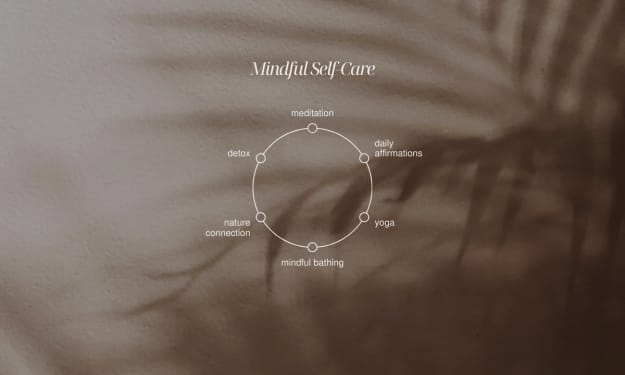
And all these things need to be done on the base of the Foundation of Healing—Caring for oneself. Healing is more than just what takes place when you’re ill or feeling poorly. It’s about creating the conditions that allow for well-being to flourish in all aspects of your life — emotionally, physically, mentally and spiritually. Self-care is the heart of recovery from traumatization because it helps us find our balance, resilience and soul-health. It requires intention, presence, and intention.
By Laila Sadiaabout a year ago in Families
The Confession That Changed My Marriage Forever
The Confession That Changed My Marriage Forever One final conversation with my mother-in-law revealed a hidden truth that helped me see my husband—and our love—through new eyes. We often think we know everything about the people closest to us—our families, our spouses, even ourselves. But sometimes, a single moment can shift everything. That moment for me came just days before my mother-in-law passed away. I had never been particularly close to her. Our relationship was polite, respectful, but distant. She was a woman of few words, often watching life quietly from the sidelines. Still, when her health began to decline and it became clear that her time was limited, I spent more time by her side—partly out of duty, but also because something inside me urged me to. One afternoon, as I sat with her in the hospital room, she motioned for me to come closer. Her voice was weak but steady. “There’s something I need to tell you,” she said. “Something I should have said a long time ago.” I leaned in, expecting perhaps a family recipe or a blessing. What she said instead left me silent. “I know you’ve struggled to understand him. My son. Your husband. He’s not always easy to love, is he?” I blinked, unsure of how to respond. She continued, “He wasn’t always like this. When he was young, he was full of light. Curious. Gentle. But then… something happened.” And then, piece by piece, she revealed a story I had never heard. When my husband was just ten years old, he had lost his younger sister in a tragic accident—an accident that happened while he was supposed to be watching her. The weight of that guilt had never truly left him. His parents never spoke about it openly. The family moved on, at least on the outside. But the boy who once laughed freely had turned inward. “He carries that with him still,” she said. “He never talks about it. But every silence, every distance—it's not about you. It’s about the pain he never learned to let go of.” I sat there frozen, the pieces of our marriage suddenly fitting together like a jigsaw puzzle. The emotional distance, the mood swings, the way he sometimes withdrew into himself—it wasn’t rejection. It was trauma. Tears welled up in her eyes. “I’ve always admired your patience with him. And I wanted you to know—he loves you more than you know. He just doesn’t always know how to show it.” She passed away two days later. That conversation didn’t fix our marriage overnight. But it gave me something I never had before: context. Compassion. A deeper understanding of the man I married. I stopped taking his silence so personally. I started creating more gentle space for him to feel safe. And slowly, almost imperceptibly, he began to open up. Eventually, I shared with him what his mother had told me. At first, he was quiet. Then he cried—really cried—for the first time since I’d known him. That night, we talked for hours. Not just about the past, but about us, our future, and how we could learn to grow together rather than apart. Since that night, we’ve become different people. Not perfect, but more present. We’ve learned to pause before reacting, to ask instead of assuming, and to listen without waiting to speak. In those small shifts, healing has taken root. Understanding, once missing, became our foundation. Looking back, it still amazes me how one single confession—a few quiet words—could unlock years of misunderstanding and pain. But that’s the thing about truth. Even when it arrives late, even when it comes through grief, it has the power to heal. Sometimes, healing begins not with answers, but with the courage to hear the questions we’ve been avoiding all along.
By Hazrat Bilalabout a year ago in Families
The Day Silence Screamed
A Village of Quiet Faces In a faraway valley hidden between gray hills and quiet rivers, there was a village called Meerabad a place so silent that even the wind moved softly. The people there lived with zipped lips, cautious hearts, and eyes full of unspoken thoughts. Children played without laughter, weddings had no music, and even tears were wiped away quietly.
By Muhammad Hayatabout a year ago in Families
Freddy the Frog and the Pond of Patience
Once upon a time, in the heart of a green and giggly forest, there lived a tiny frog named Freddy. Freddy wasn't just any frog—he was the smallest in his whole pond. While the other frogs could leap across lily pads like champions, Freddy's jumps barely lifted him off the ground. When the bigger frogs sang loud, croaky songs, Freddy's voice was just a squeak. He didn’t have strong legs or a booming ribbit, but what he had was much more powerful—heart. And dreams. Big dreams for such a small frog.
By The Waiting Treeabout a year ago in Families
When Rain Sang Her Name
The Girl Who Heard the Rain In a small village surrounded by forest and fog, there lived a 14-year-old girl named Lyra. She was quiet, thoughtful, and always carried a notebook. People in the village said she was strange because she liked to sit outside when it rained.
By Muhammad Hayatabout a year ago in Families