literature
Families and literature go hand in hand; fictional families to entertain, reflect and inspire.
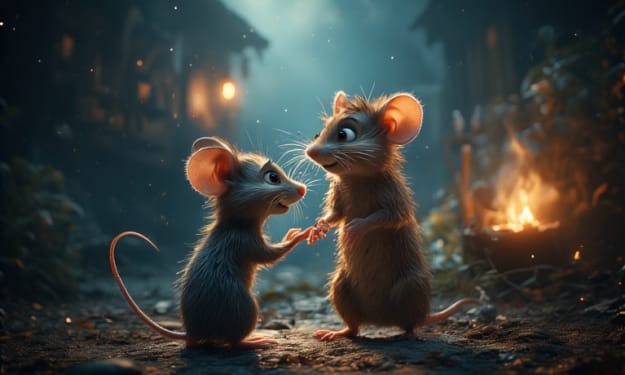
Milo the Mouse Finds Courage. Content Warning. AI-Generated.
In the heart of a tall, swaying meadow lived a tiny gray mouse named Milo. He was smaller than the other mice in his village, with big round ears and a nervous twitch in his whiskers. Milo was gentle, kind, and smart—but terribly shy and afraid of nearly everything.
By Najeeb Scholerabout a year ago in Families
Benny and the Borrowed Bike. Content Warning. AI-Generated.
In a sunny town called Maplewood, where flowers bloomed year-round and the air smelled like cinnamon waffles, lived a curious and cheerful boy named Benny. Benny loved adventure more than anything—climbing trees, chasing butterflies, or building forts out of sticks and boxes.
By Najeeb Scholerabout a year ago in Families
Freddy Fox and the Truth Trouble. Content Warning. AI-Generated.
In the heart of the Whispering Woods lived a fox named Finnegan, known far and wide for his cleverness. He could outsmart hunters, trick the crows out of crumbs, and even talk a squirrel out of its last nut.
By Najeeb Scholerabout a year ago in Families
Thoughts on parents
Most parents haven’t lived 40 years, not even 20. They’re perspective monsters, and not because they’re unable to understand different perspectives, but because they don’t want to, and that’s the problem with millions, if not billions, of parents these days. They don’t try to understand. They don’t stop. They don’t ask. They never wonder what it feels like to be someone who’s not them. They never even try.
By Joe Goldbergabout a year ago in Families
Acculturation as Adaptation: Dr. Su Yeong Kim on Cultural Navigation Among Immigrant Families
Understanding Acculturation Beyond Assimilation Acculturation is commonly defined as the ways individuals or organizations adapt their social, cultural norms, values, and beliefs to those of another. While this definition is commonly used in textbooks and research, it tends to oversimplify a more nuanced experience. Acculturation is the process by which individuals and communities negotiate the norms, beliefs, and values of a different culture alongside their own. It is a process which can lead to biculturalism of cultures rather than assimilation, which is about full absorption of a different culture. Adapting to biculturalism is a dynamic and fairly complex process. It is not a one-and-done process but rather an ongoing process of moving between multiple cultures, languages, and values.
By Su Yeong Kimabout a year ago in Families
The Forgotten Sense
Here i am to discuss something related to human psycology... Of the five senses—sight, sound, taste, touch, and smell—one is often overlooked and underestimated: smell. While sight and hearing dominate our daily experiences, and taste and touch are celebrated in food and intimacy, smell lingers quietly in the background. Yet, its influence runs deep. Smell connects us to our past, shapes our emotions, and defines how we experience the world. It is the forgotten sense—one we ignore until we lose it or are suddenly overwhelmed by a memory triggered by a scent. In truth, smell may be one of the most powerful senses we have.
By Hamid Khanabout a year ago in Families
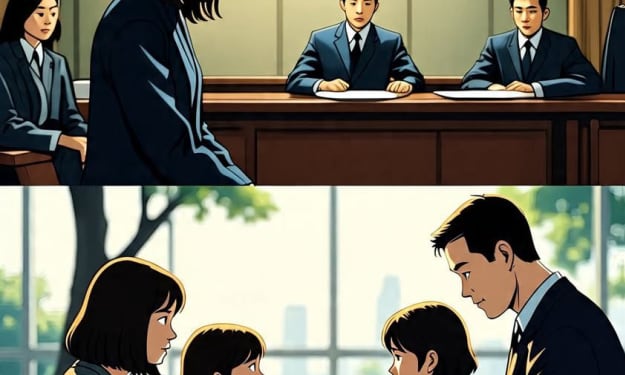
Don’t Want a Divorce: I’m Taking My Case Back
The divorce was almost finalized. A woman, determined and hurt, had taken the final steps toward separating from her husband. The paperwork was complete, every legal detail accounted for. Only one thing remained — her husband’s signature.
By Awais Ahmadabout a year ago in Families
We Took a DNA Test as a Joke—Now We're Not Talking Anymore
It started the way a lot of things do these days—on a lazy Sunday afternoon, scrolling through social media. I saw an ad for one of those at-home DNA kits, the kind that promises to tell you where your ancestors came from and maybe connect you with long-lost relatives. I showed it to my sister, and we laughed. “Let’s do it,” she said. “Why not? What’s the worst that could happen?” Neither of us could have imagined how that joke would end with us not speaking. The Setup We were always close. Growing up just two years apart, my sister and I were more like best friends than siblings. We shared everything—secrets, clothes, inside jokes no one else understood. Our family, while not perfect, had always seemed tight-knit. Our parents had been married for over 30 years, and we grew up in the same house, surrounded by photos of holidays, birthdays, and family vacations. The DNA test was meant to be fun—a curiosity. We weren’t searching for anything. We weren’t suspicious of anything. We just thought it would be cool to see if we were more Irish or German, if we had some surprising trace ancestry that would make for a good dinner story. The Results When the results came back, mine were pretty expected: 60% Irish, 30% Scandinavian, a smattering of other European regions. I was more amused than anything. Then my sister called. She sounded off. “Did you get your results?” I asked. “Yeah,” she said. There was a long pause. “Can you...send me yours?” I was confused but did it anyway. Minutes later, she texted back: “We don’t match as full siblings.” I stared at my phone for what felt like forever. I refreshed the app. I double-checked the wording. According to the test, we were half-siblings. The Fallout At first, we both assumed there had been some mistake. Maybe the company mixed up our samples. Maybe the technology was flawed. But then my sister noticed something else. The test had matched her with a close relative—a man neither of us knew. Someone who wasn’t on my list. That’s when she started asking questions. Within a week, she confronted our mother. And that’s when everything unraveled. What we learned was this: years before I was born, our mother had a brief relationship with another man. She and our father were on a “break,” and she never told him what happened. When she found out she was pregnant, they had already reconciled. Our dad never questioned it—and she never offered the truth. My sister was devastated. She said she felt like her entire identity had been based on a lie. “Everything I thought I knew about myself, about our family, it’s just...broken,” she told me. I tried to comfort her. I told her it didn’t change anything about how I saw her. That she was still my sister. But for her, the damage ran deeper. The Silence At first, we talked constantly—about how angry we were, about how unfair it felt. But gradually, something shifted. She started pulling away. She stopped answering my texts. She said she needed space. I didn’t push. I figured she just needed time to process. That was six months ago. We haven’t spoken since. What I’ve Learned People joke about DNA tests revealing unexpected family secrets, but you never really think it’ll happen to you. You never think your family—the people you’ve trusted your whole life—could be hiding something that big. But they can. And sometimes, without meaning to, you dig up truths that were buried for a reason. Do I regret taking the test? Honestly, yes and no. I don’t regret knowing the truth—but I regret what it cost us. I hope one day my sister will reach back out. I hope she’ll understand that biology doesn’t change the years we spent growing up together, the love we shared, the history we made. But I also understand if she needs more time—or if she never comes back. Sometimes, a joke can turn into a fracture. And sometimes, that fracture goes deeper than you ever thought possible.
By Shoaib Afridiabout a year ago in Families
🐒 The Monkey and the Wise Elephant
Deep in the heart of the lush Emerald Forest, where sunlight filtered softly through thick green canopies and the air always smelled of moss and mangoes, lived a monkey named Miko. He was small, quick, and full of energy—and every creature in the forest knew his name. But not everyone said it with a smile. Miko was the kind of monkey who couldn’t help himself. He swung through the trees like lightning, told silly jokes to anyone who’d listen, and played endless pranks. Sometimes he tied vines to unsuspecting animals’ tails, hid fruits in the treetops just before someone reached them, or dropped nuts on the heads of sleepy boars napping in the afternoon sun. At first, the forest chuckled. Even the older animals thought he was harmless. “Just Miko being Miko,” they would say. But over time, the laughter began to fade. His tricks became tiring, and some animals stopped coming near him at all. One day, Miko stumbled upon something new—an old brass horn tucked between the roots of a banyan tree. It was dusty but intact. The moment he blew into it, the sound echoed so loudly across the forest that birds flew off in panic. Miko grinned. “This will be fun.” He tiptoed toward the riverbank, where Tara the elephant was drinking. She was the oldest and wisest creature in the forest—calm, strong, and deeply respected. Miko crouched behind the bushes, raised the horn, and blew with all his might. BWWWAAAANG The blast startled everyone. Tara reared up in alarm, trumpeting in fear. Her enormous feet thundered against the earth as birds scattered from the trees and squirrels dashed in every direction. In her panic, Tara accidentally stepped on a bush where a family of baby rabbits had been hiding. Thankfully, they escaped in time, but the fear in their little eyes was unforgettable. The forest went still. Every eye turned toward Miko, who peeked out from behind a tree, expecting giggles. There was none. “You could’ve hurt someone!” growled a tortoise who had toppled over in the confusion. “I—I didn’t mean to…” Miko stammered. Tara didn’t say a word. She turned silently and walked away, her heavy footsteps echoing with quiet disappointment. That silence struck Miko harder than any angry word. That night, Miko couldn’t sleep. The wind through the trees sounded sad. The horn, once so exciting, now felt cold in his hands. He realized that for all his fun, he had never once thought about how his actions made others feel. The next morning, he found Tara at the river again, gently helping a thirsty deer reach the water. “I’m sorry,” he whispered. Tara turned to him slowly. “Miko,” she said with softness and strength, “when you play, remember: laughter is only real if everyone is laughing.” Miko nodded, eyes lowered. “You are clever,” she added. “That’s a gift. But cleverness without care can become cruelty.” Miko sat beside her, listening more closely than he ever had before. From that day on, something in Miko changed—not his energy, not his mischief, but his purpose. He still swung from vines and danced in the trees, but now he used his tricks to help. He'd toss ripe fruit to hungry animals, use his horn to guide lost cubs home, or mimic a predator’s call to warn others of danger. His jokes made even the oldest owls laugh again. And when a rainstorm washed away a family of burrowing animals, it was Miko who climbed high to call for help. The forest slowly warmed to him again. Kavi the deer even laughed when Miko placed a flower crown on his head. “You’re still a rascal,” said the tortoise one day, “but now you’re our rascal.” And Tara? She smiled at him every time they crossed paths. Miko never stopped playing. But now, he played with heart. 🌿 Moral of the Story:
By Shoaib Afridiabout a year ago in Families
The Last Cup of Tea
The house hadn’t changed. The cracked veranda tiles still sighed under his feet, just as they did when he used to chase after the neighborhood kids. The faded wind chime still hung by the front door, though it no longer sang. Dust lay gently on the windows, as if time itself had exhaled and settled in. Aariz turned the key in the rusted lock. The door opened slowly, creaking like an old memory resurfacing. It had been four months since his mother passed away. He hadn’t come back since the funeral. Couldn’t. Everything in this home reeked of her – her scent, her scolding, her soft humming in the kitchen when she made her famous cardamom chai. Coming back felt like walking into a memory he wasn’t ready to relive. But the lawyer had called. The property needed to be emptied. Sold. It was time. He stepped inside, half expecting to hear her call out his name the way she always did: “Aariz beta, chai thandi ho jayegi!” But the only voice that greeted him was silence — heavy, solemn, and absolute. The living room was untouched. Her shawl still hung on the back of the armchair. Her reading glasses were resting on the open pages of a half-finished Urdu novel. A pair of her slippers peeked out from under the coffee table. Aariz sat down on the couch, closed his eyes, and for a brief moment, pretended she was in the kitchen — that at any second, the whistle of the kettle would sound, and she’d come in carrying a tray of tea and biscuits, smiling through her tired eyes. But there was no kettle. No tea. Just silence. He wandered into the kitchen. The same rusted stove. The same spice rack she refused to replace. A little chalkboard still hung by the fridge, with her last written note: “Aariz will come next week. Must buy his favorite cake.” His chest tightened. He remembered the last phone call — two days before she passed. "Are you eating properly?" "Yes, Ammi." "When are you visiting again?" "Soon, just finishing up work." "Don’t wait too long, beta. Mothers don’t live forever." She had laughed when she said that. He didn’t. She died of a silent heart attack two mornings later. Alone. In this house. With no one to hold her hand. He had arrived too late. The tears came uninvited, hot and bitter, as Aariz stood by the stove and imagined her standing there in her worn-out apron, stirring tea, tasting it with her pinky, then insisting it needed "just one more elaichi." He wiped his face and opened the cabinet. There, neatly arranged, were the teacups they always used. One of them had a tiny chip on the rim — his favorite. He pulled it out, along with her special tea tin. He made the tea slowly, deliberately. He boiled the milk, added sugar the way she did — not too much, just enough. Crushed the cardamom pods the way she taught him. Let it steep just a little longer for the stronger flavor. He poured it into both cups — hers and his. Then he sat across from her empty chair. For a while, he didn’t speak. He just sat there, the cup warming his hands, the steam rising slowly between them like an unfinished goodbye. Then softly, almost brokenly, he whispered: "I’m sorry, Ammi." "I should have come back sooner." "I thought there would be more time." The chair didn’t respond. But the house listened. And somehow, he felt she heard him. When he left later that evening, he didn’t take much — just her shawl, the tea tin, and the chipped teacup. He locked the house gently, like tucking a child into bed. As he walked away, he looked back one last time. The wind chime moved — just slightly — and this time, it rang. Epilogue: Grief doesn’t ask for permission. It arrives when you’re unready, and stays longer than you want. It isn’t loud or dramatic. Sometimes, grief is just a cold cup of tea on the table — untouched, but filled with memories.
By Ikram Ullahabout a year ago in Families
Stomach Disorders Caused by Food
Introduction Stomach disorders caused by food consumption are a common clinical presentation, affecting individuals of all ages. These disorders range from mild discomfort to severe, life-threatening conditions. Food-related stomach disorders may result from foodborne infections, intolerances, allergies, or toxic reactions. This report explores the etiology, pathophysiology, clinical manifestations, diagnosis, treatment, and prevention of food-induced stomach disorders.
By Ahmad shahabout a year ago in Families