immediate family
Blood makes you related, loyalty makes you family.
Threads of Comfort
Upon Ellie's arrival into the world, her grandmother crafted a charming baby blanket, skillfully piecing together soft flannel squares. Each square was a remnant of worn-out shirts, beloved dresses, and timeworn bedsheets, all infused with cherished memories and a touch of nostalgia. The outcome was a tapestry featuring muted shades of blue, gentle hints of yellow, and subtle greens, meticulously stitched together with care. From the very first evening that Ellie settled into her crib, the blanket accompanied her, cozily tucked beneath her small chin. As she matured, the blanket transcended its role as merely a fabric item; it evolved into her guardian, steadfast companion, and trusted confidant of her innermost thoughts. She dubbed it “Bunny,” a name that seemed devoid of reason yet clung to her with the unyielding fervor only a young child can muster. Bunny explored a multitude of places: from preschool to exciting road trips, and even camping beneath the furniture in the living room. Despite the frayed edges and the further fading of colors, Bunny remained a constant presence. When Ellie turned ten, her parents kindly proposed that she consider leaving Bunny at home during their visits to friends or while traveling. "You've really grown up," her mother remarked with a gentle smile. While Ellie outwardly expressed her agreement, she found it nearly impossible to drift off to sleep without cradling it closely to her chest each night. Her fingers would instinctively roam over the frayed stitching at its corner, seeking comfort in its familiar texture. The transition to middle school introduced a set of fresh challenges and expectations. Children back then exhibited a heightened sense of awareness and were less inclined to overlook mistakes. On a typical afternoon, Ellie inadvertently brought up Bunny during an icebreaker activity in class focused on childhood memories. Caleb, known for his ever-present smirk, mockingly asked, "Is it true that you still sleep with a baby blanket?" Laughter cascaded through the room, resembling a harsh and unsettling static. Ellie's cheeks turned a deep shade of red. That evening, she wept against the plush fabric of Bunny, holding it closer than she had in many years. She refrained from bringing up Bunny to anyone else afterward. From that moment onward, it nestled within her pillowcase—concealed yet ever-present. Time continued to flow. As she entered high school, she encountered a series of unexpected challenges, including more difficult exams, emotional heartbreaks, and social struggles that she had not foreseen. Her parents separated quietly, as if they were attempting to avoid disturbing her peaceful slumber. Her mother relocated to a cozy apartment in the heart of the city. Her father became increasingly withdrawn, immersing himself in spreadsheets and long hours of late-night meetings. Ellie's world, which had once been vibrant with the soft, pastel hues of Bunny's patchwork, now appeared subdued and lifeless—dominated by shades of gray that felt both dull and frigid. However, Bunny chose to stay. It provided no solutions, offered no guidance, and did little to ease the uncomfortable pauses that often occurred during dinner conversations; yet, it remained a constant presence. It absorbed tears without hesitation. The air was infused with the fresh scent of laundry detergent, evoking a sense of security and comfort. Next arrived college—Ellie’s significant transition. She relocated to a different state, traveling three states away with only a suitcase and a box containing her essential belongings. She hesitated for a moment as she carefully placed Bunny between the neatly stacked jeans, concerned that her new roommate might catch a glimpse. Ultimately, she found it impossible to part with it. The dormitory buzzed with a cacophony of sounds, feeling unfamiliar and vibrant. Mia, her roommate, exuded brightness and energy. She proudly identified as “emotionally independent,” often indulging in herbal tea while jotting down her thoughts in a journal. One morning, Mia arrived at work earlier than usual and unexpectedly discovered Ellie discreetly tucking Bunny beneath her pillow. Mia exclaimed with genuine curiosity, "Is that a security blanket?" Her tone carried no hint of mockery. Ellie came to an abrupt stop. Certainly! Here's a rewritten version of the provided text:
By Ahiyan Hridoyabout a year ago in Families
🌧️ Kindness in the Rain
The rain didn’t just fall that night—it attacked. It slammed against the pavement with a fury, turning streets into rivers and umbrellas into crumpled messes. People rushed by, heads down, eyes averted, chasing warmth and dry shelter. No one noticed the little girl on the bench at the bus stop. Soaked to the bone. Shivering. Silent.
By Ahmad Malikabout a year ago in Families
Why Parents Say "Money Doesn't Grow on Trees" to Kids
Children often hear the phrase "Money doesn't grow on trees" early in life. It’s a common saying that carries a lot of meaning behind simple words. Parents use it to teach kids about the value of money and how to handle it responsibly. Learning about money from an early age sets kids up for a healthier financial future. The earlier children understand money’s worth, the better prepared they are to manage it wisely as adults.
By LaMarion Zieglerabout a year ago in Families
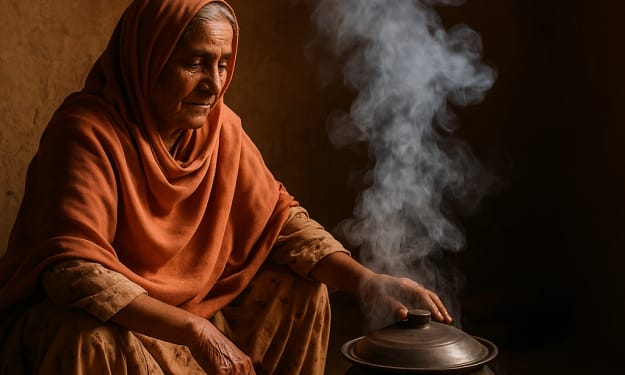
Smoke from the Stove
A mother’s silent sacrifices, a son’s long journey, and the love that held them together—despite the distance. --- In a small village nestled between fields and silence, there stood a modest mud-brick house with a slanted tin roof and smoke rising gently from its chimney each morning. That smoke, thin and unassuming, was the first sign that life within those walls had begun its day. It came from an old clay stove—handmade, cracked at the corners—where Mumtaz Begum cooked meals, boiled tea, and warmed her aging bones during winter. Mumtaz Begum lived alone with her son, Ali. Her husband had passed when Ali was just a toddler, leaving her to raise him with calloused hands and a heart that never allowed itself to break. In the quiet simplicity of their home, surrounded by wheat fields and distant mountains, she poured every ounce of her love into Ali’s upbringing. Ali was everything to her. He had his father’s smile and his mother’s stubbornness, and a spark in his eyes that made her believe he was destined for more than the life of labor she had known. She often sat with him in the evenings beside the glowing stove, telling stories of the past, reciting prayers, and passing down little truths about life. She’d gently stroke his hair and whisper, “Life is hard, beta, but it softens when you love. And know this—no matter where you go, your Ammi’s prayers will always follow you like your shadow.” Ali listened, wide-eyed, often dreaming of a world far beyond the village’s dusty roads. He wanted more—not out of ingratitude, but because he believed that if he succeeded, he could lift his mother from the weight of her sacrifices. He didn’t just want to earn money; he wanted to rewrite her story. As he grew, his ambitions expanded beyond the borders of the village. He would study under the dim light of a single lantern, using worn-out books passed down from cousins. His mother couldn’t read, but she sat beside him every night anyway, mending clothes, grinding spices, or just watching him with quiet pride. When he passed his exams and was offered admission to a university in the city, she held his face and said, “Go, my son. Fly. The nest will always be here. But don’t forget the warmth of this stove, the taste of simple food, and the smell of this earth.” Ali promised. He hugged her tight, almost too tight, afraid to let go. She packed him dry lentils and pickles, folded his clothes with care, and kissed his forehead again and again until the bus pulled away. In the city, life moved faster than Ali had imagined. The streets buzzed with noise, and buildings stretched toward the sky like dreams refusing to bow. At first, he struggled—missing home, missing his mother’s voice calling him for meals, missing the familiar smoke of their stove. But slowly, he adapted. He studied hard, worked part-time jobs, and earned scholarships. The more he succeeded, the more he felt he owed it to her. Phone calls became shorter. Visits home were fewer. But every time he called, his mother’s voice was steady and warm. “Khush rehna, beta,” she’d say. “Bas duaon mein yaad rakhna.” Be happy, son. Just remember me in your prayers. Years passed. Ali finished his studies and started a business. It grew—small at first, then bigger than he had imagined. He wore suits now, attended meetings, shook hands with people whose names echoed in magazines. He moved into a spacious apartment, bought a car, and dined in places his village never dreamed of. But somewhere between ambition and achievement, time slipped away. Calls to his mother became monthly, then quarterly. She never complained. She always answered with the same joy, the same prayer, the same affection, even when her joints hurt too much to get up from her bed. Back in the village, Mumtaz Begum’s hair had turned completely white. The stove still burned every morning. She still cooked with the same care, even if it was just for herself. Her neighbors would drop by sometimes, asking if she’d heard from Ali. “He’s doing well,” she’d say, her eyes gleaming with pride. “He’ll visit soon.” But the visits never came. Every festival, every Eid, every birthday, she would prepare as if he might walk through the door. She’d sweep the floor twice, cook his favorite sweet dish, and leave the door slightly open. “He may be late,” she’d whisper to herself. “But he will come.” Sometimes, she’d sit beside the stove and speak to it, as if it were him. “Ali, remember how you used to help me mix the dough? You were so small then. I used to scold you for eating raw dough, but you always laughed and did it again.” The smoke from the stove curled toward the ceiling, silent, listening. Then came the day when she couldn’t get out of bed. The doctor came from the next town and shook his head gently. “She’s tired,” he said. “Her heart is weak. It’s mostly emotional.” The neighbors called Ali. They told him gently, told him it might be time to come back. He stared at the phone for a long time after the call ended. The walls of his apartment suddenly felt cold, despite the central heating. He remembered the warmth of that stove, the smell of cardamom in his tea, his mother’s hand patting his back until he fell asleep. Without hesitation, he booked the earliest ticket and packed a bag. The village hadn’t changed much, but his mother had. When he entered the house, the air was thick with memory. The stove still sat in its corner, unused for days, but somehow still holding warmth—as if it had waited too. He rushed to her side, tears in his eyes. Her face had thinned, her skin more fragile than paper, but her eyes lit up the moment she saw him. “Ali…” she whispered. “Ammi,” he said, holding her hand, bringing it to his lips. “I’m sorry… I should have come sooner.” She smiled. “You came. That’s enough. I prayed every day… not for your success… but that I would see your face again.” He wept at her bedside, apologizing over and over. She stroked his hair, like she used to, her fingers weak but full of love. “You were never alone, beta. My prayers were with you every step. But now… you are here. My heart can rest.” Ali spent the next few weeks with her, cooking for her, feeding her, helping her walk a few steps every morning. Each evening, he lit the stove again—not for necessity, but for memory. They would sit beside it in silence, hands wrapped around hot cups of tea, time folding into itself like a prayer answered late, but answered still. When she passed away quietly one morning, she had a smile on her face. The village came to mourn, but they also came to honor. They spoke of her kindness, her strength, her unshakeable love for her son. And Ali stood beside her grave, not as a successful businessman, but as a son finally returned. He stayed in the village for months. Restored the house. Rebuilt the stove. Started a small school in her name so other children like him could dare to dream. Every morning, as smoke rose once again from the chimney, it carried with it more than heat. It carried memory. It carried love. And above all, it carried the story of a mother who waited—not in pain, but in faith—that one day, her son would find his way home.
By Abubakar Khanabout a year ago in Families
In This House, We Grow
At the quiet end of Maple Lane, tucked between a row of oak trees, sat a small yellow house with flower pots in the window and laughter spilling from the cracks. People often slowed down when they passed it—not because it was big or fancy, but because it felt like something rare lived inside. Inside that home lived the Alvi family. Farhan, the father, was a high school science teacher with gentle eyes and a smile that reached his students' hearts. Zainab, his wife, worked from home designing clothing and telling bedtime stories that made her children believe the stars were reachable. Their three kids—Ayesha, the thoughtful thirteen-year-old; Ahmed, their ten-year-old mischief-maker with dimples deeper than puddles; and little Amal, who had just turned four and believed the moon followed her wherever she went—filled the house with chaos and calm in equal measure. Every evening around seven, the house transformed. The television went off, phones were tucked away, and the five of them sat cross-legged on the living room floor around a warm meal. Zainab believed food was love, and her hands showed it. The meals were simple—lentils, rice, vegetables, chapati—but always colorful, always fresh. Ahmed hated spinach until his father flexed his arms and said, “That’s how I got these muscles.” From that day, Ahmed asked for “muscle leaves” every time they were on the table. The dinner table—or rather the mat—was sacred. It wasn’t just about food. It was about stories. Everyone took turns telling one good thing about their day. Sometimes it was something big, like Ayesha winning a class prize. Other times, it was small, like Amal spotting a butterfly on the balcony. But no matter what was shared, it was always met with joy. They had a rule: no sugary drinks. But they made their own lemon water, fresh juices, and sometimes “magic smoothies,” as Amal called them. The children each had their own brightly colored water bottles with their names on them, and Farhan had a habit of randomly shouting, “Water check!” which would lead to three kids scrambling to drink from their bottles while laughing. Weekends were for long walks, usually to the nearby lake where ducks floated like little boats and the sky stretched wide and forgiving. Sometimes they played frisbee. Other times, they just lay on the grass, staring at the clouds and making up stories about their shapes. Ahmed once claimed a cloud looked exactly like a burrito, which led to the whole family craving Mexican food the entire walk home. Technology wasn’t banned, but it had its place. Screens stayed off during meals, walks, and before bed. After dinner, they often read aloud together. Ayesha loved mysteries, so she would read while the others listened, eyes wide. Amal rarely understood the plot, but she listened anyway, curled up beside her mother like a kitten. At bedtime, the house went quiet, but never cold. Zainab would tuck each child in with a kiss on the forehead and whisper, “I’m proud of you.” Farhan would follow, patting heads and saying, “You are my sunshine.” The lights dimmed, and soft music played while the children drifted to sleep. Even on rough days, this ritual remained unchanged. They didn’t just talk to each other—they listened. When Ahmed came home crying because a classmate laughed at his drawing, Farhan sat with him, looked him in the eye, and said, “Tell me what happened. I want to understand.” No one was ever too busy to care. Cleanliness wasn’t about rules—it was a way of life. Hands were washed before meals, shoes came off at the door, and every Saturday was “clean-up party day,” complete with music and snacks as they organized toys, wiped counters, and turned chores into dances. Health was never taken for granted. Check-ups were scheduled before birthdays, and teeth were brushed like clockwork. Even Amal knew the dentist’s name and thought of him as a superhero in a white coat. When life got stressful—like when Zainab lost an important client or when Farhan’s school added more paperwork—they didn’t let it spill into the children’s world. Zainab would take deep breaths by the window, while Farhan sat with a hot cup of chamomile tea and a book. The children, watching their parents handle life calmly, learned to do the same. And they celebrated everything. Not just birthdays and Eid, but also when Amal used the potty for the first time, when Ayesha learned to ride a bike, and when Ahmed managed a week without forgetting his lunchbox. Zainab would bake a cake, even if it was just a little one, and Farhan would bring balloons from the corner store. Joy, they believed, should never wait for big moments. When the car broke down one winter and they couldn’t go on their planned trip, they turned the living room into a campsite. Blankets became tents, flashlights became stars, and soup was served in mugs. No one complained. They laughed harder that night than they would have in any hotel. Zainab often let the children cook with her. Ahmed became an expert onion cutter—though he wore goggles—and Ayesha made the best fruit salad in the neighborhood. Amal’s job was to press the blender button and declare everything “yummy.” Every other Friday, they went to the shelter down the street. Ayesha read to the younger kids there, while Ahmed helped organize food boxes. Amal handed out apples and got dozens of hugs in return. They didn’t talk much about kindness—they simply lived it. Farhan never smoked. He didn’t drink. Not because he was strict, but because he believed home was a place to feel safe and clear. His example became their lifestyle. Their house was filled with little traditions—some big, some silly. Like writing letters to each other once a month. Or “backward dinner night” where they ate dessert first. Or Zainab’s idea of “Memory Jar,” where they dropped notes of good moments and opened them on New Year’s Eve, laughing and remembering. Money wasn’t taboo. Every Sunday, they sat with a notebook labeled “The Budget Book.” The kids were given small allowances, and jars marked "Save", "Spend", and "Share." Ayesha started saving for a telescope. Ahmed donated part of his money to buy books for the school library. Creativity was encouraged like air. Ayesha painted, Ahmed built robots out of cereal boxes, and Amal made paper crowns for the entire family. Nothing was too small to be celebrated. Kindness was the invisible rule of the house. They said “please,” “thank you,” and hugged often. No one went to sleep angry. If voices were raised, apologies followed. If someone felt left out, a game or story was adjusted. Food came from real ingredients, not packages. Zainab loved cooking from scratch. Her soups were famous among the neighbors. Even Farhan learned to knead dough on Sundays. The kids called it “flour fight day,” and not a single apron ever stayed clean. And no matter what happened—no matter how loud the world got or how tired the day left them—every night ended with love. Spoken out loud. “I love you” wasn’t saved for special days. It was said after a sneeze, after a joke, even in passing. The Alvi family was not perfect. But their home had rhythm. A warmth that came not from fancy furniture or money, but from presence, patience, and practice. Their habits weren’t rules—they were the invisible threads that stitched their lives together. So whenever someone walked past that little yellow house on Maple Lane, they couldn’t help but smile. Because through its windows, you could glimpse something rare: a family quietly, gently, beautifully getting life right.
By Muhammad Ilyasabout a year ago in Families
The Transformation - Her journey from struggle to success
"What if one risky decision could change your family's destiny forever? "Hey, Historical Stories family! Today’s tale isn’t just about a marriage—it’s about a brother’s gamble, a sister’s leap of faith, and how a dowry-free promise in a cramped Lahore house led to a PhD, two kids with Canadian accents, and a ghost story that still haunts my niece!
By Historical Storiesabout a year ago in Families
🛏️ Discover Everyday Luxury with the Amazon Basics 4-Piece Microfiber Bed Sheet Set (Queen, Bright White)
🌙 Unmatched Softness That You Can Feel Crafted from premium brushed microfiber, these sheets offer a level of softness that rivals much more expensive options. The fabric feels smooth and silky to the touch, making it ideal for relaxing after a long day. If you’ve ever felt the comfort of hotel bedding, you’ll be surprised to find the same luxurious experience right at home.
By Mai Xuan Longabout a year ago in Families
The Silent Killer of Love and Respect
The Silent Killer of Love and Respect. Marriage is meant to be a partnership built on mutual trust, respect, and emotional safety. But what happens when one partner brings in not just emotional immaturity, but a toxic, narcissistic personality?
By Sayed Zewayedabout a year ago in Families