immediate family
Blood makes you related, loyalty makes you family.
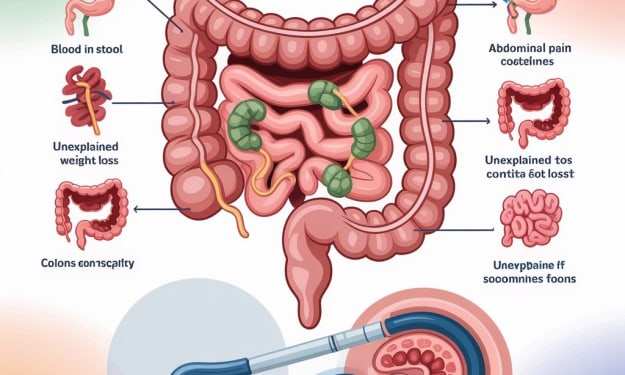
Colon Cancer
Colon cancer, also known as colorectal cancer, affects the large intestine (colon or rectum) and is one of the leading causes of cancer-related deaths worldwide. The most alarming fact about this disease is that it often begins with mild or almost invisible symptoms, which is why early detection is crucial. When caught early, colon cancer is highly treatable. Unfortunately, due to lack of awareness or delayed diagnosis, many cases are detected at later stages, when the disease has already progressed.
By Ahmad shahabout a year ago in Families
Hard Times
By adina When my family first told me that we were moving to England, I was devastated. The idea of leaving behind everything I had ever known—my friends, my school, my street, my entire way of life—filled me with fear. Albania had always been my home, and although life there was not always easy, it was familiar. I couldn’t imagine starting over in a completely different place, a country I had only seen on TV or heard about from relatives who had gone abroad. I didn't want to leave. I cried the night before we left, clutching a photo of my best friend and me at school, both of us smiling with our arms around each other. I felt like I was leaving a part of myself behind. But my parents reassured me that this move was for the best—that we were going to a place where we could all have a better future. When we finally arrived in England, everything felt strange. The streets were different, the buildings unfamiliar, and the people spoke so quickly that I struggled to understand them. For the first few weeks, I felt like an outsider. I missed home terribly. I missed my language, my food, the smells of my neighborhood, and even the noise of the local market in Tirana. But slowly, things began to change. School here was different from what I was used to. Back home, we would finish lessons earlier in the day, but in England, school went on until three o’clock in the afternoon. At first, I didn’t like the longer hours, but I soon began to appreciate the structure. The subjects were interesting, the teachers were kind, and there were so many more options. I was surprised to learn that students here could go to university even if their families didn’t have much money. It was all about working hard, being determined, and not giving up. That gave me hope. The thing that struck me most was the diversity in my new school. I wasn’t the only one who had come from a different country. In my class alone, there were children from Somalia, Bangladesh, Poland, Portugal, the Philippines, and many other places. I quickly realised I wasn’t alone in my journey. We all had stories, and we all had made sacrifices to be here. We had different backgrounds, languages, and cultures, but we were all learning together, laughing together, and growing up together. I began to make friends, real friends who didn’t care where I came from or what my accent sounded like. They just liked me for who I was. We played football at lunch, helped each other with homework, and shared snacks from our different cultures. It was through them that I truly began to feel like I belonged. It took time, but I have come to call England my home. The country that once felt so foreign now feels like a place where I have a future. I can see a path ahead that wasn’t so clear before. I want to go to university, maybe study medicine or engineering. I want to have a career that makes my parents proud and helps others too. I want to give back to the country that gave me a second chance. Looking back, I realise that this story isn’t just about hard times. Yes, moving away from home was hard. Learning a new language was hard. Trying to fit in was hard. But those difficult moments taught me something important: that change, while scary, often brings opportunity. That the hardest experiences can lead to the most rewarding ones. I’ve learned that life is full of unexpected turns, and while we can’t control everything, we can choose how we respond. We can fight, adapt, and grow. We can find beauty in diversity and strength in community. So yes, I still miss Albania. I still remember my friends and the streets of my old neighborhood. But I am not sad anymore. I carry those memories with me, and I know they are a part of who I am. But I also look forward now—with hope and determination. I called my story Hard Times, but perhaps that title doesn't tell the whole truth. This is really a story about the light that comes after the darkness, about the doors that open when others close, and about the courage to believe in a better tomorrow.
By Israr khanabout a year ago in Families
A Silent Tear at Midnight
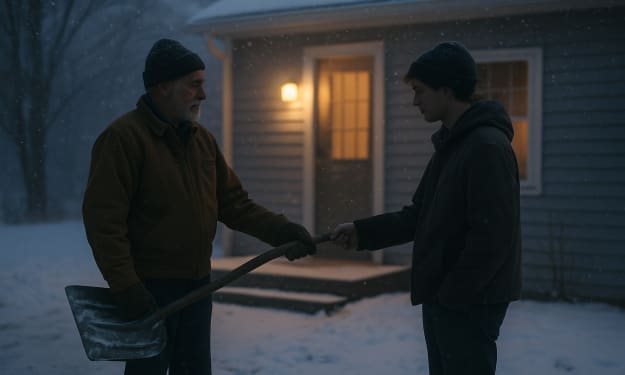
The day was hot. The sun burned everything. Even the air felt heavy. But inside, I felt cold. My grandfather, Papa, was gone. We stood near his grave. Dad was using a shovel, covering Papa with dirt. The sound of the shovel scraping against the earth echoed in my mind. I didn’t cry. I didn’t know why. Maybe my heart was too full. Or maybe it was too empty. I remembered when Papa used to take me fishing. He always smiled. His old hands felt strong when he held mine. Now, those hands were still, forever. People said I should be strong. I stood there, silent. My body felt weak, but no tears came. Why couldn’t I cry? Was something wrong with me? Around me, people whispered. Some hugged. Some cried. I just watched the dirt cover Papa, bit by bit, until he was gone from sight. At night, I lay awake in my bed. I thought about him. His voice. His laughter. The way he smelled like old wood and soap. I missed him. I wanted to cry. But still, no tears. Days passed. I went back to school. My friends played and laughed. I tried to smile, but it felt fake. Inside, I felt alone. Like I was carrying a sack of stones in my chest. One day, my teacher asked me to write about family. I picked up my pencil, but my hand shook. Words didn’t come. So I sat quietly. After class, she asked me if I was okay. I nodded, but I wasn’t. At home, I saw Dad sitting alone. He wasn’t talking much these days. His eyes looked tired. I wanted to ask him if he felt cold inside too. But I stayed silent. Maybe he wouldn’t understand. Maybe he would say, “Be strong.” Then, something changed. One morning, Mom found me sitting near Papa’s old chair. I was just sitting, not thinking. She sat next to me. She didn’t speak. Just held my hand. We sat together in silence. And in that silence, I felt something warm. Not outside. Inside. That night, tears came. Soft at first. Then stronger. I cried for Papa. For myself. For all the silent pain inside me. It felt like letting go of a heavy bag I’d been carrying for too long. Mom hugged me. She didn’t tell me to stop. She let me cry. And slowly, the cold feeling inside me began to fade. I started writing letters to Papa. I wrote about my day, my feelings, the things I couldn’t say to anyone else. I placed those letters in his old chair. With time, I smiled more. Real smiles. My sack of stones turned lighter. Now, when I remember Papa, I still feel sad. But it’s okay. Sadness is part of love. I learned that it’s okay not to cry right away. Grief has its own time. Papa is gone. But his love stays. In my heart. In my memories. And when I sit by his chair, I know I’m not alone. Grief is not a weakness. It’s just love that has nowhere to go. And love never dies. I stood there quietly, watching the sun fade behind the hills. The silence felt heavy, like it wanted to say something but didn’t know how. I looked down at my hands, small and trembling, yet somehow steady enough to hold memories I wasn’t ready to face. The wind touched my hair softly, as if trying to comfort me. I closed my eyes, hoping the breeze could carry away the weight in my heart. But some weights aren’t meant to leave; they settle quietly, like a shadow that stays even when the light changes. That night, I didn’t speak much. Words felt too loud for feelings this gentle. I simply sat by the window, holding my knees close, letting the stars tell stories I couldn’t. And maybe, just maybe, tomorrow would feel a little lighter.
By Leya kirsan official about a year ago in Families
What My Father Never Said, and What I Heard Anyway
He never gave big speeches. There were no long-winded father-son talks over a campfire, no final words of wisdom before I moved out, no dramatic pronouncements about life, women, or work. He wasn’t the kind of man who offered advice — at least not in the traditional sense.
By Kamran Zebabout a year ago in Families
Sweet Revenge Without The Drama
...SUCCESS is the best revenge! I can't remember a time when I've seen her so happy. I'm happy too - broke, but happy! For years I'd lived next door to 'Cruella-de-Vil'. A bitter and twisted lady in her 60s, who rarely had a good word to say about anyone.
By Pamella Richardsabout a year ago in Families
The Day Mom Let Go
Growing up, my mother was always there. Not just in the physical sense—making meals, cleaning the house, helping with homework—but emotionally too. She was the kind of mom who knew something was wrong even before I said a word. Her love was constant, sometimes loud, sometimes quiet, but always present. She was the safety net I didn’t realize I depended on until I had to step off it.
By Hassan Janabout a year ago in Families
Sleepless in Solitude Part 2
I see and hear some mothers complaining about how their babies are the 'terrible twos', messing up the house, getting into everything, pen marks everywhere, baby gates being climbed over, messy eating time and so on and so forth. Many times I have seen babies at 8 months old, less than 1 year old, etc. talking, crawling everywhere, mums running after them, doing all sorts of things and sometimes I wished my daughter could do the same...
By Esther Oyewoleabout a year ago in Families